
Verwandte Artikel zu Obsessive-Compulsive Disorder For Dummies (For Dummies...
Inhaltsangabe
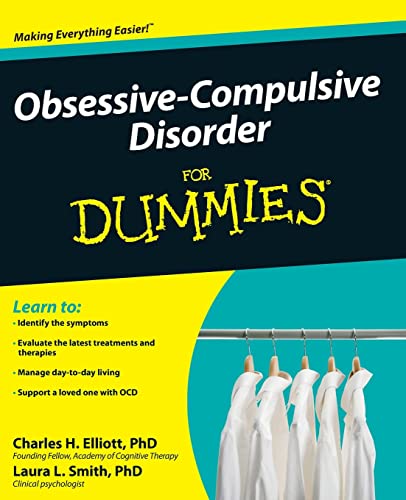
Understand OCD, get the help you need, and start feeling better Are you - or is someone you love - struggling with OCD? This reassuring, comprehensive guide explains this disorder in clear language, providing the latest information on treatment to help you in the journey from diagnosis to recovery. You'll find the motivation you need to change, tips for handling day-to-day life, and the best ways to offer support to loved ones. * Learn the ins and outs of OCD - its causes, various forms, symptoms, and the major approaches to treatment * Improve your way of thinking - connect the dots between triggers, thoughts, and feelings, and dismantle OCD beliefs * Undo OCD behavior - identify your fears, open yourself to change, delay or alter rituals, and handle setbacks * Evaluate medications - discover the pros and cons, explore the options, and know when to combine, decrease, or stop medications * Manage the OCD mind - accept negative thoughts and feelings and connect with the here and now * Target specific symptoms - from doubting and checking to symmetry and counting to shame and superstitious thinking, apply techniques for overcoming various types of OCD * Assist others with OCD - recognize symptoms in children and find professional help, support family and friends, and reinforce the right things Open the book and find: * Plain-English explanations of the disorder and its symptoms * The difference between obsessions and compulsions * Ways to change OCD thinking and behavior * How to choose the right mental-health professional * The latest scientifically based research on treatment * Tools to help track progress * The warning signs of relapse and how to handle it * Tips on treating OCD-related disorders
Die Inhaltsangabe kann sich auf eine andere Ausgabe dieses Titels beziehen.
Über die Autorin bzw. den Autor
Charles H. Elliott, Ph.D. (Corrales, New Mexico) is a clinical psychologist and a Founding Fellow in the Academy of Cognitive Therapy. He is also a member of the faculty at Fielding Graduate University. He specializes in the treatment of adolescents and adults with obsessive compulsive disorder, anxiety, anger, depression, and personality disorders. He presents nationally and internationally on new developments in the assessment and therapy of emotional disorders.
Laura L. Smith, Ph.D. (Corrales, New Mexico) is a clinical psychologist who specializes in the assessment and treatment of adults and children with obsessive compulsive disorder, as well as personality disorders, depression, anxiety, ADHD, and learning disorders. She is often asked to provide consultations to attorneys, school districts, and governmental agencies. She presents workshops on cognitive therapy and mental health issues to national and international audiences.
Von der hinteren Coverseite
Understand OCD, get the help you need, and start feeling better
Are you — or is someone you love — struggling with OCD? This reassuring, comprehensive guide explains this disorder in clear language, providing the latest information on treatment to help you in the journey from diagnosis to recovery. You'll find the motivation you need to change, tips for handling day-to-day life, and the best ways to offer support to loved ones.
-
Learn the ins and outs of OCD — its causes, various forms, symptoms, and the major approaches to treatment
-
Improve your way of thinking — connect the dots between triggers, thoughts, and feelings, and dismantle OCD beliefs
-
Undo OCD behavior — identify your fears, open yourself to change, delay or alter rituals, and handle setbacks
-
Evaluate medications — discover the pros and cons, explore the options, and know when to combine, decrease, or stop medications
-
Manage the OCD mind — accept negative thoughts and feelings and connect with the here and now
-
Target specific symptoms — from doubting and checking to symmetry and counting to shame and superstitious thinking, apply techniques for overcoming various types of OCD
-
Assist others with OCD — recognize symptoms in children and find professional help, support family and friends, and reinforce the right things
Open the book and find:
-
Plain-English explanations of the disorder and its symptoms
-
The difference between obsessions and compulsions
-
Ways to change OCD thinking and behavior
-
How to choose the right mental-health professional
-
The latest scientifically based research on treatment
-
Tools to help track progress
-
The warning signs of relapse and how to handle it
-
Tips on treating OCD-related disorders
Aus dem Klappentext
Understand OCD, get the help you need, and start feeling better
Are you — or is someone you love — struggling with OCD? This reassuring, comprehensive guide explains this disorder in clear language, providing the latest information on treatment to help you in the journey from diagnosis to recovery. You'll find the motivation you need to change, tips for handling day-to-day life, and the best ways to offer support to loved ones.
-
Learn the ins and outs of OCD — its causes, various forms, symptoms, and the major approaches to treatment
-
Improve your way of thinking — connect the dots between triggers, thoughts, and feelings, and dismantle OCD beliefs
-
Undo OCD behavior — identify your fears, open yourself to change, delay or alter rituals, and handle setbacks
-
Evaluate medications — discover the pros and cons, explore the options, and know when to combine, decrease, or stop medications
-
Manage the OCD mind — accept negative thoughts and feelings and connect with the here and now
-
Target specific symptoms — from doubting and checking to symmetry and counting to shame and superstitious thinking, apply techniques for overcoming various types of OCD
-
Assist others with OCD — recognize symptoms in children and find professional help, support family and friends, and reinforce the right things
Open the book and find:
-
Plain-English explanations of the disorder and its symptoms
-
The difference between obsessions and compulsions
-
Ways to change OCD thinking and behavior
-
How to choose the right mental-health professional
-
The latest scientifically based research on treatment
-
Tools to help track progress
-
The warning signs of relapse and how to handle it
-
Tips on treating OCD-related disorders
Auszug. © Genehmigter Nachdruck. Alle Rechte vorbehalten.
Obsessive-Compulsive Disorder For Dummies
By Charles H. Elliott Laura L. SmithJohn Wiley & Sons
Copyright © 2009 Charles H. Elliott and Laura L. SmithAll right reserved.
ISBN: 978-0-470-29331-7
Chapter One
Reviewing Obsessive-Compulsive Disorder(OCD)
In This Chapter
* Finding out about OCD
* Seeing how media obsessions can influence OCD
* Discovering treatments available for OCD
* Helping others who suffer from OCD
Depending on how you define the terms, everyone has a few obsessive or compulsive traits. In popular vernacular, obsessive is a word often used to describe someone's intense interest in something. For example, a man who stalks a movie star is totally obsessed with her. Or a woman who spends hours putting on her make-up and doing her hair obsesses about her looks. An obsession also can refer to an intense interest in a sport, a hobby, or a career. On the other hand, compulsive often is used to refer to rigid patterns of behavior, as reflected in descriptions such as "He is compulsive about keeping his house clean," or, "She compulsively balances her checkbook every week without fail."
But mental-health professionals define these terms quite differently. In the mental-health field, obsessions are considered to be unwanted thoughts, images, or impulses that occur frequently and are upsetting to the person who has them. Compulsions are various actions or rituals that a person performs in order to reduce the feelings of distress caused by obsessions.
You can find examples of obsessions and compulsions in lots of places. For example, many major-league pitchers have elaborate good-luck rituals that can look pretty strange. Some feel compelled to hear the same song prior to the game; others eat exactly the same food. You probably have watched pitchers straighten their hats, smooth out the dirt on the mound, and spit in the sand before each pitch. Many baseball hitters have elaborate rituals they carry out with their bats. Other athletes have strange beliefs, good-luck charms, or compulsive acts that they must perform, allegedly to help their performance. If you are a major-league sports player making zillions of dollars to play a game, you can indulge in a few weird behaviors. No one will bother you.
REMEMBER
Anyone can have a few obsessions or compulsions, and, in fact, most people do. But it isn't obsessive-compulsive disorder (OCD) unless the obsessions and compulsions consume considerable amounts of time and interfere significantly with the quality of your life.
In this chapter, we introduce you to OCD. We reveal how it debilitates individuals who have it and what it costs society. We also provide an overview of the major treatment options - much can be done for OCD nowadays. Finally, because OCD treatment can be greatly enhanced by the help of friends and family, we provide tips on what you can do to help someone you care about who has OCD.
What Is OCD?
OCD has many faces. Millions of people are held prisoner by the strange thoughts and feelings caused by this disorder. Most people with OCD are bright and intelligent. But doubt, uneasiness, and fear hijack their normally good, logical minds.
Whether or not you have OCD, you can probably recall a time when you felt great dread. Imagine standing at the edge of an airplane about to take your first parachute jump. The wind is blowing; your stomach is churning; you're breathing hard. Suddenly the pilot screams, "Stop! Don't jump! The chute is not attached!"
You waver at the edge, terrified, and fall back into the plane, shaking. That's how many people with OCD feel every day. OCD makes their brains believe that something horrible is going to happen. Some people fear that they left an appliance on and the house will burn down. Others are terrified that they may get infected with some unknown germ. OCD causes good, kind people to believe that they might do something horrible to a child, knock over an elderly person, or run over someone with their car.
Those with OCD almost always struggle with two major issues: shame and the intense desire to avoid all risks. We discuss these issues in the next two sections.
Suffering shame
Because the thoughts and behaviors of those with OCD are so unusual or socially unacceptable, people with OCD feel deeply embarrassed and ashamed. Imagine having the thought that you might be sexually attracted to a statue of a saint in your church. The thought bursts into your mind as you walk by the statue. Or consider how you would feel if you stood at a crosswalk and had an image come into your mind of pushing someone into oncoming traffic.
However, the frightening, disturbing thoughts of OCD are not based on reality. People with OCD have these thoughts because their OCD minds produce them, not because they are evil or malicious. It is extremely rare for someone with OCD to actually carry out a shameful act.
REMEMBER
Throughout this book we often refer to the "OCD mind" rather than you or someone you care about with OCD. The reason we do that is to emphasize that you are not your OCD. You have these thoughts, urges, impulses, and rituals because of a problem with the way your brain works. OCD is not your fault.
Wrestling with risk
The OCD mind attempts to avoid risks of all kinds almost all the time. That's why those with Contamination OCD spend many hours every single day cleaning, scrubbing, and sanitizing everything around them. People with Superstitious OCD perform rituals to keep them safe over and over again. Interestingly, most OCD sufferers focus on reducing risks around specific themes such as contamination, household safety, the safety of loved ones, or offending God. But those with contamination fears don't necessarily worry about damnation. And those who worry about turning the stove off usually don't obsess about germs.
Risks of all kinds abound in life. We don't know of any human who has avoided the ultimate worry - death. And no one can ever know when death is about to knock on the door. The following famous people were living their lives with normal precautions and died of random, unexpected events:
Given scenarios like those in the preceding list, it's hard to imagine how OCD rituals and behaviors could actually anticipate and save anyone from similar circumstances. But the OCD mind tries to create the illusion that almost all risks can be anticipated and avoided.
In truth, OCD doesn't provide significant protection in spite of extraordinary efforts to reduce risks. In chapters to come, we give you ideas about how to accept a certain amount of risk in order to live a full life, no matter how long or short that life is.
Counting the Costs of OCD
People with OCD suffer. They are more likely than others to...
„Über diesen Titel“ kann sich auf eine andere Ausgabe dieses Titels beziehen.
Suchergebnisse für Obsessive-Compulsive Disorder For Dummies (For Dummies...

Beispielbild für diese ISBN
Obsessive-Compulsive Disorder For Dummies
Anbieter: World of Books (was SecondSale), Montgomery, IL, USA
Verkäuferbewertung 5 von 5 Sternen

Paperback. Zustand: Fair. Arguably one of the most complex emotional disorders, Obsessive Compulsive Disorder is surprisingly common. Furthermore, most people at some time in their lives exhibit a smattering of OCD-like symptoms. Obsessive Compulsive Disorder For Dummies sorts out the otherwise curious and confusing world of obsessive compulsive disorder. Artikel-Nr. 00109413502
Gebraucht kaufen
EUR 4,12
Versand gratis
Versand innerhalb von USA
Versand innerhalb von USA
Anzahl: 1 verfügbar
Beispielbild für diese ISBN
Obsessive-Compulsive Disorder For Dummies
Anbieter: World of Books (was SecondSale), Montgomery, IL, USA
Verkäuferbewertung 5 von 5 Sternen
Paperback. Zustand: Good. Arguably one of the most complex emotional disorders, Obsessive Compulsive Disorder is surprisingly common. Furthermore, most people at some time in their lives exhibit a smattering of OCD-like symptoms. Obsessive Compulsive Disorder For Dummies sorts out the otherwise curious and confusing world of obsessive compulsive disorder. Artikel-Nr. CIN0470293314G
Gebraucht kaufen
EUR 4,12
Versand gratis
Versand innerhalb von USA
Versand innerhalb von USA
Anzahl: 1 verfügbar
Beispielbild für diese ISBN
Obsessive-Compulsive Disorder For Dummies
Anbieter: World of Books (was SecondSale), Montgomery, IL, USA
Verkäuferbewertung 5 von 5 Sternen
Paperback. Zustand: Very Good. Arguably one of the most complex emotional disorders, Obsessive Compulsive Disorder is surprisingly common. Furthermore, most people at some time in their lives exhibit a smattering of OCD-like symptoms. Obsessive Compulsive Disorder For Dummies sorts out the otherwise curious and confusing world of obsessive compulsive disorder. Artikel-Nr. 00109017630
Gebraucht kaufen
EUR 4,12
Versand gratis
Versand innerhalb von USA
Versand innerhalb von USA
Anzahl: 2 verfügbar
Beispielbild für diese ISBN
Obsessive-Compulsive Disorder For Dummies
Verlag:
For Dummies (edition 1), 2008
ISBN 10: 0470293314
ISBN 13: 9780470293317
Gebraucht
Paperback
Anbieter: BooksRun, Philadelphia, PA, USA
Verkäuferbewertung 5 von 5 Sternen
Paperback. Zustand: Very Good. 1. It's a well-cared-for item that has seen limited use. The item may show minor signs of wear. All the text is legible, with all pages included. It may have slight markings and/or highlighting. Artikel-Nr. 0470293314-11-1
Gebraucht kaufen
EUR 5,27
Versand gratis
Versand innerhalb von USA
Versand innerhalb von USA
Anzahl: 1 verfügbar
Beispielbild für diese ISBN
Obsessive-Compulsive Disorder for Dummies
Anbieter: ThriftBooks-Atlanta, AUSTELL, GA, USA
Verkäuferbewertung 5 von 5 Sternen
Paperback. Zustand: Very Good. No Jacket. May have limited writing in cover pages. Pages are unmarked. ~ ThriftBooks: Read More, Spend Less. Artikel-Nr. G0470293314I4N00
Gebraucht kaufen
EUR 5,97
Versand gratis
Versand innerhalb von USA
Versand innerhalb von USA
Anzahl: 1 verfügbar
Beispielbild für diese ISBN
Obsessive-Compulsive Disorder for Dummies
Anbieter: ThriftBooks-Dallas, Dallas, TX, USA
Verkäuferbewertung 5 von 5 Sternen
Paperback. Zustand: Very Good. No Jacket. May have limited writing in cover pages. Pages are unmarked. ~ ThriftBooks: Read More, Spend Less. Artikel-Nr. G0470293314I4N00
Gebraucht kaufen
EUR 5,97
Versand gratis
Versand innerhalb von USA
Versand innerhalb von USA
Anzahl: 1 verfügbar
Beispielbild für diese ISBN
Obsessive-Compulsive Disorder for Dummies
Anbieter: ThriftBooks-Dallas, Dallas, TX, USA
Verkäuferbewertung 5 von 5 Sternen
Paperback. Zustand: Good. No Jacket. Pages can have notes/highlighting. Spine may show signs of wear. ~ ThriftBooks: Read More, Spend Less. Artikel-Nr. G0470293314I3N00
Gebraucht kaufen
EUR 5,97
Versand gratis
Versand innerhalb von USA
Versand innerhalb von USA
Anzahl: 1 verfügbar
Beispielbild für diese ISBN
Obsessive-Compulsive Disorder for Dummies
Verlag:
Wiley & Sons, Incorporated, John, 2008
ISBN 10: 0470293314
ISBN 13: 9780470293317
Gebraucht
Softcover
Erstausgabe
Anbieter: Better World Books, Mishawaka, IN, USA
Verkäuferbewertung 5 von 5 Sternen
Zustand: Good. 1st Edition. Former library copy. Pages intact with minimal writing/highlighting. The binding may be loose and creased. Dust jackets/supplements are not included. Includes library markings. Stock photo provided. Product includes identifying sticker. Better World Books: Buy Books. Do Good. Artikel-Nr. 8254945-6
Gebraucht kaufen
EUR 6,35
Versand gratis
Versand innerhalb von USA
Versand innerhalb von USA
Anzahl: 2 verfügbar
Beispielbild für diese ISBN
Obsessive-Compulsive Disorder for Dummies
Verlag:
Wiley & Sons, Incorporated, John, 2008
ISBN 10: 0470293314
ISBN 13: 9780470293317
Gebraucht
Softcover
Erstausgabe
Anbieter: Better World Books, Mishawaka, IN, USA
Verkäuferbewertung 5 von 5 Sternen
Zustand: Very Good. 1st Edition. Pages intact with possible writing/highlighting. Binding strong with minor wear. Dust jackets/supplements may not be included. Stock photo provided. Product includes identifying sticker. Better World Books: Buy Books. Do Good. Artikel-Nr. 4638170-6
Gebraucht kaufen
EUR 6,35
Versand gratis
Versand innerhalb von USA
Versand innerhalb von USA
Anzahl: 1 verfügbar
Beispielbild für diese ISBN
Obsessive-Compulsive Disorder For Dummies
Anbieter: Wonder Book, Frederick, MD, USA
Verkäuferbewertung 5 von 5 Sternen
Zustand: Good. Good condition. A copy that has been read but remains intact. May contain markings such as bookplates, stamps, limited notes and highlighting, or a few light stains. Artikel-Nr. H02A-03410
Gebraucht kaufen
EUR 6,61
Versand gratis
Versand innerhalb von USA
Versand innerhalb von USA
Anzahl: 1 verfügbar