
Verwandte Artikel zu The Working Back: A Systems View
Inhaltsangabe
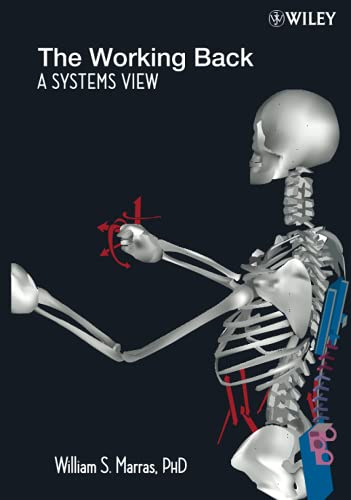
A systems approach to understanding and minimizing the causes of low back pain in the workplace
Low back pain affects 80% of the population at some point during their lifetime; it is responsiblefor over 40% of the compensation costs for work-related injuries. This book provides an understanding of the mechanisms influencing low back pain in the workplace and indicates how low back pain might be prevented, saving employers extraordinary amounts in medical costs and protecting workers from the most common on-the-job injury. With a unique, multidisciplinary perspective that shows how various influences or risk factors can be considered collectively, The Working Back: A Systems View:
Explains basic concepts in anatomy and physiology that are essential to understanding and preventing low back pain
Provides a systems perspective on the occupational causes of back pain, not only addressing factors such as spine loading, but also considering the potential impact of psychosocial and organizational interactions, genetics, and physiology
Discusses implementing preventive engineering and administrative controls and integrating risk interventions into the workplace
Offers an expert analysis of current medical research on low back pain in one comprehensive, accessible reference
This book gives readers the knowledge to assess a work environment and prescribe effective interventions. It is a hands-on reference for ergonomists, manufacturing engineers, process engineers, industrial engineers and managers, safety engineers, nurses, therapists, chiropractors, physicians, and workers with back pain. It is also an excellent resource for graduate or undergraduate students of kinesiology, physiology, ergonomics, physical therapy, nursing, industrial design, engineering, and general medicine.
Die Inhaltsangabe kann sich auf eine andere Ausgabe dieses Titels beziehen.
Über die Autorin bzw. den Autor
William S. Marras PhD, is a Professor in the College of Engineering and the College of Medicine at The Ohio State University, a certified professional ergonomist, and a fellow of the American Institute of Medical and Biological Engineers, the Human Factors and Ergonomics Society, the International Ergonomics Society, and the Ergonomics Society. He holds two patents for devices for monitoring motion of the spine. He is an ergonomic consultant for the U.S. Department of Labor, Ford Motor Company, RCA, Honda, and other corporations and associations. He has had over 180 articles published in various medical and ergonomic journals and has coauthored several books on occupational ergonomics. He is currently the chair of the Human Factors Committee within the National Academy of Sciences.
Von der hinteren Coverseite
A systems approach to understanding and minimizing the causes of low back pain in the workplace
Low back pain affects 80% of the population at some point during their lifetime; it is responsiblefor over 40% of the compensation costs for work-related injuries. This book provides an understanding of the mechanisms influencing low back pain in the workplace and indicates how low back pain might be prevented, saving employers extraordinary amounts in medical costs and protecting workers from the most common on-the-job injury. With a unique, multidisciplinary perspective that shows how various influences or risk factors can be considered collectively, The Working Back: A Systems View:
Explains basic concepts in anatomy and physiology that are essential to understanding and preventing low back pain
Provides a systems perspective on the occupational causes of back pain, not only addressing factors such as spine loading, but also considering the potential impact of psychosocial and organizational interactions, genetics, and physiology
Discusses implementing preventive engineering and administrative controls and integrating risk interventions into the workplace
Offers an expert analysis of current medical research on low back pain in one comprehensive, accessible reference
This book gives readers the knowledge to assess a work environment and prescribe effective interventions. It is a hands-on reference for ergonomists, manufacturing engineers, process engineers, industrial engineers and managers, safety engineers, nurses, therapists, chiropractors, physicians, and workers with back pain. It is also an excellent resource for graduate or undergraduate students of kinesiology, physiology, ergonomics, physical therapy, nursing, industrial design, engineering, and general medicine.
Aus dem Klappentext
A systems approach to understanding and minimizing the causes of low back pain in the workplace
Low back pain affects 80% of the population at some point during their lifetime; it is responsiblefor over 40% of the compensation costs for work-related injuries. This book provides an understanding of the mechanisms influencing low back pain in the workplace and indicates how low back pain might be prevented, saving employers extraordinary amounts in medical costs and protecting workers from the most common on-the-job injury. With a unique, multidisciplinary perspective that shows how various influences or risk factors can be considered collectively, The Working Back: A Systems View:
Explains basic concepts in anatomy and physiology that are essential to understanding and preventing low back pain
Provides a systems perspective on the occupational causes of back pain, not only addressing factors such as spine loading, but also considering the potential impact of psychosocial and organizational interactions, genetics, and physiology
Discusses implementing preventive engineering and administrative controls and integrating risk interventions into the workplace
Offers an expert analysis of current medical research on low back pain in one comprehensive, accessible reference
This book gives readers the knowledge to assess a work environment and prescribe effective interventions. It is a hands-on reference for ergonomists, manufacturing engineers, process engineers, industrial engineers and managers, safety engineers, nurses, therapists, chiropractors, physicians, and workers with back pain. It is also an excellent resource for graduate or undergraduate students of kinesiology, physiology, ergonomics, physical therapy, nursing, industrial design, engineering, and general medicine.
„Über diesen Titel“ kann sich auf eine andere Ausgabe dieses Titels beziehen.
Suchergebnisse für The Working Back: A Systems View

Beispielbild für diese ISBN
The Working Back
Anbieter: PBShop.store UK, Fairford, GLOS, Vereinigtes Königreich
Verkäuferbewertung 5 von 5 Sternen

HRD. Zustand: New. New Book. Shipped from UK. Established seller since 2000. Artikel-Nr. FW-9780470134054
Neu kaufen
EUR 118,82
EUR 6,91 Versand
Versand von Vereinigtes Königreich nach USA
Versand von Vereinigtes Königreich nach USA
Anzahl: 15 verfügbar
Beispielbild für diese ISBN
The Working Back: A Systems View
Anbieter: Phatpocket Limited, Waltham Abbey, HERTS, Vereinigtes Königreich
Verkäuferbewertung 5 von 5 Sternen
Zustand: Good. Your purchase helps support Sri Lankan Children's Charity 'The Rainbow Centre'. Ex-library, so some stamps and wear, but in good overall condition. Our donations to The Rainbow Centre have helped provide an education and a safe haven to hundreds of children who live in appalling conditions. Artikel-Nr. Z1-L-023-02528
Gebraucht kaufen
EUR 113,43
EUR 12,52 Versand
Versand von Vereinigtes Königreich nach USA
Versand von Vereinigtes Königreich nach USA
Anzahl: 1 verfügbar
Beispielbild für diese ISBN
The Working Back
Anbieter: Majestic Books, Hounslow, Vereinigtes Königreich
Verkäuferbewertung 4 von 5 Sternen

Zustand: New. pp. ix + 309 Illus. Artikel-Nr. 7523992
Neu kaufen
EUR 157,80
EUR 7,65 Versand
Versand von Vereinigtes Königreich nach USA
Versand von Vereinigtes Königreich nach USA
Anzahl: 3 verfügbar
Beispielbild für diese ISBN
The Working Back: A Systems View
Anbieter: Ria Christie Collections, Uxbridge, Vereinigtes Königreich
Verkäuferbewertung 5 von 5 Sternen
Zustand: New. In English. Artikel-Nr. ria9780470134054_new
Neu kaufen
EUR 156,61
EUR 13,28 Versand
Versand von Vereinigtes Königreich nach USA
Versand von Vereinigtes Königreich nach USA
Anzahl: Mehr als 20 verfügbar
Beispielbild für diese ISBN
The Working Back A Systems View
Anbieter: Revaluation Books, Exeter, Vereinigtes Königreich
Verkäuferbewertung 5 von 5 Sternen
Hardcover. Zustand: Brand New. 1st edition. 309 pages. 10.25x7.00x0.75 inches. In Stock. Artikel-Nr. __0470134054
Neu kaufen
EUR 167,34
EUR 14,71 Versand
Versand von Vereinigtes Königreich nach USA
Versand von Vereinigtes Königreich nach USA
Anzahl: 2 verfügbar
Beispielbild für diese ISBN
The Working Back
Anbieter: Kennys Bookstore, Olney, MD, USA
Verkäuferbewertung 5 von 5 Sternen
Zustand: New. Delivers comprehensive information on the causes of back disorders in the workplace and most importantly, how to prevent them. Provides a systems perspective to the causes of occupational back pain not only addressing factors such as spine loading, but also addressing psychosocial aspect that contribute to back injuries. Num Pages: 310 pages, Illustrations. BIC Classification: KNXC. Category: (P) Professional & Vocational. Dimension: 249 x 183 x 19. Weight in Grams: 698. . 2008. 1st Edition. Hardcover. . . . . Books ship from the US and Ireland. Artikel-Nr. V9780470134054
Neu kaufen
EUR 201,31
EUR 9,33 Versand
Versand innerhalb von USA
Versand innerhalb von USA
Anzahl: Mehr als 20 verfügbar