
Verwandte Artikel zu Kinds Of Minds: Toward An Understanding Of Consciousness...
Kinds Of Minds: Toward An Understanding Of Consciousness (Science Masters) - Softcover
Buch 4 von 14: Science Masters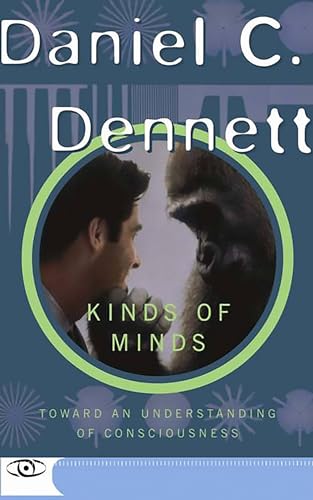
Inhaltsangabe
Combining ideas from philosophy, artificial intelligence, and neurobiology, Daniel Dennett leads the reader on a fascinating journey of inquiry, exploring such intriguing possibilities as: Can any of us really know what is going on in someone else's mind? What distinguishes the human mind from the minds of animals, especially those capable of complex behavior? If such animals, for instance, were magically given the power of language, would their communities evolve an intelligence as subtly discriminating as ours? Will robots, once they have been endowed with sensory systems like those that provide us with experience, ever exhibit the particular traits long thought to distinguish the human mind, including the ability to think about thinking? Dennett addresses these questions from an evolutionary perspective. Beginning with the macromolecules of DNA and RNA, the author shows how, step-by-step, animal life moved from the simple ability to respond to frequently recurring environmental conditions to much more powerful ways of beating the odds, ways of using patterns of past experience to predict the future in never-before-encountered situations. Whether talking about robots whose video-camera "eyes" give us the powerful illusion that "there is somebody in there" or asking us to consider whether spiders are just tiny robots mindlessly spinning their webs of elegant design, Dennett is a master at finding and posing questions sure to stimulate and even disturb.
Die Inhaltsangabe kann sich auf eine andere Ausgabe dieses Titels beziehen.
Über die Autorin bzw. den Autor
Daniel C. Dennett is Distinguished Arts and Sciences Professor, Professor of Philosophy, and Director of the Center for Cognitive Studies at Tufts University.
„Über diesen Titel“ kann sich auf eine andere Ausgabe dieses Titels beziehen.
Suchergebnisse für Kinds Of Minds: Toward An Understanding Of Consciousness...

Beispielbild für diese ISBN
Kinds Of Minds: Toward An Understanding Of Consciousness
Anbieter: World of Books (was SecondSale), Montgomery, IL, USA
Verkäuferbewertung 5 von 5 Sternen

Paperback. Zustand: Very Good. Blending ideas from philosophy, artificial intelligence, and neurobiology, this discussion explores such questions as: Can we really know what is going on in someone else's mind? Could a robot be conscious? If a being has the ability to think, does it therefore have moral significance? Artikel-Nr. 00108470027
Gebraucht kaufen
EUR 3,77
Versand gratis
Versand innerhalb von USA
Versand innerhalb von USA
Anzahl: 1 verfügbar
Beispielbild für diese ISBN
Kinds Of Minds: Toward An Understanding Of Consciousness
Anbieter: World of Books (was SecondSale), Montgomery, IL, USA
Verkäuferbewertung 5 von 5 Sternen
Paperback. Zustand: Good. Blending ideas from philosophy, artificial intelligence, and neurobiology, this discussion explores such questions as: Can we really know what is going on in someone else's mind? Could a robot be conscious? If a being has the ability to think, does it therefore have moral significance? Artikel-Nr. 00104270514
Gebraucht kaufen
EUR 3,77
Versand gratis
Versand innerhalb von USA
Versand innerhalb von USA
Anzahl: 3 verfügbar
Foto des Verkäufers
Kinds Of Minds: Toward An Understanding Of Consciousness (Science Masters)
Anbieter: Dream Books Co., Denver, CO, USA
Verkäuferbewertung 5 von 5 Sternen
Zustand: acceptable. This copy has clearly been enjoyedâ"expect noticeable shelf wear and some minor creases to the cover. Binding is strong, and all pages are legible. May contain previous library markings or stamps. Artikel-Nr. DBV.0465073514.A
Gebraucht kaufen
EUR 3,77
Versand gratis
Versand innerhalb von USA
Versand innerhalb von USA
Anzahl: 2 verfügbar
Beispielbild für diese ISBN
Kinds of Minds: Toward an Understanding of Consciousness
Anbieter: ThriftBooks-Dallas, Dallas, TX, USA
Verkäuferbewertung 5 von 5 Sternen
Paperback. Zustand: Very Good. No Jacket. Former library book; May have limited writing in cover pages. Pages are unmarked. ~ ThriftBooks: Read More, Spend Less. Artikel-Nr. G0465073514I4N10
Gebraucht kaufen
EUR 6,02
Versand gratis
Versand innerhalb von USA
Versand innerhalb von USA
Anzahl: 1 verfügbar
Beispielbild für diese ISBN
Kinds of Minds : Toward an Understanding of Consciousness
Anbieter: Better World Books, Mishawaka, IN, USA
Verkäuferbewertung 5 von 5 Sternen
Zustand: Good. Pages intact with minimal writing/highlighting. The binding may be loose and creased. Dust jackets/supplements are not included. Stock photo provided. Product includes identifying sticker. Better World Books: Buy Books. Do Good. Artikel-Nr. 4855947-6
Gebraucht kaufen
EUR 6,57
Versand gratis
Versand innerhalb von USA
Versand innerhalb von USA
Anzahl: 3 verfügbar
Beispielbild für diese ISBN
Kinds Of Minds: Toward An Understanding Of Consciousness (Science Masters)
Anbieter: WorldofBooks, Goring-By-Sea, WS, Vereinigtes Königreich
Verkäuferbewertung 5 von 5 Sternen
Paperback. Zustand: Very Good. The book has been read, but is in excellent condition. Pages are intact and not marred by notes or highlighting. The spine remains undamaged. Artikel-Nr. GOR005662648
Gebraucht kaufen
EUR 3,45
EUR 6,71 Versand
Versand von Vereinigtes Königreich nach USA
Versand von Vereinigtes Königreich nach USA
Anzahl: 1 verfügbar
Beispielbild für diese ISBN
Kinds Of Minds: Toward An Understanding Of Consciousness (Science Masters)
Anbieter: Phatpocket Limited, Waltham Abbey, HERTS, Vereinigtes Königreich
Verkäuferbewertung 5 von 5 Sternen
Zustand: Good. Your purchase helps support Sri Lankan Children's Charity 'The Rainbow Centre'. Ex-library, so some stamps and wear, but in good overall condition. Our donations to The Rainbow Centre have helped provide an education and a safe haven to hundreds of children who live in appalling conditions. Artikel-Nr. Z1-H-021-01872
Gebraucht kaufen
EUR 1,75
EUR 12,75 Versand
Versand von Vereinigtes Königreich nach USA
Versand von Vereinigtes Königreich nach USA
Anzahl: 1 verfügbar
Beispielbild für diese ISBN
KINDS OF MINDS
Anbieter: Majestic Books, Hounslow, Vereinigtes Königreich
Verkäuferbewertung 4 von 5 Sternen

Zustand: New. Artikel-Nr. 8151855
Neu kaufen
EUR 15,83
EUR 7,79 Versand
Versand von Vereinigtes Königreich nach USA
Versand von Vereinigtes Königreich nach USA
Anzahl: 1 verfügbar
Foto des Verkäufers
Kinds Of Minds
Anbieter: Rarewaves USA, HEBRON, KY, USA
Verkäuferbewertung 5 von 5 Sternen
Paperback. Zustand: New. Combining ideas from philosophy, artificial intelligence, and neurobiology, Daniel Dennett leads the reader on a fascinating journey of inquiry, exploring such intriguing possibilities as: Can any of us really know what is going on in someone else's mind? What distinguishes the human mind from the minds of animals, especially those capable of complex behaviour? If such animals, for instance, were magically given the power of language, would their communities evolve an intelligence as subtly discriminating as ours? Will robots, once they have been endowed with sensory systems like those that provide us with experience, ever exhibit the particular traits long thought to distinguish the human mind, including the ability to think about thinking? Dennett addresses these questions from an evolutionary perspective. Beginning with the macromolecules of DNA and RNA, the author shows how, step-by-step, animal life moved from the simple ability to respond to frequently recurring environmental conditions to much more powerful ways of beating the odds, ways of using patterns of past experience to predict the future in never-before-encountered situations. Whether talking about robots whose video-camera "eyes" give us the powerful illusion that "there is somebody in there" or asking us to consider whether spiders are just tiny robots mindlessly spinning their webs of elegant design, Dennett is a master at finding and posing questions sure to stimulate and even disturb. Artikel-Nr. LU-9780465073511
Neu kaufen
EUR 25,76
Versand gratis
Versand innerhalb von USA
Versand innerhalb von USA
Anzahl: Mehr als 20 verfügbar
Foto des Verkäufers
Kinds Of Minds
Anbieter: Rarewaves.com USA, London, LONDO, Vereinigtes Königreich
Verkäuferbewertung 5 von 5 Sternen
Paperback. Zustand: New. Combining ideas from philosophy, artificial intelligence, and neurobiology, Daniel Dennett leads the reader on a fascinating journey of inquiry, exploring such intriguing possibilities as: Can any of us really know what is going on in someone else's mind? What distinguishes the human mind from the minds of animals, especially those capable of complex behaviour? If such animals, for instance, were magically given the power of language, would their communities evolve an intelligence as subtly discriminating as ours? Will robots, once they have been endowed with sensory systems like those that provide us with experience, ever exhibit the particular traits long thought to distinguish the human mind, including the ability to think about thinking? Dennett addresses these questions from an evolutionary perspective. Beginning with the macromolecules of DNA and RNA, the author shows how, step-by-step, animal life moved from the simple ability to respond to frequently recurring environmental conditions to much more powerful ways of beating the odds, ways of using patterns of past experience to predict the future in never-before-encountered situations. Whether talking about robots whose video-camera "eyes" give us the powerful illusion that "there is somebody in there" or asking us to consider whether spiders are just tiny robots mindlessly spinning their webs of elegant design, Dennett is a master at finding and posing questions sure to stimulate and even disturb. Artikel-Nr. LU-9780465073511
Neu kaufen
EUR 30,02
Versand gratis
Versand von Vereinigtes Königreich nach USA
Versand von Vereinigtes Königreich nach USA
Anzahl: Mehr als 20 verfügbar