
Verwandte Artikel zu Falling Angels (OM)
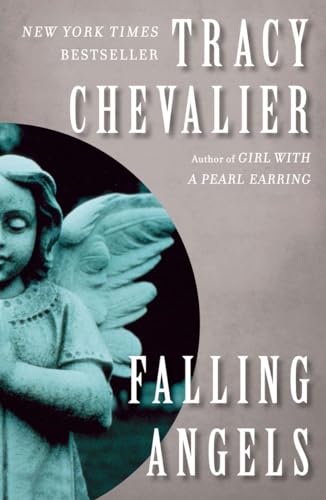
Inhaltsangabe
A New York Times bestseller
From the author of the international bestseller Girl With A Pearl Earring and At the Edge of the Orchard, Tracy Chevalier once again paints a distant age with a rich and provocative palette of characters.
Falling Angels follows the fortunes of two families in the emerging years of the twentieth century in England, while the Queen's death reverberates through a changing nation. Told through a variety of shifting perspectives—wives and husbands, friends and lovers, masters and their servants, and a gravedigger's son—Falling Angels is graced with the luminous imagery that distinguished Girl With a Pearl Earring, Falling Angels is another dazzling tour de force from this "master of voices" (The New York Times Book Review).
Die Inhaltsangabe kann sich auf eine andere Ausgabe dieses Titels beziehen.
Über die Autorinnen und Autoren
"I was born and grew up in Washington, DC. After getting a BA in English from Oberlin College (Ohio), I moved to London, England in 1984. I intended to stay 6 months; I’m still here.
"As a kid I’d often said I wanted to be a writer because I loved books and wanted to be associated with them. I wrote the odd story in high school, but it was only in my twenties that I started writing ‘real’ stories, at night and on weekends. Sometimes I wrote a story in a couple evenings; other times it took me a whole year to complete one.
"Once I took a night class in creative writing, and a story I’d written for it was published in a London-based magazine called Fiction. I was thrilled, even though the magazine folded 4 months later.
I worked as a reference book editor for several years until 1993 when I left my job and did a year-long MA in creative writing at the University of East Anglia in Norwich (England). My tutors were the English novelists Malcolm Bradbury and Rose Tremain. For the first time in my life I was expected to write every day, and I found I liked it. I also finally had an idea I considered ‘big’ enough to fill a novel. I began The Virgin Blue during that year, and continued it once the course was over, juggling writing with freelance editing.
"An agent is essential to getting published. I found my agent Jonny Geller through dumb luck and good timing. A friend from the MA course had just signed on with him and I sent my manuscript of The Virgin Blue mentioning my friend’s name. Jonny was just starting as an agent and needed me as much as I needed him. Since then he’s become a highly respected agent in the UK and I’ve gone along for the ride."
Tracy Chevalier is the New York Times bestselling author of six previous novels, including Girl with a Pearl Earring, which has been translated into thirty-nine languages and made into an Oscar-nominated film. Her latest novel is The Last Runaway. Born and raised in Washington, D.C., she lives in London with her husband and son.
"I was born and grew up in Washington, DC. After getting a BA in English from Oberlin College (Ohio), I moved to London, England in 1984. I intended to stay 6 months; I’m still here.
"As a kid I’d often said I wanted to be a writer because I loved books and wanted to be associated with them. I wrote the odd story in high school, but it was only in my twenties that I started writing ‘real’ stories, at night and on weekends. Sometimes I wrote a story in a couple evenings; other times it took me a whole year to complete one.
"Once I took a night class in creative writing, and a story I’d written for it was published in a London-based magazine called Fiction. I was thrilled, even though the magazine folded 4 months later.
I worked as a reference book editor for several years until 1993 when I left my job and did a year-long MA in creative writing at the University of East Anglia in Norwich (England). My tutors were the English novelists Malcolm Bradbury and Rose Tremain. For the first time in my life I was expected to write every day, and I found I liked it. I also finally had an idea I considered ‘big’ enough to fill a novel. I began The Virgin Blue during that year, and continued it once the course was over, juggling writing with freelance editing.
"An agent is essential to getting published. I found my agent Jonny Geller through dumb luck and good timing. A friend from the MA course had just signed on with him and I sent my manuscript of The Virgin Blue mentioning my friend’s name. Jonny was just starting as an agent and needed me as much as I needed him. Since then he’s become a highly respected agent in the UK and I’ve gone along for the ride."
Tracy Chevalier is the New York Times bestselling author of six previous novels, including Girl with a Pearl Earring, which has been translated into thirty-nine languages and made into an Oscar-nominated film. Her latest novel is The Last Runaway. Born and raised in Washington, D.C., she lives in London with her husband and son.
Auszug. © Genehmigter Nachdruck. Alle Rechte vorbehalten.
Chapter One
Kitty Coleman
I woke this morning with a stranger in my bed. The head of blond hair beside me was decidedly not my husband's. I did not know whether to be shocked or amused.
Well, I thought, here's a novel way to begin the new century.
Then I remembered the evening before and felt rather sick. I wondered where Richard was in this huge house and how we were meant to swap back. Everyone else here—the man beside me included—was far more experienced in the mechanics of these matters than I. Than we. Much as Richard bluffed last night, he was just as much in the dark as me, though he was more keen. Much more keen. It made me wonder.
I nudged the sleeper with my elbow, gently at first and then harder until at last he woke with a snort.
"Out you go," I said. And he did, without a murmur. Thankfully he didn't try to kiss me. How I stood that beard last night I'll never remember—the claret helped, I suppose. My cheeks are red with scratches.
When Richard came in a few minutes later, clutching his clothes in a bundle, I could barely look at him. I was embarrassed, and angry too—angry that I should feel embarrassed and yet not expect him to feel so as well. It was all the more infuriating that he simply kissed me, said, "Hello, darling," and began to dress, I could smell her perfume on his neck.
Yet I could say nothing. As I myself have so often said, I am open minded—I pride myself on it. Those words bite now.
I lay watching Richard dress, and found myself thinking of my brother. Harry always used to tease me for thinking too much—though he refused to concede that he was at all responsible for encouraging me. But all those evenings spent reviewing with me what his tutors had taught him in the morning—he said it was to help him remember it—what did that do but teach me to think and speak my mind? Perhaps he regretted it later. I shall never know now. I am only just out of mourning for him, but some days it feels as if I am still clutching that telegram.
Harry would be mortified to see where his teaching has led. Not that one has to be clever for this sort of thing—most of them downstairs are stupid as buckets of coal, my blond beard among them. Not one could I have a proper conversation with—I had to resort to the wine.
Frankly I'm relieved not to be of this set—to paddle in its shallows occasionally is quite enough for me. Richard I suspect feels differently, but he has married the wrong wife if he wanted that sort of life. Or perhaps it is I who chose badly—though I would never have thought so once, back when we were mad for each other.
I think Richard has made me do this to show me he is not as conventional as I feared. But it has had the opposite effect on me. He has become everything I had not thought he would be when we married. He has become ordinary.
I feel so flat this morning. Daddy and Harry would have laughed at me, but I secretly hoped that the change in the century would bring a change in us all; that England would miraculously slough off her shabby black coat to reveal something glittering and new. It is only eleven hours into the twentieth century, yet I know very well that nothing has changed but a number.
Enough. They are to ride today, which is not for me—I shall escape with my coffee to the library. It will undoubtedly be empty.
Richard Coleman
I thought being with another woman would bring Kitty back, that jealousy would open her bedroom door to me again. Yet two weeks later she has not let me in any more than before.
I do not like to think that I am a desperate man, but I do not understand why my wife is being so difficult. I have provided a decent life for her and yet she is still unhappy, though she cannot—or will not—say why.
It is enough to drive any man to change wives, if only for a night.
Maude Coleman
When Daddy saw the angel on the grave next to ours he cried, "What the devil?"
Mummy just laughed.
I looked and looked until my neck ached. It hung above us, one foot forward, a hand pointing toward heaven. It was wearing a long robe with a square neck, and it had loose hair that flowed onto its wings. It was looking down toward me, but no matter how hard I stared it did not seem to see me.
Mummy and Daddy began to argue. Daddy does not like the angel. I don't know if Mummy likes it or not—she didn't say. I think the urn Daddy has had put on our own grave bothers her more.
I wanted to sit down but didn't dare. It was very cold, too cold to sit on stone, and besides, the Queen is dead, which I think means no one can sit down, or play, or do anything comfortable.
I heard the bells ringing last night when I was in bed, and when Nanny came in this morning she told me the Queen died yesterday evening. I ate my porridge very slowly, to see if it tasted different from yesterday's, now that the Queen is gone. But it tasted just the same—too salty. Mrs. Baker always makes it that way.
Everyone we saw on our way to the cemetery was dressed in black. I wore a gray wool dress and a white pinafore, which I might have worn anyway but which Nanny said was fine for a girl to wear when someone died. Girls don't have to wear black. Nanny helped me to dress. She let me wear my black-and-white plaid coat and matching hat, but she wasn't sure about my rabbit's-fur muff, and I had to ask Mummy, who said it didn't matter what I wore. Mummy wore a blue silk dress and wrap, which did not please Daddy.
While they were arguing about the angel I buried my face in my muff. The fur is very soft. Then I heard a noise, like stone being tapped, and when I raised my head I saw a pair of blue eyes looking at me from over the headstone next to ours. I stared at them, and then the face of a boy appeared from behind the stone. His hair was full of mud, and his cheeks were dirty with it too. He winked at me, then disappeared behind the headstone.
I looked at Mummy and Daddy, who had walked a little way up the path to view the angel from another place. They had not seen the boy. I walked backward between the graves, my eyes on them. When I was sure they were not looking I ducked behind the stone.
The boy was leaning against it, sitting on his heels.
"Why do you have mud in your hair?" I asked.
"Been down a grave," he said.
I looked at him closely. There was mud on him everywhere—on his jacket, on his knees, on his shoes. There were even bits of it in his eyelashes.
"Can I touch the fur?" he asked.
"It's a muff," I said. "My muff."
"Can I touch it?"
"No." Then I felt bad saying that, so I held out the muff.
The boy spit on his fingers and wiped them on his jacket, then reached out and stroked the fur.
"What were you doing down a grave?" I asked.
"Helping our pa."
"What does your father do?"
"He digs the graves, of course. I helps him."
Then we heard a sound, like a kitten mewing. We peeked over...
„Über diesen Titel“ kann sich auf eine andere Ausgabe dieses Titels beziehen.
Suchergebnisse für Falling Angels (OM)

Beispielbild für diese ISBN
Falling Angels: A Novel
Verlag:
Penguin Publishing Group, 2002
ISBN 10: 0452283205
ISBN 13: 9780452283206
Gebraucht
Softcover
Anbieter: World of Books (was SecondSale), Montgomery, IL, USA
Verkäuferbewertung 5 von 5 Sternen

Zustand: Acceptable. Item in acceptable condition! Textbooks may not include supplemental items i.e. CDs, access codes etc. Artikel-Nr. 00062471797
Gebraucht kaufen
EUR 3,48
Versand gratis
Versand innerhalb von USA
Versand innerhalb von USA
Anzahl: 4 verfügbar
Beispielbild für diese ISBN
Falling Angels: A Novel
Verlag:
Penguin Publishing Group, 2002
ISBN 10: 0452283205
ISBN 13: 9780452283206
Gebraucht
Softcover
Anbieter: World of Books (was SecondSale), Montgomery, IL, USA
Verkäuferbewertung 5 von 5 Sternen
Zustand: Good. Item in good condition. Textbooks may not include supplemental items i.e. CDs, access codes etc. Artikel-Nr. 00084095699
Gebraucht kaufen
EUR 3,48
Versand gratis
Versand innerhalb von USA
Versand innerhalb von USA
Anzahl: Mehr als 20 verfügbar
Beispielbild für diese ISBN
Falling Angels: A Novel
Verlag:
Penguin Publishing Group, 2002
ISBN 10: 0452283205
ISBN 13: 9780452283206
Gebraucht
Softcover
Anbieter: World of Books (was SecondSale), Montgomery, IL, USA
Verkäuferbewertung 5 von 5 Sternen
Zustand: Very Good. Item in very good condition! Textbooks may not include supplemental items i.e. CDs, access codes etc. Artikel-Nr. 00084848553
Gebraucht kaufen
EUR 3,48
Versand gratis
Versand innerhalb von USA
Versand innerhalb von USA
Anzahl: 17 verfügbar
Beispielbild für diese ISBN
Falling Angels: A Novel
Verlag:
Penguin Publishing Group (edition ), 2002
ISBN 10: 0452283205
ISBN 13: 9780452283206
Gebraucht
Paperback
Anbieter: BooksRun, Philadelphia, PA, USA
Verkäuferbewertung 5 von 5 Sternen
Paperback. Zustand: Very Good. It's a well-cared-for item that has seen limited use. The item may show minor signs of wear. All the text is legible, with all pages included. It may have slight markings and/or highlighting. Artikel-Nr. 0452283205-11-18
Gebraucht kaufen
EUR 4,75
Versand gratis
Versand innerhalb von USA
Versand innerhalb von USA
Anzahl: 1 verfügbar
Beispielbild für diese ISBN
Falling Angels: A Novel
Verlag:
Penguin Publishing Group (edition ), 2002
ISBN 10: 0452283205
ISBN 13: 9780452283206
Gebraucht
Paperback
Anbieter: BooksRun, Philadelphia, PA, USA
Verkäuferbewertung 5 von 5 Sternen
Paperback. Zustand: Fair. The item might be beaten up but readable. May contain markings or highlighting, as well as stains, bent corners, or any other major defect, but the text is not obscured in any way. Artikel-Nr. 0452283205-7-18-13
Gebraucht kaufen
EUR 4,81
Versand gratis
Versand innerhalb von USA
Versand innerhalb von USA
Anzahl: 1 verfügbar
Beispielbild für diese ISBN
Falling Angels
Verlag:
Penguin Publishing Group, 2002
ISBN 10: 0452283205
ISBN 13: 9780452283206
Gebraucht
Paperback
Anbieter: ThriftBooks-Atlanta, AUSTELL, GA, USA
Verkäuferbewertung 5 von 5 Sternen
Paperback. Zustand: As New. No Jacket. Pages are clean and are not marred by notes or folds of any kind. ~ ThriftBooks: Read More, Spend Less. Artikel-Nr. G0452283205I2N00
Gebraucht kaufen
EUR 5,82
Versand gratis
Versand innerhalb von USA
Versand innerhalb von USA
Anzahl: 1 verfügbar
Beispielbild für diese ISBN
Falling Angels: A Novel
Verlag:
Penguin Publishing Group, 2002
ISBN 10: 0452283205
ISBN 13: 9780452283206
Gebraucht
Paperback
Anbieter: Redux Books, Grand Rapids, MI, USA
Verkäuferbewertung 5 von 5 Sternen
Paperback. Zustand: Good. Paperback. Pages are clean and unmarked. Covers show light edge wear.; 100% Satisfaction Guaranteed! Ships same or next business day! Artikel-Nr. 132512030008
Gebraucht kaufen
EUR 5,96
Versand gratis
Versand innerhalb von USA
Versand innerhalb von USA
Anzahl: 1 verfügbar
Beispielbild für diese ISBN
Falling Angels: A Novel
Verlag:
Penguin Publishing Group, 2002
ISBN 10: 0452283205
ISBN 13: 9780452283206
Gebraucht
Softcover
Anbieter: Wonder Book, Frederick, MD, USA
Verkäuferbewertung 5 von 5 Sternen
Zustand: Good. Good condition. With remainder mark. A copy that has been read but remains intact. May contain markings such as bookplates, stamps, limited notes and highlighting, or a few light stains. Artikel-Nr. D06F-02046
Gebraucht kaufen
EUR 6,27
Versand gratis
Versand innerhalb von USA
Versand innerhalb von USA
Anzahl: 1 verfügbar
Beispielbild für diese ISBN
Falling Angels: A Novel
Verlag:
Penguin Publishing Group, 2002
ISBN 10: 0452283205
ISBN 13: 9780452283206
Gebraucht
Softcover
Anbieter: Wonder Book, Frederick, MD, USA
Verkäuferbewertung 5 von 5 Sternen
Zustand: Very Good. Very Good condition. A copy that may have a few cosmetic defects. May also contain light spine creasing or a few markings such as an owner's name, short gifter's inscription or light stamp. Artikel-Nr. P11I-01112
Gebraucht kaufen
EUR 6,27
Versand gratis
Versand innerhalb von USA
Versand innerhalb von USA
Anzahl: 7 verfügbar
Beispielbild für diese ISBN
Falling Angels : A Novel
Verlag:
Penguin Publishing Group, 2002
ISBN 10: 0452283205
ISBN 13: 9780452283206
Gebraucht
Softcover
Anbieter: Better World Books: West, Reno, NV, USA
Verkäuferbewertung 5 von 5 Sternen
Zustand: Good. Reprint. Pages intact with minimal writing/highlighting. The binding may be loose and creased. Dust jackets/supplements are not included. Stock photo provided. Product includes identifying sticker. Better World Books: Buy Books. Do Good. Artikel-Nr. GRP73174059
Gebraucht kaufen
EUR 6,41
Versand gratis
Versand innerhalb von USA
Versand innerhalb von USA
Anzahl: 1 verfügbar