
Verwandte Artikel zu Atlas Shrugged
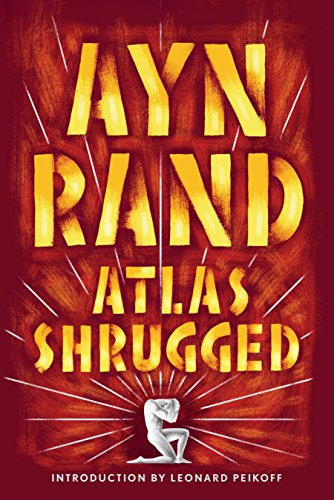
Inhaltsangabe
Peopled by larger-than-life heroes and villains, charged with towering questions of good and evil, Atlas Shrugged is Ayn Rand’s magnum opus: a philosophical revolution told in the form of an action thriller—nominated as one of America’s best-loved novels by PBS’s The Great American Read.
Who is John Galt? When he says that he will stop the motor of the world, is he a destroyer or a liberator? Why does he have to fight his battles not against his enemies but against those who need him most? Why does he fight his hardest battle against the woman he loves?
You will know the answer to these questions when you discover the reason behind the baffling events that play havoc with the lives of the amazing men and women in this book. You will discover why a productive genius becomes a worthless playboy...why a great steel industrialist is working for his own destruction...why a composer gives up his career on the night of his triumph...why a beautiful woman who runs a transcontinental railroad falls in love with the man she has sworn to kill.
Atlas Shrugged, a modern classic and Rand’s most extensive statement of Objectivism—her groundbreaking philosophy—offers the reader the spectacle of human greatness, depicted with all the poetry and power of one of the twentieth century’s leading artists.
Die Inhaltsangabe kann sich auf eine andere Ausgabe dieses Titels beziehen.
Über die Autorin bzw. den Autor
Born February 2, 1905, Ayn Rand published her first novel, We the Living, in 1936. Anthem followed in 1938. It was with the publication of The Fountainhead (1943) and Atlas Shrugged (1957) that she achieved her spectacular success. Rand’s unique philosophy, Objectivism, has gained a worldwide audience. The fundamentals of her philosophy are put forth in three nonfiction books, Introduction to Objectivist Epistemology, The Virtues of Selfishness, and Capitalism: The Unknown Ideal. They are all available in Signet editions, as is the magnificent statement of her artistic credo, The Romantic Manifesto.
Auszug. © Genehmigter Nachdruck. Alle Rechte vorbehalten.
INTRODUCTION
Ayn Rand held that art is a “re-creation of reality according to an artist’s metaphysical value judgments.” By its nature, therefore, a novel (like a statue or a symphony) does not require or tolerate an explanatory preface; it is a self-contained universe, aloof from commentary, beckoning the reader to enter, perceive, respond.
Ayn Rand would never have approved of a didactic (or laudatory) introduction to her book, and I have no intention of flouting her wishes. Instead, I am going to give her the floor. I am going to let you in on some of the thinking she did as she was preparing to write Atlas Shrugged.
Before starting a novel, Ayn Rand wrote voluminously in her journals about its theme, plot, and characters. She wrote not for any audience, but strictly for herself—that is, for the clarity of her own understanding. The journals dealing with Atlas Shrugged are powerful examples of her mind in action, confident even when groping, purposeful even when stymied, luminously eloquent even though wholly unedited. These journals are also a fascinating record of the step-by-step birth of an immortal work of art.
In due course, all of Ayn Rand’s writings will be published. For this 35th anniversary edition of Atlas Shrugged,however, I have selected, as a kind of advance bonus for her fans, four typical journal entries. Let me warn new readers that the passages reveal the plot and will spoil the book for anyone who reads them before knowing the story.
As I recall, “Atlas Shrugged” did not become the novel’s title until Miss Rand’s husband made the suggestion in 1956. The working title throughout the writing was “The Strike.”
The earliest of Miss Rand’s notes for “The Strike” are dated January 1, 1945, about a year after the publication ofThe Fountainhead. Naturally enough, the subject on her mind was how to differentiate the present novel from its predecessor.
Theme. What happens to the world when the Prime Movers go on strike.
This means—a picture of the world with its motor cut off. Show: what, how, why. The specific steps and incidents—in terms of persons, their spirits, motives, psychology and actions—and, secondarily, proceeding from persons, in terms of history, society and the world.
The theme requires: to show who are the prime movers and why, how they function. Who are their enemies and why, what are the motives behind the hatred for and the enslavement of the prime movers; the nature of the obstacles placed in their way, and the reasons for it.
This last paragraph is contained entirely in The Fountainhead. Roark and Toohey are the complete statement of it. Therefore, this is not the direct theme of The Strike—but it is part of the theme and must be kept in mind, stated again (though briefly) to have the theme clear and complete.
First question to decide is on whom the emphasis must be placed—on the prime movers, the parasites or the world. The answer is: The world. The story must be primarily a picture of the whole.
In this sense, The Strike is to be much more a “social” novel than The Fountainhead. The Fountainhead was about “individualism and collectivism within man’s soul”; it showed the nature and function of the creator and the second-hander. The primary concern there was with Roark and Toohey—showing what they are. The rest of the characters were variations of the theme of the relation of the ego to others—mixtures of the two extremes, the two poles: Roark and Toohey. The primary concern of the story was the characters, the people as such—their natures. Their relations to each other—which is society, men in relation to men—were secondary, an unavoidable, direct consequence of Roark set against Toohey. But it was not the theme.
Now, it is this relation that must be the theme. Therefore, the personal becomes secondary. That is, the personal is necessary only to the extent needed to make the relationships clear. In The Fountainhead I showed that Roark moves the world—that the Keatings feed upon him and hate him for it, while the Tooheys are out consciously to destroy him. But the theme was Roark—not Roark’s relation to the world. Now it will be the relation.
In other words, I must show in what concrete, specific way the world is moved by the creators. Exactly how do the second-handers live on the creators. Both in spiritual matters—and (most particularly) in concrete, physical events. (Concentrate on the concrete, physical events—but don’t forget to keep in mind at all times how the physical proceeds from the spiritual.) . . .
However, for the purpose of this story, I do not start by showing how the second-handers live on the prime movers in actual, everyday reality—nor do I start by showing a normal world. (That comes in only in necessary retrospect, or flashback, or by implication in the events themselves.) I start with the fantastic premise of the prime movers going on strike. This is the actual heart and center of the novel. A distinction carefully to be observed here: I do not set out to glorify the prime mover (that was The Fountainhead). I set out to show how desperately the world needs prime movers, and how viciously it treats them. And I show it on a hypothetical case—what happens to the world without them.
In The Fountainhead I did not show how desperately the world needed Roark—except by implication. I did show how viciously the world treated him, and why. I showed mainly what he is. It was Roark’s story. This must be the world’s story—in relation to its prime movers. (Almost—the story of a body in relation to its heart—a body dying of anemia.)
I don’t show directly what the prime movers do—that’s shown only by implication. I show what happens when they don’t do it. (Through that, you see the picture of what they do, their place and their role.) (This is an important guide for the construction of the story.)
In order to work out the story, Ayn Rand had to understand fully why the prime movers allowed the second-handers to live on them—why the creators had not gone on strike throughout history—what errors even the best of them made that kept them in thrall to the worst. Part of the answer is dramatized in the character of Dagny Taggart, the railroad heiress who declares war on the strikers. Here is a note on her psychology, dated April 18, 1946:
Her error—and the cause of her refusal to join the strike—is over-optimism and over-confidence (particularly this last). Over-optimism—in that she thinks men are better than they are, she doesn’t really understand them and is generous about it.
Over-confidence—in that she thinks she can do more than an individual actually can. She thinks she can run a railroad (or the world) single-handed, she can make people do what she wants or needs, what is right, by the sheer force of her own talent; not by forcing them, of course, not by enslaving them and giving orders—but by the sheer over-abundance of her own energy; she will show them how, she can teach them and persuade them, she is so able that they’ll catch it from her. (This is still faith in their rationality, in the omnipotence of reason. The...
„Über diesen Titel“ kann sich auf eine andere Ausgabe dieses Titels beziehen.
Suchergebnisse für Atlas Shrugged

Beispielbild für diese ISBN
Atlas Shrugged
Anbieter: World of Books (was SecondSale), Montgomery, IL, USA
Verkäuferbewertung 5 von 5 Sternen

Zustand: Acceptable. Item in acceptable condition! Textbooks may not include supplemental items i.e. CDs, access codes etc. Artikel-Nr. 00094269536
Gebraucht kaufen
EUR 4,19
Versand gratis
Versand innerhalb von USA
Versand innerhalb von USA
Anzahl: Mehr als 20 verfügbar
Beispielbild für diese ISBN
Atlas Shrugged
Anbieter: World of Books (was SecondSale), Montgomery, IL, USA
Verkäuferbewertung 5 von 5 Sternen
Zustand: Good. Item in good condition. Textbooks may not include supplemental items i.e. CDs, access codes etc. Artikel-Nr. 00101661776
Gebraucht kaufen
EUR 4,19
Versand gratis
Versand innerhalb von USA
Versand innerhalb von USA
Anzahl: Mehr als 20 verfügbar
Beispielbild für diese ISBN
Atlas Shrugged
Anbieter: ThriftBooks-Dallas, Dallas, TX, USA
Verkäuferbewertung 5 von 5 Sternen
Paperback. Zustand: Good. No Jacket. Pages can have notes/highlighting. Spine may show signs of wear. ~ ThriftBooks: Read More, Spend Less. Artikel-Nr. G0452011876I3N00
Gebraucht kaufen
EUR 5,94
Versand gratis
Versand innerhalb von USA
Versand innerhalb von USA
Anzahl: 6 verfügbar
Beispielbild für diese ISBN
Atlas Shrugged
Anbieter: ThriftBooks-Phoenix, Phoenix, AZ, USA
Verkäuferbewertung 5 von 5 Sternen
Paperback. Zustand: Good. No Jacket. Former library book; Pages can have notes/highlighting. Spine may show signs of wear. ~ ThriftBooks: Read More, Spend Less. Artikel-Nr. G0452011876I3N10
Gebraucht kaufen
EUR 5,94
Versand gratis
Versand innerhalb von USA
Versand innerhalb von USA
Anzahl: 1 verfügbar
Beispielbild für diese ISBN
Atlas Shrugged
Anbieter: ThriftBooks-Reno, Reno, NV, USA
Verkäuferbewertung 5 von 5 Sternen
Paperback. Zustand: Fair. No Jacket. Readable copy. Pages may have considerable notes/highlighting. ~ ThriftBooks: Read More, Spend Less. Artikel-Nr. G0452011876I5N00
Gebraucht kaufen
EUR 5,94
Versand gratis
Versand innerhalb von USA
Versand innerhalb von USA
Anzahl: Mehr als 20 verfügbar
Beispielbild für diese ISBN
Atlas Shrugged
Anbieter: ThriftBooks-Phoenix, Phoenix, AZ, USA
Verkäuferbewertung 5 von 5 Sternen
Paperback. Zustand: Good. No Jacket. Pages can have notes/highlighting. Spine may show signs of wear. ~ ThriftBooks: Read More, Spend Less. Artikel-Nr. G0452011876I3N00
Gebraucht kaufen
EUR 5,94
Versand gratis
Versand innerhalb von USA
Versand innerhalb von USA
Anzahl: 5 verfügbar
Beispielbild für diese ISBN
Atlas Shrugged
Anbieter: ThriftBooks-Phoenix, Phoenix, AZ, USA
Verkäuferbewertung 5 von 5 Sternen
Paperback. Zustand: Fair. No Jacket. Readable copy. Pages may have considerable notes/highlighting. ~ ThriftBooks: Read More, Spend Less. Artikel-Nr. G0452011876I5N00
Gebraucht kaufen
EUR 5,94
Versand gratis
Versand innerhalb von USA
Versand innerhalb von USA
Anzahl: Mehr als 20 verfügbar
Beispielbild für diese ISBN
Atlas Shrugged
Anbieter: ThriftBooks-Atlanta, AUSTELL, GA, USA
Verkäuferbewertung 5 von 5 Sternen
Paperback. Zustand: Fair. No Jacket. Former library book; Readable copy. Pages may have considerable notes/highlighting. ~ ThriftBooks: Read More, Spend Less. Artikel-Nr. G0452011876I5N10
Gebraucht kaufen
EUR 5,94
Versand gratis
Versand innerhalb von USA
Versand innerhalb von USA
Anzahl: 1 verfügbar
Beispielbild für diese ISBN
Atlas Shrugged
Anbieter: ThriftBooks-Reno, Reno, NV, USA
Verkäuferbewertung 5 von 5 Sternen
Paperback. Zustand: Good. No Jacket. Pages can have notes/highlighting. Spine may show signs of wear. ~ ThriftBooks: Read More, Spend Less. Artikel-Nr. G0452011876I3N00
Gebraucht kaufen
EUR 5,94
Versand gratis
Versand innerhalb von USA
Versand innerhalb von USA
Anzahl: 5 verfügbar
Beispielbild für diese ISBN
Atlas Shrugged
Anbieter: ThriftBooks-Atlanta, AUSTELL, GA, USA
Verkäuferbewertung 5 von 5 Sternen
Paperback. Zustand: Good. No Jacket. Pages can have notes/highlighting. Spine may show signs of wear. ~ ThriftBooks: Read More, Spend Less. Artikel-Nr. G0452011876I3N00
Gebraucht kaufen
EUR 5,94
Versand gratis
Versand innerhalb von USA
Versand innerhalb von USA
Anzahl: 6 verfügbar