
Verwandte Artikel zu The Innocent Have Nothing to Fear: A novel
Inhaltsangabe
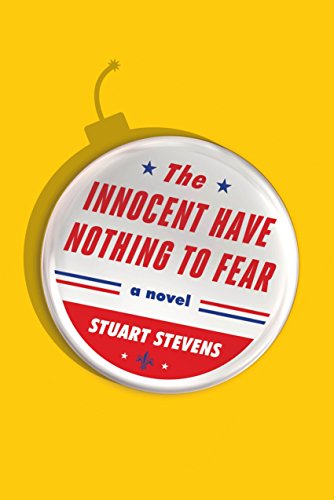
A dark comedy set at a contested Republican convention, written by a veteran political insider—the funniest and most prescient novel about politics in years.
“[Stevens] brings a full arsenal of gifts to this enterprise: humor, tactile prose and an insider’s knowledge of the hardball tactics employed on the campaign trail…. By far the most interesting parts of this novel are the behind-the-scenes accounts of the tactical and strategic maneuvering of political operatives …Stevens is a terrific raconteur — funny, observant and highly entertaining.” –Michiko Kakutani The New York Times
New Orleans in July: it's hot and sticky and squalid. J. D. Callahan is in the middle of the political race of his life and displeased to be back in his hometown. His candidate, the sitting vice president, is neck and neck with an anti-immigrant, right-wing populist as the Republicans head into their first brokered convention in decades on the heels of a staggering global economic crisis. Soon after a series of dye bombs set off a mass panic and tilt the convention toward the vice president’s law-and-order opponent, J. D.’s estranged brother shows up and asks for an inconvenient favor at a most inconvenient time, threatening to reveal a family secret that would ruin the legacy of their civil rights journalist father and destroy J. D.’s own reputation if he doesn’t follow through.
As J. D. scrambles to contain the damage on all sides, he finds himself contending with a sexy, gun-toting gossip columnist, an FBI agent convinced that J. D. is devious enough to set the bombs himself, and an old corrupt political friend of his late father with a not-so-hidden agenda. For the first time ever, J. D. is forced to reconcile the political career he’s always put first with the past he’s tried to leave behind as they careen toward each other on a disastrous collision course he may not be able to stop.
Hilarious and remarkably sharp, Stuart Stevens’s The Innocent Have Nothing to Fear is an endlessly enterTaining whodunit and a brilliant satire of our political culture.
Die Inhaltsangabe kann sich auf eine andere Ausgabe dieses Titels beziehen.
Über die Autorin bzw. den Autor
STUART STEVENS is the author of six previous books, and his work has appeared in The New York Times, The Washington Post, Esquire, and Outside, among other publications. He has written extensively for television shows, including Northern Exposure, Commander in Chief, and K Street. For twenty-five years, he was the lead strategist and media consultant for some of the nation’s toughest political campaigns. He attended Colorado College; Pembroke College, Oxford; Middlebury College; and UCLA film school. He is a former fellow of the American Film Institute. This is his second novel.
www.stuartstevens.com
Auszug. © Genehmigter Nachdruck. Alle Rechte vorbehalten.
Chapter One
It was the heat everyone noticed first when they got off the plane. Then it was the smell of garbage.
Welcome to my hometown. America’s favorite party town.
Broke, full of garbage, half the city on strike, twenty-nine percent unemployment, the highest murder rate in the civilized world (if the adjective fits), a leader in kidney disease and strange tropical maladies normally found in the slums of Mumbai, a town so corrupt that even a casino went bankrupt before it opened because the politicians were so greedy they couldn’t wait to steal it all.
Welcome to New Orleans.
Mayor Simmons had promised that if the Republican National Convention came to New Orleans, he’d scrub the city like his mama’s kitchen. Even though he was a Democrat, he understood what the convention money would mean for a very broke city. Everybody on the Site Selection Committee had said they were very impressed, but of course they weren’t thinking about silly things like cleanliness and sanitation when they picked New Orleans. Hell no. At a time when half the country was convinced that the nation was in a depression and the other half was hoping it was only the worst recession in fifty years, with a president so shell-shocked he wasn’t running for reelection and a disgraced vice president forced to resign, the honorable men and women of the Republican Party Site Selection Committee knew they had to keep their focus on the important elements of a successful convention: a massive and ready supply of sex and alcohol and a local culture that made it damn near imperative that you take advantage of both at every opportunity.
New Orleans was a city still in crisis after Katrina and the Crash, and the Republicans on the selection committee could claim with a straight face that they were picking the city as a show of support in the “great city’s difficult days.” Never mind that was true of just about every city in America these days, but with New Orleans you could also pretend it was such a fascinating place—so quaint, so Old World, such a cultural jambalaya, wasn’t it? When the Site Selection Committee came to New Orleans and the mayor greeted them at Louis Armstrong Airport with the Second Line Jazz Band and took them straight to Antoine’s and a private room, where they marveled at the waiters who could remember every order and never write down a word, well, the deal was just about done. Everybody had “Huîtres en coquille à la Rockefeller”—Oysters Rockefeller, a dish the restaurant had created in 1899 and named not because John D. Rockefeller liked the dish but because he was rich and so was the sauce.
Then they wandered out on St. Louis Street and quickly found their way to Bourbon Street, and by sunrise there was little doubt that the Republicans were coming to New Orleans. To show solidarity with the great American city that had suffered so much. Of course.
The Site Selection Committee had visited in December when the city was just cool enough not to smell, but now it stunk like a big pot of gumbo that had been rotting in the heat for several weeks. It had been over a hundred degrees every day for more than a month with ninety percent humidity, the hottest summer in a century. Didn’t Democrats warn us about global warming? This was a climate invented to make garbage smell in a hurry, and the stench brought tears to your eyes. A fierce run on scented candles had driven prices up and more incense had been sold in the city since Ravi Shankar played a three-day concert in 1968 at the Warehouse.
As if to deliberately torture Republicans for their troubled history with labor unions, the whole city seemed to be on strike: the cabdrivers, the teachers, even the cops were threatening to walk out. Everybody saw the Republican convention as their big chance to cash in, to embarrass the city into coughing up more pay to avoid ruining a moment of glory.
But that only worked if you could embarrass the city, and so far, God bless him, Mayor Tom Simmons, the first white mayor of New Orleans in over two decades, gave a very good impression of not giving one good goddamn what anybody thought. What I loved about the guy was that he understood his market. He knew he didn’t get elected to bring the city together; he wasn’t the guy who was going to get everybody to join hands and sing “Kumbaya” out by Lake Pontchartrain at sunset. Hell no. He was elected to play the tough guy, the enforcer who was brought in to bring a little order to a place where cops were hiring themselves out as hit men in their off-hours. Nobody thought he was nice when they voted for him, and by God he hadn’t let anybody down yet.
Simmons had become my personal hero when he was a state legislator and introduced a bill requiring every woman in New Orleans to carry a gun. This truly was a different kind of Democrat. The proposed legislation had followed a spate of particularly brutal carjackings of women at red lights. The bill hadn’t passed, of course, but a compromise piece of legislation made it perfectly legal for any citizen to use deadly force against a carjacker. Within the first forty-eight hours, a twenty-one-year-old secretary blew the face off of one carjacker, and an eighty-one-year-old man shot another in the ass as the poor fellow tried to flee down Rampart Street after he saw Grandpa had a sawed-off shotgun under a huge muffulleta from Mandina’s on the passenger seat. The elderly man was considered a local hero until two weeks later, when he walked into his stockbroker’s office and put two twelve-gauge slugs into his young broker for not getting him out of Apple before the Crash. But then a lot of brokers were getting shot right after the Crash.
When it looked like the Site Selection Committee was leaning toward picking New Orleans, I’d done everything I could to squash the idea. Nobody could figure out why I was against it, and a lot of people thought I was just being modest. After all, I was a local hometown boy made good, the son of a famous civil rights journalist, which had double currency in the Republican Party, which was desperate for some credibility on that front. I’d be returning home in at least quasi-triumph, the guy who had saved Vice President Hilda Smith’s campaign, brought her back from near death in New Hampshire to a few delegates shy of winning the nomination. I was helping beat back Governor Armstrong George and the barbarians at the gate, and everybody agreed my Pulitzer-winning father, Powell Callahan, would have been so proud. If only he hadn’t drunk himself to death. No, they didn’t say that. But I did, that and a whole lot more. New Orleans was the last place on earth I wanted to come back to. Yes, it was my hometown. People knew me there, had known me all my life. And that, of course, is why it terrified me so much.
It was thirty-six hours before the convention opened. A real convention, like the one everybody had been dying for since Al Smith won it on the thirty-sixth ballot in 1928 and Ford snatched it from Reagan in 1976. That was what a convention was supposed to be—a deliberative body, by God, not a made-for-television spectacle.
I hated it.
Any campaign manager would. It was a horrifying idea to roll into a convention and not have the entire process rigged gavel to gavel. This was simply unheard of. Leaving a decision as important as selecting a party’s nominee to the collection of hungover party hacks, weirdo activists, political groupies, and small-timers who comprised the delegates at any convention was an affront to the very concept of modern politics, a...
„Über diesen Titel“ kann sich auf eine andere Ausgabe dieses Titels beziehen.
Suchergebnisse für The Innocent Have Nothing to Fear: A novel

Beispielbild für diese ISBN
The Innocent Have Nothing to Fear: A novel
Anbieter: World of Books (was SecondSale), Montgomery, IL, USA
Verkäuferbewertung 5 von 5 Sternen

Zustand: Good. Item in good condition. Textbooks may not include supplemental items i.e. CDs, access codes etc. Artikel-Nr. 00095520785
Gebraucht kaufen
EUR 4,52
Versand gratis
Versand innerhalb von USA
Versand innerhalb von USA
Anzahl: 1 verfügbar
Beispielbild für diese ISBN
The Innocent Have Nothing to Fear: A novel
Anbieter: World of Books (was SecondSale), Montgomery, IL, USA
Verkäuferbewertung 5 von 5 Sternen
Zustand: Very Good. Item in very good condition! Textbooks may not include supplemental items i.e. CDs, access codes etc. Artikel-Nr. 00088213815
Gebraucht kaufen
EUR 4,52
Versand gratis
Versand innerhalb von USA
Versand innerhalb von USA
Anzahl: 2 verfügbar
Beispielbild für diese ISBN
The Innocent Have Nothing to Fear: A novel
Verlag:
Knopf (edition First Edition), 2016
ISBN 10: 0451493192
ISBN 13: 9780451493194
Gebraucht
Hardcover
Erstausgabe
Anbieter: BooksRun, Philadelphia, PA, USA
Verkäuferbewertung 5 von 5 Sternen
Hardcover. Zustand: Very Good. First Edition. With dust jacket. It's a well-cared-for item that has seen limited use. The item may show minor signs of wear. All the text is legible, with all pages included. It may have slight markings and/or highlighting. Artikel-Nr. 0451493192-11-1-29
Gebraucht kaufen
EUR 6,19
Versand gratis
Versand innerhalb von USA
Versand innerhalb von USA
Anzahl: 1 verfügbar
Beispielbild für diese ISBN
The Innocent Have Nothing to Fear: A novel
Anbieter: Wonder Book, Frederick, MD, USA
Verkäuferbewertung 5 von 5 Sternen
Zustand: As New. Like New condition. Like New dust jacket. A near perfect copy that may have very minor cosmetic defects. Artikel-Nr. E05B-01141
Gebraucht kaufen
EUR 6,40
Versand gratis
Versand innerhalb von USA
Versand innerhalb von USA
Anzahl: 1 verfügbar
Beispielbild für diese ISBN
The Innocent Have Nothing to Fear: A novel
Anbieter: Wonder Book, Frederick, MD, USA
Verkäuferbewertung 5 von 5 Sternen
Zustand: Very Good. Very Good condition. Good dust jacket. A copy that may have a few cosmetic defects. May also contain light spine creasing or a few markings such as an owner's name, short gifter's inscription or light stamp. Artikel-Nr. I15A-05359
Gebraucht kaufen
EUR 6,40
Versand gratis
Versand innerhalb von USA
Versand innerhalb von USA
Anzahl: 1 verfügbar
Beispielbild für diese ISBN
The Innocent Have Nothing to Fear : A Novel
Verlag:
Knopf Doubleday Publishing Group, 2016
ISBN 10: 0451493192
ISBN 13: 9780451493194
Gebraucht
Hardcover
Erstausgabe
Anbieter: Better World Books, Mishawaka, IN, USA
Verkäuferbewertung 5 von 5 Sternen
Zustand: Good. First Edition. Former library copy. Pages intact with minimal writing/highlighting. The binding may be loose and creased. Dust jackets/supplements are not included. Includes library markings. Stock photo provided. Product includes identifying sticker. Better World Books: Buy Books. Do Good. Artikel-Nr. 10685053-75
Gebraucht kaufen
EUR 6,72
Versand gratis
Versand innerhalb von USA
Versand innerhalb von USA
Anzahl: 1 verfügbar
Beispielbild für diese ISBN
The Innocent Have Nothing to Fear : A Novel
Verlag:
Knopf Doubleday Publishing Group, 2016
ISBN 10: 0451493192
ISBN 13: 9780451493194
Gebraucht
Hardcover
Erstausgabe
Anbieter: Better World Books: West, Reno, NV, USA
Verkäuferbewertung 5 von 5 Sternen
Zustand: Very Good. First Edition. Former library copy. Pages intact with possible writing/highlighting. Binding strong with minor wear. Dust jackets/supplements may not be included. Includes library markings. Stock photo provided. Product includes identifying sticker. Better World Books: Buy Books. Do Good. Artikel-Nr. GRP97182760
Gebraucht kaufen
EUR 6,72
Versand gratis
Versand innerhalb von USA
Versand innerhalb von USA
Anzahl: 1 verfügbar
Beispielbild für diese ISBN
The Innocent Have Nothing to Fear : A Novel
Verlag:
Knopf Doubleday Publishing Group, 2016
ISBN 10: 0451493192
ISBN 13: 9780451493194
Gebraucht
Hardcover
Erstausgabe
Anbieter: Better World Books, Mishawaka, IN, USA
Verkäuferbewertung 5 von 5 Sternen
Zustand: Very Good. First Edition. Former library copy. Pages intact with possible writing/highlighting. Binding strong with minor wear. Dust jackets/supplements may not be included. Includes library markings. Stock photo provided. Product includes identifying sticker. Better World Books: Buy Books. Do Good. Artikel-Nr. GRP97182760
Gebraucht kaufen
EUR 6,72
Versand gratis
Versand innerhalb von USA
Versand innerhalb von USA
Anzahl: 1 verfügbar
Beispielbild für diese ISBN
The Innocent Have Nothing to Fear
Anbieter: Revaluation Books, Exeter, Vereinigtes Königreich
Verkäuferbewertung 5 von 5 Sternen
Hardcover. Zustand: Brand New. 272 pages. 8.53x6.00x1.00 inches. In Stock. Artikel-Nr. zk0451493192
Neu kaufen
EUR 39,76
EUR 11,77 Versand
Versand von Vereinigtes Königreich nach USA
Versand von Vereinigtes Königreich nach USA
Anzahl: 1 verfügbar