
Verwandte Artikel zu We Walked the Sky
Inhaltsangabe
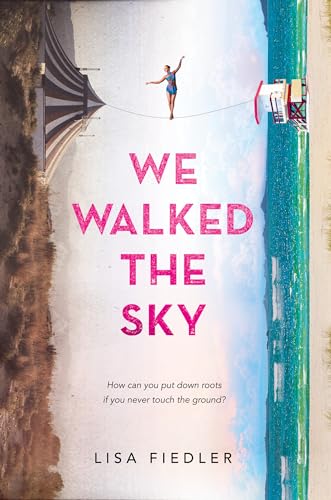
A stunning, multigenerational story about two teenagers: Victoria, who joins the circus in 1965, and her granddaughter, Callie, who leaves the circus fifty years later. Perfect for fans of This is Us.
In 1965 seventeen-year-old Victoria, having just escaped an unstable home, flees to the ultimate place for dreamers and runaways--the circus. Specifically, the VanDrexel Family Circus where, among the lion tamers, roustabouts, and trapeze artists, Victoria hopes to start a better life.
Fifty years later, Victoria's sixteen-year-old granddaughter Callie is thriving. A gifted and focused tightrope walker with dreams of being a VanDrexel high wire legend just like her grandmother, Callie can't imagine herself anywhere but the circus. But when Callie's mother accepts her dream job at an animal sanctuary in Florida just months after Victoria's death, Callie is forced to leave her lifelong home behind.
Feeling unmoored and out of her element, Callie pores over memorabilia from her family's days on the road, including a box that belonged to Victoria when she was Callie's age. In the box, Callie finds notes that Victoria wrote to herself with tips and tricks for navigating her new world. Inspired by this piece of her grandmother's life, Callie decides to use Victoria's circus prowess to navigate the uncharted waters of public high school.
Across generations, Victoria and Callie embrace the challenges of starting over, letting go, and finding new families in unexpected places.
Die Inhaltsangabe kann sich auf eine andere Ausgabe dieses Titels beziehen.
Über die Autorin bzw. den Autor
Lisa Fiedler is the author of novels for children and young adults. She divides her time between Connecticut and the Rhode Island seashore, where she lives happily with her very patient husband, her brilliant and beloved daughter, and their two incredibly spoiled golden retrievers.
Auszug. © Genehmigter Nachdruck. Alle Rechte vorbehalten.
Massachusetts, 1965
She should have never asked to go.
It had been an innocent enough request, and there was always a chance things might have gone differently—because that was how he was. She always had just as much chance of being surprised as she did of being thrown halfway across the room. (All the way across when she was younger, but she was sixteen now and almost as tall as him.) Had it been last Thursday or next Tuesday, or if she’d been wearing yellow not blue, perhaps he would have simply smoothed the pages of his Sunday Globe and huffed a brusque, “You may.” But it was today and he was him, and his fists had a way of coming out of nowhere before she could even duck.
She had discovered recently that a whimper of pain from her mother was a guaranteed trigger for his trademark unpredictable violence. He loathed the sound of weakness, hated that she was frail, as though somehow it reflected poorly on him—on Davis Winston Hastings—to have a sickly wife. Early on, she’d tried to suppress the noise of her misery, but things were worse now and she could no longer manage it; the malignant thing had become all that there was of her, nestled there between her ribs.
And although Catherine was smart enough to know better, she could never quite shake the feeling that he had somehow placed it there, that he had conjured the tumor just to be cruel, just to exert his unyielding authority over them. “I can make you sick, then punish you for not being be well.” Because he was the one in charge, make no mistake about that. He was the one with the name and the money and the manhood, and so he held their whole world in his punch-drunk fists.
He made the rules and the rules were everything. Unwritten, unspoken, undeniably understood: Remain at the dinner table until given permission to leave; Earn excellent grades, but never appear smarter than the boys; Appreciate what is given to you and ask for nothing more.
She should have never asked to go.
But sometimes the smack did not come; sometimes the insult went unspoken; sometimes her meals would not be withheld in the wake of some perceived misbehavior or shortcoming. On some days he could be utterly indifferent. Some days he’d return home from work, his trademark pocket square still folded flawlessly even after a long day at the office, acting as if he were surprised to find Catherine and Meredith there in his house—like two forgotten knickknacks, or things caught in a cobweb. He was never gentle, never kind, never good, but praise the Lord in heaven for indifference. Catherine’s best days were the ones when he just ignored her.
Today, as it turned out, would not be one of those days.
“I was invited to stay at Emily Davenport’s tonight,” she said. “I was hoping I could—”
His hand had lashed toward her like lightning, his fingers wrapping around her long dark ponytail, yanking it hard. “You don’t tell me what you’re hoping for. You ask if I will allow it.”
Swallowing the degradation, she quickly rephrased the question. “Please, Father, may I stay at Emily’s house tonight?”
His answer was lost to the sound of a sudden commotion outside. Not an ugly din, like the kind generated by the riots she’d heard about in Harlem last year and Birmingham the year before. No—this was a beautiful upset, a ruckus of unadulterated joy.
“What in holy hell is that?” he demanded, as if it were her job to know, as if the noisy interruption could somehow be blamed on her.
“The circus,” she muttered in disgust, because she was sure that was how he would want her to feel about such a garish display. She’d heard that it was in town, but had forgotten until just now, as the parade came unfurling along the perfect Brooksvale Avenue on which their perfect brick house stood among other perfect brick houses (though theirs was the most perfect by far—because it was his).
Perhaps it was the gleeful intrusion of the circus parade that compelled him to increase the duration of his torment. He was usually appeased (or perhaps bored) sooner. But today he held tight until her scalp stung and her face was streaked with tears.
Without releasing his hold on her hair, he dragged her toward the open front door. Squinting through the spring shadows that fell across the covered porch, Catherine saw her mother, hardly more than a shadow herself, bundled under woolen blankets on a wicker chaise. She was watching the circus performers file past in the late-day sunshine—a roaring, dancing, tumbling rainbow.
The music was as irresistible as if they’d hired the Pied Piper himself to lead the band. Catherine wished it would stop. She wished it would never stop. It was at once too lovely and too strange, and it did not belong here, dancing and cartwheeling through her humiliation.
“Be back in this house by ten o’clock tomorrow morning, or I will come after you,” he said, punctuating his consent with a shove that sent Catherine stumbling through the front door. She went skidding across the porch on her hands and knees to land at her mother’s feet. “Have I made myself understood?”
Her knees throbbed; her palms burned. Damn right she understood. Eyes on the porch floor, she nodded.
He hovered there long enough to remove his pocket square and use it to mop his brow. It wasn’t until his footsteps had clomped up the stairs and faded to silence that her mother spoke.
“Go, Catherine.”
It was a wisp of a voice at best, words almost without sound, but they had Catherine snapping her gaze up to meet her mother’s pale eyes in disbelief. Because while the suggestion seemed innocuous enough, there was something chilling in the delivery that made her heart race.
“Mother?”
“I’m dying, my love, my darling girl. We both know it. I’ll be surprised if I live out the week.”
“Mother, no—”
“Catherine.” Meredith Quinn Hastings held up a shaky hand to silence her child; the exertion of even that showed in her gaunt face, but she did not let her trembling fingertips fall back into her lap. Instead they went to the satin lapel of her bathrobe, to the Cartier brooch her sadistic son-of-a-bitch husband insisted she wear, despite the fact that the weight of it was now too much for her to carry. “There’s always a chance a friend or neighbor might stop in to ask after your health,” he’d snarled more than once, so if she couldn’t honor him by looking healthy, she could at least look wealthy—she owed him that much, didn’t she? The jewel-encrusted brooch had been weighing her down for months.
Until now.
With the fire-eaters crackling past and the plumed horses trotting like something from a dream, Meredith fumbled with the clasp, then held the pin out to her daughter. Because another thing they both knew was that this brooch was virtually priceless.
“Go. Now.”
“To Emily’s, you mean?” Catherine’s throat was tight.
Meredith’s chin trembled, but she lifted it defiantly and lied, “Where else?”
For the space of a heartbeat her eyes shone with determination, with hope. Over the vanishing strains of circus music, she used what little strength she had to jerk her chin in the...
„Über diesen Titel“ kann sich auf eine andere Ausgabe dieses Titels beziehen.
Suchergebnisse für We Walked the Sky

Beispielbild für diese ISBN
We Walked the Sky
Anbieter: World of Books (was SecondSale), Montgomery, IL, USA
Verkäuferbewertung 5 von 5 Sternen

Zustand: Very Good. Item in very good condition! Textbooks may not include supplemental items i.e. CDs, access codes etc. Artikel-Nr. 00106028188
Gebraucht kaufen
EUR 4,43
Versand gratis
Versand innerhalb von USA
Versand innerhalb von USA
Anzahl: 1 verfügbar
Beispielbild für diese ISBN
We Walked the Sky
Anbieter: World of Books (was SecondSale), Montgomery, IL, USA
Verkäuferbewertung 5 von 5 Sternen
Zustand: Good. Item in very good condition! Textbooks may not include supplemental items i.e. CDs, access codes etc. Artikel-Nr. 00074020034
Gebraucht kaufen
EUR 4,43
Versand gratis
Versand innerhalb von USA
Versand innerhalb von USA
Anzahl: 2 verfügbar
Beispielbild für diese ISBN
We Walked the Sky
Anbieter: BooksRun, Philadelphia, PA, USA
Verkäuferbewertung 5 von 5 Sternen
Hardcover. Zustand: Fair. The item might be beaten up but readable. May contain markings or highlighting, as well as stains, bent corners, or any other major defect, but the text is not obscured in any way. Artikel-Nr. 0451480805-7-1
Gebraucht kaufen
EUR 5,37
Versand gratis
Versand innerhalb von USA
Versand innerhalb von USA
Anzahl: 1 verfügbar
Beispielbild für diese ISBN
We Walked the Sky
Anbieter: ThriftBooks-Atlanta, AUSTELL, GA, USA
Verkäuferbewertung 5 von 5 Sternen
Hardcover. Zustand: Very Good. No Jacket. Missing dust jacket; May have limited writing in cover pages. Pages are unmarked. ~ ThriftBooks: Read More, Spend Less. Artikel-Nr. G0451480805I4N01
Gebraucht kaufen
EUR 5,87
Versand gratis
Versand innerhalb von USA
Versand innerhalb von USA
Anzahl: 1 verfügbar
Beispielbild für diese ISBN
We Walked the Sky
Anbieter: ThriftBooks-Dallas, Dallas, TX, USA
Verkäuferbewertung 5 von 5 Sternen
Hardcover. Zustand: As New. No Jacket. Pages are clean and are not marred by notes or folds of any kind. ~ ThriftBooks: Read More, Spend Less. Artikel-Nr. G0451480805I2N00
Gebraucht kaufen
EUR 5,87
Versand gratis
Versand innerhalb von USA
Versand innerhalb von USA
Anzahl: 1 verfügbar
Beispielbild für diese ISBN
We Walked the Sky
Verlag:
Penguin Young Readers Group, 2019
ISBN 10: 0451480805
ISBN 13: 9780451480804
Gebraucht
Hardcover
Anbieter: Better World Books: West, Reno, NV, USA
Verkäuferbewertung 5 von 5 Sternen
Zustand: Very Good. Former library copy. Pages intact with possible writing/highlighting. Binding strong with minor wear. Dust jackets/supplements may not be included. Includes library markings. Stock photo provided. Product includes identifying sticker. Better World Books: Buy Books. Do Good. Artikel-Nr. 17814351-6
Gebraucht kaufen
EUR 6,09
Versand gratis
Versand innerhalb von USA
Versand innerhalb von USA
Anzahl: 2 verfügbar
Beispielbild für diese ISBN
We Walked the Sky
Anbieter: Books End Bookshop, Syracuse, NY, USA
Verkäuferbewertung 4 von 5 Sternen

Hardcover. Zustand: Good. Zustand des Schutzumschlags: Good. This is a former high school library book. It has the associated wear and markings of such, however the book is otherwise clean and a solid reading copy. fmc2%262D. Artikel-Nr. 1055104
Gebraucht kaufen
EUR 1,36
EUR 5,28 Versand
Versand innerhalb von USA
Versand innerhalb von USA
Anzahl: 1 verfügbar
Beispielbild für diese ISBN
We Walked the Sky
Anbieter: AwesomeBooks, Wallingford, Vereinigtes Königreich
Verkäuferbewertung 5 von 5 Sternen
Hardcover. Zustand: Very Good. We Walked the Sky This book is in very good condition and will be shipped within 24 hours of ordering. The cover may have some limited signs of wear but the pages are clean, intact and the spine remains undamaged. This book has clearly been well maintained and looked after thus far. Money back guarantee if you are not satisfied. See all our books here, order more than 1 book and get discounted shipping. Artikel-Nr. 7719-9780451480804
Gebraucht kaufen
EUR 17,87
EUR 4,80 Versand
Versand von Vereinigtes Königreich nach USA
Versand von Vereinigtes Königreich nach USA
Anzahl: 2 verfügbar
Beispielbild für diese ISBN
We Walked the Sky
Anbieter: Bahamut Media, Reading, Vereinigtes Königreich
Verkäuferbewertung 4 von 5 Sternen
Hardcover. Zustand: Very Good. Shipped within 24 hours from our UK warehouse. Clean, undamaged book with no damage to pages and minimal wear to the cover. Spine still tight, in very good condition. Remember if you are not happy, you are covered by our 100% money back guarantee. Artikel-Nr. 6545-9780451480804
Gebraucht kaufen
EUR 17,96
EUR 8,14 Versand
Versand von Vereinigtes Königreich nach USA
Versand von Vereinigtes Königreich nach USA
Anzahl: 1 verfügbar
Beispielbild für diese ISBN
We Walked the Sky
Anbieter: Revaluation Books, Exeter, Vereinigtes Königreich
Verkäuferbewertung 5 von 5 Sternen
Hardcover. Zustand: Brand New. 320 pages. 8.25x5.50x0.81 inches. In Stock. Artikel-Nr. 0451480805
Neu kaufen
EUR 25,46
EUR 11,66 Versand
Versand von Vereinigtes Königreich nach USA
Versand von Vereinigtes Königreich nach USA
Anzahl: 1 verfügbar