
Verwandte Artikel zu A New Day
Inhaltsangabe
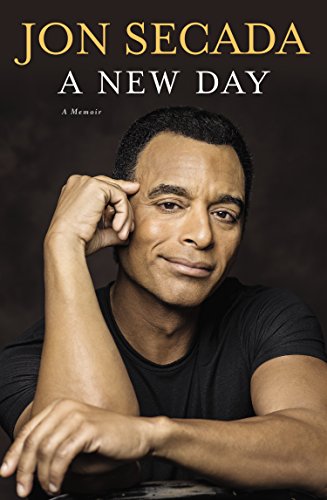
As one of the first successful Latin crossover artists, Jon Secada dominated the pop music charts in the early 90s, releasing hits such asJust Another Day and Angel and winning multiple Grammy Awards. As a Cuban refuge, Jon understands that life is about starting anew and embracing opportunities, something he never lost sight of while achieving his dream of being a performer and while building new dreams when life took unexpected turns. In his debut book, Jon shares the lessons he learned that made him the resilient person he is today. His moving message reaffirms that wisdom and strength comes from constantly reinventing yourself and finding what you’re made of through doubt and hardships, growing from adversity, and having faith inA New Day.
Die Inhaltsangabe kann sich auf eine andere Ausgabe dieses Titels beziehen.
Über die Autorinnen und Autoren
With a career spanning over two decades, Jon Secada has won two Grammy Awards, sold twenty million albums, starred on Broadway, and had numerous hits in English and Spanish, making him one of the first Latin artists to have crossover success. He lives in Miami with his family.
With a career spanning over two decades, Jon Secada has won two Grammy Awards, sold twenty million albums, starred on Broadway, and had numerous hits in English and Spanish, making him one of the first Latin artists to have crossover success. He lives in Miami with his family.
Auszug. © Genehmigter Nachdruck. Alle Rechte vorbehalten.
INTRODUCTION
“Happiness is never complete or permanent. You can work with what you have deep down inside to make your problems as unimportant as you can, so you can move on. Just feel good about who you are spiritually.”
My father first gave me that advice during a particularly turbulent time in my life. I had reached a high point in my career, winning my first Grammy Award, while my first marriage was going down in flames. I hardly knew who I was anymore. Yet my father insisted on reminding me to keep trying and moving forward, even knowing that there will always be times of doubt and uncertainty.
As Cuban refugees, my parents instilled this thinking from the beginning. We had started from nothing, just clinging to the fierce resolve that our lives could only get better. Surviving meant embracing change with unwavering confidence, constantly reinventing yourself, and having the resilience to pick yourself up and keep going when life took unexpected turns.
My story is anything but easy. It is crowded with obstacles, skids, dives, and failures as well as success. It is a story about taking the opportunities that come your way and making the most of them, even knowing that disappointment, failure, and tragedy are also a normal part of life. The lessons in this book are ones I learned from experiences that tore me apart, lifted me up, and brought me back to the start.
It is true that happiness is never guaranteed—you will always face challenges that test your will. Strength is in finding what you are made of through hardships and your own fears and vulnerabilities. Wisdom comes from growing from those adversities. And resilience is built each moment of every day by constantly having faith in a new day.
PART I
CHAPTER ONE
My heart pounded and my mouth went dry as my footsteps echoed on the cobblestones of the narrow street threading through my neighborhood in Old Havana, Cuba. I was about to walk into a lion’s den. My tormentors would be lying in wait for me the way they did every day after school, ready to pounce. They’d call me names, chase me around, and threaten to beat me up.
I was just eight years old, short and shy and chubby. More than anything, I wanted to run away and hide. That had always been my go-to survival tactic.
But now my father, newly out of prison, was forcing me to confront my enemies. “I’m not going to let you run away from this,” he’d scolded as we left the apartment. “You’re not going to be bullied. You’re going to confront those kids, whatever happens. I am not going to let you live in fear.”
Easy for him to say! My father, Jose Miguel Secada, was a charming street guy, a hardworking, handsome hustler, in the best sense of the word. He seemed to fear nothing.
Dad had only an eighth-grade education, but he was keen on envisioning opportunities and taking advantage of them. He had grown up in a big family in Santa Clara, a village in the middle of Cuba, and he was a wonderful singer, like everyone else in his musical family. One of his sisters, Moraima Secada, even became an extremely popular international entertainer. Known worldwide as “La Mora,” she was a member of the first female orchestra of America Anacaona.
My father could have become a professional singer as well. He had the voice and charisma for it. Instead, his passion was entrepreneurship. He was especially proud of his own father, who owned a pastry business. My dad worked alongside his father and had named me Juan after his dad.
Then my grandfather died, the pastry business went down the drain, and my dad was forced to leave Santa Clara to find work. He came to Havana with his mother, who died in his arms overnight of a sudden illness, leaving my father an orphan in the city.
Dad eventually worked his way up to owning an oyster bar, a small stand on a street corner in Havana, and saw opportunities to expand it. However, he was frustrated by the restrictions that Fidel Castro began putting on independent businesses when he assumed power in 1959. Chafing at having his ambitions reined in, my father saw his dreams going up in smoke as he watched Castro’s regime strip away opportunities for entrepreneurs in the name of Communism.
Eventually, my father decided to leave Cuba. He would emigrate, and when he was financially able to, he planned to send for my mother and me. But his attempted escape by fishing boat to pursue his dreams was aborted when the authorities caught him offshore.
Emigrating from Cuba without permission from the government was considered an illegal act at that time. Families who wanted to leave Cuba had to apply for papers, and even then the government expected the head of the family to “give back” to the Communist Party first. As a result, my father was imprisoned and then forced into a work camp until the paperwork was passed for us to leave the country. He was in jail practically from the time I was a toddler until I was seven years old, leaving my mother and me to fend for ourselves.
My mother, Victoria, had an outgoing, loving personality and was also strong-willed. Like my father, she had come to Havana from Oriente Province, at the easternmost tip of Cuba, to make a better life for herself. She was a beautiful woman, Afro-Spanish as a result of her Cuban grandmother falling in love with a barber in the Spanish armada. Her father was also a businessman, but he died early on in a swimming accident. After her mother died young of cancer, my mother lived with her grandmother until she was fifteen. At that point her grandmother died, too, and she, like my father, became an orphan forced to make her own way in the world.
And so my parents—both strong-willed, good-looking, fiercely independent orphans—met, fell in love, and had me. My father had another family—an ex-wife, and a son and a daughter in their early teens—but I was my mother’s only child, and therefore her driving purpose in life was to make my life the best it could possibly be. Meanwhile, my father saw his job as providing for us, no matter what it took.
While we waited for approval to leave the country, we lived hand to mouth in a small apartment near Paseo del Prado, the shady mile-long promenade in downtown Havana that dates back to the eighteenth century. Because my father was imprisoned, he was virtually a stranger to me. But my mother and I spent a lot of time together. I rode my little bike in El Prado park or went to the movies. We also spent a lot of time along El Malecón, the esplanade built to protect Havana from the surf that became the poor person’s paradise, a favorite place to promenade or fish. When he got out of prison, my father tried to teach me to swim there in some of the little pools created by the rocks, but no matter how many times he threw me in, I never did get the hang of floating. I’m still a terrible swimmer.
In other ways, too, I was an outcast, which was partly why the bullies tormented me. I went to school close to our apartment, and my mother tried to protect me as much as possible from any brainwashing by Communist government propaganda, which had infiltrated the schools. I was small for my age but overweight, reticent to speak up in class, and terrible at sports. Although some of our friends supported our desire to flee Cuba, neighborhood committees monitored families that didn’t adhere to Communist beliefs and did all they could to make you feel fearful and alienated as a result of not falling in line with Castro’s regime.
In class, for instance, my teacher called my mother aside one day and said, “Your son is the only one who isn’t part of Los Pioneros,” the youth group established by Castro. The teacher explained...
„Über diesen Titel“ kann sich auf eine andere Ausgabe dieses Titels beziehen.
Suchergebnisse für A New Day

Beispielbild für diese ISBN
A New Day
Anbieter: World of Books (was SecondSale), Montgomery, IL, USA
Verkäuferbewertung 5 von 5 Sternen

Zustand: Good. Item in good condition. Textbooks may not include supplemental items i.e. CDs, access codes etc. Artikel-Nr. 00098064876
Gebraucht kaufen
EUR 5,94
Versand gratis
Versand innerhalb von USA
Versand innerhalb von USA
Anzahl: 2 verfügbar
Beispielbild für diese ISBN
A New Day
Anbieter: ThriftBooks-Reno, Reno, NV, USA
Verkäuferbewertung 5 von 5 Sternen
Hardcover. Zustand: Very Good. No Jacket. May have limited writing in cover pages. Pages are unmarked. ~ ThriftBooks: Read More, Spend Less. Artikel-Nr. G0451469364I4N00
Gebraucht kaufen
EUR 5,96
Versand gratis
Versand innerhalb von USA
Versand innerhalb von USA
Anzahl: 1 verfügbar
Beispielbild für diese ISBN
A New Day
Anbieter: ThriftBooks-Phoenix, Phoenix, AZ, USA
Verkäuferbewertung 5 von 5 Sternen
Hardcover. Zustand: Very Good. No Jacket. May have limited writing in cover pages. Pages are unmarked. ~ ThriftBooks: Read More, Spend Less. Artikel-Nr. G0451469364I4N00
Gebraucht kaufen
EUR 5,96
Versand gratis
Versand innerhalb von USA
Versand innerhalb von USA
Anzahl: 1 verfügbar
Beispielbild für diese ISBN
A New Day
Anbieter: ThriftBooks-Dallas, Dallas, TX, USA
Verkäuferbewertung 5 von 5 Sternen
Hardcover. Zustand: Very Good. No Jacket. May have limited writing in cover pages. Pages are unmarked. ~ ThriftBooks: Read More, Spend Less. Artikel-Nr. G0451469364I4N00
Gebraucht kaufen
EUR 5,99
Versand gratis
Versand innerhalb von USA
Versand innerhalb von USA
Anzahl: 1 verfügbar
Beispielbild für diese ISBN
A New Day
Anbieter: ThriftBooks-Atlanta, AUSTELL, GA, USA
Verkäuferbewertung 5 von 5 Sternen
Hardcover. Zustand: Very Good. No Jacket. May have limited writing in cover pages. Pages are unmarked. ~ ThriftBooks: Read More, Spend Less. Artikel-Nr. G0451469364I4N00
Gebraucht kaufen
EUR 5,99
Versand gratis
Versand innerhalb von USA
Versand innerhalb von USA
Anzahl: 1 verfügbar
Beispielbild für diese ISBN
A New Day
Anbieter: ThriftBooks-Dallas, Dallas, TX, USA
Verkäuferbewertung 5 von 5 Sternen
Hardcover. Zustand: Good. No Jacket. Pages can have notes/highlighting. Spine may show signs of wear. ~ ThriftBooks: Read More, Spend Less. Artikel-Nr. G0451469364I3N00
Gebraucht kaufen
EUR 5,99
Versand gratis
Versand innerhalb von USA
Versand innerhalb von USA
Anzahl: 1 verfügbar
Beispielbild für diese ISBN
A New Day
Verlag:
Penguin Publishing Group, 2014
ISBN 10: 0451469364
ISBN 13: 9780451469366
Gebraucht
Hardcover
Anbieter: Better World Books, Mishawaka, IN, USA
Verkäuferbewertung 5 von 5 Sternen
Zustand: Very Good. Former library copy. Pages intact with possible writing/highlighting. Binding strong with minor wear. Dust jackets/supplements may not be included. Includes library markings. Stock photo provided. Product includes identifying sticker. Better World Books: Buy Books. Do Good. Artikel-Nr. 11984838-75
Gebraucht kaufen
EUR 6,30
Versand gratis
Versand innerhalb von USA
Versand innerhalb von USA
Anzahl: 1 verfügbar
Beispielbild für diese ISBN
A New Day
Verlag:
Penguin Publishing Group, 2014
ISBN 10: 0451469364
ISBN 13: 9780451469366
Gebraucht
Hardcover
Anbieter: Better World Books, Mishawaka, IN, USA
Verkäuferbewertung 5 von 5 Sternen
Zustand: Good. Pages intact with minimal writing/highlighting. The binding may be loose and creased. Dust jackets/supplements are not included. Stock photo provided. Product includes identifying sticker. Better World Books: Buy Books. Do Good. Artikel-Nr. 55164783-75
Gebraucht kaufen
EUR 6,30
Versand gratis
Versand innerhalb von USA
Versand innerhalb von USA
Anzahl: 1 verfügbar