
Verwandte Artikel zu Mystical Paths (Starbridge, Band 5)
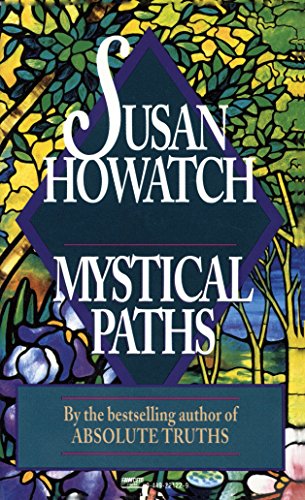
Inhaltsangabe
“No writing today can equal [Susan] Howatch's ability to write compelling novels that combine theology and psychology in a complex, fast-moving plot offering beautifully delineated characters and the suspense of a mystery/thriller. . . . The denouement will leave readers breathless.”—Publishers Weekly
Nicholas Darrow is a strong-willed and independent-minded man, full of the energy and assurance of his age and his moment in time—he is twenty-five in 1968. A magnet for attention and attraction, Nicholas is already beset by a troubled past, and expert at ignoring the grip it has on his life. But as he follows his father into the Anglican priesthood, his fascination with his own psychic powers results near-tragedy. It will only be by facing the truth about his relationship with his father that Nicholas can find his way out of the seemingly impenetrable darkness that engulfs him. . . .
Told with all the drama, intelligence, and emotional depth we have come to expect from Susan Howatch, Mystical Paths is a breathtaking novel about the powerful, often painful, but finally indestructible ties between parent and child. And like its four highly praised predecessors in the Church of England series, it is a novel that celebrates the redeeming power of self-knowledge and faith.
“Intelligent, compelling, and fascinating.”—The Cleveland Plain Dealer
Die Inhaltsangabe kann sich auf eine andere Ausgabe dieses Titels beziehen.
Über die Autorin bzw. den Autor
Susan Howatch was born in Surrey. After getting a degree in law, she emigrated to America, where she married, had a daughter, and embarked on a career as a writer. When she eventually left the United States, she lived in the Republic of Ireland for four years before returning to England. She spent time in Salisbury—which was the inspiration for her Starbridge sequence of novels—and now lives in London.
Aus dem Klappentext
s Darrow follows his father into the Anglican priesthood in 1968 at the age of twenty-five, he is fleeing a troubled past. But when his fascination with his own psychic powers results in a near-tragedy, Nicholas must face the truth about his relationship with his father before he can find his way out of the seemingly impenetrable darkness that engulfs him.
Auszug. © Genehmigter Nachdruck. Alle Rechte vorbehalten.
“More than in the past, the young are striking out into intellectual independence and revolt against tradition.”
MICHAEL RAMSEY
Archbishop of Canterbury, 1961–1974
CANTERBURY PILGRIM
1
I HAD JUST RETURNED FROM AN EXORCISM AND WAS FLINGING some shirts into the washing-machine when my colleague entered the kitchen. He was wearing his cassock and carrying a bottle of whisky. Beyond the window caked in city grime, sunlight blazed upon the battered dustbins in the backyard.
“How was the Gothic mansion haunted by the ravishing young ghost?”
“Non-existent. The trouble was in a council house where the previous occupant had overdosed on heroin in the lavatory.”
“Ah well, that’s 1988 for you … Drink?”
I declined but passed him a glass from the draining-board rack before I set the dials on the washing-machine. Meanwhile the electric kettle was coming to the boil. Absent-mindedly I reached for the teapot. “What’s new?”
“Absolutely nothing. A drunk disrupted the lunch-time Eucharist, the Gay Christians demanded that we stock their literature on AIDS, and some neurotic female from the Movement for the Ordination of Women threatened to picket the church unless you sacked me—oh, and talking of neurotic women, someone called Venetia telephoned twice to say she had to talk to you. She sounded like a nymphomaniac.” He drank deeply from his whisky before adding: “Now why should the name Venetia remind me of the 1960s?”
There was a silence broken only by the click of the kettle as it switched itself off. Then I said: “She was a friend of Christian Aysgarth’s.”
“Ah yes,” said my colleague, suddenly motionless. “The Christian Aysgarth affair. 1968. Crisis, chaos and the Devil on the loose.”
The phone rang. Moving to the extension, which hung on the wall by the dresser, I unhooked the receiver and said neutrally: “St. Benet’s Rectory.”
“Darling!” It was Venetia. “I thought I’d never get past that crusty old curate you keep!”
“He’s not my curate. He’s my colleague at the Healing Centre.”
“Well, chain him up somewhere—I can’t bear misogynists. Now darling, I know you were terribly sweet and madly keen that I should visit you for a little professional chat, but—”
“—you’ve got cold feet.”
“Slightly shivery, yes. When I awoke this morning I began to wonder if a Healing Centre was really quite my scene, and—”
“Nobody’s asking you to fall in love with it. Just think of it as a backdrop. I’m the scene.”
“Oh yes, lovely, simply too thrilling—but I can’t bear that word ‘counselling’—quite ruined by the 1980s—all those wild-eyed social workers descending like vultures on disaster-victims—”
“I’m neither wild-eyed, nor a social worker, nor a vulture, and I’m not going to counsel. I’m going to listen.”
“Oh, but I shall make a mess of talking—I make a mess of everything—I shall wind up totally speechless—”
“Fine. Then we can sit in silence and soak up the vibes.”
“Soak up the vibes! Oh Nick, how that phrase takes me back! Do you know it’s twenty years now—twenty years—since you came to see me about Christian? That mysterious quest of yours! You never did tell me the whole story, did you?”
“ ‘Whereof one cannot speak, thereof one must be silent.’ ”
“No, don’t try and wriggle off the hook by quoting Wittgenstein! Look, let’s forget my visit to the Healing Centre—come and dine with me instead and tell me exactly what happened in 1968. I always found that official version curiously unsatisfactory.”
I realised it was time to take a firm line. “Sorry,” I said, “but I don’t dine out during the week and I’ve no intention of forgetting your promise to visit the Healing Centre. I’ll see you on Thursday at eleven as we arranged yesterday in Starbridge.”
“My dear, how masterful! Why is it I always find you so utterly impossible to resist?” said Venetia crossly, and hung up.
Turning my back on the phone I found that my colleague had made the tea for me. “That’s the only woman I’ve ever met,” I said, sitting down opposite him at the kitchen table, “who can instantly recognise a quotation from Wittgenstein.”
“She sounds extremely dangerous. Do be careful, Nicholas.”
I smiled at him. Then I drank my tea, stared, into space and mentally turned back the clock to 1968, that demonic year when I had become so obsessed by Christian Aysgarth.
2
FOR MOST OF 1968 I WAS TWENTY-FIVE; MY TWENTY-SIXTH BIRTHDAY fell on Christmas Eve. Buried in that first quarter-century of my life were the time-bombs which exploded in 1968—or perhaps it would be more accurate, though less colourful, to write: weaving through those first twenty-five years were the paths which eventually converged to lead me into the Christian Aysgarth mystery. The first path followed my convoluted relationship with my father. The second path followed my disastrous career as a psychic. And the third path followed my friendship with Marina Markhampton. By 1968 all three paths were running side by side—in fact they had become a three-lane motorway where the words “to hell” came up on all the signboards—but in the beginning hell was a long way off and Path Number One led through the idyllic landscape of my childhood.
I was brought up in the country near the city of Starbridge where my father worked at the Theological College in the Cathedral Close. When I was still in the nursery he had been appointed Principal, but he had not been required to live on the premises and I can remember watching him ride off on his bicycle to the station where he would take the train to Star-bridge, twelve miles away. If the weather was wet my mother insisted on giving him a lift in the Rolls, but he preferred to be independent. Born in the last century, he had never learnt to drive and he regarded travelling by Rolls-Royce as an inexcusable luxury for a priest. But then he became busier as the College Principal; soon the inexcusable luxury transformed itself into a time-saving necessity, and he stopped talking about the corrupting influence of the motor car.
I can just remember my mother’s old chauffeur, who died in 1946. The Rolls, which I can remember clearly, died—or rather, was retired with honour—in 1947. Those were the days of the Labour Government when the rich had to tighten their belts, so my mother economised by replacing the Rolls with a Bentley and not replacing the chauffeur at all.
My mother worked. That was very unusual in those days for someone of her class. She ran the Home Farm which formed part of her estate at Starrington Magna, and every morning she would drive away to her office. I would stand on the doorstep of our manor house with Nanny and wave goodbye. Naturally I had no idea what a privileged childhood I was having, and naturally I took my doting parents and my beautiful home for granted. Nanny tried to bring me up sensibly but I soon mastered Nanny. By the time I...
„Über diesen Titel“ kann sich auf eine andere Ausgabe dieses Titels beziehen.
Suchergebnisse für Mystical Paths (Starbridge, Band 5)

Beispielbild für diese ISBN
Mystical Paths
Anbieter: World of Books (was SecondSale), Montgomery, IL, USA
Verkäuferbewertung 5 von 5 Sternen

Zustand: Good. Item in good condition. Textbooks may not include supplemental items i.e. CDs, access codes etc. Artikel-Nr. 00103958458
Gebraucht kaufen
EUR 5,57
Versand gratis
Versand innerhalb von USA
Versand innerhalb von USA
Anzahl: 1 verfügbar
Beispielbild für diese ISBN
Mystical Paths
Anbieter: World of Books (was SecondSale), Montgomery, IL, USA
Verkäuferbewertung 5 von 5 Sternen
Zustand: Acceptable. Item in acceptable condition! Textbooks may not include supplemental items i.e. CDs, access codes etc. Artikel-Nr. 00097694378
Gebraucht kaufen
EUR 5,57
Versand gratis
Versand innerhalb von USA
Versand innerhalb von USA
Anzahl: 2 verfügbar
Beispielbild für diese ISBN
Mystical Paths
Verlag:
Fawcett Books, 1993
ISBN 10: 0449221229
ISBN 13: 9780449221228
Gebraucht
Mass Market Paperback
Anbieter: ThriftBooks-Atlanta, AUSTELL, GA, USA
Verkäuferbewertung 5 von 5 Sternen
Mass Market Paperback. Zustand: Fair. No Jacket. Readable copy. Pages may have considerable notes/highlighting. ~ ThriftBooks: Read More, Spend Less. Artikel-Nr. G0449221229I5N00
Gebraucht kaufen
EUR 6,04
Versand gratis
Versand innerhalb von USA
Versand innerhalb von USA
Anzahl: 1 verfügbar
Beispielbild für diese ISBN
Mystical Paths (Starbridge)
Anbieter: Wonder Book, Frederick, MD, USA
Verkäuferbewertung 5 von 5 Sternen
Zustand: Very Good. Very Good condition. A copy that may have a few cosmetic defects. May also contain light spine creasing or a few markings such as an owner's name, short gifter's inscription or light stamp. Artikel-Nr. F21J-00534
Gebraucht kaufen
EUR 6,21
Versand gratis
Versand innerhalb von USA
Versand innerhalb von USA
Anzahl: 2 verfügbar
Beispielbild für diese ISBN
Mystical Paths
Verlag:
Random House Publishing Group, 1993
ISBN 10: 0449221229
ISBN 13: 9780449221228
Gebraucht
Softcover
Anbieter: Better World Books: West, Reno, NV, USA
Verkäuferbewertung 5 von 5 Sternen
Zustand: Very Good. 1st US Ballantine Bks Ed. June 1993. Pages intact with possible writing/highlighting. Binding strong with minor wear. Dust jackets/supplements may not be included. Stock photo provided. Product includes identifying sticker. Better World Books: Buy Books. Do Good. Artikel-Nr. 9198975-6
Gebraucht kaufen
EUR 6,35
Versand gratis
Versand innerhalb von USA
Versand innerhalb von USA
Anzahl: 1 verfügbar
Beispielbild für diese ISBN
Mystical Paths
Verlag:
Random House Publishing Group, 1993
ISBN 10: 0449221229
ISBN 13: 9780449221228
Gebraucht
Softcover
Anbieter: Better World Books, Mishawaka, IN, USA
Verkäuferbewertung 5 von 5 Sternen
Zustand: Good. 1st US Ballantine Bks Ed. June 1993. Pages intact with minimal writing/highlighting. The binding may be loose and creased. Dust jackets/supplements are not included. Stock photo provided. Product includes identifying sticker. Better World Books: Buy Books. Do Good. Artikel-Nr. GRP98758254
Gebraucht kaufen
EUR 6,35
Versand gratis
Versand innerhalb von USA
Versand innerhalb von USA
Anzahl: 3 verfügbar
Beispielbild für diese ISBN
Mystical Paths
Anbieter: WorldofBooks, Goring-By-Sea, WS, Vereinigtes Königreich
Verkäuferbewertung 5 von 5 Sternen
Paperback. Zustand: Very Good. The book has been read, but is in excellent condition. Pages are intact and not marred by notes or highlighting. The spine remains undamaged. Artikel-Nr. GOR009146239
Gebraucht kaufen
EUR 8,55
EUR 6,53 Versand
Versand von Vereinigtes Königreich nach USA
Versand von Vereinigtes Königreich nach USA
Anzahl: 1 verfügbar
Beispielbild für diese ISBN
Mystical Paths (Starbridge)
Anbieter: Robinson Street Books, IOBA, Binghamton, NY, USA
Verkäuferbewertung 4 von 5 Sternen

Mass Market Paperback. Zustand: Very Good. Prompt Shipment, shipped in Boxes, Tracking PROVIDEDVery good copy with clean pages. Artikel-Nr. ware336jd031
Gebraucht kaufen
EUR 12,00
EUR 8,19 Versand
Versand innerhalb von USA
Versand innerhalb von USA
Anzahl: 1 verfügbar
Beispielbild für diese ISBN
Mystical Paths
Anbieter: Robinson Street Books, IOBA, Binghamton, NY, USA
Verkäuferbewertung 4 von 5 Sternen
Mass Market Pa. Zustand: Used: Good. Prompt Shipment, shipped in Boxes, Tracking PROVIDEDContemporary Fiction; Good mass market paperback; page edges tanned; tips/edges bumped; crease to cover and/or spine; clean pages; prompt shipping with tracking. Artikel-Nr. Ware905NP047
Gebraucht kaufen
EUR 12,00
EUR 8,19 Versand
Versand innerhalb von USA
Versand innerhalb von USA
Anzahl: 1 verfügbar
Beispielbild für diese ISBN
Mystical Paths (Starbridge)
Anbieter: Robinson Street Books, IOBA, Binghamton, NY, USA
Verkäuferbewertung 4 von 5 Sternen
Mass Market Paperback. Zustand: Very Good. Prompt Shipment, shipped in Boxes, Tracking PROVIDEDVery good. Some creasing. *. Artikel-Nr. ware56kr2552
Gebraucht kaufen
EUR 12,00
EUR 8,19 Versand
Versand innerhalb von USA
Versand innerhalb von USA
Anzahl: 1 verfügbar