
Verwandte Artikel zu The Passover Murder: A Christine Bennett Mystery (The...
The Passover Murder: A Christine Bennett Mystery (The Christine Bennett Mysteries, Band 7) - Softcover
Buch 7 von 17: The Christine Bennett Mysteries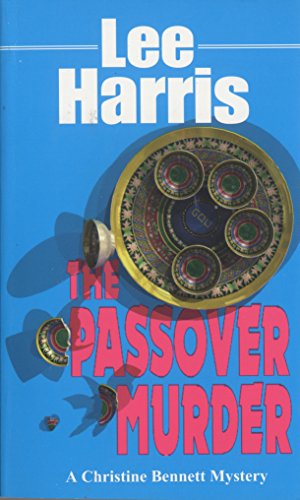
Inhaltsangabe
FINAL QUESTIONS.
Until someone killed her, the only mystery about adorable Iris Grodnik was why she had never married. But for fifteen years, her strange disappearance and murder during a Passover seder has remained a troubling piece of family history.
So when Iris's relatives ask ex-nun Chris Bennett--now the wife of a New York City cop--to make one last attempt to learn the truth, she reluctantly consents. Iris's old friends and suitors have scattered, and Chris soon suspects that some of the relatives are not telling her all they know about Iris's life and death.
Then, in the dusty depths of a hall closet, she finds an old leather purse--and her worst forebodings about Iris Grodnik's haunting murder begin to be fulfilled. . . .
Die Inhaltsangabe kann sich auf eine andere Ausgabe dieses Titels beziehen.
Über die Autorin bzw. den Autor
Lee Harris is the author of the mystery novels featuring ex-nun Christine Bennett, who first appeared in The Good Friday Murder, an Edgar Award nominee. She also writes the New York Mysteries, which debuted with Murder in Hell’s Kitchen. In 2001, Lee Harris received the Romantic Times magazine Career Achievement Award for her distinguished contribution to crime writing.
Auszug. © Genehmigter Nachdruck. Alle Rechte vorbehalten.
1
“What I’m really trying to say,” my friend Melanie Gross said over the telephone, “is that it’s going to be a slightly crazy experience, but I think you’ll enjoy it.”
“I know I’ll enjoy it. And if it’s a little crazy, I’ll enjoy it more.”
“You’re so easy to get along with, Chris. It’s a relief after my family.”
“For someone who takes on more than I could ever handle, you seem too worried about this, Mel. This is the third time you’ve talked about it.”
“I guess you’ll just have to see for yourself. See you tomorrow night.”
Tomorrow night was the Passover seder, an event I had been only dimly aware of for most of the years of my life, fifteen of which had been spent in St. Stephen’s Convent in upstate New York. But since my departure, since becoming a layperson for the first time in my adult life, my friendships and experiences had so expanded that at times I had felt nearly breathless. I had become a homeowner first, an amateur investigator into unsolved murders next, and rapidly after that had fallen in love and become good friends with people I would never have met had I remained in the convent. Mel was a Jewish neighbor, and now closest friend, who had taught me to bake Christmas cookies and helped me arrange the most beautiful wedding St. Stephen’s had ever hosted. Now my husband, Jack, and I were to be guests at her seder.
For weeks I had seen the shelves in our local supermarket fill with tantalizing foods, some of which I could not even pronounce. There were special mixes for cakes, cans of macaroons, boxes of matzohs, jars of fish, packages of candies, all labeled “Kosher for Passover.” When I bought myself a container of yogurt recently I noticed that it, too, was marked “Kosher for Passover.” What did it all mean?
“Traditionally,” Melanie explained as we sat sipping tea in her family room one cold afternoon, “all the food in the house is cleared out before Passover and replaced with new, special foods.”
“You mean you throw out all your leftovers?”
“You throw out everything, not just the leftovers. If you have a can of soup you haven’t used or a bottle of Scotch in the cupboard, that all goes out, too. Clean out the shelves, the refrigerator, the pantry, everything. Then you buy all new food that’s kosher for Passover.”
“How is it different?”
“Nothing is leavened,” she said. “No flour, no rice, no corn. That’s a reminder of the time in Egypt, when there wasn’t any bread, just matzoh. It was baked in the open in the sun, and that’s why it looks and feels the way it does. It’s hard and crisp and thin and has an uneven surface.” She showed me a piece. “So we remember that and we eat unleavened bread. And everything we use, the dishes, the pots, the eating utensils, are special for these days.”
“You have another set of dishes and silver?” I asked.
“People who keep kosher have two, one for meat and one for dairy.”
“But what about my yogurt? What makes that different? The label says the same things are in it.”
“Once a year the company cleans out its equipment or buys new equipment and they use it first to make Passover foods. The milk is put in new bottles, not old ones, things like that.”
“And when Passover is over you go back to the usual dishes and food?”
“Right. We can use up the Passover leftovers, but the dishes get packed away till next year.”
“I had no idea it was such an extensive transformation. It’s like a different way of living for a while.”
“That’s just what it is. And you’ll get a taste of it at the seder.”
“Can I help with anything?”
“Oh, thanks, no. My mother’ll spend the day with me and we’ll cook together. It’s much easier nowadays because you can buy those foil bakers and throw them out when you’re finished with them. In the old days, you had to keep a separate set of pans for the occasion.”
“Tell me who’s coming.”
“Most of my crazy family.”
“You always say that and they’re the sanest people I’ve ever met.”
“Keep an open mind,” Mel said. “You may have to change it. Would you like to read a Haggadah before the seder?”
“What did you say?”
“The Haggadah. It’s the special book we follow during the seder. It explains the seder.”
“I’d love to see it in advance. At least I’ll have some idea what’s going on.”
“Mel shook her head. “You won’t, but it won’t be your fault. I don’t know why it always works out this way, but we rarely use two Haggadahs that are the same. Every translation is different, and if you lose your place, you won’t be alone. Some people will read in Hebrew, some people will read in English. One of my uncles will fall asleep and one of my aunts will start to cry and have to leave the table and two or three cousins will go with her and everyone will forget where they were.”
“Is it such a sad occasion?”
“The seder? Sad? Oh, you mean because my aunt cries. No, it’s not sad at all. It’s really a very happy occasion, the deliverance from Egypt. The children are there and we sing and eat a lot. It’s just that my aunt—well, it’s a sad occasion for her. Something happened a long time ago. I really can’t go into it. You know how it is; something happens around a holiday, and whenever that holiday comes, you think of it. I think you’ll have a good time. My grandfather will love you and he’ll talk your ear off, my mother’s looking forward to seeing you again, and everyone else is reasonably nice.”
“And slightly crazy.”
She gave me a big smile. “You got it. Let me find you a Haggadah to give you something to do with your idle time.”
Since I couldn’t cook or bake anything to help Mel, and I don’t know enough about wine to make a good choice, I decided to send flowers for her table. They arrived in the afternoon and I got an ecstatic phone call thanking me and saying how perfect they were. When the call came, I was sipping a cup of tea and reading the Haggadah Mel had given me. What I learned was that the ceremony was the story of the Exodus from Egypt, that the children ask questions and their father gives the answers, the answers being the story. While the narration was going on, the guests would drink four glasses of wine and eat the special foods Mel had told me about. Although the explanation was in English, there were transliterated words I could not pronounce, but I assumed I would get by. I was rather pleased to see that a description of the table included flowers. I was starting off on the right foot.
My one concern that afternoon was Jack. Jack is a detective sergeant with the NYPD and works out of the Sixty-fifth Precinct in Brooklyn. The previous day he had become involved in what looked like a major crime and he had worked late the night before and gone in early this morning. I knew better than to ask if he thought he would be home in time...
„Über diesen Titel“ kann sich auf eine andere Ausgabe dieses Titels beziehen.
Suchergebnisse für The Passover Murder: A Christine Bennett Mystery (The...

Beispielbild für diese ISBN
The Passover Murder: A Christine Bennett Mystery (The Christine Bennett Mysteries)
Verlag:
Fawcett (edition Revised), 1996
ISBN 10: 0449149633
ISBN 13: 9780449149638
Gebraucht
Mass Market Paperback
Anbieter: BooksRun, Philadelphia, PA, USA
Verkäuferbewertung 5 von 5 Sternen

Mass Market Paperback. Zustand: Very Good. Revised. It's a well-cared-for item that has seen limited use. The item may show minor signs of wear. All the text is legible, with all pages included. It may have slight markings and/or highlighting. Artikel-Nr. 0449149633-8-1
Gebraucht kaufen
EUR 4,38
Versand gratis
Versand innerhalb von USA
Versand innerhalb von USA
Anzahl: 1 verfügbar
Beispielbild für diese ISBN
The Passover Murder: A Christine Bennett Mystery (The Christine Bennett Mysteries)
Verlag:
Fawcett (edition Revised), 1996
ISBN 10: 0449149633
ISBN 13: 9780449149638
Gebraucht
Mass Market Paperback
Anbieter: BooksRun, Philadelphia, PA, USA
Verkäuferbewertung 5 von 5 Sternen
Mass Market Paperback. Zustand: Very Good. Revised. It's a well-cared-for item that has seen limited use. The item may show minor signs of wear. All the text is legible, with all pages included. It may have slight markings and/or highlighting. Artikel-Nr. 0449149633-11-1
Gebraucht kaufen
EUR 4,73
Versand gratis
Versand innerhalb von USA
Versand innerhalb von USA
Anzahl: 1 verfügbar
Beispielbild für diese ISBN
The Passover Murder Christine
Anbieter: World of Books (was SecondSale), Montgomery, IL, USA
Verkäuferbewertung 5 von 5 Sternen
Zustand: Acceptable. Item in acceptable condition! Textbooks may not include supplemental items i.e. CDs, access codes etc. Artikel-Nr. 00110054849
Gebraucht kaufen
EUR 5,32
Versand gratis
Versand innerhalb von USA
Versand innerhalb von USA
Anzahl: 1 verfügbar
Beispielbild für diese ISBN
The Passover Murder : A Christine Bennett Mystery
Verlag:
Random House Publishing Group, 1996
ISBN 10: 0449149633
ISBN 13: 9780449149638
Gebraucht
Softcover
Anbieter: Better World Books, Mishawaka, IN, USA
Verkäuferbewertung 5 von 5 Sternen
Zustand: Good. Revised. Pages intact with minimal writing/highlighting. The binding may be loose and creased. Dust jackets/supplements are not included. Stock photo provided. Product includes identifying sticker. Better World Books: Buy Books. Do Good. Artikel-Nr. 3941369-6
Gebraucht kaufen
EUR 6,35
Versand gratis
Versand innerhalb von USA
Versand innerhalb von USA
Anzahl: 1 verfügbar
Beispielbild für diese ISBN
The Passover Murder : A Christine Bennett Mystery
Verlag:
Random House Publishing Group, 1996
ISBN 10: 0449149633
ISBN 13: 9780449149638
Gebraucht
Softcover
Anbieter: Better World Books: West, Reno, NV, USA
Verkäuferbewertung 5 von 5 Sternen
Zustand: Very Good. Revised. Pages intact with possible writing/highlighting. Binding strong with minor wear. Dust jackets/supplements may not be included. Stock photo provided. Product includes identifying sticker. Better World Books: Buy Books. Do Good. Artikel-Nr. GRP76625213
Gebraucht kaufen
EUR 6,35
Versand gratis
Versand innerhalb von USA
Versand innerhalb von USA
Anzahl: 1 verfügbar
Foto des Verkäufers
THE PASSOVER MURDER A CHRISTINE BENNETT MYSTERY
Verlag:
Fawcett Crest, us, 1996
ISBN 10: 0449149633
ISBN 13: 9780449149638
Gebraucht
softcover
Erstausgabe
Anbieter: Happy Heroes, Monroe, NJ, USA
Verkäuferbewertung 4 von 5 Sternen

softcover. Zustand: VG. Artikel-Nr. 6933
Gebraucht kaufen
EUR 4,44
EUR 6,90 Versand
Versand innerhalb von USA
Versand innerhalb von USA
Anzahl: 1 verfügbar