
Verwandte Artikel zu The Valiant
Inhaltsangabe
Princess. Captive. Gladiator. Always a Warrior.
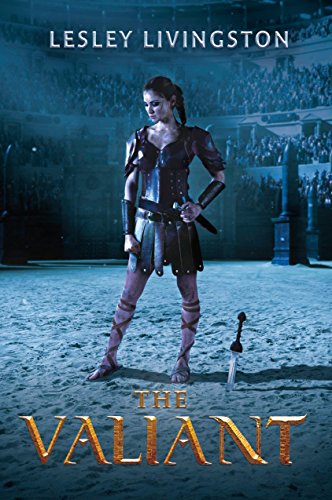
Fallon is the daughter of a proud Celtic king and the younger sister of the legendary fighter Sorcha. When Fallon was just a child, Sorcha was killed by the armies of Julius Caesar.
On the eve of her seventeenth birthday, Fallon is excited to follow in her sister's footsteps and earn her place in her father's war band. She never gets the chance.
Fallon is captured and sold to an elite training school for female gladiators—owned by none other than Julius Caesar himself. In a cruel twist of fate, the man who destroyed Fallon’s family might be her only hope of survival.
Now, Fallon must overcome vicious rivalries, deadly fights in and out of the arena, and perhaps the most dangerous threat of all: her irresistible feelings for Cai, a young Roman soldier and her sworn enemy.
A richly imagined fantasy for fans of Sarah J. Maas and Cinda Williams Chima, The Valiant recounts Fallon’s gripping journey from fierce Celtic princess to legendary gladiator and darling of the Roman empire.
Die Inhaltsangabe kann sich auf eine andere Ausgabe dieses Titels beziehen.
Über die Autorin bzw. den Autor
Lesley Livingston is an award-winning author of teen fiction, best known for her Wondrous Strange trilogy. She holds a master's degree in English from the University of Toronto and was a principal performer in a Shakespearean theatre company, specializing in performances for teen audiences, for more than a decade. Visit her at www.lesleylivingston.com and follow her on Twitter @LesLivingston.
Auszug. © Genehmigter Nachdruck. Alle Rechte vorbehalten.
I.
The steam rising off the backs of the cantering horses faded into the morning fog. Our chariot raced toward the far end of the Forgotten Vale, and Maelgwyn Ironhand—my charioteer, constant companion, and frequent adversary—pulled back on the reins.
“No!” I shouted. “Faster! Make them run faster!”
Mael didn’t bother to spare a glance over his shoulder at me. He knew any argument would be futile. Instead, he gave the ponies their head and let them run. We flew over the ground likes ravens diving over a battlefield. The horses snorted and strained, hooves drumming the grassy track and sending mist billowing in our wake.
I stood behind Mael with a spear gripped tight in my right fist and my feet braced against the swaying motion of the chariot’s suspended deck. The wind screeched in my ears, and the ground was a blur beneath our wheels. We’d never gone so fast before, and my heart hammered in my chest. I shifted and moved past Mael, stepping out in front of the chariot’s platform to balance on the square-sided draft pole that ran between the two horses.
“Fallon—be careful!” Mael called as one of my feet slipped on the wood.
I hissed through clenched teeth as I almost fell and nearly lost my hold on my spear. Switching up my grip on the weapon, I regained my balance and peered ahead at the far end of the vale, where the ground sloped sharply upward into the grave barrow of a long-forgotten occupant. A single, rough-hewn stone crowned the round summit, and at the base of the hill, we’d set up a man-high target—a tree stump padded with hay, wrapped in canvas, and painted with the image of a grimacing, snaggle-toothed Roman soldier.
I grinned, exhilaration prickling my skin. The wind whipped my hair back out of my eyes, and I saw everything with crystal clarity. It was as if time had stopped and was waiting just for me.
Carefully, one foot in front of the other, I made my way forward on the draft pole as the horses thundered on. I held my breath until I could feel the rhythm of their matched strides in my bones. Then I hitched the spear up onto my shoulder and ran the length of the chariot pole until I stood perched between the shoulders of the galloping horses, my feet braced wide on the wooden yoke harnessing them to the chariot.
My goal that morning was as simple as it was impossible: successfully execute a chariot maneuver called the Morrigan’s Flight, named after the fearsome winged war goddess who flew over battlefields collecting the souls of the worthy dead. I’d watched my older sister, Sorcha, attempt it time after time. The idea was to run out along the narrow pole between the horses of a careening chariot, throw a spear, hit a target, balance for as long as it took for the spear to stay lodged, and then run back to the safety of the chariot deck. It was dangerous. It was thrilling.
It was the supreme act of a true Cantii warrior.
And I’d never seen anyone do it. Not even Sorcha.
The last time Mael and I had attempted it, I’d lost my footing completely and dropped between the horses, barely managing to catch onto the pole with one arm and my knees. If I’d fallen, there was a good chance I would have been killed—trampled by hooves or run over by the chariot’s wheels. But the goddess had not seen fit to take me that day, and Mael had managed to pull the horses to a stop before I lost my grip. The bruises had taken weeks to fade, and Mael had shouted at me for almost half an hour, his face flushed crimson, and swore we would never, ever try such a thing again.
He should have known I wouldn’t leave him in peace until we did.
So here we were, racing at breakneck speed across the floor of the Forgotten Vale. Because at the break of dawn that morning, I, Fallon, youngest daughter of Virico the king, chief of the Cantii tribe of Prydain, would turn seventeen years old. Old enough to be made a member of my father’s war band, just like my sister before me. And I was determined that before that moment came, I would master the Morrigan’s Flight.
And Mael, with his clever, steady hands on the reins, would see me do it.
From somewhere in the Otherworld, I imagined Sorcha watched as well.
“On the field of battle, you’re either a warrior or you’re in the way,” my sister had scolded me one afternoon as my wooden practice sword missed its mark by a wide margin. She’d already proved herself to be one of the finest warriors of the Cantii tribe, and it was a lesson she had drilled into me over and over again until the day she died—killed in a skirmish defending the Island of the Mighty from Caesar’s invading legions.
“Are you a weapon or target?” Sorcha had asked. “Choose, Fallon!”
So I chose—that day and every day after.
The weight of the spear on my shoulder and the sword at my hip were as familiar to me now as my tunic and boots or my favorite cloak. As comforting as my father’s rough laugh or the roaring fire in his great hall. As heady as one of Mael’s slow smiles that, more and more often, seemed meant just for me . . .
The thrumming of the chariot ponies’ hooves raced through my limbs like the pulsing of my blood. In another moment, Mael would have to steer the chariot into a sharp turn to avoid running up against the steep sides of the Forgotten Vale’s barrow.
Now or never . . .
My fingers tightened on the spear shaft, and the target loomed large in front of me. I leaned forward over my bent knee, felt the spear tilt into a moment of perfect balance . . . and threw. The slender missile arced through the air like a deadly bird of prey, black against the dawn-pink sky.
I held my breath.
“A hit!”
Not perfect—the spear struck the target a hand’s breadth to the left of where a flesh-and-blood man’s heart would have beat—but still, it was a good, clean blow. Mael’s elated shout confirmed that. I punched my fists skyward in victory before sweeping my arms out to either side, stretched wide as wings. I felt for that fleeting instant as if I really were the goddess Morrigan in flight, swooping low over a battlefield to collect the souls of the glorious dead.
Then, as Mael eased the chariot into the turn, one of the ponies stumbled.
The animal scrambled to regain its stride, and the yoke I was balancing on bobbled with it. My gesture of triumph turned into a frantic flailing as I lost my balance and grabbed at the air to try to right myself. I heard Mael’s jubilant shout distort into a cry of warning as I pitched sideways over the shoulder of the horse and cartwheeled helplessly through the air. My head hit something hard, and the world spiraled into darkness.
Dull silence muffled the first strains of a lark’s song.
“Fallon!”
The warmth on my cheek was either the kiss of the sun or the spill of my tears. Or was it blood? That was probably it, I thought dimly. I’d hit my head and split my skull open, and now I was going to die. On the morning of my seventeenth year.
“Fallon!” Mael cried again.
His voice sounded very near and very far away at the same time.
“I must be dead,” I murmured. “Or else I’m dreaming . . .”
If this was a dream, it was a vivid one. One as clear as the dream that often haunted my nights, when the Morrigan, goddess of death and battle, would appear, terrible and magnificent in a cloak of raven feathers. In a voice like smoke and ashes, she would call...
„Über diesen Titel“ kann sich auf eine andere Ausgabe dieses Titels beziehen.
Suchergebnisse für The Valiant

Beispielbild für diese ISBN
The Valiant
Anbieter: World of Books (was SecondSale), Montgomery, IL, USA
Verkäuferbewertung 5 von 5 Sternen

Hardback. Zustand: Good. Princess. Captive. Gladiator. Always a Warrior. Fallon is the daughter of a proud Celtic king and the younger sister of the legendary fighter Sorcha. When Fallon was just a child, Sorcha was killed by the armies of Julius Caesar. On the eve of her seventeenth birthday, Fallon is excited to follow in her sister's footsteps and earn her place in her father's war band. She never gets the chance. Fallon is captured and sold to an elite training school for female gladiators--owned by none other than Julius Caesar himself. In a cruel twist of fate, the man who destroyed Fallon's family might be her only hope of survival. Now, Fallon must overcome vicious rivalries, deadly fights in and out of the arena, and perhaps the most dangerous threat of all: her irresistible feelings for Cai, a young Roman soldier and her sworn enemy. A richly imagined fantasy for fans of Sarah J. Maas and Cinda Williams Chima, The Valiant recounts Fallon's gripping journey from fierce Celtic princess to legendary gladiator and darling of the Roman empire. From the Hardcover edition. Artikel-Nr. 00079067259
Gebraucht kaufen
EUR 3,83
Versand gratis
Versand innerhalb von USA
Versand innerhalb von USA
Anzahl: 5 verfügbar
Beispielbild für diese ISBN
The Valiant
Anbieter: World of Books (was SecondSale), Montgomery, IL, USA
Verkäuferbewertung 5 von 5 Sternen
Hardback. Zustand: Very Good. Princess. Captive. Gladiator. Always a Warrior. Fallon is the daughter of a proud Celtic king and the younger sister of the legendary fighter Sorcha. When Fallon was just a child, Sorcha was killed by the armies of Julius Caesar. On the eve of her seventeenth birthday, Fallon is excited to follow in her sister's footsteps and earn her place in her father's war band. She never gets the chance. Fallon is captured and sold to an elite training school for female gladiators--owned by none other than Julius Caesar himself. In a cruel twist of fate, the man who destroyed Fallon's family might be her only hope of survival. Now, Fallon must overcome vicious rivalries, deadly fights in and out of the arena, and perhaps the most dangerous threat of all: her irresistible feelings for Cai, a young Roman soldier and her sworn enemy. A richly imagined fantasy for fans of Sarah J. Maas and Cinda Williams Chima, The Valiant recounts Fallon's gripping journey from fierce Celtic princess to legendary gladiator and darling of the Roman empire. From the Hardcover edition. Artikel-Nr. 00102312274
Gebraucht kaufen
EUR 3,83
Versand gratis
Versand innerhalb von USA
Versand innerhalb von USA
Anzahl: 2 verfügbar
Beispielbild für diese ISBN
The Valiant
Anbieter: BooksRun, Philadelphia, PA, USA
Verkäuferbewertung 5 von 5 Sternen
Hardcover. Zustand: Very Good. With dust jacket. It's a well-cared-for item that has seen limited use. The item may show minor signs of wear. All the text is legible, with all pages included. It may have slight markings and/or highlighting. Artikel-Nr. 0448493780-11-1-29
Gebraucht kaufen
EUR 5,02
Versand gratis
Versand innerhalb von USA
Versand innerhalb von USA
Anzahl: 2 verfügbar
Beispielbild für diese ISBN
The Valiant
Anbieter: ThriftBooks-Reno, Reno, NV, USA
Verkäuferbewertung 5 von 5 Sternen
Hardcover. Zustand: Very Good. No Jacket. Former library book; May have limited writing in cover pages. Pages are unmarked. ~ ThriftBooks: Read More, Spend Less. Artikel-Nr. G0448493780I4N10
Gebraucht kaufen
EUR 6,03
Versand gratis
Versand innerhalb von USA
Versand innerhalb von USA
Anzahl: 1 verfügbar
Beispielbild für diese ISBN
The Valiant
Anbieter: ThriftBooks-Dallas, Dallas, TX, USA
Verkäuferbewertung 5 von 5 Sternen
Hardcover. Zustand: Very Good. No Jacket. Former library book; May have limited writing in cover pages. Pages are unmarked. ~ ThriftBooks: Read More, Spend Less. Artikel-Nr. G0448493780I4N10
Gebraucht kaufen
EUR 6,03
Versand gratis
Versand innerhalb von USA
Versand innerhalb von USA
Anzahl: 1 verfügbar
Beispielbild für diese ISBN
The Valiant
Anbieter: ThriftBooks-Atlanta, AUSTELL, GA, USA
Verkäuferbewertung 5 von 5 Sternen
Hardcover. Zustand: Very Good. No Jacket. Former library book; May have limited writing in cover pages. Pages are unmarked. ~ ThriftBooks: Read More, Spend Less. Artikel-Nr. G0448493780I4N10
Gebraucht kaufen
EUR 6,03
Versand gratis
Versand innerhalb von USA
Versand innerhalb von USA
Anzahl: 1 verfügbar
Beispielbild für diese ISBN
The Valiant
Anbieter: ThriftBooks-Phoenix, Phoenix, AZ, USA
Verkäuferbewertung 5 von 5 Sternen
Hardcover. Zustand: Very Good. No Jacket. Former library book; May have limited writing in cover pages. Pages are unmarked. ~ ThriftBooks: Read More, Spend Less. Artikel-Nr. G0448493780I4N10
Gebraucht kaufen
EUR 6,03
Versand gratis
Versand innerhalb von USA
Versand innerhalb von USA
Anzahl: 1 verfügbar
Beispielbild für diese ISBN
The Valiant
Verlag:
Penguin Young Readers Group, 2017
ISBN 10: 0448493780
ISBN 13: 9780448493787
Gebraucht
Hardcover
Anbieter: Better World Books, Mishawaka, IN, USA
Verkäuferbewertung 5 von 5 Sternen
Zustand: Good. Pages intact with minimal writing/highlighting. The binding may be loose and creased. Dust jackets/supplements are not included. Stock photo provided. Product includes identifying sticker. Better World Books: Buy Books. Do Good. Artikel-Nr. 14021633-6
Gebraucht kaufen
EUR 6,35
Versand gratis
Versand innerhalb von USA
Versand innerhalb von USA
Anzahl: 1 verfügbar
Beispielbild für diese ISBN
The Valiant
Verlag:
Penguin Young Readers Group, 2017
ISBN 10: 0448493780
ISBN 13: 9780448493787
Gebraucht
Hardcover
Anbieter: Better World Books, Mishawaka, IN, USA
Verkäuferbewertung 5 von 5 Sternen
Zustand: Good. Former library copy. Pages intact with minimal writing/highlighting. The binding may be loose and creased. Dust jackets/supplements are not included. Includes library markings. Stock photo provided. Product includes identifying sticker. Better World Books: Buy Books. Do Good. Artikel-Nr. 14621463-6
Gebraucht kaufen
EUR 6,35
Versand gratis
Versand innerhalb von USA
Versand innerhalb von USA
Anzahl: 1 verfügbar
Beispielbild für diese ISBN
The Valiant
Anbieter: Wonder Book, Frederick, MD, USA
Verkäuferbewertung 5 von 5 Sternen
Zustand: Very Good. Very Good condition. Good dust jacket. A copy that may have a few cosmetic defects. May also contain light spine creasing or a few markings such as an owner's name, short gifter's inscription or light stamp. Artikel-Nr. K03Q-00992
Gebraucht kaufen
EUR 6,42
Versand gratis
Versand innerhalb von USA
Versand innerhalb von USA
Anzahl: 1 verfügbar