
Verwandte Artikel zu Wholesome Baby Food Guide: Over 150 Easy, Delicious,...
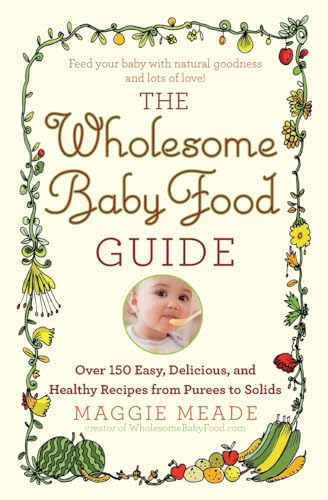
Wholesome Baby Food Guide: Over 150 Easy, Delicious, and Healthy Recipes from Purees to Solids - Softcover
Inhaltsangabe
Baby food doesn't need to be tasteless or processed and in a jar—it can be fresh, vibrant, and delicious, which is exactly what Maggie Meade will show you how to cook in The Wholesome Baby Food Guide.
Based on the top-rated baby food website, The Wholesome Baby Food Guide is filled with carefully researched information on nutrition, allergies, myths, and best practices for introducing foods to little ones. With more than 150 easy recipes, as well as storage tips and allergy alerts, Meade covers the three major stages of a baby's learning to eat: 4-6 months, 6-8 months, and 8 months and up.
With courage, humor, and gentle motivation, this book show parents that their baby's food doesn't have to come from a jar to be healthy and safe. In fact, the healthiest, safest, and tastiest (not to mention least expensive!) foods for babies are those cooked from real ingredients in the kitchen at home, and this book has the added benefit of setting the stage for a child's lifelong love of healthy and wholesome foods.
Move over Gerber—parents are getting into the kitchen!
Based on the top-rated baby food website, The Wholesome Baby Food Guide is filled with carefully researched information on nutrition, allergies, myths, and best practices for introducing foods to little ones. With more than 150 easy recipes, as well as storage tips and allergy alerts, Meade covers the three major stages of a baby's learning to eat: 4-6 months, 6-8 months, and 8 months and up.
With courage, humor, and gentle motivation, this book show parents that their baby's food doesn't have to come from a jar to be healthy and safe. In fact, the healthiest, safest, and tastiest (not to mention least expensive!) foods for babies are those cooked from real ingredients in the kitchen at home, and this book has the added benefit of setting the stage for a child's lifelong love of healthy and wholesome foods.
Move over Gerber—parents are getting into the kitchen!
Die Inhaltsangabe kann sich auf eine andere Ausgabe dieses Titels beziehen.
Über die Autorin bzw. den Autor
Maggie Meade writes and edits the top-rated baby food website www.wholesomebabyfood.com. She is the mother of three sons who enjoyed fresh homemade baby food throughout their introduction to solid foods.
Auszug. © Genehmigter Nachdruck. Alle Rechte vorbehalten.
The Wholesome Baby Food Guide
Over 150 Easy, Delicious, and Healthy Recipes from Purees to SolidsBy Meade, MaggieGrand Central Life & Style
Copyright © 2012 Meade, MaggieAll right reserved.
ISBN: 9780446584104
PART I
The Journey into Solid Foods
Of all the milestones a baby will reach in the first year, beginning solid foods is one of the most nerve-racking and confusing (not to mention messy). As a parent, you will likely be bombarded with “friendly” but maddeningly conflicting advice offered by well-intentioned friends and family. I can still recall all the confusing advice I received about feeding my own babies. (With my twins, a few people even suggested that I let one twin be the “taste tester” to determine what foods I should eventually feed them both. Looking back, I wonder if this might be the reason John always lets his brother try new foods first. Did the boys overhear this advice when they were still in their infant carriers and decide between the two of them who should go first?) Once you get past the myths and the folklore, starting your baby on solid foods does not have to be scary. Armed with the right information and a good sense of humor, you will find that introducing solids can be a fun adventure for you both.
CHAPTER ONE
A Discussion of Introducing Solid Foods at Each Stage
As you contemplate starting your baby on solid foods, it’s important to note what various medical organizations recommend. The American Academy of Pediatrics (AAP), along with many other health agencies such as the World Health Organization and UNICEF, states that breast milk and/or formula should provide all the nutrition your baby needs during the first six months of life. However, the AAP Committee on Nutrition also notes that introducing solid foods between four and six months is perfectly acceptable; introducing babies to solids prior to four months is not recommended. Regardless of whether you start at four, five, or six months, or even later, keep in mind that solid foods will not make up a large portion of your baby’s nutrition for quite a few weeks after you start. Remember that you are introducing your baby to solid foods, not suddenly changing your baby’s diet. At this point, the term complementary foods is often used instead of solid foods, and this term best describes the early role of solids. In the beginning, you are complementing breast milk and/or formula with solid foods, not replacing them. The first few weeks should be a time to take it slow, keep it simple, and stay relaxed. Explore and enjoy the experience of watching your baby touch and taste his or her way through the wonderful world of food!
How will I know when my baby is ready to eat solid foods?
When a baby hits three or four months of age, many parents start to feel that he or she may need “something more” than formula or breast milk. Your baby may suddenly be waking up more often at night or eating more often than has been typical. But it’s important to remember that while waking at night for a feeding could indicate that your baby is ready for solid food, there might be another reason: the growth spurt that typically occurs between three and four months of age. This growth spurt often accounts for your baby’s increased appetite but is not necessarily a sign that your baby needs solid foods. You see, babies have a tremendous ability to know just what they need and when they need it. These demands for increased feedings are your baby’s way of obtaining the crucial nutrition his or her body needs during this time of rapid growth. Remember, during these early months, formula and/or breast milk are your baby’s most important source of nutrition.
Studies show that babies are highly individual in developing a readiness for solid foods. One baby might seem to be ready at four months, while another shows no signs of readiness until around six or seven months. Since appetite alone is not a reliable indication, here are a few key signs to look for when trying to determine if your baby is ready to begin the journey into solid foods:
Has baby lost the tongue thrust reflex? In the first four months, the tongue thrust reflex prevents a baby from choking on foreign objects. When any unusual substance is placed on the tongue, it automatically protrudes outward rather than back. Between four and six months of age, this reflex gradually diminishes. Until the reflex is gone, solid foods won’t have a chance of making it into baby’s belly.
Has baby developed the ability to signal that she is full? Your baby will develop the ability to let you know that she is full from a “meal” with signs such as turning away from the bottle or breast and/or clamping her mouth shut. This signaling ability is critical for allowing her to regulate the amount of food she is eating and helps her avoid overeating.
Is baby able to sit up and hold his head up unassisted? This milestone is important because babies who must be reclined to be fed are at greater risk of choking. Also, the ability to sit up and have head control has long been associated with the physical maturity that might indicate baby is ready to eat solids. Most pediatricians are in agreement that this milestone is a clear indicator that a baby is ready to begin solid foods.
Has baby’s birth weight doubled? The doubling of birth weight is a rough rule of thumb that baby is ready for solid foods. It’s far from an exact rule, though, so you should consider the other signs as well.
Some infant developments that are traditionally viewed as a sign of readiness for solid foods are less reliable:
Interest in your food. This could signal a readiness for food but it may not be the best sign: when a baby reaches four to six months of age, he is interested in putting everything in his mouth!
Frequently waking in the middle of the night when a consistent sleeping pattern had been established. As noted earlier, although frequent waking could be a sign of readiness for solids, it’s not a reliable sign. Baby may be waking (and nursing/feeding) for any number of reasons: illness, teething, or even a growth spurt. Unfortunately, as you will learn over the coming months and years, sleeping patterns are often disrupted for all sorts of reasons even long after your child is on a solid food diet.
Watch Your Baby, Not the Calendar
As you know, all babies are different individuals. Don’t worry if your baby does not take to solid foods “on schedule,” and don’t let others try to convince you that your three-month-old looks hungry and needs to eat some cereal. Pay attention to your baby’s signals and cues, and “watch your baby, not the calendar” when thinking about starting solids. Most important, don’t let others make you feel guilty or second-guess your decisions. You know your baby best! Don’t be pushed into starting solids early, and don’t ever feel you are a “bad” parent if you believe your baby is or is not ready for solids before he or she is six months old.
Discuss the pros and cons of introducing solid foods with your pediatrician—and don’t be afraid to voice...
„Über diesen Titel“ kann sich auf eine andere Ausgabe dieses Titels beziehen.
Suchergebnisse für Wholesome Baby Food Guide: Over 150 Easy, Delicious,...

Beispielbild für diese ISBN
Wholesome Baby Food Guide
Verlag:
Grand Central Life & Style, 2012
ISBN 10: 044658410X
ISBN 13: 9780446584104
Gebraucht
Softcover
Anbieter: World of Books (was SecondSale), Montgomery, IL, USA
Verkäuferbewertung 5 von 5 Sternen

Zustand: Acceptable. Item in acceptable condition including possible liquid damage. As well, answers may be filled in. Lastly, may be missing components, e.g. missing DVDs, CDs, Access Code, etc. Artikel-Nr. 00028010726
Gebraucht kaufen
EUR 4,56
Versand gratis
Versand innerhalb von USA
Versand innerhalb von USA
Anzahl: 1 verfügbar
Beispielbild für diese ISBN
The Wholesome Baby Food Guide: Over 150 Easy, Delicious, and Healthy Recipes from Purees to Solids
Verlag:
Grand Central Publishing, 2012
ISBN 10: 044658410X
ISBN 13: 9780446584104
Gebraucht
Paperback
Anbieter: World of Books (was SecondSale), Montgomery, IL, USA
Verkäuferbewertung 5 von 5 Sternen
Paperback. Zustand: Good. A simple, healthy, and delicious way for parents to introduce fresh whole foods to their babies from purees to solids, based on the popular website! Artikel-Nr. 00027818546
Gebraucht kaufen
EUR 4,56
Versand gratis
Versand innerhalb von USA
Versand innerhalb von USA
Anzahl: 9 verfügbar
Beispielbild für diese ISBN
Wholesome Baby Food Guide
Verlag:
Grand Central Life & Style (edition 1), 2012
ISBN 10: 044658410X
ISBN 13: 9780446584104
Gebraucht
Paperback
Anbieter: BooksRun, Philadelphia, PA, USA
Verkäuferbewertung 5 von 5 Sternen
Paperback. Zustand: Very Good. 1. It's a well-cared-for item that has seen limited use. The item may show minor signs of wear. All the text is legible, with all pages included. It may have slight markings and/or highlighting. Artikel-Nr. 044658410X-11-1
Gebraucht kaufen
EUR 5,06
Versand gratis
Versand innerhalb von USA
Versand innerhalb von USA
Anzahl: 1 verfügbar
Beispielbild für diese ISBN
The Wholesome Baby Food Guide: Over 150 Easy, Delicious, and Healthy Recipes from Purees to Solids
Verlag:
Grand Central Life & Style, 2012
ISBN 10: 044658410X
ISBN 13: 9780446584104
Gebraucht
Softcover
Anbieter: Wonder Book, Frederick, MD, USA
Verkäuferbewertung 5 von 5 Sternen
Zustand: Very Good. Very Good condition. A copy that may have a few cosmetic defects. May also contain light spine creasing or a few markings such as an owner's name, short gifter's inscription or light stamp. Bundled media such as CDs, DVDs, floppy disks or access codes may not be included. Artikel-Nr. Y01A-03199
Gebraucht kaufen
EUR 5,30
Versand gratis
Versand innerhalb von USA
Versand innerhalb von USA
Anzahl: 1 verfügbar
Beispielbild für diese ISBN
The Wholesome Baby Food Guide : Over 150 Easy, Delicious, and Healthy Recipes from Purees to Solids
Verlag:
Grand Central Publishing, 2012
ISBN 10: 044658410X
ISBN 13: 9780446584104
Gebraucht
Softcover
Erstausgabe
Anbieter: Better World Books, Mishawaka, IN, USA
Verkäuferbewertung 5 von 5 Sternen
Zustand: Good. 1st Edition. Former library copy. Pages intact with minimal writing/highlighting. The binding may be loose and creased. Dust jackets/supplements are not included. Includes library markings. Stock photo provided. Product includes identifying sticker. Better World Books: Buy Books. Do Good. Artikel-Nr. 557768-6
Gebraucht kaufen
EUR 6,17
Versand gratis
Versand innerhalb von USA
Versand innerhalb von USA
Anzahl: 2 verfügbar
Beispielbild für diese ISBN
Wholesome Baby Food Guide: Over 150 Easy, Delicious, and Healthy Recipes from Purees to Solids
Verlag:
Grand Central Life & Style, 2012
ISBN 10: 044658410X
ISBN 13: 9780446584104
Gebraucht
Paperback
Anbieter: ThriftBooks-Atlanta, AUSTELL, GA, USA
Verkäuferbewertung 5 von 5 Sternen
Paperback. Zustand: As New. No Jacket. Pages are clean and are not marred by notes or folds of any kind. ~ ThriftBooks: Read More, Spend Less. Artikel-Nr. G044658410XI2N00
Gebraucht kaufen
EUR 6,35
Versand gratis
Versand innerhalb von USA
Versand innerhalb von USA
Anzahl: 1 verfügbar
Beispielbild für diese ISBN
Wholesome Baby Food Guide: Over 150 Easy, Delicious, and Healthy Recipes from Purees to Solids
Verlag:
Grand Central Life & Style, 2012
ISBN 10: 044658410X
ISBN 13: 9780446584104
Gebraucht
Paperback
Anbieter: ThriftBooks-Atlanta, AUSTELL, GA, USA
Verkäuferbewertung 5 von 5 Sternen
Paperback. Zustand: Very Good. No Jacket. May have limited writing in cover pages. Pages are unmarked. ~ ThriftBooks: Read More, Spend Less. Artikel-Nr. G044658410XI4N00
Gebraucht kaufen
EUR 6,35
Versand gratis
Versand innerhalb von USA
Versand innerhalb von USA
Anzahl: 1 verfügbar
Beispielbild für diese ISBN
The Wholesome Baby Food Guide: Over 150 Easy, Delicious, and Healthy Recipes from Purees to Solids
Verlag:
Grand Central Life & Style, 2012
ISBN 10: 044658410X
ISBN 13: 9780446584104
Gebraucht
Softcover
Anbieter: Wonder Book, Frederick, MD, USA
Verkäuferbewertung 5 von 5 Sternen
Zustand: Very Good. Very Good condition. With remainder mark. A copy that may have a few cosmetic defects. May also contain light spine creasing or a few markings such as an owner's name, short gifter's inscription or light stamp. Artikel-Nr. V17L-01137
Gebraucht kaufen
EUR 6,41
Versand gratis
Versand innerhalb von USA
Versand innerhalb von USA
Anzahl: 1 verfügbar
Beispielbild für diese ISBN
The Wholesome Baby Food Guide: Over 150 Easy, Delicious, and Healthy Recipes from Purees to Solids
Verlag:
Grand Central Life & Style, 2012
ISBN 10: 044658410X
ISBN 13: 9780446584104
Gebraucht
Softcover
Anbieter: Wonder Book, Frederick, MD, USA
Verkäuferbewertung 5 von 5 Sternen
Zustand: Very Good. Very Good condition. A copy that may have a few cosmetic defects. May also contain light spine creasing or a few markings such as an owner's name, short gifter's inscription or light stamp. Artikel-Nr. K12B-03786
Gebraucht kaufen
EUR 6,41
Versand gratis
Versand innerhalb von USA
Versand innerhalb von USA
Anzahl: 3 verfügbar
Beispielbild für diese ISBN
The Wholesome Baby Food Guide : Over 150 Easy, Delicious, and Healthy Recipes from Purees to Solids
Verlag:
Grand Central Publishing, 2012
ISBN 10: 044658410X
ISBN 13: 9780446584104
Gebraucht
Softcover
Erstausgabe
Anbieter: Better World Books Ltd, Dunfermline, Vereinigtes Königreich
Verkäuferbewertung 5 von 5 Sternen
Zustand: Good. 1st Edition. Former library copy. Pages intact with minimal writing/highlighting. The binding may be loose and creased. Dust jackets/supplements are not included. Includes library markings. Stock photo provided. Product includes identifying sticker. Better World Books: Buy Books. Do Good. Artikel-Nr. 557768-6
Gebraucht kaufen
EUR 5,69
EUR 5,93 Versand
Versand von Vereinigtes Königreich nach USA
Versand von Vereinigtes Königreich nach USA
Anzahl: 1 verfügbar