
Verwandte Artikel zu WHAT YOUR DOCTOR MAY NOT TELL YOU ABOUT (TM): CHILDREN'S...
WHAT YOUR DOCTOR MAY NOT TELL YOU ABOUT (TM): CHILDREN'S VACCINATIONS (What Your Doctor May Not Tell You About...(Paperback)) - Softcover
Buch 20 von 30: What Your Doctor May Not Tell You About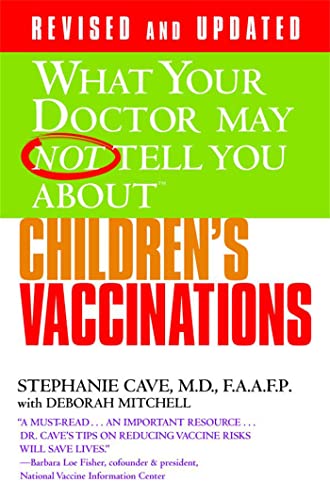
Inhaltsangabe
This is an essential guide for parents about vaccinations. Dr. Stephanie Cave explains their pros and cons and the book provides information to help parents make a knowledgeable, responsible choice about vaccinating their children.
Die Inhaltsangabe kann sich auf eine andere Ausgabe dieses Titels beziehen.
Über die Autorin bzw. den Autor
Stephanie Cave, MD, is a family practitioner in Baton Rouge, LA, who specializes in children with autism and related disorders. She has been featued on CNN, has testified in congressional hearings, and frequently speaks around the world on the topic of children and vaccinations.
Auszug. © Genehmigter Nachdruck. Alle Rechte vorbehalten.
What Your Doctor May Not Tell You About(TM) Children's Vaccinations
By Cave, StephanieWellness Central
Copyright © 2010 Cave, StephanieAll right reserved.
ISBN: 9780446555715
Part I
INTRODUCING VACCINES
Chapter 1
The Story of Vaccines
PERHAPS YOU’VE SEEN THE BUMPER STICKERS THAT SAY QUESTION AUTHORITY. Well, that’s what’s happening today with the increasing number of parents who are questioning the safety, the effectiveness, and even the necessity of the vaccines being given to their children and required by state law. Parents—and perhaps you are one of them—are questioning health care providers, state health officials, and one another about vaccinations. They are forming and joining action groups so they can learn more, and do more, about vaccine policies in the United States.
Next to the QUESTION AUTHORITY sticker should be another one that says KNOWLEDGE IS POWER. It’s not a good idea to question authority when you don’t know what you’re talking about, because it won’t help you accomplish your goals. And when the goals are safe health care and a healthy life for your children, the stakes are too high for you to miss the mark.
This chapter introduces you to the information you’ll need to help you understand the world of vaccines and how they can affect you and your children. It explains what vaccines are, types of vaccines, how they are developed, and how they affect the immune system. You will also learn the answer to the question Do I have to vaccinate my child? as well as how to use the rest of this book to answer this question for each of the vaccines required by law and for those that are not.
FIFTEEN VACCINES… AND COUNTING
Today’s parents are primarily concerned about the fifteen vaccines now recommended by the federal government. And there are dozens of other vaccines on the horizon, a future you may need to consider if you are a parent or grandparent. These other vaccines are covered in subsequent chapters. For now, however, here are the ones that are recommended in most states and mandated in some states:
- Hepatitis B—the first vaccine children are typically given
- DTaP—diphtheria, tetanus, pertussis (whooping cough), which is the newer form of the DPT (DTP) vaccine (see chapter 7 for details)
- Hib—Haemophilus influenzae type B
- Polio—the inactivated polio vaccine, or IPV, is the injected form of the polio vaccine, which as of January 1, 2000, was recommended over the oral polio vaccine (OPV) (see following and chapter 9 for more details)
- MMR—measles, mumps, and rubella combination vaccine
- Varicella—chicken pox
- Hepatitis A
- Pneumococcus
- Rotavirus
- Meningitis
- HPV (human papilloma virus)
WHAT IS A VACCINE?
A vaccine is a substance that attempts to protect people against disease. To do that, vaccines are made from the virus or other pathogen (germ) that causes the disease the vaccine is designed to fight. You might say a vaccine uses fire to fight fire: A little bit of the pathogen is specially prepared and usually injected into the body so it can help fight off any “wild,” or naturally acquired, versions of the disease. The purpose of that fight is to develop immunity.
The body has a complex system, called the immune system, that has procedures for producing and maintaining immunity. In short, when you get, say, a cold or flu virus or a bacterial infection, your body responds by producing substances called antibodies, minute protein molecules that fight against (anti) the foreign bodies (the viruses or bacteria). When you recover from the illness, your body retains some of those antibodies so it is ready to fight off the infection should it appear again. This is called immunity.
TWO TYPES OF IMMUNITY
Natural
Natural immunity is gained when viruses or bacteria enter the body, cause a disease, and the disease progresses normally. During the disease process, the body produces antibodies and disease-fighting cells, resulting in a natural immunity that is usually permanent.
When a child is naturally exposed to, say, the measles, the immune system responds immediately. Various immune cells begin to attack and eliminate the invading pathogens and send signals to other cells in the system, triggering them into action. Depending on the strength of the immune system, the body will reduce or even eliminate the disease before the symptoms show. In fact, experts have shown that the frequency of asymptomatic (having no symptoms of disease) infections outnumber clinical illnesses by at least a hundredfold, simply because the immune system has tremendous natural abilities to fight disease.
Vaccinated
Vaccinated immunity is artificial and often temporary. When the vaccines are injected into the body, they bypass many of the body’s natural defenses. In a sense, the vaccine, along with the toxic additives in the solution, is thrust into the body unannounced. This “surprise” forces the body to overcompensate by producing more disease-fighting cells than it would if the infection were natural. This overstresses the body in two ways—it not only overproduces immune system cells but must also fight the infection (introduced by the vaccine), along with the chemicals and other additives in the vaccine. (These additives are discussed in chapter 2.)
Which is better, natural or vaccinated immunity? The answer may be a little of both. In any case, in order to find out, the least we (parents, researchers, medical professionals, lawmakers) should do is take a close look at the current vaccination schedule, each of the vaccines, and the research on the pros and cons of arbitrarily vaccinating all children. Currently most children are subjected to vaccinations beginning at birth or at two months of age, long before the immune system is ready to even begin to respond. Is this practice safe or wise? Are there alternatives? I believe there are, and it is my hope that you will find some alternatives for yourself in this book.
The main purpose of a vaccine is to stimulate the formation of antibodies at a concentration high enough to stop the pathogen in its tracks, and thus prevent those who get the vaccine from getting the disease. As long as you maintain a certain concentration for a specific disease, you have immunity.
Vaccination is no guarantee that your child or you will not get the disease. A small amount of the infectious agent can get past the antibodies and cause individuals to experience some mild symptoms, or occasionally even worse effects of the disease. (More on this topic in subsequent chapters.) However, in most cases, the vaccine prevents more serious symptoms from occurring. An up-to-date list of the vaccines recommended by the US government can be seen at or downloaded from www.aap.org/family/parents/immunize.htm. An in-depth explanation of each of these vaccines can be found in chapters 6 through 17. Included in these explanations is the Vaccine Information Statement (VIS). A VIS is an information sheet, produced by the Centers for Disease Control and Prevention, which informs vaccine recipients or their parents or legal guardians...
„Über diesen Titel“ kann sich auf eine andere Ausgabe dieses Titels beziehen.
Suchergebnisse für WHAT YOUR DOCTOR MAY NOT TELL YOU ABOUT (TM): CHILDREN'S...

Beispielbild für diese ISBN
WHAT YOUR DOCTOR MAY NOT TELL YOU ABOUT (TM): CHILDREN'S VACCINATIONS
Verlag:
Grand Central Publishing, 2010
ISBN 10: 0446555711
ISBN 13: 9780446555715
Gebraucht
Softcover
Anbieter: World of Books (was SecondSale), Montgomery, IL, USA
Verkäuferbewertung 5 von 5 Sternen

Zustand: Very Good. Item in very good condition! Textbooks may not include supplemental items i.e. CDs, access codes etc. Artikel-Nr. 00110429723
Gebraucht kaufen
EUR 3,94
Versand gratis
Versand innerhalb von USA
Versand innerhalb von USA
Anzahl: 1 verfügbar
Beispielbild für diese ISBN
WHAT YOUR DOCTOR MAY NOT TELL YOU ABOUT (TM): CHILDREN'S VACCINATIONS
Verlag:
Grand Central Publishing, 2010
ISBN 10: 0446555711
ISBN 13: 9780446555715
Gebraucht
Softcover
Anbieter: World of Books (was SecondSale), Montgomery, IL, USA
Verkäuferbewertung 5 von 5 Sternen
Zustand: Acceptable. Item in acceptable condition! Textbooks may not include supplemental items i.e. CDs, access codes etc. Artikel-Nr. 00106921291
Gebraucht kaufen
EUR 3,94
Versand gratis
Versand innerhalb von USA
Versand innerhalb von USA
Anzahl: 1 verfügbar
Beispielbild für diese ISBN
WHAT YOUR DOCTOR MAY NOT TELL YOU ABOUT (TM): CHILDREN'S VACCINATIONS
Verlag:
Grand Central Publishing, 2010
ISBN 10: 0446555711
ISBN 13: 9780446555715
Gebraucht
Softcover
Anbieter: World of Books (was SecondSale), Montgomery, IL, USA
Verkäuferbewertung 5 von 5 Sternen
Zustand: Good. Item in good condition. Textbooks may not include supplemental items i.e. CDs, access codes etc. Artikel-Nr. 00105167239
Gebraucht kaufen
EUR 3,94
Versand gratis
Versand innerhalb von USA
Versand innerhalb von USA
Anzahl: 4 verfügbar
Beispielbild für diese ISBN
What Your Doctor May Not Tell You about (Tm): Children's Vaccinations
Verlag:
Grand Central Publishing, 2010
ISBN 10: 0446555711
ISBN 13: 9780446555715
Gebraucht
Paperback
Anbieter: ThriftBooks-Dallas, Dallas, TX, USA
Verkäuferbewertung 5 von 5 Sternen
Paperback. Zustand: Good. No Jacket. Pages can have notes/highlighting. Spine may show signs of wear. ~ ThriftBooks: Read More, Spend Less. Artikel-Nr. G0446555711I3N00
Gebraucht kaufen
EUR 5,81
Versand gratis
Versand innerhalb von USA
Versand innerhalb von USA
Anzahl: 2 verfügbar
Beispielbild für diese ISBN
What Your Doctor May Not Tell You about (Tm): Children's Vaccinations
Verlag:
Grand Central Publishing, 2010
ISBN 10: 0446555711
ISBN 13: 9780446555715
Gebraucht
Paperback
Anbieter: ThriftBooks-Atlanta, AUSTELL, GA, USA
Verkäuferbewertung 5 von 5 Sternen
Paperback. Zustand: Good. No Jacket. Pages can have notes/highlighting. Spine may show signs of wear. ~ ThriftBooks: Read More, Spend Less. Artikel-Nr. G0446555711I3N00
Gebraucht kaufen
EUR 5,81
Versand gratis
Versand innerhalb von USA
Versand innerhalb von USA
Anzahl: 2 verfügbar
Beispielbild für diese ISBN
What Your Doctor May Not Tell You about (Tm): Children's Vaccinations
Verlag:
Grand Central Publishing, 2010
ISBN 10: 0446555711
ISBN 13: 9780446555715
Gebraucht
Paperback
Anbieter: ThriftBooks-Dallas, Dallas, TX, USA
Verkäuferbewertung 5 von 5 Sternen
Paperback. Zustand: Fair. No Jacket. Readable copy. Pages may have considerable notes/highlighting. ~ ThriftBooks: Read More, Spend Less. Artikel-Nr. G0446555711I5N00
Gebraucht kaufen
EUR 5,81
Versand gratis
Versand innerhalb von USA
Versand innerhalb von USA
Anzahl: 1 verfügbar
Beispielbild für diese ISBN
What Your Doctor May Not Tell You about (Tm): Children's Vaccinations
Verlag:
Grand Central Publishing, 2010
ISBN 10: 0446555711
ISBN 13: 9780446555715
Gebraucht
Paperback
Anbieter: ThriftBooks-Dallas, Dallas, TX, USA
Verkäuferbewertung 5 von 5 Sternen
Paperback. Zustand: As New. No Jacket. Pages are clean and are not marred by notes or folds of any kind. ~ ThriftBooks: Read More, Spend Less. Artikel-Nr. G0446555711I2N00
Gebraucht kaufen
EUR 5,81
Versand gratis
Versand innerhalb von USA
Versand innerhalb von USA
Anzahl: 1 verfügbar
Beispielbild für diese ISBN
What Your Doctor May Not Tell You about (Tm): Children's Vaccinations
Verlag:
Grand Central Publishing, 2010
ISBN 10: 0446555711
ISBN 13: 9780446555715
Gebraucht
Paperback
Anbieter: ThriftBooks-Phoenix, Phoenix, AZ, USA
Verkäuferbewertung 5 von 5 Sternen
Paperback. Zustand: Good. No Jacket. Pages can have notes/highlighting. Spine may show signs of wear. ~ ThriftBooks: Read More, Spend Less. Artikel-Nr. G0446555711I3N00
Gebraucht kaufen
EUR 6,05
Versand gratis
Versand innerhalb von USA
Versand innerhalb von USA
Anzahl: 1 verfügbar
Beispielbild für diese ISBN
What Your Doctor May Not Tell You about (Tm): Children's Vaccinations
Verlag:
Grand Central Publishing, 2010
ISBN 10: 0446555711
ISBN 13: 9780446555715
Gebraucht
Paperback
Anbieter: ThriftBooks-Reno, Reno, NV, USA
Verkäuferbewertung 5 von 5 Sternen
Paperback. Zustand: Good. No Jacket. Pages can have notes/highlighting. Spine may show signs of wear. ~ ThriftBooks: Read More, Spend Less. Artikel-Nr. G0446555711I3N00
Gebraucht kaufen
EUR 6,05
Versand gratis
Versand innerhalb von USA
Versand innerhalb von USA
Anzahl: 2 verfügbar
Beispielbild für diese ISBN
What Your Doctor May Not Tell You about (tm): Children's Vaccinations
Verlag:
Grand Central Publishing, 2010
ISBN 10: 0446555711
ISBN 13: 9780446555715
Gebraucht
Softcover
Anbieter: Better World Books: West, Reno, NV, USA
Verkäuferbewertung 5 von 5 Sternen
Zustand: Good. Rev Upd. Pages intact with minimal writing/highlighting. The binding may be loose and creased. Dust jackets/supplements are not included. Stock photo provided. Product includes identifying sticker. Better World Books: Buy Books. Do Good. Artikel-Nr. 4450729-6
Gebraucht kaufen
EUR 6,38
Versand gratis
Versand innerhalb von USA
Versand innerhalb von USA
Anzahl: 1 verfügbar