
Verwandte Artikel zu Agent 6 (The Child 44 Trilogy, 3)
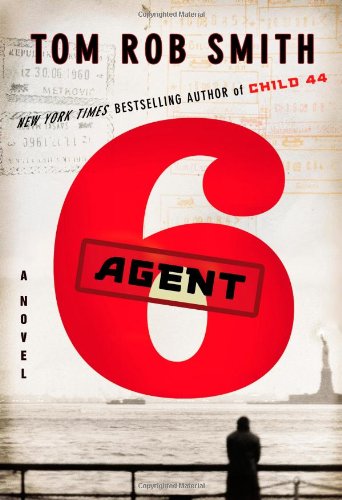
Inhaltsangabe
Tom Rob Smith's debut, Child 44, was an immediate sensation and marked the arrival of a major new talent in contemporary fiction. Named one of top 100 thrillers of all time by NPR, it hit bestseller lists around the world, won the CWA Ian Fleming Steel Dagger Award and the ITW Thriller Award for Best First Novel, and was longlisted for the Man Booker Prize.
In this spellbinding new novel, Tom Rob Smith probes the tenuous border between love and obsession as Leo Demidov struggles to untangle the threads of a devastating conspiracy that shatters everything he holds dear. Deftly capturing the claustrophobic intensity of the Cold War-era Soviet Union, it's at once a heart-pounding thriller and a richly atmospheric novel of extraordinary depth....
AGENT 6
Leo Demidov is no longer a member of Moscow's secret police. But when his wife, Raisa, and daughters Zoya and Elena are invited on a "Peace Tour" to New York City, he is immediately suspicious.
Forbidden to travel with his family and trapped on the other side of the world, Leo watches helplessly as events in New York unfold and those closest to his heart are pulled into a web of political conspiracy and betrayal-one that will end in tragedy.
In the horrible aftermath, Leo demands only one thing: to investigate the killer who destroyed his family. His request is summarily denied. Crippled by grief and haunted by the need to find out exactly what happened on that night in New York, Leo takes matters into his own hands. It is a quest that will span decades, and take Leo around the world--from Moscow, to the mountains of Soviet-controlled Afghanistan, to the backstreets of New York--in pursuit of the one man who knows the truth: Agent 6.
In this spellbinding new novel, Tom Rob Smith probes the tenuous border between love and obsession as Leo Demidov struggles to untangle the threads of a devastating conspiracy that shatters everything he holds dear. Deftly capturing the claustrophobic intensity of the Cold War-era Soviet Union, it's at once a heart-pounding thriller and a richly atmospheric novel of extraordinary depth....
AGENT 6
Leo Demidov is no longer a member of Moscow's secret police. But when his wife, Raisa, and daughters Zoya and Elena are invited on a "Peace Tour" to New York City, he is immediately suspicious.
Forbidden to travel with his family and trapped on the other side of the world, Leo watches helplessly as events in New York unfold and those closest to his heart are pulled into a web of political conspiracy and betrayal-one that will end in tragedy.
In the horrible aftermath, Leo demands only one thing: to investigate the killer who destroyed his family. His request is summarily denied. Crippled by grief and haunted by the need to find out exactly what happened on that night in New York, Leo takes matters into his own hands. It is a quest that will span decades, and take Leo around the world--from Moscow, to the mountains of Soviet-controlled Afghanistan, to the backstreets of New York--in pursuit of the one man who knows the truth: Agent 6.
Die Inhaltsangabe kann sich auf eine andere Ausgabe dieses Titels beziehen.
Über die Autorin bzw. den Autor
International #1 bestselling author Tom Rob Smith graduated from Cambridge University in 2001 and lives in London. His novels in the Child 44 trilogy were New York Times bestsellers and international publishing sensations. Among its many honors, Child 44 won the ITW 2009 Thriller Award for Best First Novel, The Strand Magazine 2008 Critics Award for Best First Novel, the CWA Ian Fleming Steel Dagger Award, and was longlisted for the Man Booker Prize.
Auszug. © Genehmigter Nachdruck. Alle Rechte vorbehalten.
Agent 6
By Tom Rob SmithGrand Central Publishing
Copyright © 2012 Tom Rob SmithAll right reserved.
ISBN: 9780446550765
USSR MOSCOW THE LUBYANKA LUBYANKA SQUARE HEADQUARTERS OF THE SECRET POLICE JANUARY 21, 1950
THE SAFEST WAY TO WRITE a diary was to imagine Stalin reading every word. Even exercising this degree of caution there was the risk of a slipped phrase, accidental ambiguity—a misunderstood sentence. Praise might be mistaken for mockery, sincere adulation taken as parody. Since even the most vigilant author couldn’t guard against every possible interpretation, an alternative was to hide the diary altogether, a method favored in this instance by the suspect, a young artist called Polina Peshkova. Her notebook had been discovered inside a fireplace, in the chimney no less, wrapped in waxy cloth and squeezed between two loose bricks. To retrieve the diary the author was forced to wait until the fire died down before inserting her hand into the chimney and feeling for the book’s spine. Ironically, the elaborate nature of this hiding place had been Peshkova’s undoing. A single sooty fingerprint on the surface of her writing desk had alerted the investigating agent’s suspicions and redirected the focus of his search—an exemplary piece of detective work.
From the perspective of the secret police, the act of concealing a diary was a crime regardless of its content. It was an attempt to separate a citizen’s public and private lives when no such gap existed. There was no thought or experience that fell outside the Party’s authority. For this reason a concealed diary was often the most incriminating evidence an agent could hope for. Since the journal wasn’t intended for any reader, the author wrote freely, lowering their guard, producing nothing less than an unsolicited confession. From-the-heart honesty made the document suitable for judging not only the author but also their friends and family. A diary could yield as many as fifteen additional suspects, fifteen new leads, often more than the most intense interrogation.
In charge of this investigation was Agent Leo Demidov, twenty-seven years old, a decorated soldier recruited to the ranks of the secret police after the Great Patriotic War. He’d flourished in the MGB through a combination of uncomplicated obedience, a belief in the State he was serving, and rigorous attention to detail. His zeal was underpinned not by ambition but by earnest adoration of his homeland, the country that had defeated Fascism. As handsome as he was serious-minded, he had the face and the spirit of a propaganda poster, a square jaw with angular lips, ever ready with a slogan.
In Leo’s brief career with the MGB, he’d overseen the examination of many hundreds of journals, pored over thousands of entries in the tireless pursuit of those accused of anti-Soviet agitation. Like a first love, he remembered the first journal he’d ever examined. Given to him by his mentor, Nikolai Borisov, it had been a difficult case. Leo had found nothing incriminating among the pages. His mentor had then read the same journal, highlighting the apparently innocent observation:
December 6, 1936—Last night Stalin’s new Constitution was adopted. I feel the same way as the rest of the country, i.e., absolute, infinite delight.
Borisov had been unsatisfied that the sentence conveyed any credible sense of delight. The author was more interested in aligning his feelings with the rest of the country. It was strategic and cynical, an empty declaration intended to hide the author’s doubts. Does a person expressing genuine delight use an abbreviation—i.e.—before describing their emotions? That question was put to the suspect in his subsequent interrogation.
INTERROGATOR BORISOV: How do you feel right now?
SUSPECT: I have done nothing wrong.
INTERROGATOR BORISOV: But my question was: How do you feel?
SUSPECT: I feel apprehensive.
INTERROGATOR BORISOV: Of course you do. That is perfectly natural. But note that you did not say, “I feel the same as anyone would in my circumstances, i.e., apprehension.”
The man received fifteen years. And Leo learned a valuable lesson—a detective was not limited to searching for statements of sedition. Far more important was to be ever vigilant for proclamations of love and loyalty that failed to convince.
Drawing from his experiences over the past three years, Leo flicked through Polina Peshkova’s diary, observing that for an artist the suspect had inelegant handwriting. Throughout she’d pressed hard with a blunt pencil, never once sharpening the point. He ran his finger over the back of each page across sentences indented like Braille. He lifted the diary to his nose. It smelled of soot. Against the run of his thumb, the pages made a crackling noise, like dry autumn leaves. He sniffed and peered and weighed the book in his hands—examining it in every way except to actually read it. For a report on the content of the diary he turned to the trainee assigned to him. As part of a recent promotion Leo had been tasked with supervising new agents. He was no longer a pupil but a mentor. These new agents would accompany him on his working day and during his nighttime arrests, gaining experience, learning from him until they were ready to run their own cases.
Grigori Semichastny was twenty-three years old and the fifth agent Leo had taught. He was perhaps the most intelligent and without a doubt the least promising. He asked too many questions, queried too many answers. He smiled when he found something amusing and frowned when something annoyed him. To know what he was thinking merely required a glance at his face. He’d been recruited from the University of Moscow, where he’d been an exceptional student, gifted with an academic pedigree, in contrast to his mentor. Leo felt no jealousy, readily accepting that he would never have a mind for serious study. Able to dissect his own intellectual shortcomings, he was unable to understand why his trainee had sought a post in a profession that he was entirely unsuited for. So mismatched was Grigori for the job that Leo had even contemplated advising him to seek another career. Such an abrupt departure would place the man under scrutiny and would, in all likelihood, condemn him in the eyes of the State. Grigori’s only viable option was to stumble along this path, and Leo felt it his duty to help him as best he could.
Grigori leafed through the pages intently, turning backwards and forwards, apparently searching for something in particular. Finally, he looked up and declared:
—The diary says nothing.
Remembering his own experience as a novice, Leo was not entirely surprised by the answer, feeling disappointment at his...
„Über diesen Titel“ kann sich auf eine andere Ausgabe dieses Titels beziehen.
Suchergebnisse für Agent 6 (The Child 44 Trilogy, 3)

Beispielbild für diese ISBN
Agent 6 (The Child 44 Trilogy, 3)
Verlag:
Grand Central Publishing, 2012
ISBN 10: 0446550760
ISBN 13: 9780446550765
Gebraucht
Hardcover
Anbieter: World of Books (was SecondSale), Montgomery, IL, USA
Verkäuferbewertung 5 von 5 Sternen

Zustand: Acceptable. Item in acceptable condition! Textbooks may not include supplemental items i.e. CDs, access codes etc. Artikel-Nr. 00102788247
Gebraucht kaufen
EUR 4,04
Versand gratis
Versand innerhalb von USA
Versand innerhalb von USA
Anzahl: 3 verfügbar
Beispielbild für diese ISBN
Agent 6
Verlag:
Grand Central Publishing, 2012
ISBN 10: 0446550760
ISBN 13: 9780446550765
Gebraucht
Hardcover
Anbieter: World of Books (was SecondSale), Montgomery, IL, USA
Verkäuferbewertung 5 von 5 Sternen
Hardback. Zustand: Good. Tom Rob Smith's debut, Child 44, was an immediate sensation and marked the arrival of a major new talent in contemporary fiction. Named one of top 100 thrillers of all time by NPR, it hit bestseller lists around the world, won the CWA Ian Fleming Steel Dagger Award and the ITW Thriller Award for Best First Novel, and was longlisted for the Man Booker Prize. In this spellbinding new novel, Tom Rob Smith probes the tenuous border between love and obsession as Leo Demidov struggles to untangle the threads of a devastating conspiracy that shatters everything he holds dear. Deftly capturing the claustrophobic intensity of the Cold War-era Soviet Union, it's at once a heart-pounding thriller and a richly atmospheric novel of extraordinary depth. AGENT 6 Leo Demidov is no longer a member of Moscow's secret police. But when his wife, Raisa, and daughters Zoya and Elena are invited on a "Peace Tour" to New York City, he is immediately suspicious. Forbidden to travel with his family and trapped on the other side of the world, Leo watches helplessly as events in New York unfold and those closest to his heart are pulled into a web of political conspiracy and betrayal-one that will end in tragedy. In the horrible aftermath, Leo demands only one thing: to investigate the killer who destroyed his family. His request is summarily denied. Crippled by grief and haunted by the need to find out exactly what happened on that night in New York, Leo takes matters into his own hands. It is a quest that will span decades, and take Leo around the world--from Moscow, to the mountains of Soviet-controlled Afghanistan, to the backstreets of New York--in pursuit of the one man who knows the truth: Agent 6. Artikel-Nr. 00101235249
Gebraucht kaufen
EUR 4,04
Versand gratis
Versand innerhalb von USA
Versand innerhalb von USA
Anzahl: 7 verfügbar
Beispielbild für diese ISBN
Agent 6 (The Child 44 Trilogy, 3)
Verlag:
Grand Central Publishing, 2012
ISBN 10: 0446550760
ISBN 13: 9780446550765
Gebraucht
Hardcover
Anbieter: ThriftBooks-Reno, Reno, NV, USA
Verkäuferbewertung 5 von 5 Sternen
Hardcover. Zustand: Very Good. No Jacket. May have limited writing in cover pages. Pages are unmarked. ~ ThriftBooks: Read More, Spend Less. Artikel-Nr. G0446550760I4N00
Gebraucht kaufen
EUR 5,94
Versand gratis
Versand innerhalb von USA
Versand innerhalb von USA
Anzahl: 1 verfügbar
Beispielbild für diese ISBN
Agent 6 (The Child 44 Trilogy, 3)
Verlag:
Grand Central Publishing, 2012
ISBN 10: 0446550760
ISBN 13: 9780446550765
Gebraucht
Hardcover
Anbieter: ThriftBooks-Dallas, Dallas, TX, USA
Verkäuferbewertung 5 von 5 Sternen
Hardcover. Zustand: Very Good. No Jacket. May have limited writing in cover pages. Pages are unmarked. ~ ThriftBooks: Read More, Spend Less. Artikel-Nr. G0446550760I4N00
Gebraucht kaufen
EUR 5,94
Versand gratis
Versand innerhalb von USA
Versand innerhalb von USA
Anzahl: 1 verfügbar
Beispielbild für diese ISBN
Agent 6 (The Child 44 Trilogy, 3)
Verlag:
Grand Central Publishing, 2012
ISBN 10: 0446550760
ISBN 13: 9780446550765
Gebraucht
Hardcover
Anbieter: ThriftBooks-Atlanta, AUSTELL, GA, USA
Verkäuferbewertung 5 von 5 Sternen
Hardcover. Zustand: Very Good. No Jacket. May have limited writing in cover pages. Pages are unmarked. ~ ThriftBooks: Read More, Spend Less. Artikel-Nr. G0446550760I4N00
Gebraucht kaufen
EUR 5,94
Versand gratis
Versand innerhalb von USA
Versand innerhalb von USA
Anzahl: 1 verfügbar
Beispielbild für diese ISBN
Agent 6
Verlag:
Grand Central Publishing, 2012
ISBN 10: 0446550760
ISBN 13: 9780446550765
Gebraucht
Hardcover
Erstausgabe
Anbieter: Better World Books, Mishawaka, IN, USA
Verkäuferbewertung 5 von 5 Sternen
Zustand: Good. First Edition. Former library copy. Pages intact with minimal writing/highlighting. The binding may be loose and creased. Dust jackets/supplements are not included. Includes library markings. Stock photo provided. Product includes identifying sticker. Better World Books: Buy Books. Do Good. Artikel-Nr. GRP95726217
Gebraucht kaufen
EUR 6,48
Versand gratis
Versand innerhalb von USA
Versand innerhalb von USA
Anzahl: 2 verfügbar
Beispielbild für diese ISBN
Agent 6
Verlag:
Grand Central Publishing, 2012
ISBN 10: 0446550760
ISBN 13: 9780446550765
Gebraucht
Hardcover
Erstausgabe
Anbieter: Better World Books, Mishawaka, IN, USA
Verkäuferbewertung 5 von 5 Sternen
Zustand: Good. First Edition. Pages intact with minimal writing/highlighting. The binding may be loose and creased. Dust jackets/supplements are not included. Stock photo provided. Product includes identifying sticker. Better World Books: Buy Books. Do Good. Artikel-Nr. GRP95712262
Gebraucht kaufen
EUR 6,48
Versand gratis
Versand innerhalb von USA
Versand innerhalb von USA
Anzahl: 1 verfügbar
Beispielbild für diese ISBN
Agent 6 (The Child 44 Trilogy, 3)
Verlag:
Grand Central Publishing (edition First Edition), 2012
ISBN 10: 0446550760
ISBN 13: 9780446550765
Gebraucht
Hardcover
Erstausgabe
Anbieter: BooksRun, Philadelphia, PA, USA
Verkäuferbewertung 5 von 5 Sternen
Hardcover. Zustand: Very Good. First Edition. With dust jacket. It's a well-cared-for item that has seen limited use. The item may show minor signs of wear. All the text is legible, with all pages included. It may have slight markings and/or highlighting. Artikel-Nr. 0446550760-11-1-29
Gebraucht kaufen
EUR 7,61
Versand gratis
Versand innerhalb von USA
Versand innerhalb von USA
Anzahl: 1 verfügbar
Beispielbild für diese ISBN
Agent 6 (The Child 44 Trilogy, 3)
Verlag:
Grand Central Publishing (edition First Edition), 2012
ISBN 10: 0446550760
ISBN 13: 9780446550765
Gebraucht
Hardcover
Erstausgabe
Anbieter: BooksRun, Philadelphia, PA, USA
Verkäuferbewertung 5 von 5 Sternen
Hardcover. Zustand: Very Good. First Edition. With dust jacket. It's a well-cared-for item that has seen limited use. The item may show minor signs of wear. All the text is legible, with all pages included. It may have slight markings and/or highlighting. Artikel-Nr. 0446550760-11-18-29
Gebraucht kaufen
EUR 9,30
Versand gratis
Versand innerhalb von USA
Versand innerhalb von USA
Anzahl: 1 verfügbar
Beispielbild für diese ISBN
Agent 6
Anbieter: AwesomeBooks, Wallingford, Vereinigtes Königreich
Verkäuferbewertung 5 von 5 Sternen
Hardcover. Zustand: Very Good. Agent 6 This book is in very good condition and will be shipped within 24 hours of ordering. The cover may have some limited signs of wear but the pages are clean, intact and the spine remains undamaged. This book has clearly been well maintained and looked after thus far. Money back guarantee if you are not satisfied. See all our books here, order more than 1 book and get discounted shipping. Artikel-Nr. 7719-9780446550765
Gebraucht kaufen
EUR 4,54
EUR 4,83 Versand
Versand von Vereinigtes Königreich nach USA
Versand von Vereinigtes Königreich nach USA
Anzahl: 2 verfügbar