
Verwandte Artikel zu How Clarissa Burden Learned to Fly
Inhaltsangabe
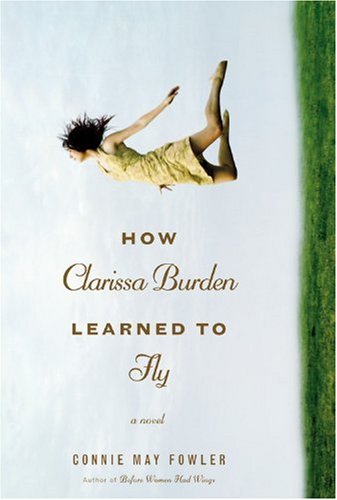
How Clarissa Burden Learned to Fly is the transcendent story of a young woman who, in a twenty-four hour period, journeys through startling moments of self-discovery that lead her to a courageous and life-altering decision.
Die Inhaltsangabe kann sich auf eine andere Ausgabe dieses Titels beziehen.
Über die Autorin bzw. den Autor
Connie May Fowler is an essayist, screenwriter, and novelist. She is the author of five novels, most recently The Problem with Murmur Lee, and a memoir, When Katie Wakes. In 1996, she published Before Women Had Wings, which became a paperback bestseller and was made into a successful Oprah Winfrey Presents movie. She founded the Connie May Fowler Women With Wings Foundation, a non-profit organization dedicated to aiding women and children in need.
Auszug. © Genehmigter Nachdruck. Alle Rechte vorbehalten.
How Clarissa Burden Learned to Fly
By Fowler, Connie MayGrand Central Publishing
Copyright © 2010 Fowler, Connie MayAll right reserved.
ISBN: 9780446540681
On June 21, 2006, at seven a.m. in a malarial crossroads named Hope, Florida, the thermometer old Mrs. Hickok had nailed to the WELCOME TO HOPE sign fifteen years prior read ninety-two degrees. It would get a lot hotter that day, and there was plenty of time for it to do so, this being the summer solstice. But ninety-two at seven a.m., sunrise occurring only three hours earlier, suggested a harsh reckoning was in store for this swampy southern outpost. The weight of the humidity-laden situation pressed down on nearly all of the village’s inhabitants, including its sundry wildlife—squirrels, raccoons, possums, rats, deer, and one lone bobcat—each of whom, immersed in its particular brand of animal consciousness, paused (some even in slumber), noses twitching, tails snapping, all steeling themselves against the inevitable onslaught of the day’s hellish heat.
Hope’s only living being to appear unfazed by the rising mercury was Clarissa Burden, a thirty-five-year-old woman who’d moved to the north Florida hamlet six months prior with her husband of seven years. Trapped as she was in a haze of insecurities and self-doubt, and being long divorced from her animal consciousness, she peered out her opened kitchen window into her rose garden and felt an undoing coming on that was totally unrelated to the weather. It was as if her brain stem, corpuscles, gallbladder, nail cuticles, the mole on her left shoulder, the scar on her knobby shin, the tender corpus of her womb—the whole shebang—were about to surrender. But to what, she did not know.
She watched her husband—a multimedia artist who dabbled in painting, filmmaking, sculpture, pottery, and photography as long as his muse wore no clothes—alternately sketch and photograph a sweating young woman. With the exception of a silver ring piercing her belly button, the woman stood in the bright light of morning amid Clarissa’s roses as naked as the moment she was born.
Clarissa leaned windward to get a better look. Barefoot and still wearing the clothes she had slept in—a rumpled T-shirt and dirt-stained shorts—she tapped her finger on the screen’s dusty mesh, wondering what it felt like to be her husband’s muse. Was the young woman racked with insecurity, fearing the artist was casting judgment with each stroke of his charcoal pencil? Or was she empowered, fully aware of the spell that flesh cast on weak men?
Her husband, Igor “Iggy” Dupuy, paused from his sketching and wiped perspiration from his bald pate and big face. “You have beautiful skin, even when you sweat.” Clarissa took in every lyrical syllable her husband uttered. And while unhappy with their intent—even if it was a harmless observation—Clarissa had never grown tired of her husband’s accent. South African by birth, of Dutch ancestry, and American by choice, Iggy was actually born Igor Pretoriun but changed his last name, favoring a French influence, to distance himself from his birth country’s racial past. She appreciated that in him. It was something they had in common, both coming from a land of racial sins and both feeling it forever necessary to let people know that the old politic was never their politic. He was a tall, strapping man with hands twice the size of Clarissa’s. It was one of the things that caused her to fall in love with him eight years ago, this stature that far outpaced her own.
Unwilling to continue to spy—that’s what it felt like to her, but only because Iggy wanted her nowhere near him while he worked—she floated her attention past her husband and the young woman, beyond the towering magnolia with its opulent white flowers that Clarissa so loved, to the field south of the rose garden. There, hidden amid tall blades of grass, a black snake shed its skin. The snake, nearly finished with the process, soaked up the sun’s early heat, enjoying the sensation of warmth on freshly minted scales, while all but two inches of its old self draped behind in the grass like a dull transparent cape, an afterthought.
If she had known the snake was out there, Clarissa’s sense of imminent implosion might have lifted, because, while not stupid, she was superstitious and believed that the presence of a snake meant she was going to come into money. Without good cause except for a writer’s ingrained insistence on avoiding clichés, she had long overlooked the importance of shed skin and what that might predict. She batted at a fly that had been pestering her ever since she’d put on the coffee. If it weren’t so hot and if her husband weren’t out there with a naked woman, she would have gone for a walk. They owned ten highly treed acres, and she was taken with it all: leaf and petal, blade and stamen. The north Florida landscape reminded her of abundance; it was such a far cry from the south Florida, palm-tree-stuttered trailer park of her youth.
She closed her eyes and breathed deeply. A cacophony of scents enveloped her, the floral high notes mingling with the musky scent of things dying. Clarissa was proud of her garden. It was becoming what she had envisioned the first time she’d stepped onto the property: her own private Eden, genteel and spilling over with rosebuds, jasmine, pendulous wisteria. Every time she tucked a plant’s roots into the rich soil, she felt the distance between her adult life and her fatherless childhood grow ever greater. And that was a very good thing. She opened her eyes. The snake wandered into taller grass, leaving its former skin behind. Clarissa saw the grass sway but didn’t think a thing of it. She was meandering through her garden’s history: how she had, without her husband’s labor or input, dreamed, planned, tilled, planted, sweated over, bled over, and adored her garden into existence. Wind rippled through the branches, bringing not a respite from the weather, but a mobile wall of heat. Clarissa tightened her ponytail, shimmying it up a tad higher on her head, and decided that she hadn’t wanted his help. Not really. Her husband ignoring dirt, and plants, and compost was, she knew, the least of her matrimonial worries.
Iggy’s big voice cut through the humid air. “Aye, Christ, this heat!”
“But when you sweat,” his model said, “sex is the best.”
“Fowking A, sweetie, fowking A!” That’s how he said “fuck,” as if the vowel were an o; stupid man. Determined to ignore them, Clarissa scanned the far boundary of her yard, where the regimental hand of her design gave way to the exuberant chaos of an oak grove. She watched a pileated woodpecker on those long wings with their lightning bolt patches of black and white dart through the cloud-free sky, and she considered the possibility that the malaise her marriage had slipped into was (a) inevitable; (b) temporary; and (c) possibly fatal. The woodpecker zigzagged over the treetops, cawed raucously, and then disappeared into the swamp’s verdant green veil.
Batting again at that annoying fly, Clarissa thought, Iggy’s art is his kingdom, but I am not his queen. He had many queens, models all: She was very clear about that issue. And also this one: He had not touched her—not so much as a...
„Über diesen Titel“ kann sich auf eine andere Ausgabe dieses Titels beziehen.
Suchergebnisse für How Clarissa Burden Learned to Fly

Beispielbild für diese ISBN
How Clarissa Burden Learned to Fly
Verlag:
Grand Central Publishing, 2010
ISBN 10: 0446540684
ISBN 13: 9780446540681
Gebraucht
Hardcover
Anbieter: World of Books (was SecondSale), Montgomery, IL, USA
Verkäuferbewertung 5 von 5 Sternen

Zustand: Good. Item in good condition. Textbooks may not include supplemental items i.e. CDs, access codes etc. Artikel-Nr. 00102743118
Gebraucht kaufen
EUR 3,75
Versand gratis
Versand innerhalb von USA
Versand innerhalb von USA
Anzahl: 1 verfügbar
Beispielbild für diese ISBN
How Clarissa Burden Learned to Fly
Verlag:
Grand Central Publishing, 2010
ISBN 10: 0446540684
ISBN 13: 9780446540681
Gebraucht
Hardcover
Anbieter: World of Books (was SecondSale), Montgomery, IL, USA
Verkäuferbewertung 5 von 5 Sternen
Zustand: Acceptable. Item in acceptable condition! Textbooks may not include supplemental items i.e. CDs, access codes etc. Artikel-Nr. 00103087615
Gebraucht kaufen
EUR 3,75
Versand gratis
Versand innerhalb von USA
Versand innerhalb von USA
Anzahl: 1 verfügbar
Beispielbild für diese ISBN
How Clarissa Burden Learned to Fly
Verlag:
Grand Central Publishing, 2010
ISBN 10: 0446540684
ISBN 13: 9780446540681
Gebraucht
Hardcover
Anbieter: ThriftBooks-Atlanta, AUSTELL, GA, USA
Verkäuferbewertung 5 von 5 Sternen
Hardcover. Zustand: Very Good. No Jacket. Missing dust jacket; May have limited writing in cover pages. Pages are unmarked. ~ ThriftBooks: Read More, Spend Less. Artikel-Nr. G0446540684I4N01
Gebraucht kaufen
EUR 6,14
Versand gratis
Versand innerhalb von USA
Versand innerhalb von USA
Anzahl: 1 verfügbar
Beispielbild für diese ISBN
How Clarissa Burden Learned to Fly
Verlag:
Grand Central Publishing, 2010
ISBN 10: 0446540684
ISBN 13: 9780446540681
Gebraucht
Hardcover
Anbieter: ThriftBooks-Atlanta, AUSTELL, GA, USA
Verkäuferbewertung 5 von 5 Sternen
Hardcover. Zustand: Very Good. No Jacket. Former library book; May have limited writing in cover pages. Pages are unmarked. ~ ThriftBooks: Read More, Spend Less. Artikel-Nr. G0446540684I4N10
Gebraucht kaufen
EUR 6,14
Versand gratis
Versand innerhalb von USA
Versand innerhalb von USA
Anzahl: 1 verfügbar
Beispielbild für diese ISBN
How Clarissa Burden Learned to Fly
Verlag:
Grand Central Publishing, 2010
ISBN 10: 0446540684
ISBN 13: 9780446540681
Gebraucht
Hardcover
Anbieter: ThriftBooks-Phoenix, Phoenix, AZ, USA
Verkäuferbewertung 5 von 5 Sternen
Hardcover. Zustand: Very Good. No Jacket. May have limited writing in cover pages. Pages are unmarked. ~ ThriftBooks: Read More, Spend Less. Artikel-Nr. G0446540684I4N00
Gebraucht kaufen
EUR 6,14
Versand gratis
Versand innerhalb von USA
Versand innerhalb von USA
Anzahl: 1 verfügbar
Beispielbild für diese ISBN
How Clarissa Burden Learned to Fly
Verlag:
Grand Central Publishing, 2010
ISBN 10: 0446540684
ISBN 13: 9780446540681
Gebraucht
Hardcover
Anbieter: ThriftBooks-Atlanta, AUSTELL, GA, USA
Verkäuferbewertung 5 von 5 Sternen
Hardcover. Zustand: Very Good. No Jacket. May have limited writing in cover pages. Pages are unmarked. ~ ThriftBooks: Read More, Spend Less. Artikel-Nr. G0446540684I4N00
Gebraucht kaufen
EUR 6,14
Versand gratis
Versand innerhalb von USA
Versand innerhalb von USA
Anzahl: 1 verfügbar
Beispielbild für diese ISBN
How Clarissa Burden Learned to Fly
Verlag:
Grand Central Publishing, 2010
ISBN 10: 0446540684
ISBN 13: 9780446540681
Gebraucht
Hardcover
Erstausgabe
Anbieter: Better World Books, Mishawaka, IN, USA
Verkäuferbewertung 5 von 5 Sternen
Zustand: Very Good. 1st Edition. Former library copy. Pages intact with possible writing/highlighting. Binding strong with minor wear. Dust jackets/supplements may not be included. Includes library markings. Stock photo provided. Product includes identifying sticker. Better World Books: Buy Books. Do Good. Artikel-Nr. 15549175-75
Gebraucht kaufen
EUR 6,64
Versand gratis
Versand innerhalb von USA
Versand innerhalb von USA
Anzahl: 2 verfügbar
Beispielbild für diese ISBN
How Clarissa Burden Learned to Fly
Verlag:
Grand Central Publishing, 2010
ISBN 10: 0446540684
ISBN 13: 9780446540681
Gebraucht
Hardcover
Erstausgabe
Anbieter: Better World Books Ltd, Dunfermline, Vereinigtes Königreich
Verkäuferbewertung 5 von 5 Sternen
Zustand: Very Good. 1st Edition. Former library copy. Pages intact with possible writing/highlighting. Binding strong with minor wear. Dust jackets/supplements may not be included. Includes library markings. Stock photo provided. Product includes identifying sticker. Better World Books: Buy Books. Do Good. Artikel-Nr. 15549175-75
Gebraucht kaufen
EUR 5,66
EUR 5,81 Versand
Versand von Vereinigtes Königreich nach USA
Versand von Vereinigtes Königreich nach USA
Anzahl: 1 verfügbar
Foto des Verkäufers
How Clarissa Burden Learned to Fly
Verlag:
Grand Central Publishing, 2010
ISBN 10: 0446540684
ISBN 13: 9780446540681
Gebraucht
Hardcover
Signiert
Anbieter: The Haunted Bookshop, LLC, Iowa City, IA, USA
Verkäuferbewertung 5 von 5 Sternen
Hardcover. Zustand: Very Good. Zustand des Schutzumschlags: Very Good. First Printing. Signed by the author on the title page with an inscription to another writer. Crisp, clean pages starting to age-tone around edges; hard over only a bit softened at spine ends; dust jacket has small crimps at spine ends and gentle fading at the spine, otherwise well-kept.; Signed by Author. Artikel-Nr. 00090327
Gebraucht kaufen
EUR 9,95
EUR 4,83 Versand
Versand innerhalb von USA
Versand innerhalb von USA
Anzahl: 1 verfügbar
Foto des Verkäufers
How Clarissa Burden Learned to Fly
Verlag:
Grand Central Publishing, 2010
ISBN 10: 0446540684
ISBN 13: 9780446540681
Gebraucht
Softcover
Anbieter: Hamelyn, Madrid, M, Spanien
Verkäuferbewertung 5 von 5 Sternen
Zustand: Good. : En 'How Clarissa Burden Learned to Fly', Connie May Fowler nos presenta la historia trascendente de una joven que, en un período de veinticuatro horas, atraviesa momentos sorprendentes de autodescubrimiento que la llevan a tomar una decisión valiente y transformadora. Esta novela explora temas de autodescubrimiento y empoderamiento femenino en el contexto de una narrativa contemporánea y conmovedora. EAN: 9780446540681 Tipo: Libros Categoría: Literatura y Ficción Título: How Clarissa Burden Learned to Fly Autor: Connie May Fowler Editorial: Grand Central Publishing Idioma: en Páginas: 288 Formato: tapa dura. Artikel-Nr. Happ-2026-07-20-ef43751e
Gebraucht kaufen
EUR 12,42
EUR 11,99 Versand
Versand von Spanien nach USA
Versand von Spanien nach USA
Anzahl: 1 verfügbar