
Verwandte Artikel zu Beyond the Call: The True Story of One World War II...
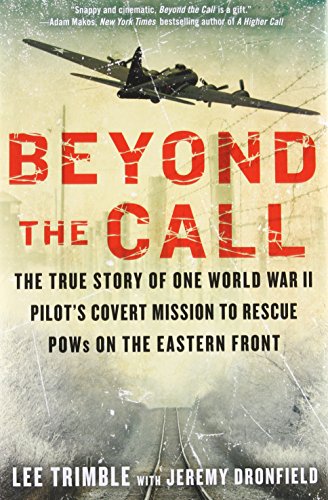
Beyond the Call: The True Story of One World War II Pilot's Covert Mission to Rescue POWs on the Eastern Front - Hardcover
Inhaltsangabe
Near the end of World War II, thousands of Allied ex-POWs were abandoned to wander the war-torn Eastern Front, modern day Ukraine. With no food, shelter, or supplies, they were an army of dying men.
The Red Army had pushed the Nazis out of Russia. As they advanced across Poland, the prison camps of the Third Reich were discovered and liberated. In defiance of humanity, the freed Allied prisoners were discarded without aid. The Soviets viewed POWs as cowards, and regarded all refugees as potential spies or partisans.
The United States repeatedly offered to help recover their POWs, but were refused. With relations between the allies strained, a plan was conceived for an undercover rescue mission. In total secrecy, the OSS chose an obscure American air force detachment stationed at a Ukrainian airfield; it would provide the base and the cover for the operation. The man they picked to undertake it was veteran 8th Air Force bomber pilot Captain Robert Trimble.
With little covert training, already scarred by the trials of combat, Trimble took the mission. He would survive by wit, courage, and a determination to do some good in a terrible war. Alone he faced up to the terrifying Soviet secret police, saving hundreds of lives. At the same time he battled to come to terms with the trauma of war and find his own way home to his wife and child.
One ordinary man. One extraordinary mission. A thousand lives at stake.
This is the compelling, inspiring true story of an American hero who laid his life on the line to bring his fellow men home to safety and freedom.
INCLUDES PHOTOS
Die Inhaltsangabe kann sich auf eine andere Ausgabe dieses Titels beziehen.
Über die Autorinnen und Autoren
Lee Trimble was born in 1950, the son of Captain Robert M. Trimble. He was educated in science and technology at Pennsylvania State University and received an MS at Stevens Institute of Technology in New Jersey. He worked in research and development on lasers, electronics, and semiconductors, and has been a scientific writer and reviewer for various scholarly and professional journals. He has lately retired from the tech world, and works rehabilitating problem dogs, including work in conjunction with SPCA International and the U.S. military on “Operation Baghdad Pups.”
Jeremy Dronfield is a multi-faceted writer, biographer, and novelist, with a special interest in WWII aviation. He began in archaeology, gaining his PhD at Cambridge University. In 1997 his debut novel,The Locust Farm, was a bestseller in the United Kingdom. He is also the author ofResurrecting Salvador, Burning Blue (a novel about the experiences of a U.S. pilot in WWII), and the critically acclaimedThe Alchemist’s Apprentice. He is also coauthor of several historical biographies, including one about the life of the Russian spy Moura Budberg.
Lee Trimble was born in 1950, the son of Captain Robert M. Trimble. He was educated in science and technology at Pennsylvania State University and received an MS at Stevens Institute of Technology in New Jersey. He worked in research and development on lasers, electronics, and semiconductors, and has been a scientific writer and reviewer for various scholarly and professional journals. He has lately retired from the tech world, and works rehabilitating problem dogs, including work in conjunction with SPCA International and the U.S. military on “Operation Baghdad Pups.”
Jeremy Dronfield is a multi-faceted writer, biographer, and novelist, with a special interest in WWII aviation. He began in archaeology, gaining his PhD at Cambridge University. In 1997 his debut novel, The Locust Farm, was a bestseller in the United Kingdom. He is also the author of Resurrecting Salvador, Burning Blue (a novel about the experiences of a U.S. pilot in WWII), and the critically acclaimed The Alchemist’s Apprentice. He is also coauthor of several historical biographies, including one about the life of the Russian spy Moura Budberg.
Auszug. © Genehmigter Nachdruck. Alle Rechte vorbehalten.
ACKNOWLEDGMENTS
ABBREVIATIONS
Captain Robert M. Trimble’s route from the UK to Ukraine, January–February 1945.
Map by J. Dronfield
Eastern Europe, early 1945. Captain Trimble’s area of operations.
Map by J. Dronfield
PREFACE
By the fall of 1944, the mighty forces of the Red Army, at a bitter cost in lives, had pushed the Nazi invaders out of Russia. As the front line rolled steadily across the Ukraine and Poland, the grim prison camps of the Third Reich were discovered and liberated: concentration camps, death camps, slave labor and POW camps. In their thousands, the suffering inmates were set loose.
The Soviets’ attitude to the freed prisoners of war was not charitable. Setting the moral mood for the “Great Patriotic War” against Nazi Germany, Stalin had decreed in 1941 that there were no prisoners of war, only traitors and cowards. His declaration, coupled with the culture of savage violence on the Eastern Front, led to cruel treatment and even atrocities against former Russian soldiers who were liberated from POW camps.
It also affected the treatment of Allied ex-prisoners. They were left to wander, starving, sick, and dying. Some were fired upon indiscriminately by Russian troops; some were robbed; many more were marched to the rear and abandoned. Even worse, hundreds were rounded up into camps where they were treated as potential spies or anti-Soviet partisans and kept in squalid conditions. Those who were able to went into hiding in the forests and abandoned farms, where they mingled with freed slave laborers and escapees from the Nazi death marches. The fortunate ones were given shelter by Polish citizens. Many lost hope of ever seeing their homes again.
Britain and the United States pleaded urgently with the Soviet government to honor their obligations to Allied prisoners of war. The United States offered to bring in planes, supplies, and contact teams to round up the liberated POWs and evacuate them. Stalin refused. He didn’t want foreigners wandering around in his territory, seeing things he didn’t want them to see. A tense, increasingly angry exchange of letters between President Roosevelt and Marshal Stalin failed to resolve the situation.
The ex-POWs were caught between callousness and politics.
Stalin began using the POWs as leverage to force Britain and America to repatriate Russians who had been liberated from POW camps or captured fighting for the Germans. Give me mine, and I’ll give you yours seemed to be the attitude. Roosevelt and Churchill rightly mistrusted Stalin’s motives, and feared for the lives of any Russians repatriated to the USSR.
Stalemate.
President Roosevelt, his diplomats, and the United States military high command were left with no option: Relations with the USSR were tense and deteriorating, but had to be preserved. If they were going to save their missing men—not to mention the other Allied ex-prisoners—from starvation, imprisonment, and death, they would have to go undercover.
The Office of Strategic Services, forerunner of the CIA, provided the means. The options were limited. The OSS European branch, based in London, had no established presence in the regions where the POW camps were. However, the United States did have just one small foothold in Soviet-occupied territory: the air base at Poltava in the Ukraine. Earlier in the war, the Russians had allowed an American unit to be set up there to service long-distance “shuttle” bombing operations from England and Italy. The shuttle missions had ended by late 1944, and Eastern Command had been scaled down to a tiny winter detachment with few duties, almost forgotten, just waiting for the war to end.
Poltava, a tiny dot of freedom in a sea of Communist red, would be the base for the covert rescue mission.
They had the location; they had the mission. All they needed was a man to undertake it. . . .
—
My father was a regular guy. Not quite what you’d call ordinary, but not noticeably exceptional either. Not a bad father, for someone whose own dad had deserted his wife and children. Dad was faithful and did his best, despite the lack of a role model. As a citizen, he did his duty in the war, and survived, then came home and raised a family. I couldn’t have told you anything extraordinary about him, had it not been for an astonishing confession when he was eighty-six years old, which revealed a whole period in his life that I knew nothing about.
The events that led to his confession began on a hot summer day in 2005, when Dad was working alone in the communal garden of his retirement community. After a couple of hours under the sun, he began to feel dizzy. He’d forgotten to bring his medicine and water. Rising from his work, he felt faint. He was unconscious before he hit the ground. He lay there for hours before he was found, sunburned and close to death. But Robert Trimble had always been a survivor.
Around noon of his second day in the Willow Valley Manor infirmary, he was done lying in bed. Without permission, he got up and dressed himself in the dirty, sweaty gardening clothes he’d been brought in wearing. Having paid a visit down the hall to his dear wife Eleanor (her dementia had confined her permanently to the infirmary), he was back in his own apartment. He got some homemade bean soup out of the refrigerator, then turned on the ball game. After dinner he put on his cap, the one with his WWII squadron insignia, and headed back to the garden.
—
Dad’s fall made me realize that the time I had left with him and Mom was limited. And so, in the winter of 2006, I began the first of several long drives up from Virginia to Pennsylvania.
I needed Dad to help me get reacquainted with my heritage. I knew he’d been a bomber pilot in the war, and I wanted to hear those stories again in detail and learn more about his earlier life. He had been a mystery throughout my life. He was a sociable, friendly kind of guy, yet he wasn’t someone we children could share our troubles with intimately. He had even greater difficulty sharing his own feelings. He was kind and caring, but none of us had a close personal relationship with him in our younger days. He was a disciplinarian, so I tended to steer clear of him when I was in trouble, which meant most of the time.
On that winter day, when I knocked on the door of his apartment he answered with a happy greeting. But when I announced casually that I wanted to spend some time talking about his early life and his experiences in the war—and that I’d brought a recorder with me to preserve his memories—he frowned and said, “All right, if that’s really what you want to do.” He suggested we go and shoot some pool in the rec room.
“Okay fine, Dad,” I said, chuckling inside that he was still deflecting after all these years. I was determined to get him to open up. I asked him about his experiences as a pilot. I knew this would hook him. Although he didn’t like to talk about the past, he did love to talk about flying. Our conversation lasted until dinnertime. He was relaxed and forgot that he was being recorded.
We kids always admired him for his WWII heroics—my brother Robert (who was named for him), my sister Carol (who was born in the midst of it all), and I. He didn’t talk about the war very often, but when you got him started, he always spoke vividly, reliving the memories as he spoke—right down to the remembered conversations and the emotions.
On that day in 2006, I finally realized my lifelong wish of recording his story, the tales of adventure in the hostile skies above Europe. At...
„Über diesen Titel“ kann sich auf eine andere Ausgabe dieses Titels beziehen.
Suchergebnisse für Beyond the Call: The True Story of One World War II...

Foto des Verkäufers
Beyond the Call: The True Story of One World War II Pilot's Covert Mission to Rescue POWs on the Eastern Front
Anbieter: Dream Books Co., Denver, CO, USA
Verkäuferbewertung 5 von 5 Sternen

Zustand: very_good. Pages are clean with no markings. May show minor signs of wear or cosmetic defects marks, cuts, bends, or scuffs on the cover, spine, pages, or dust jacket. May have remainder marks on edges. Artikel-Nr. DBV.042527604X.VG
Gebraucht kaufen
EUR 3,91
Versand gratis
Versand innerhalb von USA
Versand innerhalb von USA
Anzahl: 1 verfügbar
Beispielbild für diese ISBN
Beyond the Call: The True Story of One World War II Pilot's Covert Mission to Rescue POWs on the Eastern Front
Anbieter: World of Books (was SecondSale), Montgomery, IL, USA
Verkäuferbewertung 5 von 5 Sternen
Hardback. Zustand: Good. This inspiring true story of veteran Air Force bomber pilot Robert Trimble, who laid his life on the line to rescue World War I POWs on the Eastern Front.Near the end of World War I, thousands of Allied ex-prisoners of war were abandoned to wander the war-torn Eastern Front. With no food, shelter, or supplies, the POWs were an army of dying men. As the Red Army advanced across Poland, the Nazi prison camps were liberated. In defiance of humanity, the freed Allied prisoners were discarded without aid. The Soviets viewed POWs as cowards, and regarded all refugees as potential spies or partisans. The United States repeatedly offered to help, but were refused. With relations between the Allies strained, a plan was conceived for an undercover rescue mission. In total secrecy, the OS chose an obscure American air force detachment stationed at a Ukrainian airfield. The man they picked to undertake it was veteran 8th Air Force bomber pilot Captain Robert Trimble. With little covert training, Trimble took the mission. He would survive by wit, courage, and determination. This is the compelling, true story of an American hero who risked everything to bring his fellow soldiers home to safety and freedom. INCLUDES PHOTOS. Artikel-Nr. 00088763595
Gebraucht kaufen
EUR 4,48
Versand gratis
Versand innerhalb von USA
Versand innerhalb von USA
Anzahl: 6 verfügbar
Beispielbild für diese ISBN
Beyond the Call: The True Story of One World War II Pilot's Covert Mission to Rescue POWs on the Eastern Front
Verlag:
Dutton Caliber (edition First Edition), 2015
ISBN 10: 042527604X
ISBN 13: 9780425276044
Gebraucht
Hardcover
Erstausgabe
Anbieter: BooksRun, Philadelphia, PA, USA
Verkäuferbewertung 5 von 5 Sternen
Hardcover. Zustand: Very Good. First Edition. With dust jacket. It's a well-cared-for item that has seen limited use. The item may show minor signs of wear. All the text is legible, with all pages included. It may have slight markings and/or highlighting. Artikel-Nr. 042527604X-11-1-29
Gebraucht kaufen
EUR 5,04
Versand gratis
Versand innerhalb von USA
Versand innerhalb von USA
Anzahl: 1 verfügbar
Beispielbild für diese ISBN
Beyond the Call: The True Story of One World War II Pilot's Covert Mission to Rescue POWs on the Eastern Front
Anbieter: ThriftBooks-Dallas, Dallas, TX, USA
Verkäuferbewertung 5 von 5 Sternen
Hardcover. Zustand: Very Good. No Jacket. May have limited writing in cover pages. Pages are unmarked. ~ ThriftBooks: Read More, Spend Less. Artikel-Nr. G042527604XI4N00
Gebraucht kaufen
EUR 5,98
Versand gratis
Versand innerhalb von USA
Versand innerhalb von USA
Anzahl: 1 verfügbar
Beispielbild für diese ISBN
Beyond the Call: The True Story of One World War II Pilot's Covert Mission to Rescue POWs on the Eastern Front
Anbieter: ThriftBooks-Atlanta, AUSTELL, GA, USA
Verkäuferbewertung 5 von 5 Sternen
Hardcover. Zustand: Good. No Jacket. Pages can have notes/highlighting. Spine may show signs of wear. ~ ThriftBooks: Read More, Spend Less. Artikel-Nr. G042527604XI3N00
Gebraucht kaufen
EUR 5,98
Versand gratis
Versand innerhalb von USA
Versand innerhalb von USA
Anzahl: 1 verfügbar
Beispielbild für diese ISBN
Beyond the Call: The True Story of One World War II Pilot's Covert Mission to Rescue POWs on the Eastern Front
Anbieter: ThriftBooks-Phoenix, Phoenix, AZ, USA
Verkäuferbewertung 5 von 5 Sternen
Hardcover. Zustand: Very Good. No Jacket. May have limited writing in cover pages. Pages are unmarked. ~ ThriftBooks: Read More, Spend Less. Artikel-Nr. G042527604XI4N00
Gebraucht kaufen
EUR 5,98
Versand gratis
Versand innerhalb von USA
Versand innerhalb von USA
Anzahl: 1 verfügbar
Beispielbild für diese ISBN
Beyond the Call: The True Story of One World War II Pilot's Covert Mission to Rescue POWs on the Eastern Front
Anbieter: ThriftBooks-Reno, Reno, NV, USA
Verkäuferbewertung 5 von 5 Sternen
Hardcover. Zustand: Very Good. No Jacket. May have limited writing in cover pages. Pages are unmarked. ~ ThriftBooks: Read More, Spend Less. Artikel-Nr. G042527604XI4N00
Gebraucht kaufen
EUR 5,98
Versand gratis
Versand innerhalb von USA
Versand innerhalb von USA
Anzahl: 1 verfügbar
Beispielbild für diese ISBN
Beyond the Call: The True Story of One World War II Pilot's Covert Mission to Rescue POWs on the Eastern Front
Anbieter: ThriftBooks-Atlanta, AUSTELL, GA, USA
Verkäuferbewertung 5 von 5 Sternen
Hardcover. Zustand: Very Good. No Jacket. May have limited writing in cover pages. Pages are unmarked. ~ ThriftBooks: Read More, Spend Less. Artikel-Nr. G042527604XI4N00
Gebraucht kaufen
EUR 5,98
Versand gratis
Versand innerhalb von USA
Versand innerhalb von USA
Anzahl: 1 verfügbar
Beispielbild für diese ISBN
Beyond the Call : The True Story of One World War II Pilot's Covert Mission to Rescue POWs on the Eastern Front
Verlag:
Penguin Publishing Group, 2015
ISBN 10: 042527604X
ISBN 13: 9780425276044
Gebraucht
Hardcover
Erstausgabe
Anbieter: Better World Books, Mishawaka, IN, USA
Verkäuferbewertung 5 von 5 Sternen
Zustand: Fine. 1st Edition. Used book that is in almost brand-new condition. May contain a remainder mark. Better World Books: Buy Books. Do Good. Artikel-Nr. 534593-6
Gebraucht kaufen
EUR 6,37
Versand gratis
Versand innerhalb von USA
Versand innerhalb von USA
Anzahl: 1 verfügbar
Beispielbild für diese ISBN
Beyond the Call : The True Story of One World War II Pilot's Covert Mission to Rescue POWs on the Eastern Front
Verlag:
Penguin Publishing Group, 2015
ISBN 10: 042527604X
ISBN 13: 9780425276044
Gebraucht
Hardcover
Erstausgabe
Anbieter: Better World Books, Mishawaka, IN, USA
Verkäuferbewertung 5 von 5 Sternen
Zustand: Good. 1st Edition. Former library copy. Pages intact with minimal writing/highlighting. The binding may be loose and creased. Dust jackets/supplements are not included. Includes library markings. Stock photo provided. Product includes identifying sticker. Better World Books: Buy Books. Do Good. Artikel-Nr. 9743477-6
Gebraucht kaufen
EUR 6,37
Versand gratis
Versand innerhalb von USA
Versand innerhalb von USA
Anzahl: 1 verfügbar