
Verwandte Artikel zu The Help
Inhaltsangabe
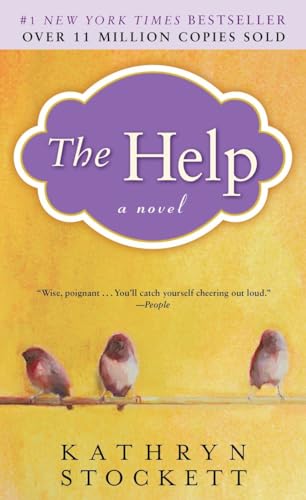
The #1 New York Times bestselling novel and basis for the Academy Award-winning film—a timeless and universal story about the lines we abide by, and the ones we don’t—nominated as one of America’s best-loved novels by PBS’s The Great American Read.
Aibileen is a black maid in 1962 Jackson, Mississippi, who’s always taken orders quietly, but lately she’s unable to hold her bitterness back. Her friend Minny has never held her tongue but now must somehow keep secrets about her employer that leave her speechless. White socialite Skeeter just graduated college. She’s full of ambition, but without a husband, she’s considered a failure.
Together, these seemingly different women join together to write a tell-all book about work as a black maid in the South, that could forever alter their destinies and the life of a small town...
Die Inhaltsangabe kann sich auf eine andere Ausgabe dieses Titels beziehen.
Über die Autorin bzw. den Autor
Kathryn Stockett was born and raised in Jackson, Mississippi. After graduating from the University of Alabama with a degree in English and creative writing, she moved to New York City, where she worked in magazine publishing and marketing for sixteen years. She currently lives in Atlanta with her husband and daughter.
Auszug. © Genehmigter Nachdruck. Alle Rechte vorbehalten.
Two days later, I sit in my parent's kitchen, waiting for dusk to fall. Igive in and light another cigarette even though last night the surgeongeneral came on the television set and shook his finger at everybody,trying to convince us that smoking will kill us. But Mother once toldme tongue kissing would turn me blind and I'm starting to think it'sall just a big plot between the surgeon general and Mother to make sureno one ever has any fun.
At eight o'clock that same night, I'mstumbling down Aibileen's street as discreetly as one can carrying afifty-pound Corona typewriter. I knock softly, already dying foranother cigarette to calm my nerves. Aibileen answers and I slipinside. She's wearing the same green dress and stiff black shoes aslast time.
I try to smile, like I'm confident it will workthis time, despite the idea she explained over the phone. "Could we…;sit in the kitchen this time?" I ask. "Would you mind?"
"Alright. Ain't nothing to look at, but come on back."
The kitchen is about half the size of the living room and warmer. It smellslike tea and lemons. The black-and-white linoleum floor has beenscrubbed thin. There's just enough counter for the china tea set. I setthe typewriter on a scratched red table under the window. Aibileenstarts to pour the hot water into the teapot.
"Oh, nonefor me, thanks," I say and reach in my bag. "I brought us some Co-Colasif you want one." I've tried to come up with ways to make Aibileen morecomfortable. Number One: Don't make Aibileen feel like she has to serveme.
"Well, ain't that nice. I usually don't take my tea tilllater anyway." She brings over an opener and two glasses. I drink minestraight from the bottle and seeing this, she pushes the glasses aside,does the same.
I called Aibileen after Elizabeth gave me thenote, and listened hopefully as Aibileen told me her idea—for her towrite her own words down and then show me what she's written. I triedto act excited. But I know I'll have to rewrite everything she'swritten, wasting even more time. I thought it might make it easier ifshe could see it in type-face instead of me reading it and telling herit can't work this way.
We smile at each other. I take a sip of my Coke, smooth my blouse. "So…;" I say.
Aibileen has a wire-ringed notebook in front of her. "Want me to…;just go head and read?"
"Sure," I say.
We both take deep breaths and she begins reading in a slow, steady voice.
"Myfirst white baby to ever look after was named Alton Carrington Speers.It was 1924 and I'd just turned fifteen years old. Alton was a long,skinny baby with hair fine as silk on a corn…;"
I begin typing as she reads, her words rhythmic, pronounced more clearly thanher usual talk. "Every window in that filthy house was painted shut onthe inside, even though the house was big with a wide green lawn. Iknew the air was bad, felt sick myself…;"
"Hang on," I say. I've typed wide greem. I blow on the typing fluid, retype it. "Okay, go ahead."
"When the mama died, six months later," she reads, "of the lung disease, theykept me on to raise Alton until they moved away to Memphis. I lovedthat baby and he loved me and that's when I knew I was good at makingchildren feel proud of themselves…;"
I hadn't wanted toinsult Aibileen when she told me her idea. I tried to urge her out ofit, over the phone. "Writing isn't that easy. And you wouldn't havetime for this anyway, Aibileen, not with a full-time job."
"Can't be much different than writing my prayers every night."
It was the first interesting thing she'd told me about herself since we'dstarted the project, so I'd grabbed the shopping pad in the pantry."You don't say your prayers, then?"
"I never told nobody that before. Not even Minny. Find I can get my point across a lot better writing em down."
"Sothis is what you do on the weekends?" I asked. "In your spare time?" Iliked the idea of capturing her life outside of work, when she wasn'tunder the eye of Elizabeth Leefolt.
"Oh no, I write a hour, sometimes two ever day. Lot a ailing, sick peoples in this town."
I was impressed. That was more than I wrote on some days. I told her we'd try it just to get the project going again.
Aibileen takes a breath, a swallow of Coke, and reads on.
Shebacktracks to her first job at thirteen, cleaning the Francis the Firstsilver service at the governor's mansion. She reads how on her firstmorning, she made a mistake on the chart where you filled in the numberof pieces so they'd know you hadn't stolen anything.
"I comehome that morning, after I been fired, and stood outside my house withmy new work shoes on. The shoes my mama paid a month's worth a lightbill for. I guess that's when I understood what shame was and the colorof it too. Shame ain't black, like dirt, like I always thought it was.Shame be the color of a new white uniform your mother ironed all nightto pay for, white without a smudge or a speck a work-dirt on it."
Aibileenlooks up to see what I think. I stop typing. I'd expected the storiesto be sweet, glossy. I realize I might be getting more than I'dbargained for. She reads on.
"…;so I go on and get thechiffarobe straightened out and before I know it, that little white boydone cut his fingers clean off in that window fan I asked her to takeout ten times. I never seen that much red come out a person and I grabthe boy, I grab them four fingers. Tote him to the colored hospitalcause I didn't know where the white one was. But when I got there, acolored man stop me and say, Is this boy white?" The typewriterkeys are clacking like hail on a roof. Aibileen is reading faster and Iam ignoring my mistakes, stopping her only to put in another page.Every eight seconds, I fling the carriage aside.
"And I says Yessuh, and he say, Is them his white fingers? And I say, Yessuh, and he say, Well you better tell them he your high yellow cause that colored doctor won't operate on a white boy in a Negro hospital. And then a white policeman grab me and he say, Now you look a here—"
She stops. Looks up. The clacking ceases.
"What? The policeman said look a here what?"
"Well, that's all I put down. Had to catch the bus for work this morning."
I hit the return and the typewriter dings. Aibileen and I look each other straight in the eye. I think this might actually work.
Chapter 12
Everyother night for the next two weeks, I tell Mother I'm off to feed thehungry at the Canton Presbyterian Church, where we, fortunately, knownot a soul. Of course she'd rather I go down to the First Presbyterian,but Mother's not one to argue with Christian works and she nodsapprovingly, tells me on the side to make sure I wash my handsthoroughly with soap afterward.
Hour after hour, inAibileen's kitchen, she reads her writing and I type, the detailsthickening, the babies' faces sliding into focus. At first, I'mdisappointed that Aibileen is doing most of the writing, with me justediting. But if Missus Stein likes it, I'll be writing the other maids'stories and that will be more than enough work. If she likes it…; I find myself saying this over and over in my head, hoping it might make it so.
Aibileen's writing is clear, honest. I tell her so.
"Well, look who I been writing to." She...
„Über diesen Titel“ kann sich auf eine andere Ausgabe dieses Titels beziehen.
Suchergebnisse für The Help

Beispielbild für diese ISBN
The Help
Anbieter: World of Books (was SecondSale), Montgomery, IL, USA
Verkäuferbewertung 5 von 5 Sternen

Paperback. Zustand: Fair. The #1 New York Times bestselling novel and basis for the Academy Award-winning film?a timeless and universal story about the lines we abide by, and the ones we don?t?nominated as one of America?s best-loved novels by PBS?s The Great American Read.Aibileen is a black maid in 1962 Jackson, Mississippi, who?s always taken orders quietly, but lately she?s unable to hold her bitterness back. Her friend Minny has never held her tongue but now must somehow keep secrets about her employer that leave her speechless. White socialite Skeeter just graduated college. She?s full of ambition, but without a husband, she?s considered a failure.Together, these seemingly different women join together to write a tell-all book about work as a black maid in the South, that could forever alter their destinies and the life of a small town. Artikel-Nr. 00066977057
Gebraucht kaufen
EUR 3,68
Versand gratis
Versand innerhalb von USA
Versand innerhalb von USA
Anzahl: Mehr als 20 verfügbar
Beispielbild für diese ISBN
The Help
Anbieter: World of Books (was SecondSale), Montgomery, IL, USA
Verkäuferbewertung 5 von 5 Sternen
Paperback. Zustand: Good. The #1 New York Times bestselling novel and basis for the Academy Award-winning film?a timeless and universal story about the lines we abide by, and the ones we don?t?nominated as one of America?s best-loved novels by PBS?s The Great American Read.Aibileen is a black maid in 1962 Jackson, Mississippi, who?s always taken orders quietly, but lately she?s unable to hold her bitterness back. Her friend Minny has never held her tongue but now must somehow keep secrets about her employer that leave her speechless. White socialite Skeeter just graduated college. She?s full of ambition, but without a husband, she?s considered a failure.Together, these seemingly different women join together to write a tell-all book about work as a black maid in the South, that could forever alter their destinies and the life of a small town. Artikel-Nr. 00094826857
Gebraucht kaufen
EUR 3,68
Versand gratis
Versand innerhalb von USA
Versand innerhalb von USA
Anzahl: Mehr als 20 verfügbar
Beispielbild für diese ISBN
The Help
Anbieter: World of Books (was SecondSale), Montgomery, IL, USA
Verkäuferbewertung 5 von 5 Sternen
Paperback. Zustand: Very Good. The #1 New York Times bestselling novel and basis for the Academy Award-winning film?a timeless and universal story about the lines we abide by, and the ones we don?t?nominated as one of America?s best-loved novels by PBS?s The Great American Read.Aibileen is a black maid in 1962 Jackson, Mississippi, who?s always taken orders quietly, but lately she?s unable to hold her bitterness back. Her friend Minny has never held her tongue but now must somehow keep secrets about her employer that leave her speechless. White socialite Skeeter just graduated college. She?s full of ambition, but without a husband, she?s considered a failure.Together, these seemingly different women join together to write a tell-all book about work as a black maid in the South, that could forever alter their destinies and the life of a small town. Artikel-Nr. 00099889446
Gebraucht kaufen
EUR 3,68
Versand gratis
Versand innerhalb von USA
Versand innerhalb von USA
Anzahl: Mehr als 20 verfügbar
Beispielbild für diese ISBN
The Help
Verlag:
Berkley (edition Reprint), 2011
ISBN 10: 0425232204
ISBN 13: 9780425232200
Gebraucht
Paperback
Anbieter: BooksRun, Philadelphia, PA, USA
Verkäuferbewertung 5 von 5 Sternen
Paperback. Zustand: Fair. Reprint. The item might be beaten up but readable. May contain markings or highlighting, as well as stains, bent corners, or any other major defect, but the text is not obscured in any way. Artikel-Nr. 0425232204-7-1-13
Gebraucht kaufen
EUR 4,85
Versand gratis
Versand innerhalb von USA
Versand innerhalb von USA
Anzahl: 3 verfügbar
Beispielbild für diese ISBN
The Help
Verlag:
Berkley (edition Reprint), 2011
ISBN 10: 0425232204
ISBN 13: 9780425232200
Gebraucht
Paperback
Anbieter: BooksRun, Philadelphia, PA, USA
Verkäuferbewertung 5 von 5 Sternen
Paperback. Zustand: Very Good. Reprint. It's a well-cared-for item that has seen limited use. The item may show minor signs of wear. All the text is legible, with all pages included. It may have slight markings and/or highlighting. Artikel-Nr. 0425232204-11-18
Gebraucht kaufen
EUR 5,51
Versand gratis
Versand innerhalb von USA
Versand innerhalb von USA
Anzahl: 6 verfügbar
Beispielbild für diese ISBN
The Help
Verlag:
Berkley (edition Reprint), 2011
ISBN 10: 0425232204
ISBN 13: 9780425232200
Gebraucht
Paperback
Anbieter: BooksRun, Philadelphia, PA, USA
Verkäuferbewertung 5 von 5 Sternen
Paperback. Zustand: Very Good. Reprint. It's a well-cared-for item that has seen limited use. The item may show minor signs of wear. All the text is legible, with all pages included. It may have slight markings and/or highlighting. Artikel-Nr. 0425232204-8-18
Gebraucht kaufen
EUR 5,57
Versand gratis
Versand innerhalb von USA
Versand innerhalb von USA
Anzahl: 1 verfügbar
Beispielbild für diese ISBN
The Help
Verlag:
Berkley (edition Reprint), 2011
ISBN 10: 0425232204
ISBN 13: 9780425232200
Gebraucht
Paperback
Anbieter: BooksRun, Philadelphia, PA, USA
Verkäuferbewertung 5 von 5 Sternen
Paperback. Zustand: Fair. Reprint. The item might be beaten up but readable. May contain markings or highlighting, as well as stains, bent corners, or any other major defect, but the text is not obscured in any way. Artikel-Nr. 0425232204-7-18
Gebraucht kaufen
EUR 5,66
Versand gratis
Versand innerhalb von USA
Versand innerhalb von USA
Anzahl: 4 verfügbar
Beispielbild für diese ISBN
The Help
Anbieter: ThriftBooks-Phoenix, Phoenix, AZ, USA
Verkäuferbewertung 5 von 5 Sternen
Paperback. Zustand: Good. No Jacket. Former library book; Pages can have notes/highlighting. Spine may show signs of wear. ~ ThriftBooks: Read More, Spend Less. Artikel-Nr. G0425232204I3N10
Gebraucht kaufen
EUR 5,90
Versand gratis
Versand innerhalb von USA
Versand innerhalb von USA
Anzahl: 1 verfügbar
Beispielbild für diese ISBN
The Help
Anbieter: ThriftBooks-Reno, Reno, NV, USA
Verkäuferbewertung 5 von 5 Sternen
Paperback. Zustand: Fair. No Jacket. Readable copy. Pages may have considerable notes/highlighting. ~ ThriftBooks: Read More, Spend Less. Artikel-Nr. G0425232204I5N00
Gebraucht kaufen
EUR 5,90
Versand gratis
Versand innerhalb von USA
Versand innerhalb von USA
Anzahl: Mehr als 20 verfügbar
Beispielbild für diese ISBN
The Help
Anbieter: ThriftBooks-Dallas, Dallas, TX, USA
Verkäuferbewertung 5 von 5 Sternen
Paperback. Zustand: Fair. No Jacket. Readable copy. Pages may have considerable notes/highlighting. ~ ThriftBooks: Read More, Spend Less. Artikel-Nr. G0425232204I5N00
Gebraucht kaufen
EUR 5,90
Versand gratis
Versand innerhalb von USA
Versand innerhalb von USA
Anzahl: Mehr als 20 verfügbar