
Verwandte Artikel zu Miracle Run: Watching My Autistic Sons Grow Up- and...
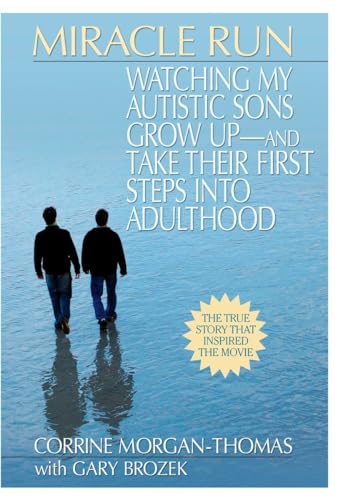
Miracle Run: Watching My Autistic Sons Grow Up- and Take Their First StepsInto Adulthood - Softcover
Inhaltsangabe
The inspiration for the Lifetime movie and a guide for parents confronting their autistic children's journeys to adulthood.
Parents of autistic children often wonder: What will happen to our kids when they grow up? Can they work? Have relationships and their own families? Here is the poignant story of one woman watching her autistic boys reach adulthood.
A single mother barely making ends meet, Corrine Morgan-Thomas could hardly afford doctors for her twins, Stephen and Phillip. After their diagnosis of autism, no one else thought these boys would ever amount to anything. But Corrine managed single-handedly to keep the boys out of institutions-and in "regular" school. And their inspiring story became Lifetime television's Miracle Run.
The real miracle, though, was what happened where the movie left off-when Stephen and Phillip graduated to face adult autism. From their diagnosis to the present day, when the boys have grown into young men leading happy lives, Corrine's eye-opening story is full of candor, humor, and most of all, hope.
Die Inhaltsangabe kann sich auf eine andere Ausgabe dieses Titels beziehen.
Über die Autorin bzw. den Autor
Corrine Morgan-Thomas
Auszug. © Genehmigter Nachdruck. Alle Rechte vorbehalten.
In any teen’s life, two rites of passage stand out: first love andgetting a driver’s license. As complicated as both those matterscan be, when you factor autism into the equation, you have tohave a mastery of higher math and a grasp of the chemistry of the volatile emotions of teenagers firmly in your mind.
Although I had mixed feelings about them falling in love, Ifirmly believed that Stephen and Phillip had the right to applyfor and to try to get their driver’s licenses. If they passed thewritten and the driving tests, demonstrating the competencythat any other citizen possessed, then why not?
On the other hand, I had some pretty good why- nots inmind. The anxiety level they both exhibited in new situations,especially when exposed to things like loud noises, would potentiallymake them a danger to themselves and to other drivers.All the medications that Phillip was on and the unpredictableinteractions among those drugs didn’t make him a good candidatefor driving. When I stacked those reasons up against theirstrong desire to drive, and what more potent symbol of a teen’sfreedom and independence exists than driving, I was torn. Ididn’t want to be the one to stand in the way of their dreambeing fulfilled. To give you a better idea of how much drivingmeant to him, Phillip had written a song aptly titled “TheDMV Song.” I didn’t like to ever play favorites, but I could reasonablyimagine Stephen being able to earn his license. With Phillip, I thought the odds were stacked against him.
On one occasion, I took them both to the DMV office. Iturned them loose after telling them which line to stand in.I sat in a waiting area with my fingers crossed, hoping thatthey’d both fail the written test. I knew that would greatly disappointthem both, but failing on their own was better thanme not allowing them to do something they wanted so badly todo. The first time Phillip took the written test, I could see thathe was struggling. I don’t know if it was nerves or what, but Icould read the panic in his eyes as he scanned the questions.
That surprised me since they had both studied very hard forthe test. When Phillip completed his test and brought it to theclerk, he kind of shuffled up and looked as though he was aboutto collapse with in himself. It took a few moments for him toget his score, and when he was called back up, it was clear thathe hadn’t passed. I breathed a deep sigh of relief. Stephen hadalready passed the written portion of the exam and was in lineto take the vision test. I now only had one to worry about.
Then I noticed that the clerk had taken Phillip aside. I didn’twant to make a scene, so I stood up and inched my way closer towhere the pair was standing. The clerk, obviously very sympatheticto Phillip’s plight, was asking him a series of really basicquestions about driving. The next thing I knew, he was shakingPhillip’s hand and congratulating him for passing the writtentest. I couldn’t believe it. It was a nice gesture, but all I couldthink of was that he was hoping that Phillip wouldn’t make itpast some of the other hurdles he had yet to face.
As it turned out, neither of the boys passed the drivingportion of the exam. I was so relieved. They both vowed to workharder and to pass the next time. As bad as I felt rooting againstmy sons, I knew that in the end their not getting to drive was agood thing. I would hate for them to do harm to themselves andto another driver or pedestrian. Balancing what is right for themwith the needs of the larger community is an ongoing task.
I believe that someday they will both be able to drive. Quitea few high- functioning autistics do, and I feel that once thetwins mature a little more and learn to deal better with loudnoises and such, they will be good drivers. One thing is for sure:they would never get lost. Stephen especially is like a humanGlobal Positioning Satellite. I’m not fond of driving, and I frequentlyget lost, but if Stephen or Phillip is in the car with me,I never have to worry about finding my way. It is uncanny howwe can be traveling in some unfamiliar place and they alwaysmanage to get me back on the road to home.
The twins still talk about getting their licenses, and I thinkthat one day they will. They just have to be patient, a virtue whoseimportance we all became acutely aware of throughout the years.
As for that other major adolescent rite of passage— first love—I knew I wouldn’t be able to have the proverbial birds and the beesdiscussion with Stephen and Phillip. I knew that my nervousnessand awkward attempts to communicate with them aboutreproduction and sexual intimacy would send the wrong signalto them. If I stuttered and stammered, hemmed and hawed,turned beet red and blanched at any of their questions I thoughtwere too frank, all I would do was add to their confusion. I alsoknew that I owed it to them and to my daughter to make certainthey received the proper information about sexual matters. Thereis a five- year age difference between Ali and the twins, they havedifferent fathers, and though there was never any suggestion of inappropriate conduct on their part, I was paranoid about custodyissues due to my previous experiences with child welfare folks.
For that reason, I sent the boys to a psychologist when theywere about to enter their teens. The boys had received someinstruction at school about reproduction, mostly a very clinical,very scientific parts- and- process inventory that had little to dowith their real world concerns. I wanted them to go to someonewho could speak with them on their level about all kinds of matters that I would have never been able to bring up: nocturnalemissions, masturbation, intercourse, spontaneous erections,and all the other things that had a blush factor of 10 or more.
Along with a discussion about those issues, I wanted thetherapist to help me instruct the boys on what was appropriatebehavior— not simply sexually but socially— with members of the opposite sex. I knew that the boys had developed an interestin girls and women. I used to bring home outdated magazinesfrom the off ice— People and Cosmopolitan, mostly— andStephen and Phillip would read them. They both seemed tobe drawn to the ones with the photos of female celebrities onthe cover. That was fine and normal, but I also wanted them tolearn that what they saw on the covers of the magazines andwhat was in store for them in reality were two different things.
Because of patient- client confidentiality issues— and even If there weren’t those constraints placed on a therapist, I wouldn’thave asked anyway— I don’t know and can’t tell you the detailsof the discussions the boys had with him. I respected their privacyenough and trusted in the therapist enough to simply takethem to the appointments, sit patiently in the waiting room forthe hour to lapse, and then drive the boys home. Later, whenDoug learned that the boys had received some additional sexeducation through the therapist, he referred to him as “DoctorLas Vegas— what they discuss in his off ice stays in his off ice.”And that’s exactly as I intended it.
I knew my limitations, and I didn’t want them to interferewith the twins getting the information they needed anddeserved. I was willing to let go of my control over the situationand let someone with far more expertise than I possesseddo the job for me.
Stephen and Phillip have both expressed a desire, as I’vementioned before, to date and to eventually marry. Stephen’sfirst foray into high school romance serves as an object lesson inthe ways of the autistic heart.
Stephen’s self- confidence was boosted enormously by thepress attention he was receiving. As one student...
„Über diesen Titel“ kann sich auf eine andere Ausgabe dieses Titels beziehen.
Suchergebnisse für Miracle Run: Watching My Autistic Sons Grow Up- and...

Beispielbild für diese ISBN
Miracle Run: Watching My Autistic Sons Grow Up- and Take Their First StepsInto Adulthood
Verlag:
Penguin Publishing Group (edition ), 2009
ISBN 10: 0425225828
ISBN 13: 9780425225820
Gebraucht
Paperback
Anbieter: BooksRun, Philadelphia, PA, USA
Verkäuferbewertung 5 von 5 Sternen

Paperback. Zustand: Very Good. It's a well-cared-for item that has seen limited use. The item may show minor signs of wear. All the text is legible, with all pages included. It may have slight markings and/or highlighting. Artikel-Nr. 0425225828-11-1
Gebraucht kaufen
EUR 4,38
Versand gratis
Versand innerhalb von USA
Versand innerhalb von USA
Anzahl: 1 verfügbar
Beispielbild für diese ISBN
Miracle Run: Watching My Autistic Sons Grow Up- and Take Their First StepsInto Adulthood
Verlag:
Penguin Publishing Group, 2009
ISBN 10: 0425225828
ISBN 13: 9780425225820
Gebraucht
Paperback
Anbieter: ThriftBooks-Dallas, Dallas, TX, USA
Verkäuferbewertung 5 von 5 Sternen
Paperback. Zustand: Good. No Jacket. Former library book; Pages can have notes/highlighting. Spine may show signs of wear. ~ ThriftBooks: Read More, Spend Less. Artikel-Nr. G0425225828I3N10
Gebraucht kaufen
EUR 5,87
Versand gratis
Versand innerhalb von USA
Versand innerhalb von USA
Anzahl: 1 verfügbar
Beispielbild für diese ISBN
Miracle Run : Watching My Autistic Sons Grow up- and Take Their First StepsInto Adulthood
Verlag:
Penguin Publishing Group, 2009
ISBN 10: 0425225828
ISBN 13: 9780425225820
Gebraucht
Softcover
Anbieter: Better World Books, Mishawaka, IN, USA
Verkäuferbewertung 5 von 5 Sternen
Zustand: Good. Pages intact with minimal writing/highlighting. The binding may be loose and creased. Dust jackets/supplements are not included. Stock photo provided. Product includes identifying sticker. Better World Books: Buy Books. Do Good. Artikel-Nr. 532375-6
Gebraucht kaufen
EUR 6,09
Versand gratis
Versand innerhalb von USA
Versand innerhalb von USA
Anzahl: 1 verfügbar
Foto des Verkäufers
Miracle Run: Watching My Autistic Sons Grow Up- and Take Their First StepsInto Adulthood
Verlag:
Penguin Publishing Group, 2009
ISBN 10: 0425225828
ISBN 13: 9780425225820
Gebraucht
paperback
Anbieter: WeBuyBooks, Rossendale, LANCS, Vereinigtes Königreich
Verkäuferbewertung 5 von 5 Sternen
paperback. Zustand: Good. Most items will be dispatched the same or the next working day. A copy that has been read but remains in clean condition. All of the pages are intact and the cover is intact and the spine may show signs of wear. The book may have minor markings which are not specifically mentioned. Ex library copy with usual stamps & stickers. Artikel-Nr. rev5087373200
Gebraucht kaufen
EUR 9,26
EUR 6,59 Versand
Versand von Vereinigtes Königreich nach USA
Versand von Vereinigtes Königreich nach USA
Anzahl: 1 verfügbar
Beispielbild für diese ISBN
Miracle Run: Watching My Autistic Sons Grow Up - and Take Their First Steps into Adulthood
Anbieter: Revaluation Books, Exeter, Vereinigtes Königreich
Verkäuferbewertung 5 von 5 Sternen
Paperback. Zustand: Brand New. 336 pages. 8.75x5.50x1.00 inches. In Stock. Artikel-Nr. x-0425225828
Neu kaufen
EUR 30,74
EUR 11,63 Versand
Versand von Vereinigtes Königreich nach USA
Versand von Vereinigtes Königreich nach USA
Anzahl: 2 verfügbar
Beispielbild für diese ISBN
Miracle Run: Watching My Autistic Sons Grow Up- and Take Their First StepsInto Adulthood
Anbieter: Kennys Bookstore, Olney, MD, USA
Verkäuferbewertung 5 von 5 Sternen
Zustand: New. Num Pages: 336 pages. BIC Classification: BM; MJNA; VFJD; VFX. Category: (G) General (US: Trade). Dimension: 216 x 140 x 23. Weight in Grams: 400. . 2009. Paperback. . . . . Books ship from the US and Ireland. Artikel-Nr. V9780425225820
Neu kaufen
EUR 33,75
EUR 9,23 Versand
Versand innerhalb von USA
Versand innerhalb von USA
Anzahl: Mehr als 20 verfügbar
Beispielbild für diese ISBN
Miracle Run: Watching My Autistic Sons Grow Up- and Take Their First StepsInto Adulthood
Anbieter: Ria Christie Collections, Uxbridge, Vereinigtes Königreich
Verkäuferbewertung 5 von 5 Sternen
Zustand: New. In English. Artikel-Nr. ria9780425225820_new
Neu kaufen
EUR 30,45
EUR 13,13 Versand
Versand von Vereinigtes Königreich nach USA
Versand von Vereinigtes Königreich nach USA
Anzahl: Mehr als 20 verfügbar