
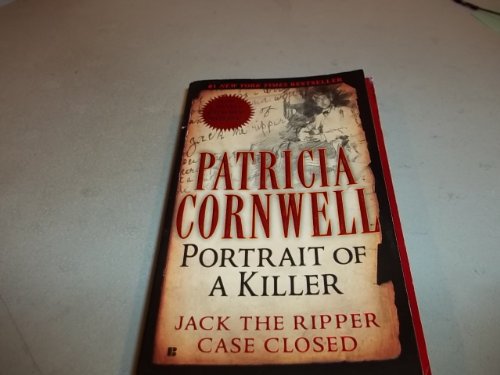
Verwandte Artikel zu Portrait of a Killer: Jack the Ripper - Case Closed
Inhaltsangabe
Examines the century-old series of murders that terrorized London in the 1880s, drawing on research, state-of-the-art forensic science, and insights into the criminal mind to reveal the true identity of the infamous Jack the Ripper. Reprint.
Die Inhaltsangabe kann sich auf eine andere Ausgabe dieses Titels beziehen.
Auszug. © Genehmigter Nachdruck. Alle Rechte vorbehalten.
Monday, August 6, 1888, was a bank holiday in London. The city
was a carnival of wondrous things to do for as little as pennies
if one could spare a few.
The bells of Windsor’s Parish Church and St. George’s Chapel rang
throughout the day. Ships were dressed in flags, and royal salutes boomed
from cannons to celebrate the Duke of Edinburgh’s forty-fourth birthday.
The Crystal Palace offered a dazzling spectrum of special programs:
organ recitals, military band concerts, a “monster display of fireworks,”
a grand fairy ballet, ventriloquists, and “world famous minstrel performances.”
Madame Tussaud’s featured a special wax model of Frederick
II lying in state and, of course, the ever-popular Chamber of Horrors.
Other delicious horrors awaited those who could afford theater tickets
and were in the mood for a morality play or just a good old-fashioned
fright. Dr. Jekyll and Mr. Hyde was playing to sold-out houses. The famous
American actor Richard Mansfield was brilliant as Jekyll and Hyde
__
C H A P T E R O N E
M R . N O B O D Y
at Henry Irving’s Lyceum, and the Opera Comique had its version, too,
although poorly reviewed and in the midst of a scandal because the theater
had adapted Robert Louis Stevenson’s novel without permission.
On this bank holiday there were horse and cattle shows; special
“cheap rates” on trains; and the bazaars in Covent Garden overflowing
with Sheffield plates, gold, jewelry, used military uniforms. If one wanted
to pretend to be a soldier on this relaxed but rowdy day, he could do so
with little expense and no questions asked. Or one could impersonate a
copper by renting an authentic Metropolitan Police uniform from Angel’s
Theatrical Costumes in Camden Town, scarcely a two-mile stroll from
where the handsome Walter Richard Sickert lived.
Twenty-eight-year-old Sickert had given up his obscure acting career
for the higher calling of art. He was a painter, an etcher, a student of
James McNeill Whistler, and a disciple of Edgar Degas. Young Sickert
was himself a work of art: slender, with a strong upper body from swimming,
a perfectly angled nose and jaw, thick wavy blond hair, and blue
eyes that were as inscrutable and penetrating as his secret thoughts and
piercing mind. One might almost have called him pretty, except for his
mouth, which could narrow into a hard, cruel line. His precise height is
unknown, but a friend of his described him as a little above average. Photographs
and several items of clothing donated to the Tate Gallery
Archive in the 1980s suggest he was probably five foot eight or nine.
Sickert was fluent in German, English, French, and Italian. He knew
Latin well enough to teach it to friends, and he was well acquainted with
Danish and Greek and possibly knew a smattering of Spanish and Portuguese.
He was said to read the classics in their original languages, but
he didn’t always finish a book once he started it. It wasn’t uncommon to
find dozens of novels strewn about, opened to the last page that had
snagged his interest. Mostly, Sickert was addicted to newspapers,
tabloids, and journals.
Until his death in 1942, his studios and studies looked like a recycling
center for just about every bit of newsprint to roll off the European
P A T R I C I A C O R N W E L L
[ 2 ]
presses. One might ask how any hard-working person could find time to
go through four, five, six, ten newspapers a day, but Sickert had a
method. He didn’t bother with what didn’t interest him, whether it was
politics, economics, world affairs, wars, or people. Nothing mattered to
Sickert unless it somehow affected Sickert.
He usually preferred to read about the latest entertainment to come
to town, to scrutinize art critiques, to turn quickly to any story about
crime, and to search for his own name if there was any reason it might
be in print on a given day. He was fond of letters to the editor, especially
ones he wrote and signed with a pseudonym. Sickert relished knowing
what other people were doing, especially in the privacy of their own notalways-
so-tidy Victorian lives. “Write, write, write!” he would beg his
friends. “Tell me in detail all sorts of things, things that have amused you
and how and when and where, and all sorts of gossip about every one.”
Sickert despised the upper class, but he was a star stalker. He somehow
managed to hobnob with the major celebrities of the day: Henry Irving
and Ellen Terry, Aubrey Beardsley, Henry James, Max Beerbohm,
Oscar Wilde, Monet, Renoir, Pissarro, Rodin, André Gide, Édouard Dujardin,
Proust, Members of Parliament. But he did not necessarily know
many of them, and no one—famous or otherwise—ever really knew him.
Not even his first wife, Ellen, who would turn forty in less than two
weeks. Sickert may not have given much thought to his wife’s birthday
on this bank holiday, but it was extremely unlikely he had forgotten it.
He was much admired for his amazing memory. Throughout his life
he would amuse dinner guests by performing long passages of musicals
and plays, dressed for the parts, his recitations flawless. Sickert would
not have forgotten that Ellen’s birthday was August 18th and a very easy
occasion to ruin. Maybe he would “forget.” Maybe he would vanish into
one of his secret rented hovels that he called studios. Maybe he would
take Ellen to a romantic café in Soho and leave her alone at the table
while he dashed off to a music hall and then stayed out the rest of the
night. Ellen loved Sickert all her sad life, despite his cold heart, his patho-
P O R T R A I T O F A K I L L E R
[ 3 ]
logical lying, his self-centeredness, and his habit of disappearing for
days—even weeks—without warning or explanation.
Walter Sickert was an actor by nature more than by virtue of employment.
He lived on the center stage of his secret, fantasy-driven life
and was just as comfortable moving about unnoticed in the deep shadows
of isolated streets as he was in the midst of throbbing crowds. He
had a great range of voice and was a master of greasepaint and wardrobe.
So gifted at disguise was he that as a boy he often went about unrecognized
by his neighbors and family.
Throughout his long and celebrated life, he was notorious for constantly
changing his appearance with a variety of beards and mustaches,
for his bizarre dress that in some cases constituted costumes, for his hairstyles—
including shaving his head. He was, wrote French artist and
friend Jacques-Emile Blanche, a “Proteus.” Sickert’s “genius for camouflage
in dress, in the fashion of wearing his hair, and in his manner of
speaking rival Fregoli’s,” Blanche recalled. In a portrait Wilson Steer
painted of Sickert in 1890, Sickert sports a phony-looking mustache that
resembles a squirrel’s tail pasted above his mouth.
He also had a penchant for changing his name. His acting career,
paintings, etchings, drawings, and prolific letters to colleagues, friends,
and newspapers reveal many personas: Mr. Nemo (Latin for “Mr. Nobody”),
An Enthusiast, A Whistlerite, Your Art Critic, An Outsider, Walter
Sickert, Sickert, Walter R. Sickert, Richard Sickert, W. R. Sickert,
W.S., R.S., S., Dick, W. St., Rd. Sickert LL.D., R.St. A.R.A., and RDSt
A.R.A.
Sickert did not write his memoirs, keep a diary or calendar, or date
most of his letters or works of art, so it is difficult to know where he was
or what he was doing on or during any given day, week, month, or even
year. I could find no record of his whereabouts or activities on August 6,
1888, but there is no reason to suspect...
„Über diesen Titel“ kann sich auf eine andere Ausgabe dieses Titels beziehen.
Suchergebnisse für Portrait of a Killer: Jack the Ripper - Case Closed

Beispielbild für diese ISBN
Portrait of a Killer: Jack the Ripper -- Case Closed
Anbieter: World of Books (was SecondSale), Montgomery, IL, USA
Verkäuferbewertung 5 von 5 Sternen

Zustand: Good. Artikel-Nr. 00081930533
Gebraucht kaufen
EUR 3,66
Versand gratis
Versand innerhalb von USA
Versand innerhalb von USA
Anzahl: 20 verfügbar
Beispielbild für diese ISBN
Portrait Of A Killer: Jack The Ripper Case Closed
Anbieter: World of Books (was SecondSale), Montgomery, IL, USA
Verkäuferbewertung 5 von 5 Sternen
Zustand: Acceptable. Item in very good condition! Textbooks may not include supplemental items i.e. CDs, access codes etc. Artikel-Nr. 00075715787
Gebraucht kaufen
EUR 3,66
Versand gratis
Versand innerhalb von USA
Versand innerhalb von USA
Anzahl: 4 verfügbar
Beispielbild für diese ISBN
Portrait Of A Killer: Jack The Ripper Case Closed
Verlag:
Berkley (edition Reissue), 2003
ISBN 10: 0425192733
ISBN 13: 9780425192733
Gebraucht
Mass Market Paperback
Anbieter: BooksRun, Philadelphia, PA, USA
Verkäuferbewertung 5 von 5 Sternen
Mass Market Paperback. Zustand: Fair. Reissue. The item might be beaten up but readable. May contain markings or highlighting, as well as stains, bent corners, or any other major defect, but the text is not obscured in any way. Artikel-Nr. 0425192733-7-1-13
Gebraucht kaufen
EUR 4,65
Versand gratis
Versand innerhalb von USA
Versand innerhalb von USA
Anzahl: 2 verfügbar
Beispielbild für diese ISBN
Portrait Of A Killer: Jack The Ripper Case Closed
Verlag:
Berkley (edition Reissue), 2003
ISBN 10: 0425192733
ISBN 13: 9780425192733
Gebraucht
Mass Market Paperback
Anbieter: BooksRun, Philadelphia, PA, USA
Verkäuferbewertung 5 von 5 Sternen
Mass Market Paperback. Zustand: Fair. Reissue. The item might be beaten up but readable. May contain markings or highlighting, as well as stains, bent corners, or any other major defect, but the text is not obscured in any way. Artikel-Nr. 0425192733-7-1
Gebraucht kaufen
EUR 4,73
Versand gratis
Versand innerhalb von USA
Versand innerhalb von USA
Anzahl: 1 verfügbar
Beispielbild für diese ISBN
Portrait Of A Killer: Jack The Ripper Case Closed
Anbieter: ThriftBooks-Atlanta, AUSTELL, GA, USA
Verkäuferbewertung 5 von 5 Sternen
Mass Market Paperback. Zustand: Fair. No Jacket. Readable copy. Pages may have considerable notes/highlighting. ~ ThriftBooks: Read More, Spend Less. Artikel-Nr. G0425192733I5N00
Gebraucht kaufen
EUR 6,11
Versand gratis
Versand innerhalb von USA
Versand innerhalb von USA
Anzahl: 1 verfügbar
Beispielbild für diese ISBN
Portrait of a Killer : Jack the Ripper - Case Closed
Verlag:
Penguin Publishing Group, 2003
ISBN 10: 0425192733
ISBN 13: 9780425192733
Gebraucht
Softcover
Anbieter: Better World Books: West, Reno, NV, USA
Verkäuferbewertung 5 von 5 Sternen
Zustand: Very Good. Reissue. Pages intact with possible writing/highlighting. Binding strong with minor wear. Dust jackets/supplements may not be included. Stock photo provided. Product includes identifying sticker. Better World Books: Buy Books. Do Good. Artikel-Nr. 6375553-6
Gebraucht kaufen
EUR 6,90
Versand gratis
Versand innerhalb von USA
Versand innerhalb von USA
Anzahl: 1 verfügbar
Beispielbild für diese ISBN
Portrait of a Killer : Jack the Ripper - Case Closed
Verlag:
Penguin Publishing Group, 2003
ISBN 10: 0425192733
ISBN 13: 9780425192733
Gebraucht
Softcover
Anbieter: Better World Books, Mishawaka, IN, USA
Verkäuferbewertung 5 von 5 Sternen
Zustand: Good. Reissue. Pages intact with minimal writing/highlighting. The binding may be loose and creased. Dust jackets/supplements are not included. Stock photo provided. Product includes identifying sticker. Better World Books: Buy Books. Do Good. Artikel-Nr. 3264850-6
Gebraucht kaufen
EUR 6,90
Versand gratis
Versand innerhalb von USA
Versand innerhalb von USA
Anzahl: 2 verfügbar
Beispielbild für diese ISBN
Portrait of a Killer : Jack the Ripper - Case Closed
Verlag:
Penguin Publishing Group, 2003
ISBN 10: 0425192733
ISBN 13: 9780425192733
Gebraucht
Softcover
Anbieter: Better World Books: West, Reno, NV, USA
Verkäuferbewertung 5 von 5 Sternen
Zustand: Good. Reissue. Pages intact with minimal writing/highlighting. The binding may be loose and creased. Dust jackets/supplements are not included. Stock photo provided. Product includes identifying sticker. Better World Books: Buy Books. Do Good. Artikel-Nr. 3264850-6
Gebraucht kaufen
EUR 6,90
Versand gratis
Versand innerhalb von USA
Versand innerhalb von USA
Anzahl: 2 verfügbar
Beispielbild für diese ISBN
Portrait of a Killer : Jack the Ripper - Case Closed
Verlag:
Penguin Publishing Group, 2003
ISBN 10: 0425192733
ISBN 13: 9780425192733
Gebraucht
Softcover
Anbieter: Better World Books, Mishawaka, IN, USA
Verkäuferbewertung 5 von 5 Sternen
Zustand: Very Good. Reissue. Pages intact with possible writing/highlighting. Binding strong with minor wear. Dust jackets/supplements may not be included. Stock photo provided. Product includes identifying sticker. Better World Books: Buy Books. Do Good. Artikel-Nr. 6375553-6
Gebraucht kaufen
EUR 6,90
Versand gratis
Versand innerhalb von USA
Versand innerhalb von USA
Anzahl: 1 verfügbar
Beispielbild für diese ISBN
Portrait of a Killer : Jack the Ripper - Case Closed
Verlag:
Penguin Publishing Group, 2003
ISBN 10: 0425192733
ISBN 13: 9780425192733
Gebraucht
Softcover
Anbieter: Better World Books, Mishawaka, IN, USA
Verkäuferbewertung 5 von 5 Sternen
Zustand: Good. Reissue. Former library copy. Pages intact with minimal writing/highlighting. The binding may be loose and creased. Dust jackets/supplements are not included. Includes library markings. Stock photo provided. Product includes identifying sticker. Better World Books: Buy Books. Do Good. Artikel-Nr. 8648075-6
Gebraucht kaufen
EUR 6,90
Versand gratis
Versand innerhalb von USA
Versand innerhalb von USA
Anzahl: 1 verfügbar