
Verwandte Artikel zu The Sum of All Fears (Om): A Jack Ryan Novel
Inhaltsangabe
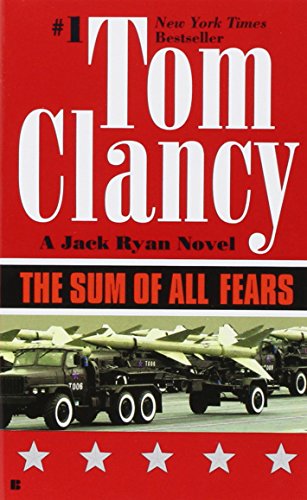
The search for a stolen nuclear weapon on American soil sends Jack Ryan on a dangerous mission with global consequences in this #1 New York Times bestselling thriller.
Peace may finally be at hand in the Middle East, as Jack Ryan, Deputy Director of Intelligence for the CIA, lays the groundwork for a plan that could end centuries of conflict. But ruthless terrorists have a final, desperate card to play: a nuclear weapon hidden somewhere in the United States.
With one terrible act, distrust mounts, forces collide, and the floundering U.S. president seems unable to cope with the crisis. With the world on the verge of nuclear disaster, Ryan must frantically seek a solution-before the chiefs of state lose control of themselves and the world.
Die Inhaltsangabe kann sich auf eine andere Ausgabe dieses Titels beziehen.
Über die Autorin bzw. den Autor
A little more than thirty years ago Tom Clancy was a Maryland insurance broker with a passion for naval history. Years before, he had been an English major at Baltimore’s Loyola College and had always dreamed of writing a novel. His first effort, The Hunt for Red October—the first of the phenomenally successful Jack Ryan novels—sold briskly as a result of rave reviews, then catapulted onto the New York Times bestseller list after President Reagan pronounced it “the perfect yarn.” From that day forward, Clancy established himself as an undisputed master at blending exceptional realism and authenticity, intricate plotting, and razor-sharp suspense. He passed away in October 2013.
Auszug. © Genehmigter Nachdruck. Alle Rechte vorbehalten.
PROLOGUE
BROKEN ARROW
"Like the wolf on the fold." In recounting the Syrian attack on the Israeli-held Golan Heights at 1400 local time on Saturday, the 6th of October, 1973, most commentators automatically recalled Lord Byron's famous line. There is also little doubt that that is precisely what the more literarily inclined Syrian commanders had in mind when they placed the final touches on the operations plans that would hurl more tanks and guns at the Israelis than any of Hitler's vaunted panzer generals had ever dreamed of having.
However, the sheep found by the Syrian Army that grim October day were more like big-horned rams in autumn rut than the more docile kind found in pastoral verse. Outnumbered by roughly nine to one, the two Israeli brigades on the Golan were crack units. The 7th Brigade held the northern Golan and scarcely budged, its defensive network a delicate balance of rigidity and flexibility. Individual strongpoints held stubbornly, channeling the Syrian penetrations into rocky defiles where they could be pinched off and smashed by roving bands of Israeli armor which lay in wait behind the Purple Line. By the time reinforcements began arriving on the second day, the situation was still in hand-but barely. By the end of the fourth day, the Syrian tank army that had fallen upon the 7th lay a smoking ruin before it.
The Barak ("Thunderbolt") Brigade held the southern heights and was less fortunate. Here the terrain was less well suited to the defense, and here also the Syrians appear to have been more ably led. Within hours the Barak had been broken into several fragments. Though each piece would later prove to be as dangerous as a nest of vipers, the Syrian spearheads were quick to exploit the gaps and race toward their strategic objective, the Sea of Galilee. The situation that developed over the next thirty-six hours would prove to be the gravest test of Israeli arms since 1948.
Reinforcements began arriving on the second day. These had to be thrown into the battle area piecemeal-plugging holes, blocking roads, even rallying units that had broken under the desperate strain of combat and, for the first time in Israeli history, fled the field before the advancing Arabs. Only on the third day were the Israelis able to assemble their armored fist, first enveloping, then smashing the three deep Syrian penetrations. The changeover to offensive operations followed without pause. The Syrians were hurled back toward their own capital by a wrathful counterattack, and surrendered a field littered with burned-out tanks and shattered men. At the end of this day the troopers of the Barak and the 7th heard over their unit radio nets a message from Israeli Defense Forces High Command:
YOU HAVE SAVED THE PEOPLE OF ISRAEL.
And so they had. Yet outside Israel, except for schools in which men learn the profession of arms, this epic battle is strangely unremembered. As in the Six Day War of 1967, the more freewheeling operations in the Sinai were the ones that attracted the excitement and admiration of the world: bridging the Suez, the Battle of the "Chinese" Farm, the encirclement of the Egyptian 3rd Army-this despite the fearful implications of the Golan fighting, which was far closer to home. Still, the survivors of those two brigades knew what they had done, and their officers could revel in the knowledge that among professional soldiers who know the measure of skill and courage that such a stand entails, their Battle for the Heights would be remembered with Thermopylae, Bastogne, and Gloucester Hill.
Each war knows many ironies, however, and the October War was no exception. As is true of most glorious defensive stands, this one was largely unnecessary. The Israelis had misread intelligence reports which, had they been acted on as little as twelve hours earlier, would have enabled them to execute pre-set plans and pour reserves onto the Heights hours before the onslaught commenced. Had they done so,
„Über diesen Titel“ kann sich auf eine andere Ausgabe dieses Titels beziehen.
Suchergebnisse für The Sum of All Fears (Om): A Jack Ryan Novel

Beispielbild für diese ISBN
The Sum of All Fears Om Jack R
Anbieter: World of Books (was SecondSale), Montgomery, IL, USA
Verkäuferbewertung 5 von 5 Sternen

Zustand: Acceptable. Item in good condition. Textbooks may not include supplemental items i.e. CDs, access codes etc. Artikel-Nr. 00058357497
Gebraucht kaufen
EUR 3,59
Versand gratis
Versand innerhalb von USA
Versand innerhalb von USA
Anzahl: 8 verfügbar
Beispielbild für diese ISBN
The Sum of All Fears Om Jack R
Anbieter: World of Books (was SecondSale), Montgomery, IL, USA
Verkäuferbewertung 5 von 5 Sternen
Zustand: Good. Item in good condition. Textbooks may not include supplemental items i.e. CDs, access codes etc. Artikel-Nr. 00107607783
Gebraucht kaufen
EUR 3,59
Versand gratis
Versand innerhalb von USA
Versand innerhalb von USA
Anzahl: 3 verfügbar
Beispielbild für diese ISBN
The Sum of All Fears Om Jack R
Anbieter: World of Books (was SecondSale), Montgomery, IL, USA
Verkäuferbewertung 5 von 5 Sternen
Zustand: Very Good. Item in very good condition! Textbooks may not include supplemental items i.e. CDs, access codes etc. Artikel-Nr. 00085106647
Gebraucht kaufen
EUR 3,59
Versand gratis
Versand innerhalb von USA
Versand innerhalb von USA
Anzahl: 2 verfügbar
Beispielbild für diese ISBN
The Sum of All Fears (A Jack Ryan Novel)
Verlag:
Berkley Books (edition ), 2002
ISBN 10: 0425184226
ISBN 13: 9780425184226
Gebraucht
Mass Market Paperback
Anbieter: BooksRun, Philadelphia, PA, USA
Verkäuferbewertung 5 von 5 Sternen
Mass Market Paperback. Zustand: Fair. The item might be beaten up but readable. May contain markings or highlighting, as well as stains, bent corners, or any other major defect, but the text is not obscured in any way. Artikel-Nr. 0425184226-7-1
Gebraucht kaufen
EUR 4,86
Versand gratis
Versand innerhalb von USA
Versand innerhalb von USA
Anzahl: 1 verfügbar
Beispielbild für diese ISBN
The Sum of All Fears (A Jack Ryan Novel)
Verlag:
Berkley Books (edition ), 2002
ISBN 10: 0425184226
ISBN 13: 9780425184226
Gebraucht
Mass Market Paperback
Anbieter: BooksRun, Philadelphia, PA, USA
Verkäuferbewertung 5 von 5 Sternen
Mass Market Paperback. Zustand: Very Good. It's a well-cared-for item that has seen limited use. The item may show minor signs of wear. All the text is legible, with all pages included. It may have slight markings and/or highlighting. Artikel-Nr. 0425184226-11-18
Gebraucht kaufen
EUR 5,01
Versand gratis
Versand innerhalb von USA
Versand innerhalb von USA
Anzahl: 1 verfügbar
Beispielbild für diese ISBN
The Sum of All Fears (A Jack Ryan Novel)
Anbieter: ThriftBooks-Atlanta, AUSTELL, GA, USA
Verkäuferbewertung 5 von 5 Sternen
Unknown. Zustand: Fair. No Jacket. Readable copy. Pages may have considerable notes/highlighting. ~ ThriftBooks: Read More, Spend Less. Artikel-Nr. G0425184226I5N00
Gebraucht kaufen
EUR 5,77
Versand gratis
Versand innerhalb von USA
Versand innerhalb von USA
Anzahl: 1 verfügbar
Beispielbild für diese ISBN
The Sum of All Fears (A Jack Ryan Novel)
Anbieter: ThriftBooks-Dallas, Dallas, TX, USA
Verkäuferbewertung 5 von 5 Sternen
Unknown. Zustand: Fair. No Jacket. Readable copy. Pages may have considerable notes/highlighting. ~ ThriftBooks: Read More, Spend Less. Artikel-Nr. G0425184226I5N00
Gebraucht kaufen
EUR 5,77
Versand gratis
Versand innerhalb von USA
Versand innerhalb von USA
Anzahl: 1 verfügbar
Beispielbild für diese ISBN
The Sum of All Fears (A Jack Ryan Novel)
Anbieter: Wonder Book, Frederick, MD, USA
Verkäuferbewertung 5 von 5 Sternen
Zustand: Very Good. Very Good condition. A copy that may have a few cosmetic defects. May also contain light spine creasing or a few markings such as an owner's name, short gifter's inscription or light stamp. Artikel-Nr. I19C-07089
Gebraucht kaufen
EUR 6,22
Versand gratis
Versand innerhalb von USA
Versand innerhalb von USA
Anzahl: 6 verfügbar
Beispielbild für diese ISBN
The Sum of All Fears
Verlag:
Penguin Publishing Group, 2002
ISBN 10: 0425184226
ISBN 13: 9780425184226
Gebraucht
Softcover
Anbieter: Better World Books, Mishawaka, IN, USA
Verkäuferbewertung 5 von 5 Sternen
Zustand: Good. Pages intact with minimal writing/highlighting. The binding may be loose and creased. Dust jackets/supplements are not included. Stock photo provided. Product includes identifying sticker. Better World Books: Buy Books. Do Good. Artikel-Nr. 3265066-75
Gebraucht kaufen
EUR 6,35
Versand gratis
Versand innerhalb von USA
Versand innerhalb von USA
Anzahl: 5 verfügbar
Beispielbild für diese ISBN
Sum of All Fears
Verlag:
Berkley Books May 2002, 2002
ISBN 10: 0425184226
ISBN 13: 9780425184226
Gebraucht
Mass Market Paperback
Anbieter: Books End Bookshop, Syracuse, NY, USA
Verkäuferbewertung 4 von 5 Sternen

Mass Market Paperback. Zustand: Good+. Reader's creases and light, general wear. Artikel-Nr. 1047686
Gebraucht kaufen
EUR 3,56
EUR 5,18 Versand
Versand innerhalb von USA
Versand innerhalb von USA
Anzahl: 1 verfügbar