
Verwandte Artikel zu Planning for the Unplanned: Recovering from Crises...
Inhaltsangabe
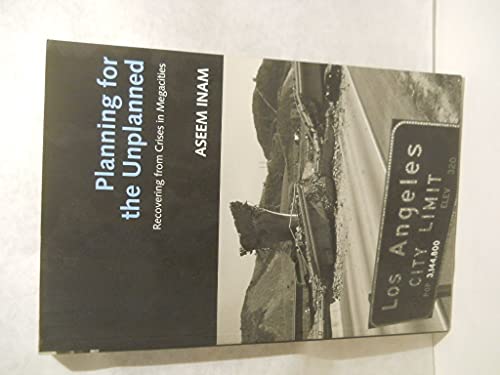
How do cities plan for the unplanned? Do cities plan for recovery from every possible sudden shock? How does one prepare a plan for the recovery after a tragedy, like the September 11, 2001 terrorist attacks on New York? The book discovers the systematic features that contribute to the success of planning institutions. In cities filled with uncertainty and complexity, planning institutions effectively tackle unexpected and sudden change by relying on the old and the familiar, rather than the new and the innovative. The author argues that planning programs institutions were successful because they were bureaucratic, and relied on standardized routines, rigorous sets of established regimes, familiar programs, and institutionalized hierarchies. Also contrary to popular perception, neither the leaders at the top of the institutions nor those workers at the grassroots level were the most important in the implementation of such routines. The key actors were middle managers, because they knew the institutional structures inside out, what the routines were and how to use them, and were successful go-betweens between national governments and grassroots community groups. Case studies from Mexico City, Los Angeles and New York provide a deeper understanding of urban planning processes. The case studies reveal that systematic institutional analysis helps us understand what works in planning, and why. They also demonstrate the manner in which institutional routines serve as powerful and effective tools for addressing novel situations.
Die Inhaltsangabe kann sich auf eine andere Ausgabe dieses Titels beziehen.
Über die Autorin bzw. den Autor
Aseem Inam is Assistant Professor of Urban Planning at the University of Michigan in Ann Arbor. He has worked as an architect, urban designer, and planner in North America, Europe, and Asia. He has published on alternative forms of suburban development, and on more meaningful ways of designing our cities.
„Über diesen Titel“ kann sich auf eine andere Ausgabe dieses Titels beziehen.
Suchergebnisse für Planning for the Unplanned: Recovering from Crises...

Beispielbild für diese ISBN
Planning for the Unplanned : Recovering from Crises in Megacities
Anbieter: Better World Books, Mishawaka, IN, USA
Verkäuferbewertung 5 von 5 Sternen

Zustand: Good. Former library copy. Pages intact with minimal writing/highlighting. The binding may be loose and creased. Dust jackets/supplements are not included. Includes library markings. Stock photo provided. Product includes identifying sticker. Better World Books: Buy Books. Do Good. Artikel-Nr. 52578645-6
Gebraucht kaufen
EUR 15,36
Versand gratis
Versand innerhalb von USA
Versand innerhalb von USA
Anzahl: 1 verfügbar
Beispielbild für diese ISBN
Planning for the Unplanned
Anbieter: Roundabout Books, Greenfield, MA, USA
Verkäuferbewertung 4 von 5 Sternen

paperback. Zustand: Very Good. Condition Notes: Clean, unmarked copy with some edge wear. Good binding. Dust jacket included if issued with one. We ship in recyclable American-made mailers. 100% money-back guarantee on all orders. Artikel-Nr. 1616032
Gebraucht kaufen
EUR 15,36
Versand gratis
Versand innerhalb von USA
Versand innerhalb von USA
Anzahl: 1 verfügbar
Beispielbild für diese ISBN
Planning for the Unplanned: Recovering from Crises in Megacities
Anbieter: ThriftBooks-Atlanta, AUSTELL, GA, USA
Verkäuferbewertung 5 von 5 Sternen
Paperback. Zustand: Good. No Jacket. Pages can have notes/highlighting. Spine may show signs of wear. ~ ThriftBooks: Read More, Spend Less. Artikel-Nr. G0415951305I3N00
Gebraucht kaufen
EUR 17,28
Versand gratis
Versand innerhalb von USA
Versand innerhalb von USA
Anzahl: 1 verfügbar
Beispielbild für diese ISBN
Planning for the Unplanned
Anbieter: Ria Christie Collections, Uxbridge, Vereinigtes Königreich
Verkäuferbewertung 5 von 5 Sternen
Zustand: New. In English. Artikel-Nr. ria9780415951302_new
Neu kaufen
EUR 44,74
EUR 13,28 Versand
Versand von Vereinigtes Königreich nach USA
Versand von Vereinigtes Königreich nach USA
Anzahl: Mehr als 20 verfügbar
Beispielbild für diese ISBN
Planning for the Unplanned: Recovering from Crises in Megacities
Anbieter: Revaluation Books, Exeter, Vereinigtes Königreich
Verkäuferbewertung 5 von 5 Sternen
Paperback. Zustand: Brand New. 1st edition. 248 pages. 8.75x6.00x0.75 inches. In Stock. Artikel-Nr. x-0415951305
Neu kaufen
EUR 51,47
EUR 11,77 Versand
Versand von Vereinigtes Königreich nach USA
Versand von Vereinigtes Königreich nach USA
Anzahl: 2 verfügbar
Beispielbild für diese ISBN
Planning for the Unplanned: Recovering from Crises in Megacities
Anbieter: Kennys Bookstore, Olney, MD, USA
Verkäuferbewertung 5 von 5 Sternen
Zustand: New. Num Pages: 262 pages, 20 black & white illustrations, 11 black & white tables, 14 black & white halftones. BIC Classification: JFFC; JKSR; JPWL. Category: (G) General (US: Trade). Dimension: 229 x 152 x 15. Weight in Grams: 362. . 2005. 1st Edition. paperback. . . . . Books ship from the US and Ireland. Artikel-Nr. V9780415951302
Neu kaufen
EUR 54,98
EUR 9,33 Versand
Versand innerhalb von USA
Versand innerhalb von USA
Anzahl: Mehr als 20 verfügbar
Foto des Verkäufers
Planning for the Unplanned : Recovering from Crises in Megacities
Verlag:
Taylor & Francis Ltd (Sales) Mär 2005, 2005
ISBN 10: 0415951305
ISBN 13: 9780415951302
Neu
Taschenbuch
Anbieter: AHA-BUCH GmbH, Einbeck, Deutschland
Verkäuferbewertung 5 von 5 Sternen
Taschenbuch. Zustand: Neu. Neuware - How do cities plan for the unplanned Do cities plan for recovery from every possible sudden shock How does one prepare a plan for the recovery after a tragedy, like the September 11, 2001 terrorist attacks on New York The book discovers the systematic features that contribute to the success of planning institutions. In cities filled with uncertainty and complexity, planning institutions effectively tackle unexpected and sudden change by relying on the old and the familiar, rather than the new and the innovative. The author argues that planning programs institutions were successful because they were bureaucratic, and relied on standardized routines, rigorous sets of established regimes, familiar programs, and institutionalized hierarchies. Also contrary to popular perception, neither the leaders at the top of the institutions nor those workers at the grassroots level were the most important in the implementation of such routines. The key actors were middle managers, because they knew the institutional structures inside out, what the routines were and how to use them, and were successful go-betweens between national governments and grassroots community groups. Case studies from Mexico City, Los Angeles and New York provide a deeper understanding of urban planning processes. The case studies reveal that systematic institutional analysis helps us understand what works in planning, and why. They also demonstrate the manner in which institutional routines serve as powerful and effective tools for addressing novel situations. Artikel-Nr. 9780415951302
Neu kaufen
EUR 52,62
EUR 35,00 Versand
Versand von Deutschland nach USA
Versand von Deutschland nach USA
Anzahl: 2 verfügbar