
Verwandte Artikel zu Setting Free the Kites: A Novel
Inhaltsangabe
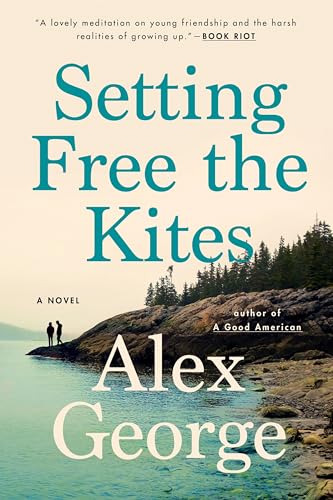
From the author of the “lyrical and compelling” (USA Today) novel A Good American comes a powerful story of two friends and the unintended consequences of friendship, loss, and hope.
For Robert Carter, life in his coastal Maine hometown is comfortably predictable. But in 1976, on his first day of eighth grade, he meets Nathan Tilly, who changes everything. Nathan is confident, fearless, impetuous—and fascinated by kites and flying. Robert and Nathan’s budding friendship is forged in the crucible of two family tragedies, and as the boys struggle to come to terms with loss, they take summer jobs at the local rundown amusement park. It’s there that Nathan’s boundless capacity for optimism threatens to overwhelm them both, and where they learn some harsh truths about family, desire, and revenge.
Unforgettable and heart-breaking, Setting Free the Kites is a poignant and moving exploration of the pain, joy, and glories of young friendship.
Die Inhaltsangabe kann sich auf eine andere Ausgabe dieses Titels beziehen.
Über die Autorin bzw. den Autor
The author of A Good American, Alex George is an Englishman who lives, works, and writes in the middle of America. He studied law at Oxford University and worked for eight years as a corporate lawyer in London and Paris before moving to the United States. He lives in Missouri with his family.
Auszug. © Genehmigter Nachdruck. Alle Rechte vorbehalten.
***This excerpt is from an advance uncorrected copy proof***
Copyright © 2017 Alex George
PROLOGUE
Haverford, Maine, 2015
Nathan Tilly gave me the story I’m going to tell, but it was the old paper mill that set my memories free.
I read the report in the Haverford Gazette the previous week. The mill has not been operational for more than fifty years, but now the land has been sold to a supermarket chain, and the old building is to be razed to make way for a customer parking lot. The news has prompted vigorous local debate. Some are angry that the city council has allowed part of our municipal heritage to be sold off. Others are excited at the prospect of fresh bagels. Such is progress.
For myself, I’m sorry to see the old place go. I want to pay my last respects, watch the thing go down.
The lower end of Bridge Street is lined with mud-encrusted pick-ups and vans. I have to double back and park on the other side of the river. It is a beautiful, fresh spring morning. The faintest of breezes is coming in off the ocean. As I walk across the bridge I can hear someone shouting instructions through a bullhorn.
Warning signs have been posted along the road, keeping the curious at bay. Authorized Personnel Only. Hard Hat Required. I keep my distance. A huge crane is parked in front of the old building, its arm stretched high into the sky. A wrecking ball hangs at the end of the crane’s thick steel rope, fat and heavy with the threat of violence. The mill’s giant wooden doors have been padlocked shut my entire life, but now they are opened wide, and early morning sunlight falls into the cathedral-like space where vast pulping machines once rumbled from dawn to dusk, the town’s beating heart. Workmen in reflector vests walk in and out, murmuring into walkie-talkies. I guess they are checking all three floors for uninvited visitors before the walls start crashing down.
The mill’s red brick chimney rises tall and straight into the sky. By lunchtime it will be gone.
At precisely nine o’clock there is a long, shrill blast from a whistle. A man climbs into the cabin of the crane and turns on the ignition. As the engine rumbles to life, the arm of the crane begins to move from side to side, and the wrecking ball starts to swing.
The old mill has been on the brink of demolition for years. Up and down this part of the southern Maine coast, from Biddeford to Brunswick, abandoned industrial buildings have been rescued and revivified, artfully repurposed for twenty-first century living. Those ancient spaces have been reborn as art galleries, office suites with double-height ceilings, and organic delicatessens selling squid ink pasta from Umbria and artisanal cheeses from Vermont. Everyone has been waiting for a similar metamorphosis to happen in Haverford. It hasn’t been for want of trying: in 2004 a consortium of property speculators from away went crazy for the mill’s exposed brickwork. An architect was commissioned to design a warren of luxury condominiums with reclaimed timber floors and glinting chrome appliances. But the town lacked the necessary real estate mojo to pull it off. No matter how pretty the artist’s impressions in the brochure looked, nobody was buying. Not a single unit was sold, and the promised renovation never happened. The place has remained abandoned and deserted ever since.
The wrecking ball is swinging fiercely now, slicing through the air in ever more violent arcs. The crane operator begins to rotate the cabin, gradually turning it toward the old walls. I feel my body stiffen in anticipation of the first impact. When it comes, there is an infernal roar of collapsing brick, crushed wood, and splintering glass. That’s when I feel a release within me, a quiet letting go. The crane operator edges the caterpillar tracks forward a few feet, and moments later another slab of wall disappears. A fog of atomized red brick hangs over the rubble. I watch for a few minutes, and then turn away. There is nothing more to see.
As I walk back over the bridge, I think about those two gravity-defying summers, almost forty years ago, when the old mill gave us shelter, and Nathan Tilly’s gift for boundless hope gave us wings. Nathan loved the mill so much. Inside those old brick walls, the light of uncomplicated happiness shone down on us, as warm and as comforting as the sun.
But such a bright light casts long, dark shadows.
I open the door of my car and climb in. I rest my hands on the steering wheel and gaze back across the bridge. The wrecking ball is still swinging hard, making its way toward the mill’s chimney.
I do not want to see the chimney fall. I drive away.
1976
ONE
Sometimes life-changing moments slip by unnoticed, their significance only becoming apparent in the light of subsequent events. But Nathan Tilly was never one for the subtle approach.
The summer of 1976 had been long and humid. The horseflies had been larger and more vicious than in past years, which was saying something. They had swarmed around me, taking painful chunks out of my sweet, thirteen year-old flesh. My legs and upper body bore the scars of months of relentless attack. For me the smell of summer was not the salty tang of the ocean, nor the ambrosial scent of young blueberries, but the sour chemical whiff of antiseptic cream that my mother would slather on my bumpy mosaic of bites, a constellation of unending irritation. On the first day of my eighth grade year at Longfellow Middle School, my shoulders were still itching from the horseflies’ diabolical attention.
My discomfort was also, I am sure, a physical manifestation of the anxiety that I was feeling that day. I had been dreading the start of the new school year all summer. Every blissfully unscheduled day of vacation was, to me, just one step closer to seeing Hollis Calhoun again.
For most of the previous year, Hollis Calhoun had bullied me without mercy. He undertook a campaign of terrors, small and large. Some of it was innocuous enough – an unanticipated cuff around the back of the head in the corridor, a sharp elbow jab to the ribs in the cafeteria line – but he also liked to corner me out of sight of others, and inflict more elaborate, sustained cruelties. He crowded in on me, heavy and huge, obliterating the world beyond his fists. His violence was claustrophobic as well as cruel. There was a warped intimacy in all those carefully administered punches and kicks. He would scrutinize my face intently as he hurt me, delighted by the fear in my eyes.
For all his thuggery, Hollis possessed a nuanced understanding of the psychological mechanics of terror. He took care to ensure that his attacks were never predictable. Not knowing when they might come, I was in a constant state of high alert. Sometimes he would leave me alone for days, which had the paradoxical effect of ratcheting up my sense of impending...
„Über diesen Titel“ kann sich auf eine andere Ausgabe dieses Titels beziehen.
Suchergebnisse für Setting Free the Kites: A Novel

Beispielbild für diese ISBN
Setting Free the Kites
Verlag:
Putnam Publishing Group,U.S., 2018
ISBN 10: 0399576487
ISBN 13: 9780399576485
Gebraucht
Paperback
Anbieter: World of Books (was SecondSale), Montgomery, IL, USA
Verkäuferbewertung 5 von 5 Sternen

Paperback. Zustand: Good. From the author of the "lyrical and compelling" (USA Today) novel A Good American comes a powerful story of two friends and the unintended consequences of friendship, loss, and hope. For Robert Carter, life in his coastal Maine hometown is comfortably predictable. But in 1976, on his first day of eighth grade, he meets Nathan Tilly, who changes everything. Nathan is confident, fearless, impetuous-and fascinated by kites and flying. Robert and Nathan's budding friendship is forged in the crucible of two family tragedies, and as the boys struggle to come to terms with loss, they take summer jobs at the local rundown amusement park. It's there that Nathan's boundless capacity for optimism threatens to overwhelm them both, and where they learn some harsh truths about family, desire, and revenge. Unforgettable and heart-breaking, Setting Free the Kites is a poignant and moving exploration of the pain, joy, and glories of young friendship. Artikel-Nr. 00107033948
Gebraucht kaufen
EUR 3,47
Versand gratis
Versand innerhalb von USA
Versand innerhalb von USA
Anzahl: 2 verfügbar
Beispielbild für diese ISBN
Setting Free the Kites
Verlag:
Penguin Publishing Group (edition Reprint), 2018
ISBN 10: 0399576487
ISBN 13: 9780399576485
Gebraucht
Paperback
Anbieter: BooksRun, Philadelphia, PA, USA
Verkäuferbewertung 5 von 5 Sternen
Paperback. Zustand: Very Good. Reprint. It's a well-cared-for item that has seen limited use. The item may show minor signs of wear. All the text is legible, with all pages included. It may have slight markings and/or highlighting. Artikel-Nr. 0399576487-11-6
Gebraucht kaufen
EUR 4,78
Versand gratis
Versand innerhalb von USA
Versand innerhalb von USA
Anzahl: 1 verfügbar
Beispielbild für diese ISBN
Setting Free the Kites
Anbieter: ThriftBooks-Reno, Reno, NV, USA
Verkäuferbewertung 5 von 5 Sternen
Paperback. Zustand: Very Good. No Jacket. May have limited writing in cover pages. Pages are unmarked. ~ ThriftBooks: Read More, Spend Less. Artikel-Nr. G0399576487I4N00
Gebraucht kaufen
EUR 5,95
Versand gratis
Versand innerhalb von USA
Versand innerhalb von USA
Anzahl: 1 verfügbar
Beispielbild für diese ISBN
Setting Free the Kites
Anbieter: ThriftBooks-Atlanta, AUSTELL, GA, USA
Verkäuferbewertung 5 von 5 Sternen
Paperback. Zustand: Very Good. No Jacket. May have limited writing in cover pages. Pages are unmarked. ~ ThriftBooks: Read More, Spend Less. Artikel-Nr. G0399576487I4N00
Gebraucht kaufen
EUR 5,97
Versand gratis
Versand innerhalb von USA
Versand innerhalb von USA
Anzahl: 1 verfügbar
Beispielbild für diese ISBN
Setting Free the Kites
Anbieter: ThriftBooks-Dallas, Dallas, TX, USA
Verkäuferbewertung 5 von 5 Sternen
Paperback. Zustand: Very Good. No Jacket. May have limited writing in cover pages. Pages are unmarked. ~ ThriftBooks: Read More, Spend Less. Artikel-Nr. G0399576487I4N00
Gebraucht kaufen
EUR 5,97
Versand gratis
Versand innerhalb von USA
Versand innerhalb von USA
Anzahl: 1 verfügbar
Beispielbild für diese ISBN
Setting Free the Kites
Verlag:
Penguin Publishing Group, 2018
ISBN 10: 0399576487
ISBN 13: 9780399576485
Gebraucht
Softcover
Anbieter: Better World Books, Mishawaka, IN, USA
Verkäuferbewertung 5 von 5 Sternen
Zustand: Good. Reprint. Pages intact with minimal writing/highlighting. The binding may be loose and creased. Dust jackets/supplements are not included. Stock photo provided. Product includes identifying sticker. Better World Books: Buy Books. Do Good. Artikel-Nr. 14783895-6
Gebraucht kaufen
EUR 6,17
Versand gratis
Versand innerhalb von USA
Versand innerhalb von USA
Anzahl: 1 verfügbar
Beispielbild für diese ISBN
Setting Free the Kites
Verlag:
Penguin Publishing Group, 2018
ISBN 10: 0399576487
ISBN 13: 9780399576485
Gebraucht
Softcover
Anbieter: Better World Books Ltd, Dunfermline, Vereinigtes Königreich
Verkäuferbewertung 5 von 5 Sternen
Zustand: Good. Reprint. Pages intact with minimal writing/highlighting. The binding may be loose and creased. Dust jackets/supplements are not included. Stock photo provided. Product includes identifying sticker. Better World Books: Buy Books. Do Good. Artikel-Nr. 14783895-6
Gebraucht kaufen
EUR 9,99
EUR 5,96 Versand
Versand von Vereinigtes Königreich nach USA
Versand von Vereinigtes Königreich nach USA
Anzahl: 1 verfügbar
Beispielbild für diese ISBN
Setting Free the Kites
Anbieter: Revaluation Books, Exeter, Vereinigtes Königreich
Verkäuferbewertung 5 von 5 Sternen
Paperback. Zustand: Brand New. reprint edition. 304 pages. 8.25x5.50x0.59 inches. In Stock. Artikel-Nr. x-0399576487
Neu kaufen
EUR 26,35
EUR 11,91 Versand
Versand von Vereinigtes Königreich nach USA
Versand von Vereinigtes Königreich nach USA
Anzahl: 2 verfügbar
Beispielbild für diese ISBN
Setting Free the Kites
Anbieter: Ria Christie Collections, Uxbridge, Vereinigtes Königreich
Verkäuferbewertung 5 von 5 Sternen
Zustand: New. In English. Artikel-Nr. ria9780399576485_new
Neu kaufen
EUR 28,41
EUR 11,16 Versand
Versand von Vereinigtes Königreich nach USA
Versand von Vereinigtes Königreich nach USA
Anzahl: Mehr als 20 verfügbar
Foto des Verkäufers
Setting Free the Kites: A Novel
Anbieter: AHA-BUCH GmbH, Einbeck, Deutschland
Verkäuferbewertung 5 von 5 Sternen
Paperback. Zustand: Sehr gut. Gebraucht - Sehr gut Sg - leichte Beschädigungen oder Verschmutzungen, ungelesenes Mängelexemplar, gestempelt - From the author of the lyrical and compelling (USA Today) novel A Good American comes a powerful story of two friends and the unintended consequences of friendship, loss, and hope. For Robert Carter, life in his coastal Maine hometown is comfortably predictable. But in 1976, on his first day of eighth grade, he meets Nathan Tilly, who changes everything. Nathan is confident, fearless, impetuous and fascinated by kites and flying. Robert and Nathan s budding friendship is forged in the crucible of two family tragedies, and as the boys struggle to come to terms with loss, they take summer jobs at the local rundown amusement park. It s there that Nathan s boundless capacity for optimism threatens to overwhelm them both, and where they learn some harsh truths about family, desire, and revenge. Unforgettable and heart-breaking, Setting Free the Kites is a poignant and moving exploration of the pain, joy, and glories of young friendship. Artikel-Nr. INF1000787646
Gebraucht kaufen
EUR 17,02
EUR 35,00 Versand
Versand von Deutschland nach USA
Versand von Deutschland nach USA
Anzahl: 1 verfügbar