
Verwandte Artikel zu The Disappeared (A Joe Pickett Novel, Band 18)
Inhaltsangabe
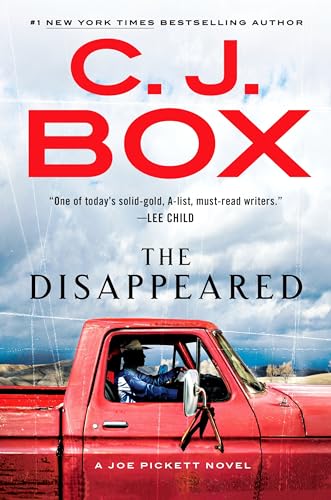
Wyoming game warden Joe Pickett has two lethal cases to contend with in this electrifying #1 New York Times-bestseller from C. J. Box.
Wyoming's new governor isn't sure what to make of Joe Pickett, but he has a job for him that is extremely delicate. A prominent female British executive never came home from the high-end guest ranch she was visiting, and the British Embassy is pressing hard. Pickett knows that happens sometimes--these ranches are stocked with handsome young cowboys, and "ranch romances" aren't uncommon. But no sign of her months after she vanished? That suggests something else.
At the same time, his friend Nate Romanowski has asked Joe to intervene with the feds on behalf of falconers who can no longer hunt with eagles even though their permits are in order. Who is blocking the falconers and why? The more he investigates both cases, the more someone wants him to go away. Is it because of the missing woman or because he's become Nate's advocate? Or are they somehow connected? The answers, when they come, will be even worse than he'd imagined.
Die Inhaltsangabe kann sich auf eine andere Ausgabe dieses Titels beziehen.
Über die Autorin bzw. den Autor
C. J. Box is the #1 New York Times bestselling author of eighteen Joe Pickett novels, six stand-alone novels, and a story collection. He has won the Edgar, Anthony, Macavity, Gumshoe, and two Barry awards, as well as the French Prix Calibre .38 and a French Elle magazine literary award. His books have been translated into twenty-seven languages. He and his wife Laurie split their time between their home and ranch in Wyoming.
Auszug. © Genehmigter Nachdruck. Alle Rechte vorbehalten.
1
Wylie Frye was used to smelling of smoke and that was long before he became a criminal of sorts.
Wood smoke permeated his clothing, his hair, and his full black beard to the point that he didn't notice it anymore. He was only reminded of his particular odor when drinkers on the next barstool or patrons standing in line at the Kum-N-Go convenience store leaned away from him and turned their heads to breathe untainted air.
But he didn't mind. He'd smelled worse at times in his life, and wood smoke wasn't so bad.
On cold nights like this, after he'd used the front-end loader to deliver bucket after bucket of sawdust to the burner from a small mountain of it near the mill, he could relax in the burner shack and let the warmth of the fire and the sweet blanket of smoke engulf him.
Wylie sat at a metal desk under a light fixture mounted in the wall behind him and stared at the dark screen of his cell phone. It was two-forty-five in the morning and his visitor was fifteen minutes late. Wylie was starting to fidget.
He watched the screen because he knew he wouldn't hear the phone chime with an incoming text over the roar from the fire outside. In the rusting shack where Wylie sat, fifty feet from the base of the burner, it sounded like he was inside a jet engine. The west wall-which was made of corrugated steel and faced the burner-radiated enough heat that he couldn't touch it with his hand. In the deep January winter of the Upper North Platte River Valley, Wylie had the warmest blue-collar job of anyone he knew. So there was that.
If he had to stink in order to stay warm on the job, it was a trade-off he was willing to make. He still had nightmares about that winter he'd spent working outside on a fracking rig in North Dakota where he'd lost two toes and the tip of his little finger to frostbite.
Every minute or so, Wylie looked up from the phone on the desk to the small opaque portal window that faced the road outside, expecting to see headlights approaching. He couldn't see clearly because the smoke left a film on the glass that distorted the view, even though he wiped it clear nightly with Windex.
There was nothing to see, though.
It wasn't just the heat from the fire that was making him sweat. He tapped the top of the desk with his fingertips in a manic rhythm. He felt more than heard his belly surge with acid and he tasted the green chili burrito he'd eaten for dinner at the Bear Trap in Riverside. It was going to be a long night.
The conical steel structure, known alternatively as a Òbeehive,Ó Òtipi,Ó or ÒwigwamÓ burner for its resemblance to each, roared in the dark and belched a solid column of wood smoke into the frigid night sky of Encampment, Wyoming. The burner was fifty feet high and its fuel was sawdust from the mill.
Its biggest fires took place at night by design-when sleeping residents couldn't see the volume of smoke and complain about it. The flames often burned so hot that the walls of the wigwam glowed red like the cherry of a massive cigar and errant sparks drifted out of the steel mesh at the top like shooting stars. When the base was filled with sawdust and fully aflame, the temperature inside exceeded a thousand degrees Fahrenheit.
There was a window of time to do what they wanted to do, heÕd told the men who would be texting him. Even though it was rare when anybody was up and around in the middle of the night in Encampment, a tiny mountain hamlet of barely four hundred people at the base of the Sierra Madre range, there was a very specific window of time when their plan would work. It lasted from two-fifteen to around three-thirty.
After two, some drunks were still driving around after the trio of bars in the immediate area closed. There was a bar for every one hundred and fifty residents, which Wylie thought was just about right-two bars side by side in the tiny village of Riverside, with its population of fifty residents, and one bar in adjoining Encampment. When two o'clock finally came around and they closed, ranch hands headed back to their bunkhouses, lumberjacks went home for a few hours of sleep, and unemployed drunks drove off to wherever unemployed drunks went.
Wylie could see the last drinkers of the night through the portal either driving recklessly up McCaffrey or motoring home so slowly and cautiously it was almost comical. Large clouds of condensation coughed out of their tailpipes in the cold, and he could sometimes see the drivers themselves if they were inebriated and had forgotten to shut off their interior dome lights. But he couldn't hear the vehicles because of the roar of the fire. He couldn't hear anything.
The town cop, known as Jalen Spanks-he'd been given the nickname Jalen Spanks (His Monkey) by the regulars at the Bear Trap-did the same routine every night, arriving at three-thirty. Often, Wylie would emerge from his burn shack and wave hello. In return, Jalen would raise two fingers from the steering wheel in a reciprocal salute. Sometimes, when it wasn't below zero outside, Jalen would roll down his driver's-side window and ask Wylie how he was doing. Wylie kept his responses pleasant and short. He didn't want to become friends with Jalen the cop, because Jalen the cop was kind of a dick who took himself and the authority his uniform bestowed upon him a little bit too seriously, Wylie thought. Too many small-town cops were like that.
Wylie looked at his phone again. They were twenty minutes late. If they didnÕt show soon, they might run the risk of being at the mill when Jalen cruised through. That could be a hell of a situation, and one that Wylie would have a tough time explaining away without incriminating himself and getting fired or worse.
So when his phone lit up with the message Running late, Wylie said aloud, "No shit."
Five minutes appeared in a text balloon immediately afterward.
"Better fucking hurry," Wylie admonished.
Then: Hit the bricks.
"Yeah, yeah," Wylie said as he pulled on his heavy Carhartt coat and jammed a Stormy Kromer rancher hat over his head with the earflaps down. He thrust his hands in the pockets and stepped outside the shack in time to see a pair of headlights turn his way from the road.
The cold instantly tightened the exposed skin of his face and Wylie tucked his chin into his coat and walked away from the burn shack and the burner. He guessed it was twenty below zero based on how quickly the crystals formed inside his nose as he breathed in.
He wasn't supposed to see the vehicle come in, or the faces of the men inside it, or observe what they were doing at the wigwam burner.
That was the deal.
That was the reason Wylie was a criminal of sorts.
In the version told by Jeb Pryor, the owner of the mill, the U.S. Forest Service had sat idly by while pine beetles bored into nearly every tree in the Sierra Madre range and, over ten years, killed them where they stood. While millions of board feet of lumber went to waste, hundreds of unemployed timber workers stared at the mountains as they turned from pine green to rust brown. Only after several five-month-long fires had gone out of control were the logging roads reopened.
The federal policy of not logging the dying trees had had something to do with combating...
„Über diesen Titel“ kann sich auf eine andere Ausgabe dieses Titels beziehen.
Suchergebnisse für The Disappeared (A Joe Pickett Novel, Band 18)

Beispielbild für diese ISBN
The Disappeared
Anbieter: World of Books (was SecondSale), Montgomery, IL, USA
Verkäuferbewertung 5 von 5 Sternen

Hardback. Zustand: Good. Wyoming game warden Joe Pickett has two lethal cases to contend with in this electrifying #1 New York Times-bestseller from C. J. Box. Wyoming's new governor isn't sure what to make of Joe Pickett, but he has a job for him that is extremely delicate. A prominent female British executive never came home from the high-end guest ranch she was visiting, and the British Embassy is pressing hard. Pickett knows that happens sometimes--these ranches are stocked with handsome young cowboys, and ranch romances aren't uncommon. But no sign of her months after she vanished? That suggests something else. At the same time, his friend Nate Romanowski has asked Joe to intervene with the feds on behalf of falconers who can no longer hunt with eagles even though their permits are in order. Who is blocking the falconers and why? The more he investigates both cases, the more someone wants him to go away. Is it because of the missing woman or because he's become Nate's advocate? Or are they somehow connected? The answers, when they come, will be even worse than he'd imagined. Artikel-Nr. 00108682699
Gebraucht kaufen
EUR 3,82
Versand gratis
Versand innerhalb von USA
Versand innerhalb von USA
Anzahl: 11 verfügbar
Beispielbild für diese ISBN
The Disappeared
Anbieter: World of Books (was SecondSale), Montgomery, IL, USA
Verkäuferbewertung 5 von 5 Sternen
Hardback. Zustand: Fair. Wyoming game warden Joe Pickett has two lethal cases to contend with in this electrifying #1 New York Times-bestseller from C. J. Box. Wyoming's new governor isn't sure what to make of Joe Pickett, but he has a job for him that is extremely delicate. A prominent female British executive never came home from the high-end guest ranch she was visiting, and the British Embassy is pressing hard. Pickett knows that happens sometimes--these ranches are stocked with handsome young cowboys, and ranch romances aren't uncommon. But no sign of her months after she vanished? That suggests something else. At the same time, his friend Nate Romanowski has asked Joe to intervene with the feds on behalf of falconers who can no longer hunt with eagles even though their permits are in order. Who is blocking the falconers and why? The more he investigates both cases, the more someone wants him to go away. Is it because of the missing woman or because he's become Nate's advocate? Or are they somehow connected? The answers, when they come, will be even worse than he'd imagined. Artikel-Nr. 00107183723
Gebraucht kaufen
EUR 3,82
Versand gratis
Versand innerhalb von USA
Versand innerhalb von USA
Anzahl: 4 verfügbar
Foto des Verkäufers
The Disappeared (A Joe Pickett Novel)
Anbieter: Dream Books Co., Denver, CO, USA
Verkäuferbewertung 5 von 5 Sternen
Zustand: good. Gently used with minimal wear on the corners and cover. A few pages may contain light highlighting or writing, but the text remains fully legible. Dust jacket may be missing, and supplemental materials like CDs or codes may not be included. May be ex-library with library markings. Ships promptly! Artikel-Nr. DBV.0399176624.G
Gebraucht kaufen
EUR 3,88
Versand gratis
Versand innerhalb von USA
Versand innerhalb von USA
Anzahl: 2 verfügbar
Foto des Verkäufers
The Disappeared (A Joe Pickett Novel)
Anbieter: Dream Books Co., Denver, CO, USA
Verkäuferbewertung 5 von 5 Sternen
Zustand: acceptable. This copy has clearly been enjoyedâ"expect noticeable shelf wear and some minor creases to the cover. Binding is strong, and all pages are legible. May contain previous library markings or stamps. Artikel-Nr. DBV.0399176624.A
Gebraucht kaufen
EUR 4,34
Versand gratis
Versand innerhalb von USA
Versand innerhalb von USA
Anzahl: 2 verfügbar
Beispielbild für diese ISBN
The Disappeared
Anbieter: ThriftBooks-Atlanta, AUSTELL, GA, USA
Verkäuferbewertung 5 von 5 Sternen
Hardcover. Zustand: Very Good. No Jacket. Missing dust jacket; May have limited writing in cover pages. Pages are unmarked. ~ ThriftBooks: Read More, Spend Less. Artikel-Nr. G0399176624I4N01
Gebraucht kaufen
EUR 5,94
Versand gratis
Versand innerhalb von USA
Versand innerhalb von USA
Anzahl: 5 verfügbar
Beispielbild für diese ISBN
The Disappeared
Anbieter: ThriftBooks-Reno, Reno, NV, USA
Verkäuferbewertung 5 von 5 Sternen
Hardcover. Zustand: Very Good. No Jacket. Former library book; May have limited writing in cover pages. Pages are unmarked. ~ ThriftBooks: Read More, Spend Less. Artikel-Nr. G0399176624I4N10
Gebraucht kaufen
EUR 5,94
Versand gratis
Versand innerhalb von USA
Versand innerhalb von USA
Anzahl: 6 verfügbar
Beispielbild für diese ISBN
The Disappeared
Anbieter: ThriftBooks-Phoenix, Phoenix, AZ, USA
Verkäuferbewertung 5 von 5 Sternen
Hardcover. Zustand: Good. No Jacket. Missing dust jacket; Pages can have notes/highlighting. Spine may show signs of wear. ~ ThriftBooks: Read More, Spend Less. Artikel-Nr. G0399176624I3N01
Gebraucht kaufen
EUR 5,94
Versand gratis
Versand innerhalb von USA
Versand innerhalb von USA
Anzahl: 2 verfügbar
Beispielbild für diese ISBN
The Disappeared
Anbieter: ThriftBooks-Phoenix, Phoenix, AZ, USA
Verkäuferbewertung 5 von 5 Sternen
Hardcover. Zustand: Good. No Jacket. Pages can have notes/highlighting. Spine may show signs of wear. ~ ThriftBooks: Read More, Spend Less. Artikel-Nr. G0399176624I3N00
Gebraucht kaufen
EUR 5,94
Versand gratis
Versand innerhalb von USA
Versand innerhalb von USA
Anzahl: 9 verfügbar
Beispielbild für diese ISBN
The Disappeared
Anbieter: ThriftBooks-Reno, Reno, NV, USA
Verkäuferbewertung 5 von 5 Sternen
Hardcover. Zustand: Good. No Jacket. Pages can have notes/highlighting. Spine may show signs of wear. ~ ThriftBooks: Read More, Spend Less. Artikel-Nr. G0399176624I3N00
Gebraucht kaufen
EUR 5,94
Versand gratis
Versand innerhalb von USA
Versand innerhalb von USA
Anzahl: 9 verfügbar
Beispielbild für diese ISBN
The Disappeared
Anbieter: ThriftBooks-Dallas, Dallas, TX, USA
Verkäuferbewertung 5 von 5 Sternen
Hardcover. Zustand: Fair. No Jacket. Missing dust jacket; Readable copy. Pages may have considerable notes/highlighting. ~ ThriftBooks: Read More, Spend Less. Artikel-Nr. G0399176624I5N01
Gebraucht kaufen
EUR 5,94
Versand gratis
Versand innerhalb von USA
Versand innerhalb von USA
Anzahl: 2 verfügbar