
Verwandte Artikel zu Where It Hurts: A Novel (Gus Murphy)
Inhaltsangabe
Nominated for the 2017 Edgar Award for Best Novel
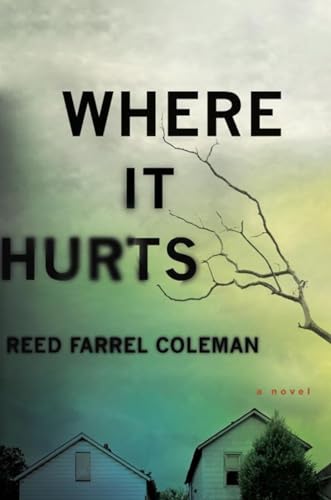
From the critically acclaimed and award-winning author comes a gritty, atmospheric new series about the other side of Long Island, far from the wealth of the Hamptons, where real people live—and die.
Gus Murphy thought he had the world all figured out. A retired Suffolk County cop, Gus had everything a man could want: a great marriage, two kids, a nice house, and the rest of his life ahead of him. But when tragedy strikes, his life is thrown into complete disarray. In the course of a single deadly moment, his family is blown apart and he is transformed from a man who believes he understands everything into a man who understands nothing.
Divorced and working as a courtesy van driver for the run-down hotel in which he has a room, Gus has settled into a mindless, soulless routine that barely keeps his grief at arm’s length. But Gus’s comfortable waking trance comes to an end when ex-con Tommy Delcamino asks him for help. Four months earlier, Tommy’s son T.J.’s battered body was discovered in a wooded lot, yet the Suffolk County PD doesn’t seem interested in pursuing the killers. In desperation, Tommy seeks out the only cop he ever trusted—Gus Murphy.
Gus reluctantly agrees to see what he can uncover. As he begins to sweep away the layers of dust that have collected over the case during the intervening months, Gus finds that Tommy was telling the truth. It seems that everyone involved with the late T.J Delcamino—from his best friend, to a gang enforcer, to a mafia capo, and even the police—has something to hide, and all are willing to go to extreme lengths to keep it hidden. It’s a dangerous favor Gus has taken on as he claws his way back to take a place among the living, while searching through the sewers for a killer.
Die Inhaltsangabe kann sich auf eine andere Ausgabe dieses Titels beziehen.
Über die Autorin bzw. den Autor
Reed Farrel Coleman, author of the New York Times–bestselling Robert B. Parker’s Blind Spot, has been called a “hard-boiled poet” by NPR’s Maureen Corrigan and the “noir poet laureate” in The Huffington Post. He has published twenty-one novels, including nine books in the critically acclaimed Moe Prager series. He is a three-time recipient of the Shamus Award for Best Detective Novel of the Year, a winner of the Barry and Anthony awards, and is a three-time Edgar Award nominee. An adjunct instructor at Hofstra University and an instructor for MWA U, he lives with his family on Long Island.
Auszug. © Genehmigter Nachdruck. Alle Rechte vorbehalten.
***This excerpt is from an advance uncorrected proof***
Copyright © 2016 Reed Farrel Coleman
One
(Monday Night)
Some people swallow their grief. Some let it swallow them. I guess there’s about a thousand degrees in between those extremes. Maybe a million. Maybe a million million. Who the fuck knows? Not me. I don’t. I’m just about able to put one foot before the other, to breathe again. But not always, not even most of the time. Annie, my wife, I mean, my ex-wife, she let it swallow her whole and when it spit her back up, she was someone else, something else: a hornet from a butterfly. If I was on the outside looking in and not the central target of her fury and sting, I might understand it. I might forgive it. I tell myself I would. But I’d have to forgive myself first. I might as well wish for Jesus to reveal himself in my side view mirror or for John Jr. to come back to us. At the moment, my wishes were less ambitious ones. I wished for the 11:38 to Ronkonkoma to be on time. I should have wished for it to be early.
I checked the dashboard clock as I pulled into the hotel courtesy van parking spot out in front of the Dunkin Donuts shop at the station. 11:30, eight minutes to spare. But spare time was empty time and I had come to dread it because empty was pretty much all I was anymore. Two years steeped in emptiness and I still didn’t know how to fill it up. My shrink, Dr. Rosen, says not to try, that I should let myself fully experience the void. That if I don’t give myself permission to feel the depth of the abyss, the slipperiness of its walls, I’ll never climb out. The thing is, you have to want to climb out, don’t you? Even a spare minute was chance enough to relive the last two years. Took forever to live it. Takes only seconds to live it again. I had tried filling in the fissures, cracks, and cavities with wondering, wondering about the trick of time. That got me about as far as wishing. Nowhere.
I stepped out of the van into the chill night. My breath turned to heaving clouds of smoke as cold as God’s love. Hail Mary, full of shit, the Lord is with thee, not me. I didn’t really want coffee. No man who lives for sleep as I do wants coffee. But I had to sustain my waking trance until six AM. Then I could turn the van keys over to Fredo and fall into my cool sheet and quilt-covered solace. When I was on the job, it was different. Everything was different. I liked the world then and the people in it. Liked the buzz of caffeine. Yeah, that was me once, the cop in a donut shop, reinforcing stereotypes. Now I was just occupying my mind, doing something, anything not to sit in the van marking time.
Aziza, the mocha-skinned Pakistani girl behind the counter, nodded at me. Smiled a gap-toothed smile. She no longer asked what I wanted. Small coffee. Half and Half. Two Sweet’n Lows. She made it up for me. Put it on the counter. She no longer gave me the change when I paid. She dropped the change in the paper tip cup with the other careless pennies, quarters, dimes, and nickels. I liked Aziza because she expected nothing of me beyond our routine. We danced our nightly dance and then went back to being strangers. She didn’t expect me to put the pain behind me or to bravely get on with my life.
Khalid, the night manager, a fleshy man with shark eyes and a suspicious face, stared at me as he always did. It was as if he could smell the taint on me. He didn’t like me in the shop. Thought I might sully the place with my taint or maybe that wasn’t it at all.
I got back to the van as the 11:38 pulled into Ronkonkoma. In the eight minutes that had passed, the usual crowd had descended upon the station. Parents in double-parked SUVs, waiting to pick up their kids. Bored-looking husbands unhappy at being dragged off their sofas into the cold night because their wives felt like doing Broadway with the girls. Cabbies outside their cars, their flannel-shirted bellies flopping over their beltlines, smoking cigarettes, talking shit to each other. I placed the coffee inside the van and took out my Paragon Hotel placard on which the words Westex Technical were written in black marker.
I was scheduled to pick up a party of three from Westex and bring them back to the Paragon. The Paragon Hotel of Bohemia, New York was paragon of nothing so much as proximity, proximity to Long Island MacArthur Airport. And MacArthur Airport, an airport of three airlines, was nothing so much as an unfulfilled promise, the little airport that couldn’t. The Paragon was a way station, a place to pass through on the way to or from the airport. There was the occasional foreign tourist who’d fixated on the room rate instead of the distance to New York City or had neglected to convert kilometers into miles.
The three Westex guys were what I expected, what most of my passengers were: tired, hungry, distracted. When I got back into the van after loading their bags into the rear, all of them were busy with their phones or tablets. They kind of grunted to themselves and one another. I was glad of that, happy to be ignored. I had trouble with the chatty ones, the ones who wanted to be your pal. When I was on the job I understood nervous chatter because the uniform made people nervous. I also had empathy for the compulsively polite. Not anymore. Who in their heart of hearts really wanted to be the van driver’s buddy? It was all so much bullshit, a way to pass time from point to point. I was in on the lie of passing time, so I never spoke first. Never asked where anyone was from. Never asked if they had enjoyed the city. Never asked what they did for a living, or about their families. Never asked where they were headed. I knew where they were headed. We were all headed there, eventually.
I put the van in drive, looked in my side view for oncoming cars or the second coming. And not seeing either, I pulled the wheel hard left and made a sweeping U-turn west onto Railroad Avenue. As we went I sipped at my unwanted coffee, thinking of my dead son.
Two
(Tuesday Morning)
The phone bleating on the nightstand woke me from a dreamless sleep, but John Jr. was my first waking thought just as he had been my last conscious thought before I closed my eyes. It was as reflexive to me as blinking. After two years grieving him, missing him, tearing my guts out over his death, he never really left me. At least he was no longer every thought in between my first and last. There had been periods during that first year when I felt I would choke on his constant presence. When I would have given almost anything for a few minutes of simple forgetfulness. It got so oppressive that I began hating the son I had loved more than myself and then hated myself for hating him.
The TV was still on but tuned to SportsCenter, so it could have been any time of the day or night. I looked out the southeast facing window of my room and saw the sun was relatively low in the sky. I felt the weariness still deep in my bones and knew I hadn’t been asleep very long.
I reached for the...
„Über diesen Titel“ kann sich auf eine andere Ausgabe dieses Titels beziehen.
Suchergebnisse für Where It Hurts: A Novel (Gus Murphy)

Beispielbild für diese ISBN
Where It Hurts: A Novel
Verlag:
Putnam Publishing Group,U.S., 2016
ISBN 10: 039917303X
ISBN 13: 9780399173035
Gebraucht
Hardcover
Anbieter: World of Books (was SecondSale), Montgomery, IL, USA
Verkäuferbewertung 5 von 5 Sternen

Hardback. Zustand: Fair. Gus Murphy, a retired cop, had everything a man could want: a great marriage, two kids, a nice house and the rest of his life ahead of him. But when his family is blown apart, he is transformed from a man who believes he understands everything into a man who understands nothing. Divorced and working as a courtesy van driver, ex-con Tommy Delcamino comes to him for help. Months earlier, TJ Delcamino's battered body was discovered and the police don't seem interested in finding the killers. In desperation, Tommy seeks out the only cop he ever trusted - Gus Murphy. Artikel-Nr. 00087093436
Gebraucht kaufen
EUR 4,56
Versand gratis
Versand innerhalb von USA
Versand innerhalb von USA
Anzahl: 2 verfügbar
Beispielbild für diese ISBN
Where It Hurts: A Novel
Verlag:
Putnam Publishing Group,U.S., 2016
ISBN 10: 039917303X
ISBN 13: 9780399173035
Gebraucht
Hardcover
Anbieter: World of Books (was SecondSale), Montgomery, IL, USA
Verkäuferbewertung 5 von 5 Sternen
Hardback. Zustand: Good. Gus Murphy, a retired cop, had everything a man could want: a great marriage, two kids, a nice house and the rest of his life ahead of him. But when his family is blown apart, he is transformed from a man who believes he understands everything into a man who understands nothing. Divorced and working as a courtesy van driver, ex-con Tommy Delcamino comes to him for help. Months earlier, TJ Delcamino's battered body was discovered and the police don't seem interested in finding the killers. In desperation, Tommy seeks out the only cop he ever trusted - Gus Murphy. Artikel-Nr. 00091173698
Gebraucht kaufen
EUR 4,56
Versand gratis
Versand innerhalb von USA
Versand innerhalb von USA
Anzahl: 2 verfügbar
Beispielbild für diese ISBN
Where It Hurts (A Gus Murphy Novel)
Verlag:
G.P. Putnam's Sons (edition First Edition), 2016
ISBN 10: 039917303X
ISBN 13: 9780399173035
Gebraucht
Hardcover
Erstausgabe
Anbieter: BooksRun, Philadelphia, PA, USA
Verkäuferbewertung 5 von 5 Sternen
Hardcover. Zustand: Very Good. First Edition. It's a well-cared-for item that has seen limited use. The item may show minor signs of wear. All the text is legible, with all pages included. It may have slight markings and/or highlighting. Artikel-Nr. 039917303X-11-1
Gebraucht kaufen
EUR 5,77
Versand gratis
Versand innerhalb von USA
Versand innerhalb von USA
Anzahl: 1 verfügbar
Beispielbild für diese ISBN
Where It Hurts (A Gus Murphy Novel)
Anbieter: Wonder Book, Frederick, MD, USA
Verkäuferbewertung 5 von 5 Sternen
Zustand: Very Good. Very Good condition. Very Good dust jacket. A copy that may have a few cosmetic defects. May also contain light spine creasing or a few markings such as an owner's name, short gifter's inscription or light stamp. Artikel-Nr. N17D-02438
Gebraucht kaufen
EUR 5,95
Versand gratis
Versand innerhalb von USA
Versand innerhalb von USA
Anzahl: 1 verfügbar
Beispielbild für diese ISBN
Where It Hurts (A Gus Murphy Novel)
Anbieter: ThriftBooks-Dallas, Dallas, TX, USA
Verkäuferbewertung 5 von 5 Sternen
Hardcover. Zustand: Very Good. No Jacket. May have limited writing in cover pages. Pages are unmarked. ~ ThriftBooks: Read More, Spend Less. Artikel-Nr. G039917303XI4N00
Gebraucht kaufen
EUR 6,26
Versand gratis
Versand innerhalb von USA
Versand innerhalb von USA
Anzahl: 1 verfügbar
Beispielbild für diese ISBN
Where It Hurts (A Gus Murphy Novel)
Anbieter: ThriftBooks-Dallas, Dallas, TX, USA
Verkäuferbewertung 5 von 5 Sternen
Hardcover. Zustand: Very Good. No Jacket. Former library book; May have limited writing in cover pages. Pages are unmarked. ~ ThriftBooks: Read More, Spend Less. Artikel-Nr. G039917303XI4N10
Gebraucht kaufen
EUR 6,26
Versand gratis
Versand innerhalb von USA
Versand innerhalb von USA
Anzahl: 1 verfügbar
Beispielbild für diese ISBN
Where It Hurts (A Gus Murphy Novel)
Anbieter: ThriftBooks-Atlanta, AUSTELL, GA, USA
Verkäuferbewertung 5 von 5 Sternen
Hardcover. Zustand: Very Good. No Jacket. May have limited writing in cover pages. Pages are unmarked. ~ ThriftBooks: Read More, Spend Less. Artikel-Nr. G039917303XI4N00
Gebraucht kaufen
EUR 6,26
Versand gratis
Versand innerhalb von USA
Versand innerhalb von USA
Anzahl: 1 verfügbar
Beispielbild für diese ISBN
Where It Hurts
Verlag:
Penguin Publishing Group, 2016
ISBN 10: 039917303X
ISBN 13: 9780399173035
Gebraucht
Hardcover
Erstausgabe
Anbieter: Better World Books: West, Reno, NV, USA
Verkäuferbewertung 5 von 5 Sternen
Zustand: Very Good. 1st. Former library copy. Pages intact with possible writing/highlighting. Binding strong with minor wear. Dust jackets/supplements may not be included. Includes library markings. Stock photo provided. Product includes identifying sticker. Better World Books: Buy Books. Do Good. Artikel-Nr. 9223699-75
Gebraucht kaufen
EUR 6,34
Versand gratis
Versand innerhalb von USA
Versand innerhalb von USA
Anzahl: 1 verfügbar
Beispielbild für diese ISBN
Where It Hurts
Verlag:
Penguin Publishing Group, 2016
ISBN 10: 039917303X
ISBN 13: 9780399173035
Gebraucht
Hardcover
Erstausgabe
Anbieter: Better World Books, Mishawaka, IN, USA
Verkäuferbewertung 5 von 5 Sternen
Zustand: Very Good. 1st. Former library copy. Pages intact with possible writing/highlighting. Binding strong with minor wear. Dust jackets/supplements may not be included. Includes library markings. Stock photo provided. Product includes identifying sticker. Better World Books: Buy Books. Do Good. Artikel-Nr. 9223699-75
Gebraucht kaufen
EUR 6,34
Versand gratis
Versand innerhalb von USA
Versand innerhalb von USA
Anzahl: 1 verfügbar