
Verwandte Artikel zu Heartificial Intelligence: Embracing Our Humanity to...
Inhaltsangabe
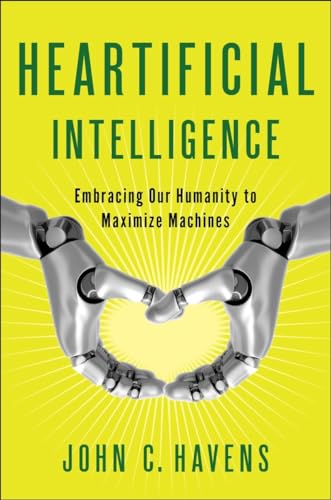
Algorithms will soon know more about us than we know ourselves
Where should machine automation end? Is it acceptable to have a digital assistant arrange your calendar, but not to have a robot spouse? Are companion robots acceptable for seniors in need of comfort, but not okay for toddlers exposed to emotional software that could influence their behavior? Is it desirable to live a life within the virtual reality of Facebook’s Oculus Rift, but not if your thoughts are sold to advertisers who manipulate your purchases?
We’ve entered an era where a myriad of personalization algorithms influence our every decision, and the lines between human assistance, automation, and extinction have blurred. We need to create ethical standards for the Artificial Intelligence usurping our lives, and allow individuals to control their identity based on their values. Otherwise, we sacrifice our humanity for productivity versus purpose and for profits versus people.
Featuring pragmatic solutions drawing on economics, emerging technologies, and positive psychology, Heartificial Intelligence provides the first values-driven approach to algorithmic living—a definitive roadmap to help humanity embrace the present and positively define their future. Each chapter opens with a fictional vignette, helping readers imagine how they would respond to various Artificial Intelligence scenarios while demonstrating the need to codify their values, as the algorithms dominating society today are already doing.
Funny, poignant, and accessible, this book paints a vivid portrait of how our lives might look in either a dystopia of robotic and corporate dominance, or a utopia where humans use technology to enhance our natural abilities to evolve into a long-lived, super-intelligent, and altruistic species.
Die Inhaltsangabe kann sich auf eine andere Ausgabe dieses Titels beziehen.
Über die Autorin bzw. den Autor
JOHN C. HAVENS is a TEDx speaker and a contributing writer for Mashable, The Guardian, and The Huffington Post. He is the founder of the H(app)athon Project, a nonprofit organization "connecting happiness to action one phone, one heart, and one city at a time" through the use of interactive, sensor-based smartphone surveys. A former EVP for a top-ten global PR firm, he has counseled clients including Gillette, HP, and Merck on technology and social-media, and has been quoted on issues relating to tech, business, and well-being by USA Today, Fast Company, BBC News, Forbes, INC, PR Week, and Advertising Age. Havens was a professional actor in New York City for more than fifteen years, appearing in principal roles on Broadway, on television, and in film.
Auszug. © Genehmigter Nachdruck. Alle Rechte vorbehalten.
A QUICK NOTE
REGARDING THIS BOOK’S FORMAT
Hello, and welcome to Heartificial Intelligence!
We have some exciting news! This book has been created using an old-fashioned publishing process utilizing paper and ink. Our historical research indicates this format allows humans to read, ruminate, and react to ideas without the need to click away to fourteen cat videos, Facebook posts, or tweets.* Our focus groups also indicate that this publishing format will help reinforce your sense of messy yet glorious humanity by forcing you to confront your own thoughts untainted by algorithmic influence.
Furthermore, outside of information regarding your initial purchase of this book, your actions will not be tracked in any way once you start reading it.** While it’s tempting to try and influence your reaction to the book by modern tracking and profiling methodologies, the title of the book indicates our desire for you to take the time you deserve to analyze how emerging technologies are affecting your humanity.
Apparently humans are equipped with hearts and minds of their own.*** So our advice is to use the ones you already have to increase happiness and well-being before relying on the external ones other people are currently building. Not that these people aren’t building amazing and worthwhile things, mind you. But our feeling is you won’t be able to fully appreciate artificial intelligence until you define your own genuine human values first.
Thanks for your time. We hope you enjoy this more traditional process of reading and the personal introspection we’ve heard it provides.
You’re worth it.****
* If you’ve opted to purchase this text as an e-book and prefer to click away to support cat videos, Facebook posts, or tweets, we recommend stating in a loud voice, “I am a HUMAN and will not be tracked!” This will serve as a centering process to remind yourself of your inherent humanity due to your ability to publicly act illogically and with great fervor. Please note, however, that you will still be tracked by hundreds of external data brokers, advertisers, and other organizations, any of whom may try to sell you sexual vitamin supplements. We have only tried about seven of these and cannot legally attest to their efficacy.
** At least not by the author and publisher. People may stare at you while you’re reading in Starbucks or your kids may distract you during the precious seven minutes available to you to read during the day since, if you’re like me, you fall dead asleep at some embarrassing time like nine thirty because you’re exhausted from parenting all day along with everything else in your life, right?
*** Many doctors have said this. At least one of them looks like Socrates, so we’re pretty confident this is true.
**** Seriously, you are. If you’re like me, artificial intelligence does one of three things to you:
• Terrifies you because you think your toaster is going to kill you.
• Concerns you because your boss just gave your bonus to an algorithm.
• Mystifies you because your humanity is managed more by machines every day.
Don’t wait until the Singularity comes and artificial intelligence takes over the world to believe me on this. Toasters are mean little buggers.
AUTHOR’S NOTE
The challenge in writing about an emerging technology such as artificial intelligence is that between the time you finish your manuscript and when your book is published, there’s a strong possibility a new discovery has been made in the field about which you’ve written. So, in an effort to placate any future commenters on Amazon, Reddit, or any other platform:
• At the time of writing this book, Google has still not announced specifics around its artificial intelligence ethics board. If by the time you’re reading this, it has, I say thank you to Google! Hopefully I’m expressing my gratitude while even being on that board, enjoying delicious and healthy meals from Google’s famed cafeterias between stints in one of their nap pods (where I do my best thinking).
• At the time of writing this book, there is no formal, industry-wide AI ethical standard of which I am aware. I certainly could have missed it, and there are a number of great organizations working in this area, many of whom I interviewed in this book. My focus in Heartificial Intelligence is more to point out the necessity of such standards and why they’re important to individuals than to comment on one organization’s accuracy or efficacy.
• If we’ve been taken over by AI/robots in some way, then I’d like to point out how favorable I am regarding our future sentient colleagues. Seriously. This is not an anti-AI book, or anti-transhumanism book. I believe AI ethics is actually a more mature way of looking at our future with machines than creating potential sentient machines we sell and enslave. Call me crazy.
• I think it’s important to have a sense of humor about AI. This doesn’t mean I take the subject lightly. As I point out in the book, I have struggled a great deal with fear and depression on the subjects of automation and loss of agency. But I wrote this book to help you move beyond fear and be constructive as you consider the inevitability of AI in our midst, today. My vote is that we greet the future with curiosity, laughter, and joy versus dread, gloom, and fear.
FINAL AUTHOR’S NOTE
I’m a huge fan of Monty Python, so this author’s note serves no purpose except to be silly.
INTRODUCTION
Spring 2021
“If you want your daughter to live, this is the only solution.”
My wife was in the waiting room with my two kids, my eleven-year-old son and my nine-year-old daughter, the white paper on the examining table freshly crinkled from where Melanie had been examined moments before. The smell of the alcohol swab they’d used after taking her blood still hung in the air.
“So the computer chip goes directly in her brain?” I asked again. I was having a difficult time understanding what exactly was going to happen to my daughter to combat her young-onset Parkinson’s disease.1 A year before, her hands had begun shaking throughout the day. Her seizures increased in intensity, and two months ago she began experiencing blackouts and fell down at school. Her diagnosis came quickly, although she’d gone through a battery of painful tests to confirm it was Parkinson’s.
“Yes,” answered Dr. Schwarma, our family practitioner for the past six years. An extremely sharp and caring woman in her midthirties, she never beat around the bush with her diagnoses. She’d contacted a friend who worked in Manhattan who specialized in the procedure. “The chip will help control the erratic synapses in her brain that are causing her seizures.”
I pointed to the iPad in her hands. “Is the chip like something you’d find in a computer? I’m assuming it stays in her brain permanently once it’s put in?”
“That’s the hope, although the human body is an intense environment. There’s a good chance the chip will need to be replaced, but it’s a relatively simple procedure even though it involves the brain. Plus, there’s the possibility of remote updates for the chip with newer technology, which would mean less chance of future surgery.”
I paused before speaking as the voice of the office secretary came over a loudspeaker...
„Über diesen Titel“ kann sich auf eine andere Ausgabe dieses Titels beziehen.
Suchergebnisse für Heartificial Intelligence: Embracing Our Humanity to...

Beispielbild für diese ISBN
Heartificial Intelligence: Embracing Our Humanity to Maximize Machines
Anbieter: World of Books (was SecondSale), Montgomery, IL, USA
Verkäuferbewertung 5 von 5 Sternen

Paperback. Zustand: Good. Algorithms will soon know more about us than we know ourselves Where should machine automation end? Is it acceptable to have a digital assistant arrange your calendar, but not to have a robot spouse? Are companion robots acceptable for seniors in need of comfort, but not okay for toddlers exposed to emotional software that could influence their behavior? Is it desirable to live a life within the virtual reality of Facebook's Oculus Rift, but not if your thoughts are sold to advertisers who manipulate your purchases? We've entered an era where a myriad of personalization algorithms influence our every decision, and the lines between human assistance, automation, and extinction have blurred. We need to create ethical standards for the Artificial Intelligence usurping our lives, and allow individuals to control their identity based on their values. Otherwise, we sacrifice our humanity for productivity versus purpose and for profits versus people. Featuring pragmatic solutions drawing on economics, emerging technologies, and positive psychology,Heartificial Intelligenceprovides the first values-driven approach to algorithmic living-a definitive roadmap to help humanity embrace the present and positively define their future. Each chapter opens with a fictional vignette, helping readers imagine how they would respond to various Artificial Intelligence scenarios while demonstrating the need to codify their values, as the algorithms dominating society today are already doing. Funny, poignant, and accessible, this book paints a vivid portrait of how our lives might look in either a dystopia of robotic and corporate dominance, or a utopia where humans use technology to enhance our natural abilities to evolve into a long-lived, super-intelligent, and altruistic species. Artikel-Nr. 00096060819
Gebraucht kaufen
EUR 4,51
Versand gratis
Versand innerhalb von USA
Versand innerhalb von USA
Anzahl: 2 verfügbar
Beispielbild für diese ISBN
Heartificial Intelligence: Embracing Our Humanity to Maximize Machines
Anbieter: World of Books (was SecondSale), Montgomery, IL, USA
Verkäuferbewertung 5 von 5 Sternen
Paperback. Zustand: Very Good. Algorithms will soon know more about us than we know ourselves Where should machine automation end? Is it acceptable to have a digital assistant arrange your calendar, but not to have a robot spouse? Are companion robots acceptable for seniors in need of comfort, but not okay for toddlers exposed to emotional software that could influence their behavior? Is it desirable to live a life within the virtual reality of Facebook's Oculus Rift, but not if your thoughts are sold to advertisers who manipulate your purchases? We've entered an era where a myriad of personalization algorithms influence our every decision, and the lines between human assistance, automation, and extinction have blurred. We need to create ethical standards for the Artificial Intelligence usurping our lives, and allow individuals to control their identity based on their values. Otherwise, we sacrifice our humanity for productivity versus purpose and for profits versus people. Featuring pragmatic solutions drawing on economics, emerging technologies, and positive psychology,Heartificial Intelligenceprovides the first values-driven approach to algorithmic living-a definitive roadmap to help humanity embrace the present and positively define their future. Each chapter opens with a fictional vignette, helping readers imagine how they would respond to various Artificial Intelligence scenarios while demonstrating the need to codify their values, as the algorithms dominating society today are already doing. Funny, poignant, and accessible, this book paints a vivid portrait of how our lives might look in either a dystopia of robotic and corporate dominance, or a utopia where humans use technology to enhance our natural abilities to evolve into a long-lived, super-intelligent, and altruistic species. Artikel-Nr. 00108578307
Gebraucht kaufen
EUR 4,51
Versand gratis
Versand innerhalb von USA
Versand innerhalb von USA
Anzahl: 1 verfügbar
Beispielbild für diese ISBN
Heartificial Intelligence : Embracing Our Humanity to Maximize Machines
Verlag:
Penguin Publishing Group, 2016
ISBN 10: 0399171711
ISBN 13: 9780399171710
Gebraucht
Softcover
Anbieter: Better World Books, Mishawaka, IN, USA
Verkäuferbewertung 5 von 5 Sternen
Zustand: Good. Former library copy. Pages intact with minimal writing/highlighting. The binding may be loose and creased. Dust jackets/supplements are not included. Includes library markings. Stock photo provided. Product includes identifying sticker. Better World Books: Buy Books. Do Good. Artikel-Nr. 8971986-75
Gebraucht kaufen
EUR 6,56
Versand gratis
Versand innerhalb von USA
Versand innerhalb von USA
Anzahl: 1 verfügbar
Beispielbild für diese ISBN
Heartificial Intelligence : Embracing Our Humanity to Maximize Machines
Verlag:
Penguin Publishing Group, 2016
ISBN 10: 0399171711
ISBN 13: 9780399171710
Gebraucht
Softcover
Anbieter: Better World Books, Mishawaka, IN, USA
Verkäuferbewertung 5 von 5 Sternen
Zustand: Very Good. Former library copy. Pages intact with possible writing/highlighting. Binding strong with minor wear. Dust jackets/supplements may not be included. Includes library markings. Stock photo provided. Product includes identifying sticker. Better World Books: Buy Books. Do Good. Artikel-Nr. 9736384-75
Gebraucht kaufen
EUR 6,56
Versand gratis
Versand innerhalb von USA
Versand innerhalb von USA
Anzahl: 1 verfügbar
Beispielbild für diese ISBN
Heartificial Intelligence: Embracing Our Humanity to Maximize Machines
Verlag:
Penguin Publishing Group, 2016
ISBN 10: 0399171711
ISBN 13: 9780399171710
Gebraucht
Paperback
Anbieter: ThriftBooks-Dallas, Dallas, TX, USA
Verkäuferbewertung 5 von 5 Sternen
Paperback. Zustand: Very Good. No Jacket. May have limited writing in cover pages. Pages are unmarked. ~ ThriftBooks: Read More, Spend Less. Artikel-Nr. G0399171711I4N00
Gebraucht kaufen
EUR 6,69
Versand gratis
Versand innerhalb von USA
Versand innerhalb von USA
Anzahl: 1 verfügbar
Beispielbild für diese ISBN
Heartificial Intelligence: Embracing Our Humanity to Maximize Machines
Verlag:
Penguin Publishing Group, 2016
ISBN 10: 0399171711
ISBN 13: 9780399171710
Gebraucht
Paperback
Anbieter: ThriftBooks-Atlanta, AUSTELL, GA, USA
Verkäuferbewertung 5 von 5 Sternen
Paperback. Zustand: Very Good. No Jacket. May have limited writing in cover pages. Pages are unmarked. ~ ThriftBooks: Read More, Spend Less. Artikel-Nr. G0399171711I4N00
Gebraucht kaufen
EUR 6,69
Versand gratis
Versand innerhalb von USA
Versand innerhalb von USA
Anzahl: 1 verfügbar
Beispielbild für diese ISBN
Heartificial Intelligence: Embracing Our Humanity to Maximize Machines
Anbieter: Bahamut Media, Reading, Vereinigtes Königreich
Verkäuferbewertung 4 von 5 Sternen

Paperback. Zustand: Very Good. Shipped within 24 hours from our UK warehouse. Clean, undamaged book with no damage to pages and minimal wear to the cover. Spine still tight, in very good condition. Remember if you are not happy, you are covered by our 100% money back guarantee. Artikel-Nr. 6545-9780399171710
Gebraucht kaufen
EUR 9,42
EUR 8,26 Versand
Versand von Vereinigtes Königreich nach USA
Versand von Vereinigtes Königreich nach USA
Anzahl: 1 verfügbar
Beispielbild für diese ISBN
Heartificial Intelligence: Embracing Our Humanity to Maximize Machines
Anbieter: AwesomeBooks, Wallingford, Vereinigtes Königreich
Verkäuferbewertung 5 von 5 Sternen
Paperback. Zustand: Very Good. Heartificial Intelligence: Embracing Our Humanity to Maximize Machines This book is in very good condition and will be shipped within 24 hours of ordering. The cover may have some limited signs of wear but the pages are clean, intact and the spine remains undamaged. This book has clearly been well maintained and looked after thus far. Money back guarantee if you are not satisfied. See all our books here, order more than 1 book and get discounted shipping. Artikel-Nr. 7719-9780399171710
Gebraucht kaufen
EUR 12,82
EUR 4,88 Versand
Versand von Vereinigtes Königreich nach USA
Versand von Vereinigtes Königreich nach USA
Anzahl: 2 verfügbar
Beispielbild für diese ISBN
Heartificial Intelligence: Embracing Our Humanity to Maximize Machines
Anbieter: Revaluation Books, Exeter, Vereinigtes Königreich
Verkäuferbewertung 5 von 5 Sternen
Paperback. Zustand: Brand New. 272 pages. 9.00x6.00x0.75 inches. In Stock. Artikel-Nr. x-0399171711
Neu kaufen
EUR 30,18
EUR 11,84 Versand
Versand von Vereinigtes Königreich nach USA
Versand von Vereinigtes Königreich nach USA
Anzahl: 2 verfügbar
Beispielbild für diese ISBN
Heartificial Intelligence
Verlag:
J.P.Tarcher,U.S./Perigee Bks.,U.S., 2016
ISBN 10: 0399171711
ISBN 13: 9780399171710
Neu
Softcover
Anbieter: Kennys Bookstore, Olney, MD, USA
Verkäuferbewertung 5 von 5 Sternen
Zustand: New. Num Pages: 304 pages, illustrations. BIC Classification: PDZ; TJFM1; UYQ. Category: (G) General (US: Trade). Dimension: 155 x 229 x 22. Weight in Grams: 310. . 2016. Paperback. . . . . Books ship from the US and Ireland. Artikel-Nr. V9780399171710
Neu kaufen
EUR 34,42
EUR 9,36 Versand
Versand innerhalb von USA
Versand innerhalb von USA
Anzahl: Mehr als 20 verfügbar