
Verwandte Artikel zu Prayer
Inhaltsangabe
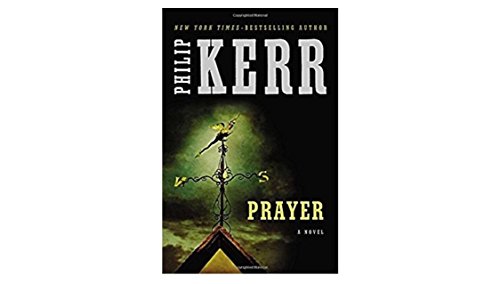
From New York Times-bestselling author Philip Kerr comes an amazing departure: an intense psychological thriller, sure to garner even more acclaim for this powerhouse author on the rise.
Gil Martins, an agent with the FBI’s Domestic Terrorism Unit in Houston, confronts the violence generated by extremism within our nation’s borders every day. He sees hatred and destruction wrought by every kind of “ism” there is, and the zealots who kill in their names. Until now, he has always been a part of the solution—however imperfect—a part of justice. But when Gil discovers he played a key role in wrongly condemning an innocent man to death row, it shakes his faith—in the system, in himself, and in God—deeply. It even estranges him from his wife and son.
Desperate, Gil offers up a prayer. To know God is there, not through a sign or physical demonstration but through the strength to cope with his ever-growing, ever-creeping doubts.
His problems become more than personal as things heat up in Houston. A serial killer terrorizing the morally righteous turns out to have religious motivations, upping the case from homicide to domestic terrorism. A number of prominent secular icons die or are grievously injured abruptly and under suspicious circumstances, the latest of which is a New Atheist writer who’s fallen into an inexplicable coma. Left and right, it seems Gil can’t escape the power of God and murder.
As Gil investigates both cases, he realizes that there may be a connection—answering his prayers in a most terrifying way.
Die Inhaltsangabe kann sich auf eine andere Ausgabe dieses Titels beziehen.
Über die Autorinnen und Autoren
Philip Kerr is the author of the Bernie Gunther series as well as several dystopian futuristic novels, standalone thrillers, and the young adult seriesChildren of the Lamp. He lives in London with his wife and children.
Philip Kerr is the author of the Bernie Gunther series as well as several dystopian futuristic novels, standalone thrillers, and the young adult series Children of the Lamp. He lives in London with his wife and children.
Auszug. © Genehmigter Nachdruck. Alle Rechte vorbehalten.
Also by Philip Kerr
PROLOGUE
ST. ANDREW’S CATHEDRAL,
GLASGOW, SCOTLAND
APRIL 5, 1988
It was a bright cold day, but as if it were midsummer, I had given up my usual gray clothes of lambswool and thick flannel, and had been dressed for innocence in white cotton like all of the other children in the cathedral.
I was trembling, but not just because of the freezing temperature in St. Andrew’s; I was also trembling because there was a mortal sin in my heart—or so I imagined.
The gray stone interior soared above my neatly combed hair like the hall of some ancient castle, and the air was filled with the smell of candles and incense. As the church organ played and the weak voices of the choir mumbled strange words that might have been Latin, I walked slowly and reverently up the center aisle toward the Friar Tuck–size bishop with my small, sweaty palms pressed together as if I were a little saint—although in my own eyes I was anything but that—just the way my mother had shown me.
“You do it like this, Giles,” she had said, showing me exactly how. “As if you were trying to press something very flat in your hands that you must hold close to your face so that the tips of the fingers are just touching your lips.”
“You mean like Joan of Arc, when they burned her at the stake,” I asked.
My mother winced.
“Yes. If you like, Giles. But if we think about it, I’m sure you can find a nicer example than that, can’t you?”
“How about Mary Queen of Scots?”
“Someone who’s not on their way to execution, perhaps. Please try to think of someone else, Giles. A saint, perhaps.”
“Surely the saints are only saints because they were martyrs first,” I argued. “That means most of them were executed, too.”
My mother made an exasperated face. “You’ve got an answer for everything, Giles,” she muttered.
“A soft answer turns away wrath,” I said. “But grievous words stir up anger. Proverbs 15:1.”
Quoting the Bible was a useful trick I had learned in Bible class. We had to learn a text every week, and it hadn’t taken me long to work out that quoting from the Bible also had the effect of silencing critical adults. More usefully, it had the effect of deterring the unwelcome attentions of Father Lees. He tended to leave me alone out of fear of the text that I might utter when confronted with his priestly hands—as if God were speaking to him directly through my innocent mouth. Because of my knowledge of the Bible, my father called me Holy Willie and sometimes “precocious,” and told my mother that in his opinion teaching children what was in the Bible was a bad thing. She ignored him, of course, but in retrospect I think Dad was right. There’s a lot in the Bible that shouldn’t ever have been translated from the Latin or the Greek.
A long line of us boys and girls shuffled up the nave of the cathedral. We must have looked like one of those Korean Moonie weddings where hundreds of couples get married at once.
Of course, this was not my child wedding but my own confirmation—the moment I was to declare my desire to renounce Satan and all his works, and to become a Roman Catholic—and, for everyone else in the cathedral of St. Andrew’s, it seemed to be a very happy day. Everyone else except me, perhaps, because there was something about the ceremony I didn’t like; not just the pansy white shirt and shorts and school tie—which were bad enough—but something else, too; I think you could say I had a feeling of deep foreboding, as if something terrible were about to happen that was not unconnected with the commission of the possibly mortal sin I was contemplating.
I was twelve years old and being precocious meant I was also possessed of “a bit of an imagination”; that was how my parents described children like me who exaggerated some things and lied about others. Certainly, I had my own ideas about almost everything. These ideas were sometimes influenced by what I had read in a book or seen on television, but more often than not, they were simply the result of deep and often wrong juvenile thinking that was at least the product of an independent mind; any lies I did tell were usually told with good intent.
Thanks to Father Lees, I had been well schooled in the Roman Catholic catechism and in the meaning of confirmation, which you can read all about in the Acts of the Apostles, chapter two. Every Wednesday for the last month I’d been taken to Bible class where Father Lees had told us how, shortly after Pentecost, the apostles had been hiding away in some locked room because they were afraid of the Jews, when suddenly they heard a noise that sounded like the wind but was, in fact, the sound of the Holy Ghost. Next, small tongues of fire appeared like little blue butane-gas cigarette-lighter flames above the heads of the disciples and they were all filled with the Holy Ghost and began to speak in foreign languages that, according to my older brother, Andy, was not unlike what happens in The Exorcist.
Now, I didn’t like ghosts and ghost stories any more than I would care to have been left alone in a locked room with Father Lees, and I certainly didn’t care for the idea of having any spirit—holy or otherwise—come inside my body and light me up “like a little candle for Jesus,” which was how the creepy priest described it to us in Bible class. In fact, the idea terrified me. Nor did I much like the possibility that I might never again be able to speak English, but only some baffling language like Chinese or Swahili that nobody else in Glasgow would be able to understand. Not that Glaswegians are easy to understand themselves; even other people from Scotland have a hard job with the accent and the lack of consonants. Speaking the English language as it is spoken in Glasgow is like learning to spit.
So I had made a plan that was going to save me from the strong risk of ghostly possession and speaking in tongues—a secret plan I discussed with no one other than my own conscience (and certainly not my mother) and that I now put into action.
When it was my turn to be confirmed, I knelt in front of the bishop and, as soon as he had anointed my forehead and slapped my face with his nicotine-stained fingers—rather harder than I’d been expecting—to symbolize how the world might treat me because of my faith, and Father Lees had given me the red grape juice and wafer that was the blood and body of Jesus Christ, I stepped around the granite pillar of the church and, while everyone’s eyes were on the boy immediately behind me who was now being confirmed, quickly wiped the holy oil off my forehead and spat the dry wafer off the roof of my mouth into my handkerchief.
One of my school friends saw me do this, and for quite a while afterward my nickname was “the heretic,” which I rather enjoyed. It gave me a wicked, worldly aspect that I fancied made me seem sophisticated. Apparently unconsumed hosts—which is what you call the wafer when you don’t actually swallow it—are very useful for the commission of satanic rites or devil worship. Not that I was interested in worshipping the devil. I think that even then—and possibly thanks to Father Lees—I saw God and the devil as opposite sides of the same grubby coin, although for a long time I think I managed to make a pretty good fist of being a good Christian.
Now, it’s said that no sin goes unpunished, and my own evil act was certainly punished because as I pulled the clean, folded white square of...
„Über diesen Titel“ kann sich auf eine andere Ausgabe dieses Titels beziehen.
Suchergebnisse für Prayer

Beispielbild für diese ISBN
Prayer
Anbieter: World of Books (was SecondSale), Montgomery, IL, USA
Verkäuferbewertung 5 von 5 Sternen

Zustand: Good. Item in good condition. Textbooks may not include supplemental items i.e. CDs, access codes etc. Artikel-Nr. 00093531287
Gebraucht kaufen
EUR 3,71
Versand gratis
Versand innerhalb von USA
Versand innerhalb von USA
Anzahl: 3 verfügbar
Beispielbild für diese ISBN
Prayer
Anbieter: World of Books (was SecondSale), Montgomery, IL, USA
Verkäuferbewertung 5 von 5 Sternen
Zustand: Very Good. Item in very good condition! Textbooks may not include supplemental items i.e. CDs, access codes etc. Artikel-Nr. 00089821201
Gebraucht kaufen
EUR 3,71
Versand gratis
Versand innerhalb von USA
Versand innerhalb von USA
Anzahl: 2 verfügbar
Beispielbild für diese ISBN
Prayer
Verlag:
G.P. Putnam's Sons (edition First Edition), 2014
ISBN 10: 039916765X
ISBN 13: 9780399167652
Gebraucht
Hardcover
Erstausgabe
Anbieter: BooksRun, Philadelphia, PA, USA
Verkäuferbewertung 5 von 5 Sternen
Hardcover. Zustand: Very Good. First Edition. With dust jacket. It's a well-cared-for item that has seen limited use. The item may show minor signs of wear. All the text is legible, with all pages included. It may have slight markings and/or highlighting. Artikel-Nr. 039916765X-11-1-29
Gebraucht kaufen
EUR 5,56
Versand gratis
Versand innerhalb von USA
Versand innerhalb von USA
Anzahl: 1 verfügbar
Beispielbild für diese ISBN
Prayer
Verlag:
Penguin Publishing Group, 2014
ISBN 10: 039916765X
ISBN 13: 9780399167652
Gebraucht
Hardcover
Erstausgabe
Anbieter: Better World Books, Mishawaka, IN, USA
Verkäuferbewertung 5 von 5 Sternen
Zustand: Good. First Edition. Pages intact with minimal writing/highlighting. The binding may be loose and creased. Dust jackets/supplements are not included. Stock photo provided. Product includes identifying sticker. Better World Books: Buy Books. Do Good. Artikel-Nr. 514589-75
Gebraucht kaufen
EUR 6,55
Versand gratis
Versand innerhalb von USA
Versand innerhalb von USA
Anzahl: 2 verfügbar
Beispielbild für diese ISBN
Prayer
Verlag:
G.P. Putnam's Sons (edition First Edition), 2014
ISBN 10: 039916765X
ISBN 13: 9780399167652
Gebraucht
Hardcover
Erstausgabe
Anbieter: BooksRun, Philadelphia, PA, USA
Verkäuferbewertung 5 von 5 Sternen
Hardcover. Zustand: Very Good. First Edition. With dust jacket. It's a well-cared-for item that has seen limited use. The item may show minor signs of wear. All the text is legible, with all pages included. It may have slight markings and/or highlighting. Artikel-Nr. 039916765X-11-6-29
Gebraucht kaufen
EUR 6,75
Versand gratis
Versand innerhalb von USA
Versand innerhalb von USA
Anzahl: 1 verfügbar
Beispielbild für diese ISBN
Prayer
Anbieter: ThriftBooks-Reno, Reno, NV, USA
Verkäuferbewertung 5 von 5 Sternen
Hardcover. Zustand: Very Good. No Jacket. May have limited writing in cover pages. Pages are unmarked. ~ ThriftBooks: Read More, Spend Less. Artikel-Nr. G039916765XI4N00
Gebraucht kaufen
EUR 7,47
Versand gratis
Versand innerhalb von USA
Versand innerhalb von USA
Anzahl: 1 verfügbar
Beispielbild für diese ISBN
Prayer
Anbieter: ThriftBooks-Atlanta, AUSTELL, GA, USA
Verkäuferbewertung 5 von 5 Sternen
Hardcover. Zustand: Very Good. No Jacket. May have limited writing in cover pages. Pages are unmarked. ~ ThriftBooks: Read More, Spend Less. Artikel-Nr. G039916765XI4N00
Gebraucht kaufen
EUR 7,47
Versand gratis
Versand innerhalb von USA
Versand innerhalb von USA
Anzahl: 1 verfügbar
Beispielbild für diese ISBN
Prayer
Anbieter: ThriftBooks-Dallas, Dallas, TX, USA
Verkäuferbewertung 5 von 5 Sternen
Hardcover. Zustand: Very Good. No Jacket. May have limited writing in cover pages. Pages are unmarked. ~ ThriftBooks: Read More, Spend Less. Artikel-Nr. G039916765XI4N00
Gebraucht kaufen
EUR 7,47
Versand gratis
Versand innerhalb von USA
Versand innerhalb von USA
Anzahl: 1 verfügbar
Beispielbild für diese ISBN
Prayer
Anbieter: Wonder Book, Frederick, MD, USA
Verkäuferbewertung 5 von 5 Sternen
Zustand: Very Good. Very Good condition. Good dust jacket. A copy that may have a few cosmetic defects. May also contain light spine creasing or a few markings such as an owner's name, short gifter's inscription or light stamp. Artikel-Nr. V04A-05216
Gebraucht kaufen
EUR 9,93
Versand gratis
Versand innerhalb von USA
Versand innerhalb von USA
Anzahl: 1 verfügbar
Beispielbild für diese ISBN
Prayer
Verlag:
G.P. Putnam's Sons, 2014
ISBN 10: 039916765X
ISBN 13: 9780399167652
Gebraucht
Hardcover
Erstausgabe
Signiert
Anbieter: The Book Scouts, Hamilton, ON, Kanada
Verkäuferbewertung 5 von 5 Sternen
hardcover. Zustand: Near Fine. Zustand des Schutzumschlags: Near Fine. First Edition. We're always buying collectible book collections. Contact us for details. We're happy to provide pictures of any book priced at $10 or more, please just ask! Signed American first edition, first printing. Signed on title page by author. Contains numberline 1 2 3 4 5 6 7 8 9 10. Virtually no wear to jacket. Jacket is NOT price clipped. Covers are clean and bright. Edges are sharp. No tears or creases. The book itself is in Near Fine condition. The binding is straight and tight. NO remainder mark. Signed. Artikel-Nr. 23100130
Gebraucht kaufen
EUR 16,69
EUR 8,65 Versand
Versand von Kanada nach USA
Versand von Kanada nach USA
Anzahl: 1 verfügbar