
Verwandte Artikel zu The Learning Habit: A Groundbreaking Approach to Homework...
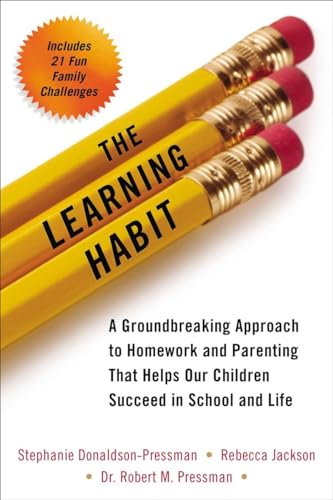
The Learning Habit: A Groundbreaking Approach to Homework and Parenting that Helps Our Children Succeed in School and Life - Softcover
Inhaltsangabe
A groundbreaking approach to building learning habits for life, based on a major new study revealing what works – and what doesn’t
Life is different for kids today. Between standardized testing, the Common Core Curriculum, copious homework assignments, and seemingly endless amounts of “screen time,” it’s hard for kids – and parents – to know what’s most essential. How can parents help their kids succeed – not just do well “on the test” -- but develop the learning habits they’ll need to thrive throughout their lives?
This important and parent-friendly book presents new solutions based on the largest study of family routines ever conducted. The Learning Habit offers a blueprint for navigating the maze of homework, media use, and the everyday stress that families with school-age children face; turning those “stress times” into opportunities to develop the eight critical skills kids will need to succeed in college and in the highly competitive job market of tomorrow – skills including concentration and focus, time management, decision-making, goal-setting, and self-reliance. Along with hands-on advice and compelling real-life case studies, the book includes 21 fun family challenges for parents and kids, bringing together the latest research with simple everyday solutions to help kids thrive, academically and beyond.
Die Inhaltsangabe kann sich auf eine andere Ausgabe dieses Titels beziehen.
Über die Autorin bzw. den Autor
Stephanie Donaldson-Pressman is a psychotherapist, consultant, and internationally recognized author in the field of family therapy. She is the author of The Narcissistic Family, and Clinical Director of New England Center for Pediatric Psychology.
Rebecca Jackson is a writer and neuro-psychological educator whose writing is featured on the GoodParentGoodChild website and Huffington Post Screen Sense.
Dr. Robert M. Pressman is a Board Certified Family Psychologist, a practicing pediatric psychologist, and Director of Research at the New England Center for Pediatric Psychology.
Auszug. © Genehmigter Nachdruck. Alle Rechte vorbehalten.
INTRODUCTION
This book is written by three researchers who are also parents. The impetus for our work and our research is our unwavering belief that parenting is our most important job. While being parents provided the motivation for this book, our other jobs provided the material. We are all clinicians who work with children and families.
There is something else about this book that makes it unique: It is based on the largest survey of family routines ever conducted. The Learning Habit Studies were a 3-year project, which involved both traditional paper research studies, interviews, and a groundbreaking online research study that surveyed nearly 50,000 parents in all 50 U.S. states. Conducted in the fall of 2013, the findings are both conclusive and provocative. The recommendations we make are rooted in science, clinical experience, and parent and teacher interviews.
Stephanie Donaldson-Pressman is the clinical director of the New England Center for Pediatric Psychology (NECPP) and a bestselling author; she works with parents and children, both independently and in groups. Rebecca Jackson’s work as a psychometrist involves testing children for learning disabilities, cognitive deficits, and psychological disorders. Because her overstuffed suitcase on wheels is brimming with all kinds of fascinating tests and gadgets, her children refer to her as “the kid detective.” Dr. Robert M. Pressman is the research director of the NECPP. He was the lead researcher for our three collaborative studies, conducted with NECPP, Brown University’s Alpert Medical School, and Children’s National Medical Center; Rhode Island College’s Psychology Department also participated in the first two studies. The findings from these studies provided significant new data about the habits, routines, and challenges of families living in this digital age. As a clinical psychologist, Dr. Pressman also works with children and their families.
We are all trained observers, whose jobs and habits are to write about what we see. This book is the result of not only research studies but hundreds of interviews and thousands of hours of clinical observation.
WHAT’S HAPPENING IN OUR HOUSE?
Over the last few years, we have seen dramatic changes in the educational landscape. Homework, once considered an adjunct to classroom teaching, has become a central piece of the educational process—and an important component of students’ grades. The integration of technology and homework, via online teaching tools and textbooks, has further complicated the process, as the line between educational and recreational media consumption becomes increasingly blurred. More and more “nonessential” school programs are being cut. The very activities that enriched our lives and provided us with opportunities in athletics and the arts are being eliminated. Teachers are being forced to teach to the (mandated) tests rather than challenging their students, stimulating their thinking, or creating pride in simply learning something new. Brightly colored textbooks and teaching manuals filled with illustrations have become digitalized; while this sounds exciting in theory, it often translates into nondescript black-and-white photocopies of the material being used in classrooms and sent home in the form of worksheets—so that all students can participate. Despite the focus on mandated tests, we are graduating children who lack the skills to survive, much less thrive, in college. Once first in the world in college-graduated students, the United States is now 10th.1 Almost half of our students who enter college do not graduate.2 They simply do not have the confidence, study skills, or learning habits necessary to handle the work and challenges independent collegiate living entails.
Technology has also become an ever-present influence on our lives. Our children have the benefit of instant communication and easy access to information. That is a wonderful thing—except when it’s not. What we observe are children who can relate to screens with ease, but have few social or communication skills; kids who can play video games for hours, but can’t read a book for longer than 10 minutes; kids who can text and tweet, but can’t focus on a challenging math problem or make sense of a few paragraphs in a history book. “It’s boring!” they cry. And compared to the instant gratification of video games, texting, and social media, it probably is.
Homework used to take 30 minutes—at most—to create special projects, finish up a few math problems, or prepare for a spelling test. Kids would simply scan the chapters and answer the assigned questions during study hall or before class—fiendishly scribbling before the teacher walked in! Not anymore. Today, homework can take several (stressful) hours a day.3 Digital homework assignments and online research and tutorials are now the norm; yet parents are given little to no guidance on how to help their children integrate these tools into their homework routines for maximum benefit. Love it or hate it, technology-based homework is here to stay.
The focus on test scores has also made achievement the most important thing. As a result, we are producing a nation of kids who are afraid to make mistakes, try new things, and even ask questions in class—because they may be perceived as stupid. If you can’t be an achiever, if you can’t be the best, then it’s better not to try—because you might fail.
ARE WE THE ONLY ONES?
We wanted to find out if what we were seeing was universal. We wanted to study families who have met these challenges and produced children who graduated from college in four years—rather than five or six or never. Why were their kids academically successful? What did they do to give their children such terrific social skills, emotional health, and the confidence that allowed them to communicate so clearly and assertively? We joined forces with other scientists, and conducted three separate learning habit research studies to find out.
In one of the most comprehensive psychosocial research studies of all time on this topic, nearly 50,000 parents from 4,600 cities across the nation took time out of their busy lives to offer us a candid look at their daily habits and routines. Since this study was offered online and participants were guaranteed anonymity, something interesting happened: Moms and dads felt comfortable being completely honest about their children’s grades, social interactions with peers, discipline and behavioral issues at home and at school, and, yes, about their media use.
Of course, collaborating, analyzing, and cross-correlating such a massive amount of data was a daunting task. We had to compare a multitude of diverse topics, to see if there were links between factors like sports and communication skills, grades and social involvement, bedtimes and personality traits, and parenting style and independence. Eventually, however, we were able to find the links—connect the dots—and identify habits used by those families whose children were experiencing academic, emotional, and social success. Once identified, these habits were then combined with parenting techniques that can incorporate these best practices.
A NEW CONCEPT OF HOMEWORK
The goal of this book is to help parents understand and facilitate the habits and routines that help children learn. This can often mean synthesizing seemingly unrelated tasks. For example, you might not think that communication skills are part of the homework process, but you will after reading this book. So are sports and social skills. Sleep is of the highest importance. What about cell phone use, video games, and computers?...
„Über diesen Titel“ kann sich auf eine andere Ausgabe dieses Titels beziehen.
Suchergebnisse für The Learning Habit: A Groundbreaking Approach to Homework...

Beispielbild für diese ISBN
Learning Habit A Grounbreaking
Anbieter: World of Books (was SecondSale), Montgomery, IL, USA
Verkäuferbewertung 5 von 5 Sternen

Zustand: Very Good. Item in very good condition! Textbooks may not include supplemental items i.e. CDs, access codes etc. Artikel-Nr. 00102273884
Gebraucht kaufen
EUR 3,90
Versand gratis
Versand innerhalb von USA
Versand innerhalb von USA
Anzahl: 1 verfügbar
Beispielbild für diese ISBN
Learning Habit A Grounbreaking
Anbieter: World of Books (was SecondSale), Montgomery, IL, USA
Verkäuferbewertung 5 von 5 Sternen
Zustand: Good. Item in good condition. Textbooks may not include supplemental items i.e. CDs, access codes etc. Artikel-Nr. 00061048187
Gebraucht kaufen
EUR 3,90
Versand gratis
Versand innerhalb von USA
Versand innerhalb von USA
Anzahl: 7 verfügbar
Beispielbild für diese ISBN
Learning Habit A Grounbreaking
Anbieter: World of Books (was SecondSale), Montgomery, IL, USA
Verkäuferbewertung 5 von 5 Sternen
Zustand: Acceptable. Item in acceptable condition! Textbooks may not include supplemental items i.e. CDs, access codes etc. Artikel-Nr. 00100692695
Gebraucht kaufen
EUR 3,90
Versand gratis
Versand innerhalb von USA
Versand innerhalb von USA
Anzahl: 2 verfügbar
Beispielbild für diese ISBN
The Learning Habit: A Groundbreaking Approach to Homework and Parenting that Helps Our Children Succeed in School and Life
Verlag:
TarcherPerigee (edition Illustrated), 2014
ISBN 10: 0399167110
ISBN 13: 9780399167119
Gebraucht
Paperback
Anbieter: BooksRun, Philadelphia, PA, USA
Verkäuferbewertung 5 von 5 Sternen
Paperback. Zustand: Fair. Illustrated. The item might be beaten up but readable. May contain markings or highlighting, as well as stains, bent corners, or any other major defect, but the text is not obscured in any way. Artikel-Nr. 0399167110-7-1-13
Gebraucht kaufen
EUR 4,21
Versand gratis
Versand innerhalb von USA
Versand innerhalb von USA
Anzahl: 1 verfügbar
Beispielbild für diese ISBN
The Learning Habit : A Groundbreaking Approach to Homework and Parenting That Helps Our Children Succeed in School and Life
Verlag:
Penguin Publishing Group, 2014
ISBN 10: 0399167110
ISBN 13: 9780399167119
Gebraucht
Softcover
Anbieter: Better World Books, Mishawaka, IN, USA
Verkäuferbewertung 5 von 5 Sternen
Zustand: Good. Former library copy. Pages intact with minimal writing/highlighting. The binding may be loose and creased. Dust jackets/supplements are not included. Includes library markings. Stock photo provided. Product includes identifying sticker. Better World Books: Buy Books. Do Good. Artikel-Nr. 7622869-6
Gebraucht kaufen
EUR 6,03
Versand gratis
Versand innerhalb von USA
Versand innerhalb von USA
Anzahl: 1 verfügbar
Beispielbild für diese ISBN
The Learning Habit : A Groundbreaking Approach to Homework and Parenting That Helps Our Children Succeed in School and Life
Verlag:
Penguin Publishing Group, 2014
ISBN 10: 0399167110
ISBN 13: 9780399167119
Gebraucht
Softcover
Anbieter: Better World Books, Mishawaka, IN, USA
Verkäuferbewertung 5 von 5 Sternen
Zustand: Good. Pages intact with minimal writing/highlighting. The binding may be loose and creased. Dust jackets/supplements are not included. Stock photo provided. Product includes identifying sticker. Better World Books: Buy Books. Do Good. Artikel-Nr. 6066272-6
Gebraucht kaufen
EUR 6,03
Versand gratis
Versand innerhalb von USA
Versand innerhalb von USA
Anzahl: 1 verfügbar
Beispielbild für diese ISBN
The Learning Habit: A Groundbreaking Approach to Homework and Parenting that Helps Our Children Succeed in School and Life
Anbieter: Wonder Book, Frederick, MD, USA
Verkäuferbewertung 5 von 5 Sternen
Zustand: Good. Good condition. A copy that has been read but remains intact. May contain markings such as bookplates, stamps, limited notes and highlighting, or a few light stains. Artikel-Nr. I11E-01560
Gebraucht kaufen
EUR 6,27
Versand gratis
Versand innerhalb von USA
Versand innerhalb von USA
Anzahl: 1 verfügbar
Beispielbild für diese ISBN
Learning Habit: A Grounbreaking Approach to Homework and Parenting That Helps Our Children Succeed in School and Life: A Groundbreaking Approach to . Helps Our Children Succeed in School and Life
Anbieter: WorldofBooks, Goring-By-Sea, WS, Vereinigtes Königreich
Verkäuferbewertung 5 von 5 Sternen
Paperback. Zustand: Very Good. The book has been read, but is in excellent condition. Pages are intact and not marred by notes or highlighting. The spine remains undamaged. Artikel-Nr. GOR008988969
Gebraucht kaufen
EUR 3,53
EUR 6,53 Versand
Versand von Vereinigtes Königreich nach USA
Versand von Vereinigtes Königreich nach USA
Anzahl: 1 verfügbar
Beispielbild für diese ISBN
Learning Habit: A Grounbreaking Approach to Homework and Parenting That Helps Our Children Succeed in School and Life
Anbieter: AwesomeBooks, Wallingford, Vereinigtes Königreich
Verkäuferbewertung 5 von 5 Sternen
Paperback. Zustand: Very Good. Learning Habit: A Grounbreaking Approach to Homework and Parenting That Helps Our Children Succeed in School and Life This book is in very good condition and will be shipped within 24 hours of ordering. The cover may have some limited signs of wear but the pages are clean, intact and the spine remains undamaged. This book has clearly been well maintained and looked after thus far. Money back guarantee if you are not satisfied. See all our books here, order more than 1 book and get discounted shipping. . Artikel-Nr. 7719-9780399167119
Gebraucht kaufen
EUR 5,82
EUR 4,80 Versand
Versand von Vereinigtes Königreich nach USA
Versand von Vereinigtes Königreich nach USA
Anzahl: 2 verfügbar
Beispielbild für diese ISBN
The Learning Habit : A Groundbreaking Approach to Homework and Parenting That Helps Our Children Succeed in School and Life
Verlag:
Penguin Publishing Group, 2014
ISBN 10: 0399167110
ISBN 13: 9780399167119
Gebraucht
Softcover
Anbieter: Better World Books Ltd, Dunfermline, Vereinigtes Königreich
Verkäuferbewertung 5 von 5 Sternen
Zustand: Very Good. Former library copy. Pages intact with possible writing/highlighting. Binding strong with minor wear. Dust jackets/supplements may not be included. Includes library markings. Stock photo provided. Product includes identifying sticker. Better World Books: Buy Books. Do Good. Artikel-Nr. GRP97600703
Gebraucht kaufen
EUR 5,98
EUR 5,83 Versand
Versand von Vereinigtes Königreich nach USA
Versand von Vereinigtes Königreich nach USA
Anzahl: 1 verfügbar