
Verwandte Artikel zu The Best Place to Work: The Art and Science of Creating...
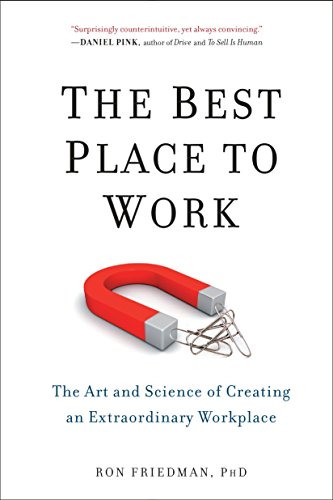
Inhaltsangabe
Now in paperback: A groundbreaking, practical guide for fueling workplace happiness, creativity, and success based on the latest research from the behavioral sciences.
For readers of Malcolm Gladwell, Daniel Pink, and Stephen Dubner, a captivating and surprising journey through the science of workplace excellence.
Why do successful companies reward failure? What can casinos teach us about building a happy workplace? How do you design an office that enhances both attention to detail and creativity?
In The Best Place to Work, award-winning psychologist Ron Friedman, Ph.D., uses the latest research from the fields of motivation, creativity, behavioral economics, neuroscience, and management to reveal what really makes us successful at work. Combining powerful stories with cutting-edge findings, Friedman shows leaders at every level how they can promote smarter thinking, greater innovation, and stronger performance.
Among the many surprising insights, Friedman explains how learning to think like a hostage negotiator can help you defuse a workplace argument, why placing a fish bowl near your desk can elevate your thinking, and how incorporating strategic distractions into your schedule can help you make smarter decisions. The book introduces the inventor who created the cubicle, the president who brought down the world's most dangerous criminal, and the teenager who single-handedly transformed professional tennis--vivid stories that offer unexpected revelations on achieving workplace excellence.
The Best Place to Work offers employees and executives alike game-changing advice for working smarter and turning any organization--regardless of its size, budget, or ambitions--into an extraordinary workplace.
Die Inhaltsangabe kann sich auf eine andere Ausgabe dieses Titels beziehen.
Über die Autorin bzw. den Autor
Ron Friedman, Ph.D., is an award-winning psychologist who writes for the Harvard Business Review, Fast Company, Forbes, Entrepreneur, and CNN. He is the founder of ignite80, a consulting firm that helps smart leaders build thriving workplaces, and frequently delivers keynotes and trainings on the science of workplace excellence.
To learn more about his work, visit ignite80.com.
Auszug. © Genehmigter Nachdruck. Alle Rechte vorbehalten.
INTRODUCTION
A Tale of Two Menus
Near the heart of Silicon Valley, just a few miles south of the San Francisco Bay, sits an enchanting Indian restaurant called Baadal. It is run by Irfan Dama, an animated chef of forty-one, who designs three-course meals that alternate daily. Baadal is his first restaurant. Yet by all accounts, it is a colossal success. Within just days of opening, reservations were nearly impossible to secure.
Unlike more traditional Indian restaurants, Chef Dama’s menus aim to demystify meals that often intimidate novice diners, by listing every ingredient included in a dish. The restaurant’s decor also provides a range of dining experiences, from quiet booths surrounded by sheer curtains to open-space tables to a rousing Bollywood-themed room intended for group celebrations.
There’s one other thing that’s different about Irfan Dama’s restaurant: It doesn’t charge customers a penny. In fact, anyone who’s had the good fortune of sampling Baadal’s world-class cuisine has done so for free.
Baadal is owned by Google. It is one of the thirty gourmet restaurants that cater to employees at the company’s Mountain View headquarters, known as the Googleplex.
At Google, eating is serious business. Every meal brings with it the opportunity to try over two hundred artisan-crafted dishes. Among the more recent offerings: roast quail, steak tartare, lobster bisque, black cod with parsley pesto and bread crumbs, and porcini-encrusted grass-fed beef. For lighter eaters, there is a salad bar, a noodle bar, a cheese and charcuterie bar, crudité platters, and seasonal sous vide vegetables. Between meals, Googlers are invited to visit one of the many microkitchens sprinkled throughout the campus, each open 24/7 and stocking organic fruit, yogurts, candy, nuts, and drinks. The goal at Google is for employees to be within three minutes of a food source at all times.
The vast and complementary food selection is one reason Google was ranked by Fortune magazine as the world’s best place to work. But as far as Googleplex amenities go, it’s only the tip of the iceberg.
Employees at the company are treated to massages, haircuts, eyebrow-shaping services, foreign language courses, and doctor visits, all on site and free of charge. They have access to three wellness centers, a bowling alley, basketball courts, a roller-hockey rink, ping-pong tables, arcade games, foosball tables, a rock-climbing wall, a putting green, and volleyball courts complete with actual sand. There’s an indoor tree house, manicured gardens, apiaries for recreational beekeeping, a replica of Richard Branson’s private spaceship, and the life-size skeleton of a Tyrannosaurus rex. Not to be forgotten: the heated toilet seats.
Google is far from the only organization investing heavily in the comfort of its employees. SAS, a business-analytics software company that earned more than $3 billion in 2012, provides its employees with access to tennis courts, saunas, a billiards hall, heated swimming pools, and work-life counseling, which includes confidential professional advice on financial planning, elder care, and family issues. At Facebook, employees can ride company-provided bicycles to the campus barber, drop off their dry cleaning, grab a latte, raid the free candy shop, and, conveniently, visit the on-site dentist.
And it’s not just companies in high tech. Wegmans, a northeastern U.S. grocery chain, has consistently appeared near the top of Fortune magazine’s list of 100 Best Companies to Work For over the past fifteen years. During that same time period, annual sales have nearly tripled. While many retail operations have tried growing earnings by reducing labor costs, Wegmans has steered in the opposite direction, offering its supermarket employees (many of whom are still in high school and simply glad to have a job) wellness programs, pretax spending accounts, 401(k) plans, life insurance, and education scholarships.
What’s the rationale behind all this lavish spending? For many companies on Fortune’s list, the basic calculus is simple: Happy employees mean bigger profits.
The more invested and enthusiastic people are about their work, the more successful their organization is on a variety of metrics. Studies indicate that happy employees are more productive, more creative, and provide better client service. They’re less likely to quit or call in sick. What’s more, they act as brand ambassadors outside the office, spreading positive impressions of their company and attracting star performers to their team.
The bottom line for many of the world’s most profitable organizations is this: Investing in workplace happiness doesn’t cost their company money—it ensures they stay on top.
It’s a perspective backed by some compelling data. Research conducted by the Great Place to Work Institute—the organization that compiles an annual list of leading workplaces in conjunction with Fortune magazine—reveals an eye-opening statistic: The stocks of companies on the Best Companies to Work For list outperform the market as a whole by a stunning factor of 2 to 1.
Investors are catching on. Around the time the Googleplex opened its doors in 2004, San Francisco–based Parnassus Investments launched a mutual fund comprised exclusively of companies with outstanding workplaces, like the ones on Fortune’s list. Since the fund’s inception, it’s recorded a 9.63 percent annualized return. In comparison, the overall S&P index during that same time period was a considerably more modest 5.58 percent.
The evidence is clear: Creating an extraordinary workplace can pay significant dividends.
So how do you do it?
Google, SAS, Facebook, and Wegmans certainly set a high bar. But what if you don’t have the budget of a multinational corporation? What if you’re struggling to find room for a bigger copier, let alone the space for an on-site wellness center? What if the closest thing your office has to a gourmet restaurant is the vending machine at the end of the hall?
What then?
• • •
This book happened by accident.
It came about after I left academics, where I’d spent years studying human motivation in the lab and teaching psychology at colleges and universities. Shortly after earning a doctorate in social psychology and settling into a teaching position, I found myself restless.
I’d planned on spending my life as a college professor. But the moment I stepped into the role, I began itching for a new challenge. I wanted to do something practical. Something applied. And so I entered the business world, where I was hired to measure public opinion as a pollster.
Not long after I arrived, I noticed something unexpected. As a social psychologist specializing in human motivation, I’d read countless studies on the factors that promote productivity, creativity, and engagement. Yet to my surprise, very few of these findings were being put to use. Much of what I observed—from the way organizations hire to the way leaders motivate to the layout and design of most office spaces—appeared blind to a wealth of research on how we can build a better workplace.
Over the past decade, advances in brain imaging, data-gathering methods, and behavioral science experiments have produced powerful insights into the conditions that help us work more effectively. We now know how to build a room that boosts creativity, how to turn workplace colleagues into close friends, and how to make any job more meaningful. We know that decorating your office can make you more...
„Über diesen Titel“ kann sich auf eine andere Ausgabe dieses Titels beziehen.
Suchergebnisse für The Best Place to Work: The Art and Science of Creating...

Beispielbild für diese ISBN
The Best Place to Work: The Art and Science of Creating an Extraordinary Workplace
Anbieter: World of Books (was SecondSale), Montgomery, IL, USA
Verkäuferbewertung 5 von 5 Sternen

Paperback. Zustand: Fair. Now in paperback: A groundbreaking, practical guide for fueling workplace happiness, creativity, and success based on the latest research from the behavioral sciences. For readers of Malcolm Gladwell, Daniel Pink, and Stephen Dubner, a captivating and surprising journey through the science of workplace excellence. Why do successful companies reward failure? What can casinos teach us about building a happy workplace? How do you design an office that enhances both attention to detail and creativity? In The Best Place to Work, award-winning psychologist Ron Friedman, Ph.D., uses the latest research from the fields of motivation, creativity, behavioral economics, neuroscience, and management to reveal what really makes us successful at work. Combining powerful stories with cutting-edge findings, Friedman shows leaders at every level how they can promote smarter thinking, greater innovation, and stronger performance. Among the many surprising insights, Friedman explains how learning to think like a hostage negotiator can help you defuse a workplace argument, why placing a fish bowl near your desk can elevate your thinking, and how incorporating strategic distractions into your schedule can help you make smarter decisions. The book introduces the inventor who created the cubicle, the president who brought down the world's most dangerous criminal, and the teenager who single-handedly transformed professional tennis--vivid stories that offer unexpected revelations on achieving workplace excellence. The Best Place to Work offers employees and executives alike game-changing advice for working smarter and turning any organization--regardless of its size, budget, or ambitions--into an extraordinary workplace. Artikel-Nr. 00102382652
Gebraucht kaufen
EUR 4,05
Versand gratis
Versand innerhalb von USA
Versand innerhalb von USA
Anzahl: 2 verfügbar
Beispielbild für diese ISBN
The Best Place to Work: The Art and Science of Creating an Extraordinary Workplace
Anbieter: World of Books (was SecondSale), Montgomery, IL, USA
Verkäuferbewertung 5 von 5 Sternen
Paperback. Zustand: Good. Now in paperback: A groundbreaking, practical guide for fueling workplace happiness, creativity, and success based on the latest research from the behavioral sciences. For readers of Malcolm Gladwell, Daniel Pink, and Stephen Dubner, a captivating and surprising journey through the science of workplace excellence. Why do successful companies reward failure? What can casinos teach us about building a happy workplace? How do you design an office that enhances both attention to detail and creativity? In The Best Place to Work, award-winning psychologist Ron Friedman, Ph.D., uses the latest research from the fields of motivation, creativity, behavioral economics, neuroscience, and management to reveal what really makes us successful at work. Combining powerful stories with cutting-edge findings, Friedman shows leaders at every level how they can promote smarter thinking, greater innovation, and stronger performance. Among the many surprising insights, Friedman explains how learning to think like a hostage negotiator can help you defuse a workplace argument, why placing a fish bowl near your desk can elevate your thinking, and how incorporating strategic distractions into your schedule can help you make smarter decisions. The book introduces the inventor who created the cubicle, the president who brought down the world's most dangerous criminal, and the teenager who single-handedly transformed professional tennis--vivid stories that offer unexpected revelations on achieving workplace excellence. The Best Place to Work offers employees and executives alike game-changing advice for working smarter and turning any organization--regardless of its size, budget, or ambitions--into an extraordinary workplace. Artikel-Nr. 00098944455
Gebraucht kaufen
EUR 4,05
Versand gratis
Versand innerhalb von USA
Versand innerhalb von USA
Anzahl: 19 verfügbar
Beispielbild für diese ISBN
The Best Place to Work: The Art and Science of Creating an Extraordinary Workplace
Anbieter: World of Books (was SecondSale), Montgomery, IL, USA
Verkäuferbewertung 5 von 5 Sternen
Paperback. Zustand: Very Good. Now in paperback: A groundbreaking, practical guide for fueling workplace happiness, creativity, and success based on the latest research from the behavioral sciences. For readers of Malcolm Gladwell, Daniel Pink, and Stephen Dubner, a captivating and surprising journey through the science of workplace excellence. Why do successful companies reward failure? What can casinos teach us about building a happy workplace? How do you design an office that enhances both attention to detail and creativity? In The Best Place to Work, award-winning psychologist Ron Friedman, Ph.D., uses the latest research from the fields of motivation, creativity, behavioral economics, neuroscience, and management to reveal what really makes us successful at work. Combining powerful stories with cutting-edge findings, Friedman shows leaders at every level how they can promote smarter thinking, greater innovation, and stronger performance. Among the many surprising insights, Friedman explains how learning to think like a hostage negotiator can help you defuse a workplace argument, why placing a fish bowl near your desk can elevate your thinking, and how incorporating strategic distractions into your schedule can help you make smarter decisions. The book introduces the inventor who created the cubicle, the president who brought down the world's most dangerous criminal, and the teenager who single-handedly transformed professional tennis--vivid stories that offer unexpected revelations on achieving workplace excellence. The Best Place to Work offers employees and executives alike game-changing advice for working smarter and turning any organization--regardless of its size, budget, or ambitions--into an extraordinary workplace. Artikel-Nr. 00100662921
Gebraucht kaufen
EUR 4,05
Versand gratis
Versand innerhalb von USA
Versand innerhalb von USA
Anzahl: 9 verfügbar
Beispielbild für diese ISBN
The Best Place to Work: The Art and Science of Creating an Extraordinary Workplace
Verlag:
TarcherPerigee (edition Reprint), 2015
ISBN 10: 0399165606
ISBN 13: 9780399165603
Gebraucht
Paperback
Anbieter: BooksRun, Philadelphia, PA, USA
Verkäuferbewertung 5 von 5 Sternen
Paperback. Zustand: Very Good. Reprint. It's a well-cared-for item that has seen limited use. The item may show minor signs of wear. All the text is legible, with all pages included. It may have slight markings and/or highlighting. Artikel-Nr. 0399165606-11-1
Gebraucht kaufen
EUR 4,66
Versand gratis
Versand innerhalb von USA
Versand innerhalb von USA
Anzahl: 2 verfügbar
Beispielbild für diese ISBN
The Best Place to Work: The Art and Science of Creating an Extraordinary Workplace
Verlag:
Tarcher (edition Reprint), 2015
ISBN 10: 0399165606
ISBN 13: 9780399165603
Gebraucht
Paperback
Anbieter: BooksRun, Philadelphia, PA, USA
Verkäuferbewertung 5 von 5 Sternen
Paperback. Zustand: Very Good. Reprint. It's a well-cared-for item that has seen limited use. The item may show minor signs of wear. All the text is legible, with all pages included. It may have slight markings and/or highlighting. Artikel-Nr. 0399165606-8-18
Gebraucht kaufen
EUR 5,35
Versand gratis
Versand innerhalb von USA
Versand innerhalb von USA
Anzahl: 1 verfügbar
Beispielbild für diese ISBN
The Best Place to Work: The Art and Science of Creating an Extraordinary Workplace
Anbieter: ThriftBooks-Atlanta, AUSTELL, GA, USA
Verkäuferbewertung 5 von 5 Sternen
Paperback. Zustand: Good. No Jacket. Pages can have notes/highlighting. Spine may show signs of wear. ~ ThriftBooks: Read More, Spend Less. Artikel-Nr. G0399165606I3N00
Gebraucht kaufen
EUR 6,01
Versand gratis
Versand innerhalb von USA
Versand innerhalb von USA
Anzahl: 1 verfügbar
Beispielbild für diese ISBN
The Best Place to Work : The Art and Science of Creating an Extraordinary Workplace
Verlag:
Penguin Publishing Group, 2015
ISBN 10: 0399165606
ISBN 13: 9780399165603
Gebraucht
Softcover
Anbieter: Better World Books, Mishawaka, IN, USA
Verkäuferbewertung 5 von 5 Sternen
Zustand: Good. Pages intact with minimal writing/highlighting. The binding may be loose and creased. Dust jackets/supplements are not included. Stock photo provided. Product includes identifying sticker. Better World Books: Buy Books. Do Good. Artikel-Nr. 8165081-6
Gebraucht kaufen
EUR 6,18
Versand gratis
Versand innerhalb von USA
Versand innerhalb von USA
Anzahl: 6 verfügbar
Beispielbild für diese ISBN
The Best Place to Work : The Art and Science of Creating an Extraordinary Workplace
Verlag:
Penguin Publishing Group, 2015
ISBN 10: 0399165606
ISBN 13: 9780399165603
Gebraucht
Softcover
Anbieter: Better World Books: West, Reno, NV, USA
Verkäuferbewertung 5 von 5 Sternen
Zustand: Very Good. Former library copy. Pages intact with possible writing/highlighting. Binding strong with minor wear. Dust jackets/supplements may not be included. Includes library markings. Stock photo provided. Product includes identifying sticker. Better World Books: Buy Books. Do Good. Artikel-Nr. GRP93758914
Gebraucht kaufen
EUR 6,18
Versand gratis
Versand innerhalb von USA
Versand innerhalb von USA
Anzahl: 1 verfügbar
Beispielbild für diese ISBN
The Best Place to Work : The Art and Science of Creating an Extraordinary Workplace
Verlag:
Penguin Publishing Group, 2015
ISBN 10: 0399165606
ISBN 13: 9780399165603
Gebraucht
Softcover
Anbieter: Better World Books: West, Reno, NV, USA
Verkäuferbewertung 5 von 5 Sternen
Zustand: Very Good. Pages intact with possible writing/highlighting. Binding strong with minor wear. Dust jackets/supplements may not be included. Stock photo provided. Product includes identifying sticker. Better World Books: Buy Books. Do Good. Artikel-Nr. 10348347-6
Gebraucht kaufen
EUR 6,18
Versand gratis
Versand innerhalb von USA
Versand innerhalb von USA
Anzahl: 2 verfügbar
Foto des Verkäufers
The Best Place to Work: The Art and Science of Creating an Extraordinary Workplace
Anbieter: Dream Books Co., Denver, CO, USA
Verkäuferbewertung 5 von 5 Sternen
Zustand: good. Gently used with minimal wear on the corners and cover. A few pages may contain light highlighting or writing, but the text remains fully legible. Dust jacket may be missing, and supplemental materials like CDs or codes may not be included. May be ex-library with library markings. Ships promptly! Artikel-Nr. DBV.0399165606.G
Gebraucht kaufen
EUR 6,19
Versand gratis
Versand innerhalb von USA
Versand innerhalb von USA
Anzahl: 1 verfügbar