
Verwandte Artikel zu Three-Martini Lunch: A Novel
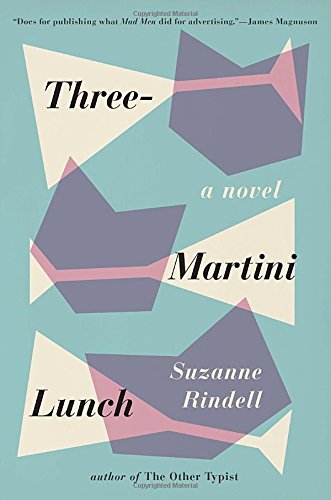
Inhaltsangabe
From the author of the "thrilling" (The Christian Science Monitor) novel The Other Typist comes an evocative, multilayered story of ambition, success, and secrecy in 1950s New York.
In 1958, Greenwich Village buzzes with beatniks, jazz clubs, and new ideas-the ideal spot for three ambitious young people to meet. Cliff Nelson, the son of a successful book editor, is convinced he's the next Kerouac, if only his father would notice. Eden Katz dreams of being an editor but is shocked when she encounters roadblocks to that ambition. And Miles Tillman, a talented black writer from Harlem, seeks to learn the truth about his father's past, finding love in the process. Though different from one another, all three share a common goal: to succeed in the competitive and uncompromising world of book publishing. As they reach for what they want, they come to understand what they must sacrifice, conceal, and betray to achieve their goals, learning they must live with the consequences of their choices. In Three-Martini Lunch, Suzanne Rindell has written both a page-turning morality tale and a captivating look at a stylish, demanding era-and a world steeped in tradition that's poised for great upheaval.
Die Inhaltsangabe kann sich auf eine andere Ausgabe dieses Titels beziehen.
Über die Autorin bzw. den Autor
Suzanne Rindell is the author of The Other Typist. She has published her short fiction and poetry in Conjunctions (online), Nimrod, storySouth, Crab Orchard Review, and Cream City Review. Rindell lives in New York City.
Auszug. © Genehmigter Nachdruck. Alle Rechte vorbehalten.
This excerpt is from an advance uncorrected proof
Copyright © 2016 Suzanne Rindell
Cliff
Greenwich Village in '58 was a madman's paradise. In those days a bunch of us went aroundtogether drinking too much coffee and smoking too much cannabis and talking allthe time about poetry and Nietzsche and bebop. I had been running around with the same guys I knew from Columbia - giveor take a colored jazz musician here or a benny addict there - and together wewould get good and stoned and ride the subway down to Washington Square. I guess you could say I liked my Columbiabuddies all right. They were swellenough guys but when you really got down to it they were a pack of poserwannabe-poets in tweed and I knew it was only a matter of time before I outgrewthem. Their fathers were bankers andlawyers and once their fascination with poetic manifestos wore off they wouldsettle down and become bankers and lawyers, too, and marry a nicedebutante. I was different from theseguys because even before I went to college I knew I was meant to be an artist,even if I didn't know just yet exactly what form I wanted my creativity totake. As far as I was concerned academiawas for the birds anyhow, and the more I spent time below 14thStreet, the more I realized that the Village was my true education.
When I finally threw in the towel and dropped my last classat Columbia, My Old Man came poking around my apartment in MorningsideHeights. He ahemmed quietly to himself and fingered the waxy leaves of theplants in the window and finally sat with his rump covering a water-stain on ahand-me-down Louis XVI sofa my great-aunt had deemed too ugly to keep in herown apartment. Together we drank acouple of fingers of bourbon neat, and then he shook my hand in a dignified wayand informed me the best lesson he could teach me at this point in my life was self-reliance. His plan mainly involved cutting me off fromthe family fortune and making long speeches on the superior quality of earned pleasures.
Once My Old Man broke the news about how I was going tohave to pave my own road it was all over pretty quickly after that. I threw a couple of loud parties and didn'tpay my rent and then the landlord had me out lickety-split and I had to golooking for a new place.
Which is how, as I entered into mystudy of the relative value of earned pleasures, I found myself renting aone-room studio in the Village with no hot water and a toilet down thehall. The lid was missing on the tank ofthat toilet and I remember the worst thing I ever did to my fellow hall-mateswas to get sick after coming home drunk one night and mistake the open tank forthe open bowl. But even without mywhiskey-induced embellishments the building was a dump. It was a pretty crummy apartment and when itrained the paint on the walls bubbled something awful, but I liked being nearthe basement cafés where people were passionate about trying out new thingswith the spoken word, which was still pretty exciting to me at the time. In those days you could walk the streets allaround Washington Square and plunge down a narrow stairway here and there tofind a room painted all black with red light bulbs screwed into the fixturesand there'd be someone standing in front of a crowd telling America to go tohell or maybe acting out the birth of a sacred cow in India. It was all kind of bananas and you were neversure what you were going to see, but after a while you started to come acrossthe same people mostly.
I had seen Miles, Swish, Bobby, and Pal around theVillage, of course, and they had seen me, too. We were friendly enough with one another, all of us being artytypes. I knew their faces and I knewtheir names but the night I really entered the picture I was in such a sorrystate it was a real act of mercy on their part. I was slated to read my poems for the first time ever at a place calledThe Sweet Spot. Earlier that afternoon I had been looking over my pages when itsuddenly
„Über diesen Titel“ kann sich auf eine andere Ausgabe dieses Titels beziehen.
Weitere beliebte Ausgaben desselben Titels

Suchergebnisse für Three-Martini Lunch: A Novel

Beispielbild für diese ISBN
ThreeMartini Lunch
Anbieter: World of Books (was SecondSale), Montgomery, IL, USA
Verkäuferbewertung 5 von 5 Sternen

Zustand: Very Good. Item in very good condition! Textbooks may not include supplemental items i.e. CDs, access codes etc. Artikel-Nr. 00103094468
Gebraucht kaufen
EUR 4,77
Versand gratis
Versand innerhalb von USA
Versand innerhalb von USA
Anzahl: 1 verfügbar
Beispielbild für diese ISBN
ThreeMartini Lunch
Anbieter: World of Books (was SecondSale), Montgomery, IL, USA
Verkäuferbewertung 5 von 5 Sternen
Zustand: Good. Item in good condition. Textbooks may not include supplemental items i.e. CDs, access codes etc. Artikel-Nr. 00094226637
Gebraucht kaufen
EUR 4,77
Versand gratis
Versand innerhalb von USA
Versand innerhalb von USA
Anzahl: 1 verfügbar
Beispielbild für diese ISBN
Three-Martini Lunch
Anbieter: ThriftBooks-Dallas, Dallas, TX, USA
Verkäuferbewertung 5 von 5 Sternen
Hardcover. Zustand: Very Good. No Jacket. Former library book; May have limited writing in cover pages. Pages are unmarked. ~ ThriftBooks: Read More, Spend Less. Artikel-Nr. G0399165487I4N10
Gebraucht kaufen
EUR 6,28
Versand gratis
Versand innerhalb von USA
Versand innerhalb von USA
Anzahl: 1 verfügbar
Beispielbild für diese ISBN
Three-Martini Lunch
Anbieter: ThriftBooks-Dallas, Dallas, TX, USA
Verkäuferbewertung 5 von 5 Sternen
Hardcover. Zustand: Very Good. No Jacket. Missing dust jacket; May have limited writing in cover pages. Pages are unmarked. ~ ThriftBooks: Read More, Spend Less. Artikel-Nr. G0399165487I4N01
Gebraucht kaufen
EUR 6,28
Versand gratis
Versand innerhalb von USA
Versand innerhalb von USA
Anzahl: 1 verfügbar
Beispielbild für diese ISBN
Three-Martini Lunch
Verlag:
Penguin Publishing Group, 2016
ISBN 10: 0399165487
ISBN 13: 9780399165481
Gebraucht
Hardcover
Anbieter: Better World Books, Mishawaka, IN, USA
Verkäuferbewertung 5 von 5 Sternen
Zustand: Good. Pages intact with minimal writing/highlighting. The binding may be loose and creased. Dust jackets/supplements are not included. Stock photo provided. Product includes identifying sticker. Better World Books: Buy Books. Do Good. Artikel-Nr. 8685773-75
Gebraucht kaufen
EUR 6,32
Versand gratis
Versand innerhalb von USA
Versand innerhalb von USA
Anzahl: 1 verfügbar
Beispielbild für diese ISBN
Three-Martini Lunch
Verlag:
Penguin Publishing Group, 2016
ISBN 10: 0399165487
ISBN 13: 9780399165481
Gebraucht
Hardcover
Anbieter: Better World Books, Mishawaka, IN, USA
Verkäuferbewertung 5 von 5 Sternen
Zustand: Good. Former library copy. Pages intact with minimal writing/highlighting. The binding may be loose and creased. Dust jackets/supplements are not included. Includes library markings. Stock photo provided. Product includes identifying sticker. Better World Books: Buy Books. Do Good. Artikel-Nr. 9510573-6
Gebraucht kaufen
EUR 6,32
Versand gratis
Versand innerhalb von USA
Versand innerhalb von USA
Anzahl: 2 verfügbar
Beispielbild für diese ISBN
Three-Martini Lunch
Verlag:
Penguin Publishing Group, 2016
ISBN 10: 0399165487
ISBN 13: 9780399165481
Gebraucht
Hardcover
Anbieter: Better World Books, Mishawaka, IN, USA
Verkäuferbewertung 5 von 5 Sternen
Zustand: Very Good. Former library copy. Pages intact with possible writing/highlighting. Binding strong with minor wear. Dust jackets/supplements may not be included. Includes library markings. Stock photo provided. Product includes identifying sticker. Better World Books: Buy Books. Do Good. Artikel-Nr. GRP102244245
Gebraucht kaufen
EUR 6,32
Versand gratis
Versand innerhalb von USA
Versand innerhalb von USA
Anzahl: 1 verfügbar
Beispielbild für diese ISBN
Three-Martini Lunch
Verlag:
Penguin Publishing Group, 2016
ISBN 10: 0399165487
ISBN 13: 9780399165481
Gebraucht
Hardcover
Anbieter: Better World Books Ltd, Dunfermline, Vereinigtes Königreich
Verkäuferbewertung 5 von 5 Sternen
Zustand: Very Good. Former library copy. Pages intact with possible writing/highlighting. Binding strong with minor wear. Dust jackets/supplements may not be included. Includes library markings. Stock photo provided. Product includes identifying sticker. Better World Books: Buy Books. Do Good. Artikel-Nr. GRP102244245
Gebraucht kaufen
EUR 5,64
EUR 5,85 Versand
Versand von Vereinigtes Königreich nach USA
Versand von Vereinigtes Königreich nach USA
Anzahl: 1 verfügbar
Foto des Verkäufers
Three-Martini Lunch
Anbieter: WeBuyBooks, Rossendale, LANCS, Vereinigtes Königreich
Verkäuferbewertung 5 von 5 Sternen
Zustand: Very Good. Most items will be dispatched the same or the next working day. A copy that has been read, but is in excellent condition. Pages are intact and not marred by notes or highlighting. The spine remains undamaged. Artikel-Nr. rev7470262092
Gebraucht kaufen
EUR 3,30
EUR 9,73 Versand
Versand von Vereinigtes Königreich nach USA
Versand von Vereinigtes Königreich nach USA
Anzahl: 1 verfügbar
Foto des Verkäufers
Three-Martini Lunch
Verlag:
Putnam Pub Group, 2016
ISBN 10: 0399165487
ISBN 13: 9780399165481
Gebraucht
Hardcover
Erstausgabe
Anbieter: ThriftBooksVintage, Tukwila, WA, USA
Verkäuferbewertung 5 von 5 Sternen
Hardcover. Zustand: Good. Zustand des Schutzumschlags: Good. First Edition. Dust jacket in good condition. First edition, first printing. Shelf and handling wear to cover and binding, with general signs of previous use. Moderate wear to boards and dust jacket due to age and use. All pages are intact, binding is sound. Secure packaging for safe delivery. Artikel-Nr. 1866179287
Gebraucht kaufen
EUR 20,54
Versand gratis
Versand innerhalb von USA
Versand innerhalb von USA
Anzahl: 1 verfügbar