
Verwandte Artikel zu The Counterfeit Agent (John Wells, Band 8)
Inhaltsangabe
Berenson’s strength is his deep understanding of geopolitics and of the shoddy compromises it demands. He clearly has excellent contacts in the world of shadows. Wells is a complex and satisfying protagonist, tackling bad guys across the world’s conflict zones.”--The New York Times Book Review
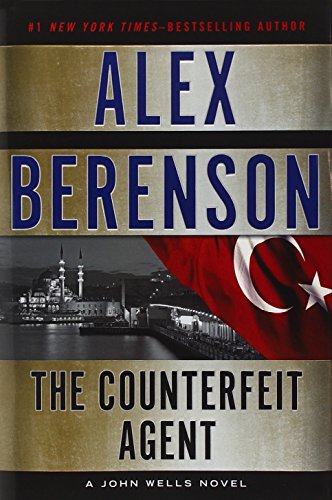
John Wells goes undercover as the threat of nuclear war skyrockets between the United States and Iran, in the cutting-edge new novel from the #1New York Timesbestselling author.
In an Istanbul hotel, a deep source warns a CIA agent that Iran intends to kill a CIA station chief. Quickly, John Wells is called in to investigate, but before he can get far, the tip comes true. Which means that thenext warning the source gives will be taken very seriously indeed. And it’s a big one.We’ve put a package on a ship from Dubai to the United States. A radioactive one. A bomb?Not yet. It’s a test run.
As the threat level jumps and the government mobilizes, something still doesn’t smell right to Wells’s old CIA boss Ellis Shafer, and so he sends Wells on a private mission to find out what’s going on. But the two of them are swimming against the tide. From Guatemala to Thailand to Hong Kong to Istanbul, Wells uses every skill he has, including his ability to go undercover in the Arab world, to chase down leads. But it might not be enough. Soon there might be nothing anyone can do to pull the United States back from the brink of war.
John Wells goes undercover as the threat of nuclear war skyrockets between the United States and Iran, in the cutting-edge new novel from the #1New York Timesbestselling author.
In an Istanbul hotel, a deep source warns a CIA agent that Iran intends to kill a CIA station chief. Quickly, John Wells is called in to investigate, but before he can get far, the tip comes true. Which means that thenext warning the source gives will be taken very seriously indeed. And it’s a big one.We’ve put a package on a ship from Dubai to the United States. A radioactive one. A bomb?Not yet. It’s a test run.
As the threat level jumps and the government mobilizes, something still doesn’t smell right to Wells’s old CIA boss Ellis Shafer, and so he sends Wells on a private mission to find out what’s going on. But the two of them are swimming against the tide. From Guatemala to Thailand to Hong Kong to Istanbul, Wells uses every skill he has, including his ability to go undercover in the Arab world, to chase down leads. But it might not be enough. Soon there might be nothing anyone can do to pull the United States back from the brink of war.
Die Inhaltsangabe kann sich auf eine andere Ausgabe dieses Titels beziehen.
Über die Autorinnen und Autoren
As a reporter for The New York Times, Alex Berenson covered topics ranging from the occupation of Iraq to the crimes of Bernie Madoff. His seven previous John Wells novels includeThe Faithful Spy, winner of the 2007 Edgar Award for best first novel. He lives in Garrison, New York.
As a reporter for The New York Times, Alex Berenson covered topics ranging from the occupation of Iraq to the crimes of Bernie Madoff. His seven previous John Wells novels includeThe Faithful Spy, winner of the 2007 Edgar Award for best first novel. He lives in Garrison, New York.
Auszug. © Genehmigter Nachdruck. Alle Rechte vorbehalten.
PROLOGUE
JOHANNESBURG, SOUTH AFRICA
All private planes were not created equal. The woman who called
herself Salome usually rode a Gulfstream G550, a jet that could
jump nonstop from Zurich to Johannesburg. But her boss had commandeered
the 550 a week earlier. Busy month. Take the IV. The G-IV
was a fine aircraft, but it would have run out of fuel over the jungles
of Congo.
And the meeting could not be postponed.
So Salome made a virtue of necessity, overnighting in Nairobi. She
added a pistol and extra ammunition to the deposit box at the Standard
Chartered. She checked the alarm in the safe house in Westlands.
True, she had nothing planned in Kenya. But better to have and not
need . . .
Salome was pretty, when she wanted to be. Not exactly beautiful,
but outright beauty was not an asset in her line of work. Beautiful
women were memorable. She preferred to be forgotten. She was in
her thirties, slim, with shoulder-length hair, light brown eyes. Her
least attractive feature was her nose, which seemed imported from a
bigger face. She could have been Spanish or Italian, but she wasn’t.
Her English was flawless, but she wasn’t American or British. She
wore a simple gold band on her ring finger, but she wasn’t married.
Men paid much less attention to married women.
To say she called herself Salome was not exactly correct. None of
her passports used the name. She rarely spoke it aloud. More accurate
to say she thought of herself as Salome. Lately the name had become
more real than the one her mother and father had given her.
Salome, who danced for Herod and demanded the head of John the
Baptist as her reward. A biblical vixen up there with her better-known
cousins, Jezebel and Delilah. A stagy name. Spoken too often, it might
sound foolish. Yet she couldn’t deny its power over her.
So. Salome.
The jet left Wilson Airport in Nairobi a few minutes after sunrise, following
a grimy Cessna that Salome suspected was CIA. She restrained
the urge to wave. The G-IV was too showy for this airport. The 550
would have been worse. Something to remember for her next visit.
She closed her eyes and counted to ten. At six she was asleep.
She woke only when the flight attendant touched her shoulder.
“Ms. Kerr? We land in ten minutes.”
She was Helen Kerr today, according to her passport—which
happened to be Kenyan. The choice wasn’t as odd as it first seemed.
Thousands of British colonists and their families had kept their
Kenyan citizenship. Plus South Africa didn’t require a visa for Kenyans,
making it a good place to use the passport. Salome rotated her identities
carefully. Airports were tricky places for her, surveillance funnels
that tightened each year. Entry and exit records were permanently
saved, passports checked against transnational databases. Some
countries now took digital head shots of every arriving passenger.
The National Security Agency had access, overt or covert, to every
record.
Fortunately, most countries did not routinely fingerprint passengers.
Not yet. When that day came, Salome’s trips would become
even more complicated. Fewer private jets. More border runs, train
rides, and chartered ships. She would become a smuggler, with herself
as her only cargo. She didn’t look forward to the change.
Today, though, the immigration agent barely glanced at her photo.
“Purpose of trip?”
“Safari.”
“You don’t safari in Kenya?”
“I hear Kruger is better. Wanted to see for myself.”
The agent smiled. “Length of stay?”
“Three days.”
That quickly he stamped her passport, nodded her along. As she
walked through the nothing-to-declare line at customs, she felt the
familiar relief that came with escaping the funnel. She could never
be sure. She didn’t underestimate the NSA’s abilities. Their computers
could trace a signal through a trillion bits of noise. But they needed a
place to start. Helen Kerr’s safari wasn’t it.
She emerged from the terminal at eleven a.m. and blinked her
eyes against the bright sun. Winter in the northern hemisphere, summer
in the south. A perk of this trip. Her driver, Jan, stood beside a
Land Cruiser, holding a sign with her name. He was a white man,
thickly muscled.
“Ms. Kerr. Pleasure to meet you.” He had a strong South African
accent, the words spoken slowly, the syllables mashed together. Pleashuh.
He grunted a little as he lifted her bag into the Toyota. “Heavy.”
He didn’t dare ask what was inside.
She ignored him, ignored him again when he asked if her flight
had been smooth. Best if he knew nothing about her. Not even her
accent. For two hours they drove west on a divided highway filled
with square Mercedes trucks and pickups overloaded with furniture.
South Africans loved auto racing. The drivers on this highway seemed
to think they were auditioning for Formula One. They sped, tailgated,
sliced between lanes without signaling—sometimes all three at once.
Finally, a sign proclaimed the Free State province, featuring the
suitably Orwellian motto Success Through Unity. After another hour
Jan steered the Toyota north onto a rutted two-lane road that cut
through rich farmland, sunflower and wheat fields. “Another forty,
forty-five minutes.” Nothing more. Good boy, she almost said. You’re
learning.
During apartheid, this province had been among the most racist
areas in South Africa. Blacks without the proper pass cards had a
nasty habit of disappearing, their bodies turning up months later. Of
course, apartheid had ended decades before. Blacks could live wherever
they chose in South Africa. Yet many avoided the Free State.
Because of men like the one Salome had flown five thousand miles
to see.
His estate was small and manicured. Two gray mares grazed behind a
low brick wall topped with a wire fence. Every few meters, pictographs
of a lightning bolt hung from its mesh. To warn off anyone
who couldn’t read “Danger: Electricity,” Salome supposed. The entry
gate was eight feet of wrought iron watched by twin security cameras.
Behind it Salome glimpsed a handsome brick house with a columned
front porch. “Witwans Manor,” a bronze plaque proclaimed.
Rand Witwans had stolen even more money than Salome had imagined.
Or his wife had been an heiress. Or both.
The gate swung open as the Land Cruiser arrived. They were
expected. The Toyota rolled up the gravel driveway as a German
shepherd trotted alongside. Like everything else here, the shepherd
was a model of the breed, tall and imposing, with dark, broody eyes:
That bite hurt me more than it hurt you. Salome preferred cats to dogs.
Cats were more subtle. Deadlier, too. The average house cat killed
hundreds of birds and mice every year if its owners were kind or foolish
enough to allow it outside. Though Salome had neither cat nor
dog. Nor husband nor child. Years before, she’d imagined she would.
No longer. This project had become her life.
As the Cruiser stopped in front of the house, the shepherd barked
an urgent warning. In a window on the second floor, a steel-gray
Great Dane looked down on them, jowls quivering. A thief who
feared dogs had best find another house.
The front door swung open. A tall man wearing a blue blazer and
khakis stepped onto the porch. Rand Witwans. In his mid-seventies,
he still aspired to be an English country gentleman. He had most...
„Über diesen Titel“ kann sich auf eine andere Ausgabe dieses Titels beziehen.
Suchergebnisse für The Counterfeit Agent (John Wells, Band 8)

Beispielbild für diese ISBN
The Counterfeit Agent
Anbieter: World of Books (was SecondSale), Montgomery, IL, USA
Verkäuferbewertung 5 von 5 Sternen

Hardback. Zustand: Fair. John Wells returns for another deadly mission from New York Times bestselling author Alex Berenson. In an Istanbul hotel, a deep source warns a CIA agent that Iran intends to kill a CIA station chief. Quickly, John Wells is called in to investigate, but before he can get far, the tip comes true. Which means that the next warning the source gives will be taken very seriously indeed. And it's a big one. A radioactive one. As the threat level jumps and the government mobilizes, Wells must figure out what's really going on. From a drug lord's mansion in Guatemala to a secret plastic surgery center in Thailand to the slums of Istanbul, Wells uses every skill he has--including his ability to go undercover in the Arab world--to chase down leads. But the enemy he faces is equally determined. And soon he may be too late to pull the United States back from the brink of war. Artikel-Nr. 00105174597
Gebraucht kaufen
EUR 5,13
Versand gratis
Versand innerhalb von USA
Versand innerhalb von USA
Anzahl: 3 verfügbar
Beispielbild für diese ISBN
The Counterfeit Agent
Anbieter: World of Books (was SecondSale), Montgomery, IL, USA
Verkäuferbewertung 5 von 5 Sternen
Hardback. Zustand: Good. John Wells returns for another deadly mission from New York Times bestselling author Alex Berenson. In an Istanbul hotel, a deep source warns a CIA agent that Iran intends to kill a CIA station chief. Quickly, John Wells is called in to investigate, but before he can get far, the tip comes true. Which means that the next warning the source gives will be taken very seriously indeed. And it's a big one. A radioactive one. As the threat level jumps and the government mobilizes, Wells must figure out what's really going on. From a drug lord's mansion in Guatemala to a secret plastic surgery center in Thailand to the slums of Istanbul, Wells uses every skill he has--including his ability to go undercover in the Arab world--to chase down leads. But the enemy he faces is equally determined. And soon he may be too late to pull the United States back from the brink of war. Artikel-Nr. 00102979651
Gebraucht kaufen
EUR 5,13
Versand gratis
Versand innerhalb von USA
Versand innerhalb von USA
Anzahl: 10 verfügbar
Beispielbild für diese ISBN
The Counterfeit Agent (A John Wells Novel)
Verlag:
G.P. Putnam's Sons (edition First Edition), 2014
ISBN 10: 0399159738
ISBN 13: 9780399159732
Gebraucht
Hardcover
Erstausgabe
Anbieter: BooksRun, Philadelphia, PA, USA
Verkäuferbewertung 5 von 5 Sternen
Hardcover. Zustand: Very Good. First Edition. It's a well-cared-for item that has seen limited use. The item may show minor signs of wear. All the text is legible, with all pages included. It may have slight markings and/or highlighting. Artikel-Nr. 0399159738-11-1
Gebraucht kaufen
EUR 5,50
Versand gratis
Versand innerhalb von USA
Versand innerhalb von USA
Anzahl: 1 verfügbar
Beispielbild für diese ISBN
The Counterfeit Agent
Verlag:
Penguin Publishing Group, 2014
ISBN 10: 0399159738
ISBN 13: 9780399159732
Gebraucht
Hardcover
Anbieter: Better World Books: West, Reno, NV, USA
Verkäuferbewertung 5 von 5 Sternen
Zustand: Good. 1st Printing. Former library copy. Pages intact with minimal writing/highlighting. The binding may be loose and creased. Dust jackets/supplements are not included. Includes library markings. Stock photo provided. Product includes identifying sticker. Better World Books: Buy Books. Do Good. Artikel-Nr. 513899-6
Gebraucht kaufen
EUR 6,33
Versand gratis
Versand innerhalb von USA
Versand innerhalb von USA
Anzahl: 2 verfügbar
Beispielbild für diese ISBN
The Counterfeit Agent
Verlag:
Penguin Publishing Group, 2014
ISBN 10: 0399159738
ISBN 13: 9780399159732
Gebraucht
Hardcover
Anbieter: Better World Books: West, Reno, NV, USA
Verkäuferbewertung 5 von 5 Sternen
Zustand: Good. 1st Printing. Pages intact with minimal writing/highlighting. The binding may be loose and creased. Dust jackets/supplements are not included. Stock photo provided. Product includes identifying sticker. Better World Books: Buy Books. Do Good. Artikel-Nr. 5067328-75
Gebraucht kaufen
EUR 6,33
Versand gratis
Versand innerhalb von USA
Versand innerhalb von USA
Anzahl: 2 verfügbar
Beispielbild für diese ISBN
The Counterfeit Agent
Verlag:
Penguin Publishing Group, 2014
ISBN 10: 0399159738
ISBN 13: 9780399159732
Gebraucht
Hardcover
Anbieter: Better World Books, Mishawaka, IN, USA
Verkäuferbewertung 5 von 5 Sternen
Zustand: Very Good. 1st Printing. Pages intact with possible writing/highlighting. Binding strong with minor wear. Dust jackets/supplements may not be included. Stock photo provided. Product includes identifying sticker. Better World Books: Buy Books. Do Good. Artikel-Nr. GRP97697014
Gebraucht kaufen
EUR 6,33
Versand gratis
Versand innerhalb von USA
Versand innerhalb von USA
Anzahl: 1 verfügbar
Beispielbild für diese ISBN
The Counterfeit Agent (A John Wells Novel)
Anbieter: Wonder Book, Frederick, MD, USA
Verkäuferbewertung 5 von 5 Sternen
Zustand: Good. Good condition. Good dust jacket. A copy that has been read but remains intact. May contain markings such as bookplates, stamps, limited notes and highlighting, or a few light stains. Artikel-Nr. L21H-04156
Gebraucht kaufen
EUR 6,40
Versand gratis
Versand innerhalb von USA
Versand innerhalb von USA
Anzahl: 1 verfügbar
Beispielbild für diese ISBN
The Counterfeit Agent (A John Wells Novel)
Anbieter: Wonder Book, Frederick, MD, USA
Verkäuferbewertung 5 von 5 Sternen
Zustand: Very Good. Very Good condition. Very Good dust jacket. A copy that may have a few cosmetic defects. May also contain light spine creasing or a few markings such as an owner's name, short gifter's inscription or light stamp. Artikel-Nr. N22K-00572
Gebraucht kaufen
EUR 6,40
Versand gratis
Versand innerhalb von USA
Versand innerhalb von USA
Anzahl: 3 verfügbar
Beispielbild für diese ISBN
The Counterfeit Agent (A John Wells Novel)
Anbieter: Wonder Book, Frederick, MD, USA
Verkäuferbewertung 5 von 5 Sternen
Zustand: As New. Like New condition. Like New dust jacket. A near perfect copy that may have very minor cosmetic defects. Artikel-Nr. O09M-01235
Gebraucht kaufen
EUR 6,40
Versand gratis
Versand innerhalb von USA
Versand innerhalb von USA
Anzahl: 2 verfügbar
Beispielbild für diese ISBN
The Counterfeit Agent (A John Wells Novel)
Anbieter: ThriftBooks-Dallas, Dallas, TX, USA
Verkäuferbewertung 5 von 5 Sternen
Hardcover. Zustand: Very Good. No Jacket. Missing dust jacket; May have limited writing in cover pages. Pages are unmarked. ~ ThriftBooks: Read More, Spend Less. Artikel-Nr. G0399159738I4N01
Gebraucht kaufen
EUR 6,66
Versand gratis
Versand innerhalb von USA
Versand innerhalb von USA
Anzahl: 1 verfügbar