
Verwandte Artikel zu Horizon
Inhaltsangabe
ONE OF THE BEST BOOKS OF THE YEAR:
THE NEW YORK TIMES • NPR • THE GUARDIAN
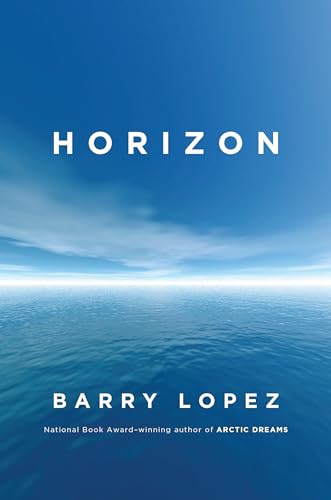
From pole to pole and across decades of lived experience, National Book Award-winning author Barry Lopez delivers his most far-ranging, yet personal, work to date. Horizon moves indelibly, immersively, through the author’s travels to six regions of the world: from Western Oregon to the High Arctic; from the Galápagos to the Kenyan desert; from Botany Bay in Australia to finally, unforgettably, the ice shelves of Antarctica.
Along the way, Lopez probes the long history of humanity’s thirst for exploration, including the prehistoric peoples who trekked across Skraeling Island in northern Canada, the colonialists who plundered Central Africa, an enlightenment-era Englishman who sailed the Pacific, a Native American emissary who found his way into isolationist Japan, and today’s ecotourists in the tropics. And always, throughout his journeys to some of the hottest, coldest, and most desolate places on the globe, Lopez searches for meaning and purpose in a broken world.
Die Inhaltsangabe kann sich auf eine andere Ausgabe dieses Titels beziehen.
Über die Autorin bzw. den Autor
Barry Lopez is the author of three collections of essays, including Horizon; several story collections; Arctic Dreams, for which he received the National Book Award; Of Wolves and Men, a National Book Award finalist; and Crow and Weasel, a novella-length fable. He contributed regularly to both American and foreign journals and traveled to more than seventy countries to conduct research. He was the recipient of fellowships from the Guggenheim, Lannan, and National Science Foundations and was honored by a number of institutions for his literary, humanitarian, and environmental work. He died in 2020.
www.barrylopez.com
Auszug. © Genehmigter Nachdruck. Alle Rechte vorbehalten.
1.
Mamaroneck
A history, one purporting to depict the life trajectory of the grandfather reading by the pool, could easily begin 65 years before that moment in Hawai‘i, in an embayment of Long Island Sound called Mamaroneck Harbor. Here is a stretch of sheltered water, a surface barely roughened that day by a wind blowing westward from the direction of Crane Island. A boy who cannot yet swim wades steadily farther out into the salt water, under the shepherding gaze of his mother. She’s hardly fifty feet away, a dark-haired woman in her middle thirties, her legs tucked beneath her, her belly round with a second child. She’s sitting on a wool blanket, embroidering a needlepoint image of field flowers erect in a vase. It’s 1948. She’s conversing with a friend underneath a large white oak tree on Orienta Point, on the Westchester County coast of New York.
The boy halts when he reaches water up to his chin. She watches him steadily now. He wants to go farther, to swim out past Turkey Rock, out farther even, out beyond the Scotch Caps, two islets on the distant rim of the Sound. Past that lies a horizon of water. A blank page.
He turns for shore, scuttling sideways like a crab in ripples that break over his small shoulders.
A few months later, with the approach of a New England winter and following the birth of his only sibling, the boy moves with his family to a valley in Southern California, an irrigated expanse of farmland. Groves of oranges and walnuts, fields of alfalfa. Peach orchards. The irrigated San Fernando Valley. This Mediterranean plain is bounded to the south by the Santa Monica Mountains, to the north by the snow-capped San Gabriels. A different life for him, now. A different geography. An unfamiliar climate. Different races of people.
One day, a couple of years after the family arrives, the father leaves. He returns to his first wife, living in Florida with their son, and the boy and his mother and younger brother begin together another sort of existence. His mother teaches home economics at a junior high school in Northridge and, at night, dressmaking at Pierce Junior College, near Calabasas. Other evenings she works at home, creating couture clothing for her clients. The father writes from Florida. He promises to send money but never does. The three of them, anyway, seem to have all they need. The boy is curious, but wary. A suburban crow. He makes friends with other boys in his neighborhood and with his classmates at Our Lady of Grace, a Catholic grade school in Encino. He gets to know a few of his mother’s students, the sons of braceros working in the vegetable fields north and west of their house in Reseda.
He learns to ride a bicycle. He rides and rides, as far north in the valley as Granada Hills and west all the way to Chatsworth.
Their mother takes the boys out into the western Mojave Desert, to the eastern Mojave and the Grand Canyon, and south to the San Diego Zoo and across the border into Mexico.
One afternoon the boy stands on the shore of Topanga Beach, fronting the great Pacific just east of Malibu. He watches comber after comber crash the strand, stepping clear of the waves’ retreating sweeps each time, as his mother has asked. He understands that this foaming storm surf has arrived on the beach from someplace else. Here, temperate air embraces him, an onshore breeze softens the burn of the sun’s rays on his white skin. Its light splinters on bits of quartz in the sand at his feet.
This, too, is new to him, a feeling of being cradled in harmless breezes and caressed by light. Years later, walking alone in faraway places, he will remember and long for this sensation.
A friend of his mother, a man the boy hopes will one day be his father, is accompanying the family that day at Topanga Beach. He tells the boy that far off across the water, farther away even than the storm that makes these waves, is the extremely ancient country of China. The boy has no image of China. The tall, long-fingered, long-legged, soft-spoken man in khaki trousers moves through the boy’s mind with the hesitating grace of a flamingo. The boy imagines that the man knows many things. He works at the Santa Barbara Botanic Garden and some days brings the boy with him to work. His name is Dara. He points out differences among the plants; he pots with the boy in the greenhouses. He explains how a large flowering plant like a jacaranda grows from a small seed.
The boy’s most favorite trees now are eucalypts, the tall River red gums and Blue gums that flank Calvert Street in Reseda where he lives. He likes the royal towering of them, the shedding boles, slick beneath his hands, the fragrance of the hard gumnuts. He carries a few of these buttons in his pockets wherever he goes. He likes the defiant reach of these trees, how they crowd and rake the blue sky, and how the wind chitters in their leaf clusters. He feels safe hiding in their shadows. Dara tells him that around Los Angeles they’re called “skyline trees.” He likes that. Originally from Australia, he says, but they grow all over the world, wherever the right conditions can be found. It’s the same for the frangipani trees and bougainvillea vines growing at the Botanic Garden. Those two, along with the eucalypts, says Dara, are now found everywhere “in the colonial subtropics.”
The boy can’t picture Australia, but he is transfixed by the idea that some trees are carried off from their first country and then grow happily in other places.
When he lies in bed at night, imagining the future he wants, a strategy he uses to probe the vague precincts of his dreams, the boy envisions the Botanic Garden and thinks about Dara, how gently Dara’s hands handle plants. By now, though, he has also learned about some things less comforting. More threatening. He circumspectly regards the lives of poisonous Black widow spiders living in the garage alongside his house, red hourglasses gleaming on the females’ tummies. When he talks to adults about the rattlesnake that startled him and his friend Thair while they were walking in the Santa Monica Mountains one morning, hunting for alligator lizards, he enjoys the way adults attend closely to his story.
The snake had snapped at them when they teased it. He doesn’t tell his listeners that he and Thair beat it with a stick until it was dead.
One weekend at Zuma Beach the boy is stung by a wounded Portuguese man-of-war, a deep ocean creature, foundering wounded in the surf. An ambulance comes to take him, vomiting and shivering, to the hospital.
He trusts the shelter of the towering gum trees and wonders about the power of Portuguese man-of-wars. The two things are now entwined in his mind.
He is ashamed of having killed the snake and of his silence about it.
Most every Saturday the boy goes with his mother and brother to the Farmer’s Market in Los Angeles, at Third and Fairfax, driving over from the valley in his mother’s dark-green, 1941 Ford. He loves the shine and heft of the fruit. He has to reach higher than his head in order to feel within the tilted boxes for greengage plums, for kumquats and nectarines. He likes to heft the Belgian endives, to feel the brush of wetted carrot tops across his forehead, to grip a cassava melon in both his hands. They’re like his first pets.
A friend of his mother owns an avocado ranch near Fallbrook. Her husband, a DC-6 pilot who flies every week to Honolulu and on to Tokyo for American Airlines, is not much interested in answering the boy, who wants to know how this actually occurs, Los Angeles to Honolulu, then to Tokyo. The boy has considered that he will one day have a...
„Über diesen Titel“ kann sich auf eine andere Ausgabe dieses Titels beziehen.
Weitere beliebte Ausgaben desselben Titels

Suchergebnisse für Horizon

Beispielbild für diese ISBN
Horizon
Anbieter: World of Books (was SecondSale), Montgomery, IL, USA
Verkäuferbewertung 5 von 5 Sternen

Zustand: Very Good. Item in very good condition! Textbooks may not include supplemental items i.e. CDs, access codes etc. Artikel-Nr. 00106345961
Gebraucht kaufen
EUR 3,65
Versand gratis
Versand innerhalb von USA
Versand innerhalb von USA
Anzahl: 4 verfügbar
Beispielbild für diese ISBN
Horizon
Anbieter: World of Books (was SecondSale), Montgomery, IL, USA
Verkäuferbewertung 5 von 5 Sternen
Zustand: Good. Item in good condition. Textbooks may not include supplemental items i.e. CDs, access codes etc. Artikel-Nr. 00106448138
Gebraucht kaufen
EUR 3,65
Versand gratis
Versand innerhalb von USA
Versand innerhalb von USA
Anzahl: 2 verfügbar
Beispielbild für diese ISBN
Horizon
Anbieter: World of Books (was SecondSale), Montgomery, IL, USA
Verkäuferbewertung 5 von 5 Sternen
Zustand: Acceptable. Item in acceptable condition! Textbooks may not include supplemental items i.e. CDs, access codes etc. Artikel-Nr. 00106658878
Gebraucht kaufen
EUR 3,89
Versand gratis
Versand innerhalb von USA
Versand innerhalb von USA
Anzahl: 1 verfügbar
Beispielbild für diese ISBN
Horizon
Anbieter: World of Books (was SecondSale), Montgomery, IL, USA
Verkäuferbewertung 5 von 5 Sternen
Zustand: Good. Good condition ex-library book with usual library markings and stickers. Artikel-Nr. 00106460017
Gebraucht kaufen
EUR 5,34
Versand gratis
Versand innerhalb von USA
Versand innerhalb von USA
Anzahl: 1 verfügbar
Beispielbild für diese ISBN
Horizon
Verlag:
Knopf Doubleday Publishing Group, 2019
ISBN 10: 0394585828
ISBN 13: 9780394585826
Gebraucht
Hardcover
Anbieter: Better World Books, Mishawaka, IN, USA
Verkäuferbewertung 5 von 5 Sternen
Zustand: Good. Former library copy. Pages intact with minimal writing/highlighting. The binding may be loose and creased. Dust jackets/supplements are not included. Includes library markings. Stock photo provided. Product includes identifying sticker. Better World Books: Buy Books. Do Good. Artikel-Nr. 18600246-6
Gebraucht kaufen
EUR 6,49
Versand gratis
Versand innerhalb von USA
Versand innerhalb von USA
Anzahl: 5 verfügbar
Beispielbild für diese ISBN
Horizon
Verlag:
Knopf Doubleday Publishing Group, 2019
ISBN 10: 0394585828
ISBN 13: 9780394585826
Gebraucht
Hardcover
Anbieter: Better World Books: West, Reno, NV, USA
Verkäuferbewertung 5 von 5 Sternen
Zustand: Good. Pages intact with minimal writing/highlighting. The binding may be loose and creased. Dust jackets/supplements are not included. Stock photo provided. Product includes identifying sticker. Better World Books: Buy Books. Do Good. Artikel-Nr. 17476127-6
Gebraucht kaufen
EUR 6,49
Versand gratis
Versand innerhalb von USA
Versand innerhalb von USA
Anzahl: 1 verfügbar
Beispielbild für diese ISBN
Horizon
Anbieter: Wonder Book, Frederick, MD, USA
Verkäuferbewertung 5 von 5 Sternen
Zustand: Good. Good condition. Very Good dust jacket. A copy that has been read but remains intact. May contain markings such as bookplates, stamps, limited notes and highlighting, or a few light stains. Artikel-Nr. R09S-00825
Gebraucht kaufen
EUR 6,63
Versand gratis
Versand innerhalb von USA
Versand innerhalb von USA
Anzahl: 1 verfügbar
Beispielbild für diese ISBN
Horizon
Anbieter: Wonder Book, Frederick, MD, USA
Verkäuferbewertung 5 von 5 Sternen
Zustand: Very Good. Very Good condition. Very Good dust jacket. A copy that may have a few cosmetic defects. May also contain light spine creasing or a few markings such as an owner's name, short gifter's inscription or light stamp. Artikel-Nr. K10P-0258
Gebraucht kaufen
EUR 6,63
Versand gratis
Versand innerhalb von USA
Versand innerhalb von USA
Anzahl: 1 verfügbar
Beispielbild für diese ISBN
Horizon
Anbieter: ThriftBooks-Phoenix, Phoenix, AZ, USA
Verkäuferbewertung 5 von 5 Sternen
Hardcover. Zustand: Good. No Jacket. Pages can have notes/highlighting. Spine may show signs of wear. ~ ThriftBooks: Read More, Spend Less. Artikel-Nr. G0394585828I3N00
Gebraucht kaufen
EUR 7,00
Versand gratis
Versand innerhalb von USA
Versand innerhalb von USA
Anzahl: 1 verfügbar
Beispielbild für diese ISBN
Horizon
Anbieter: ThriftBooks-Reno, Reno, NV, USA
Verkäuferbewertung 5 von 5 Sternen
Hardcover. Zustand: Very Good. No Jacket. Former library book; May have limited writing in cover pages. Pages are unmarked. ~ ThriftBooks: Read More, Spend Less. Artikel-Nr. G0394585828I4N10
Gebraucht kaufen
EUR 7,00
Versand gratis
Versand innerhalb von USA
Versand innerhalb von USA
Anzahl: 1 verfügbar