
Verwandte Artikel zu PERFUME: THE STORY OF MURDER
Inhaltsangabe
The year is 1738; the place, Paris. A baby is born under a fish-monger’s bloody table in a marketplace, and abandoned. Orphaned, passed over to the monks as a charity case, already there is something in the aura of the tiny infant that is unsettling. No one will look after him; he is somehow too demanding, and, even more disturbing, something is missing: as his wet nurse tries to explain, he doesn’t smell the way a baby should smell; indeed, he has no scent at all.
Slowly, as we watch Jean-Baptiste Grenouille cling stubbornly to life, we begin to realize that a monster is growing before our eyes. With mounting unease, yet hypnotized, we see him explore his powers and their effect on the world around him. For this dark and sinister boy who has no smell himself possesses an absolute sense of smell, and with it he can read the world to discover the hidden truths that elude ordinary men. He can smell the very composition of objects, and their history, and where they have been, he has no need of the light, and darkness is not dark to him, because nothing can mask the odors of the universe.
As he leaves childhood behind and comes to understand his terrible uniqueness, his obsession becomes the quest to identify, and then to isolate, the most perfect scent of all, the scent of life itself.
At first, he hones his powers, learning the ancient arts of perfume-making until the exquisite fragrances he creates are the rage of Paris, and indeed Europe. Then, secure in his mastery of these means to an end, he withdraws into a strange and agonized solitude, waiting, dreaming, until the morning when he wakes, ready to embark on his monstrous quest: to find and extract from the most perfect living creatures—the most beautiful young virgins in the land— that ultimate perfume which alone can make him, too, fully human. As his trail leads him, at an ever-quickening pace, from his savage exile to the heart of the country and then back to Paris, we are caught up in a rising storm of terror and mortal sensual conquest until the frenzy of his final triumph explodes in all its horrifying consequences.
Told with dazzling narrative brilliance and the haunting power of a grown-up fairy tale, Perfume is one of the most remarkable novels of the last fifty years.
Die Inhaltsangabe kann sich auf eine andere Ausgabe dieses Titels beziehen.
Über die Autorin bzw. den Autor
Patrick Süskind was born in Ambach, near Munich, in 1949. After a problem with his hands made it impossible for him to pursue his ambitions as a concert pianist, Süskind enrolled in the University of Munich, where he studied medieval and modern history. His first play, The Double Bass, written in 1980, became an international success, performed in Germany, in Switzerland, at the Edinburgh Festival, in London, and at the New Theatre in Brooklyn. His first novel, Perfume, became a globally acclaimed bestseller with more than fifteen million copies sold worldwide. Mr. Süskind lives and writes in Munich.
Auszug. © Genehmigter Nachdruck. Alle Rechte vorbehalten.
Perfume
The Story of a MurdererBy Patrick SuskindAlfred A. Knopf
Copyright © 2006 Patrick SuskindAll right reserved.
ISBN: 9780394550848
1
In eighteenth-century France there lived a man who was one of the most gifted and abominable personages in an era that knew no lack of gifted and abominable personages. His story will be told here. His name was Jean-Baptiste Grenouille, and if his name-in contrast to the names of other gifted abominations, de Sade's, for instance, or Saint-Just's, Fouch?'s, Bonaparte's, etc.-has been forgotten today, it is certainly not because Grenouille fell short of those more famous blackguards when it came to arrogance, misanthropy, immorality, or, more succinctly, to wickedness, but because his gifts and his sole ambition were restricted to a domain that leaves no traces in history: to the fleeting realm of scent.
In the period of which we speak, there reigned in the cities a stench barely conceivable to us modern men and women. The streets stank of manure, the courtyards of urine, the stairwells stank of moldering wood and rat droppings, the kitchens of spoiled cabbage and mutton fat; the unaired parlors stank of stale dust, the bedrooms of greasy sheets, damp featherbeds, and the pungently sweet aroma of chamber pots. The stench of sulfur rose from the chimneys, the stench of caustic lyes from the tanneries, and from the slaughterhouses came the stench of congealed blood. People stank of sweat and unwashed clothes; from their mouths came the stench of rotting teeth, from their bellies that of onions, and from their bodies, if they were no longer very young, came the stench of rancid cheese and sour milk and tumorous disease. The rivers stank, the marketplaces stank, the churches stank, it stank beneath the bridges and in the palaces. The peasant stank as did the priest, the apprentice as did his master's wife, the whole of the aristocracy stank, even the king himself stank, stank like a rank lion, and the queen like an old goat, summer and winter. For in the eighteenth century there was nothing to hinder bacteria busy at decomposition, and so there was no human activity, either constructive or destructive, no manifestation of germinating or decaying life that was not accompanied by stench.
And of course the stench was foulest in Paris, for Paris was the largest city of France. And in turn there was a spot in Paris under the sway of a particularly fiendish stench: between the rue aux Fers and the rue de la Ferronnerie, the Cimeti?re des Innocents to be exact. For eight hundred years the dead had been brought here from the H?tel-Dieu and from the surrounding parish churches, for eight hundred years, day in, day out, corpses by the dozens had been carted here and tossed into long ditches, stacked bone upon bone for eight hundred years in the tombs and charnel houses. Only later-on the eve of the Revolution, after several of the grave pits had caved in and the stench had driven the swollen graveyard's neighbors to more than mere protest and to actual insurrection-was it finally closed and abandoned. Millions of bones and skulls were shoveled into the catacombs of Montmartre and in its place a food market was erected.
Here, then, on the most putrid spot in the whole kingdom, Jean-Baptiste Grenouille was born on July 17, 1738. It was one of the hottest days of the year. The heat lay leaden upon the graveyard, squeezing its putrefying vapor, a blend of rotting melon and the fetid odor of burnt animal horn, out into the nearby alleys. When the labor pains began, Grenouille's mother was standing at a fish stall in the rue aux Fers, scaling whiting that she had just gutted. The fish, ostensibly taken that very morning from the Seine, already stank so vilely that the smell masked the odor of corpses. Grenouille's mother, however, perceived the odor neither of the fish nor of the corpses, for her sense of smell had been utterly dulled, besides which her belly hurt, and the pain deadened all susceptibility to sensate impressions. She only wanted the pain to stop, she wanted to put this revolting birth behind her as quickly as possible. It was her fifth. She had effected all the others here at the fish booth, and all had been stillbirths or semi-stillbirths, for the bloody meat that emerged had not differed greatly from the fish guts that lay there already, nor had lived much longer, and by evening the whole mess had been shoveled away and carted off to the graveyard or down to the river. It would be much the same this day, and Grenouille's mother, who was still a young woman, barely in her mid-twenties, and who still was quite pretty and had almost all her teeth in her mouth and some hair on her head and-except for gout and syphilis and a touch of consumption-suffered from no serious disease, who still hoped to live a while yet, perhaps a good five or ten years, and perhaps even to marry one day and as the honorable wife of a widower with a trade or some such to bear real children . . . Grenouille's mother wished that it were already over. And when the final contractions began, she squatted down under the gutting table and there gave birth, as she had done four times before, and cut the newborn thing's umbilical cord with her butcher knife. But then, on account of the heat and the stench, which she did not perceive as such but only as an unbearable, numbing something-like a field of lilies or a small room filled with too many daffodils-she grew faint, toppled to one side, fell out from under the table into the street, and lay there, knife in hand.
Tumult and turmoil. The crowd stands in a circle around her, staring, someone hails the police. The woman with the knife in her hand is still lying in the street. Slowly she comes to.
What has happened to her?
"Nothing."
What is she doing with that knife?
"Nothing."
Where does the blood on her skirt come from?
"From the fish."
She stands up, tosses the knife aside, and walks off to wash.
And then, unexpectedly, the infant under the gutting table begins to squall. They have a look, and beneath a swarm of flies and amid the offal and fish heads they discover the newborn child. They pull it out. As prescribed by law, they give it to a wet nurse and arrest the mother. And since she confesses, openly admitting that she would definitely have let the thing perish, just as she had with those other four by the way, she is tried, found guilty of multiple infanticide, and a few weeks later decapitated at the place de Gr?ve.
By that time the child had already changed wet nurses three times. No one wanted to keep it for more than a couple of days. It was too greedy, they said, sucked as much as two babies, deprived the other sucklings of milk and them, the wet nurses, of their livelihood, for it was impossible to make a living nursing just one babe. The police officer in charge, a man named La Fosse, instantly wearied of the matter and wanted to have the child sent to a halfway house for foundlings and orphans at the far end of the rue Saint-Antoine, from which transports of children were dispatched daily to the great public orphanage in Rouen. But since these convoys were made up of porters who carried bark baskets into which, for reasons of economy, up to four infants were placed at a time; since therefore the mortality rate on the road was extraordinarily high; since for that reason the porters were urged to convey only baptized infants and only those furnished with an official certificate of transport to be stamped upon arrival in Rouen; since the babe Grenouille had neither been baptized nor...
„Über diesen Titel“ kann sich auf eine andere Ausgabe dieses Titels beziehen.
Suchergebnisse für PERFUME: THE STORY OF MURDER

Foto des Verkäufers
Perfume: The Story of Murder
Anbieter: Dream Books Co., Denver, CO, USA
Verkäuferbewertung 5 von 5 Sternen

Zustand: good. Gently used with minimal wear on the corners and cover. A few pages may contain light highlighting or writing, but the text remains fully legible. Dust jacket may be missing, and supplemental materials like CDs or codes may not be included. May be ex-library with library markings. Ships promptly! Artikel-Nr. DBV.0394550846.G
Gebraucht kaufen
EUR 15,44
Versand gratis
Versand innerhalb von USA
Versand innerhalb von USA
Anzahl: 1 verfügbar
Beispielbild für diese ISBN
Perfume: The Story of Murder
Anbieter: Robinson Street Books, IOBA, Binghamton, NY, USA
Verkäuferbewertung 4 von 5 Sternen

Hardcover. Zustand: good. Prompt Shipment, shipped in Boxes, Tracking PROVIDEDLiterary Fiction; Good hard cover with dust jacket, tips bumped, deckled pages, book club, tanning page edge, and prompt shipping with tracking. Artikel-Nr. Dr5psd073
Gebraucht kaufen
EUR 17,71
EUR 8,17 Versand
Versand innerhalb von USA
Versand innerhalb von USA
Anzahl: 1 verfügbar
Beispielbild für diese ISBN
PERFUME
Verlag:
Knopf Doubleday Publishing Group, 1986
ISBN 10: 0394550846
ISBN 13: 9780394550848
Neu
Hardcover
Anbieter: PBShop.store US, Wood Dale, IL, USA
Verkäuferbewertung 5 von 5 Sternen
HRD. Zustand: New. New Book. Shipped from UK. Established seller since 2000. Artikel-Nr. WB-9780394550848
Beispielbild für diese ISBN
Perfume: The Story of Murder
Anbieter: Kennys Bookstore, Olney, MD, USA
Verkäuferbewertung 5 von 5 Sternen
Zustand: New. 1986. First Edition. Hardcover. . . . . . Books ship from the US and Ireland. Artikel-Nr. V9780394550848
Neu kaufen
EUR 34,86
EUR 9,03 Versand
Versand innerhalb von USA
Versand innerhalb von USA
Anzahl: 1 verfügbar
Beispielbild für diese ISBN
Perfume: The Story of a Murderer
Anbieter: Revaluation Books, Exeter, Vereinigtes Königreich
Verkäuferbewertung 5 von 5 Sternen
Hardcover. Zustand: Brand New. 272 pages. 8.75x6.00x1.00 inches. In Stock. Artikel-Nr. xr0394550846
Neu kaufen
EUR 32,26
EUR 11,65 Versand
Versand von Vereinigtes Königreich nach USA
Versand von Vereinigtes Königreich nach USA
Anzahl: 2 verfügbar
Beispielbild für diese ISBN
Perfume: The Story of a Murderer
Anbieter: Revaluation Books, Exeter, Vereinigtes Königreich
Verkäuferbewertung 5 von 5 Sternen
Hardcover. Zustand: Brand New. 272 pages. 8.75x6.00x1.00 inches. In Stock. Artikel-Nr. xi0394550846
Neu kaufen
EUR 32,26
EUR 11,65 Versand
Versand von Vereinigtes Königreich nach USA
Versand von Vereinigtes Königreich nach USA
Anzahl: 2 verfügbar
Beispielbild für diese ISBN
Perfume: The Story of a Murderer
Anbieter: Revaluation Books, Exeter, Vereinigtes Königreich
Verkäuferbewertung 5 von 5 Sternen
Hardcover. Zustand: Brand New. 272 pages. 8.75x6.00x1.00 inches. In Stock. Artikel-Nr. 0394550846
Neu kaufen
EUR 35,25
EUR 11,65 Versand
Versand von Vereinigtes Königreich nach USA
Versand von Vereinigtes Königreich nach USA
Anzahl: 1 verfügbar
Foto des Verkäufers
Perfume : The Story of Murder
Verlag:
Knopf Doubleday Publishing Group Okt 2006, 2006
ISBN 10: 0394550846
ISBN 13: 9780394550848
Neu
Hardcover
Anbieter: AHA-BUCH GmbH, Einbeck, Deutschland
Verkäuferbewertung 5 von 5 Sternen
Buch. Zustand: Neu. Neuware - The year is 1738; the place, Paris. A baby is born under a fish-monger's bloody table in a marketplace, and abandoned. Orphaned, passed over to the monks as a charity case, already there is something in the aura of the tiny infant that is unsettling. No one will look after him; he is somehow too demanding, and, even more disturbing, something is missing: as his wet nurse tries to explain, he doesn't smell the way a baby should smell; indeed, he has no scent at all.Slowly, as we watch Jean-Baptiste Grenouille cling stubbornly to life, we begin to realize that a monster is growing before our eyes. With mounting unease, yet hypnotized, we see him explore his powers and their effect on the world around him. For this dark and sinister boy who has no smell himself possesses an absolute sense of smell, and with it he can read the world to discover the hidden truths that elude ordinary men. He can smell the very composition of objects, and their history, and where they have been, he has no need of the light, and darkness is not dark to him, because nothing can mask the odors of the universe. As he leaves childhood behind and comes to understand his terrible uniqueness, his obsession becomes the quest to identify, and then to isolate, the most perfect scent of all, the scent of life itself.At first, he hones his powers, learning the ancient arts of perfume-making until the exquisite fragrances he creates are the rage of Paris, and indeed Europe. Then, secure in his mastery of these means to an end, he withdraws into a strange and agonized solitude, waiting, dreaming, until the morning when he wakes, ready to embark on his monstrous quest: to find and extract from the most perfect living creaturesthe most beautiful young virgins in the land that ultimate perfume which alone can make him, too, fully human. As his trail leads him, at an ever-quickening pace, from his savage exile to the heart of the country and then back to Paris, we are caught up in a rising storm of terror and mortal sensual conquest until the frenzy of his final triumph explodes in all its horrifying consequences. Told with dazzling narrative brilliance and the haunting power of a grown-up fairy tale, Perfume is one of the most remarkable novels of the last fifty years. Artikel-Nr. 9780394550848
Neu kaufen
EUR 39,50
EUR 30,50 Versand
Versand von Deutschland nach USA
Versand von Deutschland nach USA
Anzahl: 2 verfügbar
Foto des Verkäufers
PERFUME
Verlag:
Knopf Doubleday Publishing Group, 1986
ISBN 10: 0394550846
ISBN 13: 9780394550848
Neu
Hardcover
Anbieter: moluna, Greven, Deutschland
Verkäuferbewertung 5 von 5 Sternen
Zustand: New. Patrick Süskind was born in Ambach, near Munich, in 1949. After a problem with his hands made it impossible for him to pursue his ambitions as a concert pianist, Süskind enrolled in the University of Munich, where he studied medieval and mo. Artikel-Nr. 897931644
Neu kaufen
EUR 30,88
EUR 48,99 Versand
Versand von Deutschland nach USA
Versand von Deutschland nach USA
Anzahl: 2 verfügbar
Foto des Verkäufers
Perfume: The Story of Murder
Verlag:
Alfred A Knopf, 1986
ISBN 10: 0394550846
ISBN 13: 9780394550848
Gebraucht
Hardcover
Erstausgabe
Anbieter: Sekkes Consultants, North Dighton, MA, USA
Verkäuferbewertung 5 von 5 Sternen
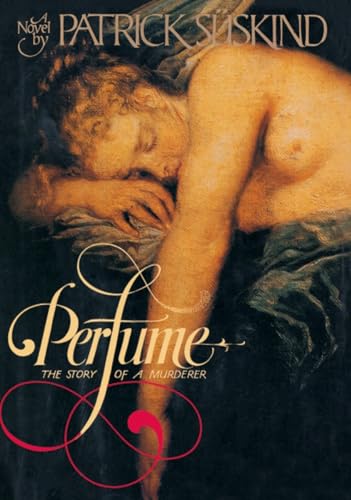
Hardcover. Zustand: Near Fine. Zustand des Schutzumschlags: Near Fine. 1st Edition. Patrick Süskind s classic novel provokes a terrifying examination of what happens when one man's indulgence in his greatest passion his sense of smell leads to murder. Translated from the German by John E. Woods and won both the World Fantasy Award and the PEN Translation Prize in 1987. On the cover is the image of Antoine Watteau's painting, Jupiter and Antiope, which depicts a sleeping woman. The book was adapted for film in 2006 by Tom Tykwer, starring Ben Whishaw and Dustin Hoffman. Pages are as new, dust jacket slight rubbing to a corner and a tiny closed tear to the back panel bottom edge, protected in plastic transparency. First printing. 6" - 8¾". book. Artikel-Nr. 277895
Gebraucht kaufen
EUR 119,52
Versand gratis
Versand innerhalb von USA
Versand innerhalb von USA
Anzahl: 1 verfügbar