
Verwandte Artikel zu The Stories of John Cheever
Inhaltsangabe
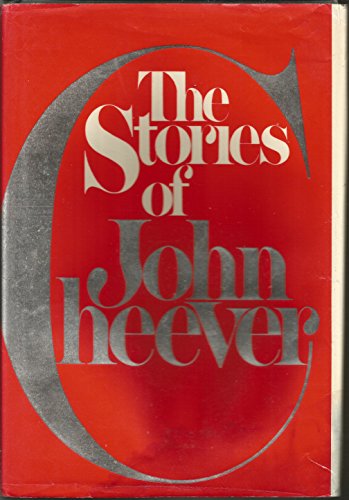
When The Stories of John Cheever was originally published, it became an immediate national bestseller and won the Pulitzer Prize. In the years since, it has become a classic. Vintage Books is proud to reintroduce this magnificent collection.
Here are sixty-one stories that chronicle the lives of what has been called "the greatest generation." From the early wonder and disillusionment of city life in "The Enormous Radio" to the surprising discoveries and common mysteries of suburbia in "The Housebreaker of Shady Hill" and "The Swimmer," Cheever tells us everything we need to know about "the pain and sweetness of life."
From the Trade Paperback edition.
Die Inhaltsangabe kann sich auf eine andere Ausgabe dieses Titels beziehen.
Über die Autorin bzw. den Autor
Shortly before his death in 1982, John Cheever was awarded the National Medal for Literature from the American Academy of Arts and Letters.<br><br><br><i>From the Trade Paperback edition.</i>
Auszug. © Genehmigter Nachdruck. Alle Rechte vorbehalten.
“The Enormous Radio”
Jim and Irene Westcott were the kind of people who seem to strike that satisfactory average of income, endeavor, and respectability that is reached by the statistical reports in college alumni bulletins. They were the parents of two young children, they had been married nine years, they lived on the twelfth floor of an apartment house near Sutton Place, they went to the theatre on an average of 10.3 times a year, and they hoped someday to live in Westchester. Irene Westcott was a pleasant, rather plain girl with soft brown hair and a wide, fine forehead upon which nothing at all had been written, and in the cold weather she wore a coat of fitch skins dyed to resemble mink. You could not say that Jim Westcott looked younger than he was, but you could at least say of him that he seemed to feel younger. He wore his graying hair cut very short, he dressed in the kind of clothes his class had worn at Andover, and his manner was earnest, vehement, and intentionally naïve. The Westcotts differed from their friends, their classmates, and their neighbors only in an interest they shared in serious music. They went to a great many concerts–although they seldom mentioned this to anyone–and they spent a good deal of time listening to music on the radio.
Their radio was an old instrument, sensitive, unpredictable, and beyond repair. Neither of them understood the mechanics of radio–or of any of the other appliances that surrounded them–and when the instrument faltered, Jim would strike the side of the cabinet with his hand. This sometimes helped. One Sunday afternoon, in the middle of a Schubert quartet, the music faded away altogether. Jim struck the cabinet repeatedly, but there was no response; the Schubert was lost to them forever. He promised to buy Irene a new radio, and on Monday when he came home from work he told her that he had got one. He refused to describe it, and said it would be a surprise for her when it came.
The radio was delivered at the kitchen door the following afternoon, and with the assistance of her maid and the handyman Irene uncrated it and brought it into the living room. She was struck at once with the physical ugliness of the large gumwood cabinet. Irene was proud of her living room, she had chosen its furnishings and colors as carefully as she chose her clothes, and now it seemed to her that the new radio stood among her intimate possessions like an aggressive intruder. She was confounded by the number of dials and switches on the instrument panel, and she studied them thoroughly before she put the plug into a wall socket and turned the radio on. The dials flooded with a malevolent green light, and in the distance she heard the music of a piano quintet. The quintet was in the distance for only an instant; it bore down upon her with a speed greater than light and filled the apartment with the noise of music amplified so mightily that it knocked a china ornament from a table to the floor. She rushed to the instrument and reduced the volume. The violent forces that were snared in the ugly gumwood cabinet made her uneasy. Her children came home from school then, and she took them to the Park. It was not until later in the afternoon that she was able to return to the radio.
The maid had given the children their suppers and was supervising their baths when Irene turned on the radio, reduced the volume, and sat down to listen to a Mozart quintet that she knew and enjoyed. The music came through clearly. The new instrument had a much purer tone, she thought, than the old one. She decided that tone was most important and that she could conceal the cabinet behind a sofa. But as soon as she had made her peace with the radio, the interference began. A crackling sound like the noise of a burning powder fuse began to accompany the singing’ of the strings. Beyond the music, there was a rustling that reminded Irene, unpleasantly of the sea, and as the quintet progressed, these noises were joined by many others. She tried all the dials and switches but nothing dimmed the interference, and she sat down, disappointed and bewildered, and tried to trace the flight of the melody. The elevator shaft in her building ran beside the living-room wall, and it was the noise of the elevator that gave her a clue to the character of the static. The rattling of the elevator cables and the opening and closing of the elevator doors were reproduced in her loudspeaker, and, realizing that the radio was sensitive to electrical currents of all sorts, she began to discern through the Mozart the ringing of telephone bells, the dialing of phones, and the lamentation of a vacuum cleaner. By listening more carefully, she was able to distinguish doorbells, elevator bells, electric razors, and Waring mixers, whose sounds had been picked up from the apartments that surrounded hers and transmitted through her loudspeaker. The powerful and ugly instrument, with its mistaken sensitivity to discord, was more than she could hope to master, so she turned the thing off and went into the nursery to see her children.
When Jim Westcott came home that night, he went to the radio confidently and worked the controls. He had the same sort of experience Irene had had. A man was speaking on the station Jim had chosen, and his voice swung instantly from the distance into a force so powerful that it shook the apartment. Jim turned the volume control and reduced the voice. Then, a minute or two later, the interference began. The ringing of telephones and doorbells set in, joined by the rasp of the elevator doors and the whir of cooking appliances. The character of the noise had changed since Irene had tried the radio earlier; the last of the electric razors was being unplugged, the vacuum cleaners had all been returned to their closets, and the static reflected that change in pace that overtakes the city after the sun goes down. He fiddled with the knobs but couldn’t get rid of the noises, so he turned the radio off and told Irene that in the morning he’d call the people who had sold it to him and give them hell.
The following afternoon, when Irene returned to the apartment from a luncheon date, the maid told her that a man had come and fixed the radio. Irene went into the living room before she took off her hat or her furs and tried the instrument. From the loudspeaker came a recording of the “Missouri Waltz.” It reminded her of the thin, scratchy music from an old-fashioned phonograph that she sometimes heard across the lake where she spent her summers. She waited until the waltz had finished, expecting an explanation of the recording, but there was none. The music was followed by silence, and then the plaintive and scratchy record was repeated. She turned the dial and got a satisfactory burst of Caucasian music–the thump of bare feet in the dust and the rattle of coin jewelry–but in the background she could bear the ringing of bells and a confusion of voices. Her children came home from school then, and she turned off the radio and went to the nursery.
When Jim came home that night, he was tired, and he took a bath and changed his clothes. Then he joined Irene in the living room. He had just turned on the radio when the maid announced dinner, so he left it on, and he and Irene went to the table.
Jim was too tired to make even a pretense of sociability, and there was nothing about the dinner to hold Irene’s interest, so her attention wandered from the food to the deposits of silver polish on the candlesticks and from there to the music in the other room. She listened for a few minutes to a Chopin prelude and then was surprised to hear a man’s voice break in. “For Christ’s sake, Kathy,” he said, “do you always have to play the piano when I get home?” The music stopped abruptly....
„Über diesen Titel“ kann sich auf eine andere Ausgabe dieses Titels beziehen.
Suchergebnisse für The Stories of John Cheever

Beispielbild für diese ISBN
The Stories of John Cheever
Anbieter: World of Books (was SecondSale), Montgomery, IL, USA
Verkäuferbewertung 5 von 5 Sternen

Zustand: Acceptable. Item in acceptable condition! Textbooks may not include supplemental items i.e. CDs, access codes etc. Artikel-Nr. 00109088473
Gebraucht kaufen
EUR 5,29
Versand gratis
Versand innerhalb von USA
Versand innerhalb von USA
Anzahl: 1 verfügbar
Beispielbild für diese ISBN
The Stories of John Cheever
Anbieter: ThriftBooks-Phoenix, Phoenix, AZ, USA
Verkäuferbewertung 5 von 5 Sternen
Hardcover. Zustand: Good. No Jacket. Missing dust jacket; Pages can have notes/highlighting. Spine may show signs of wear. ~ ThriftBooks: Read More, Spend Less. Artikel-Nr. G0394500873I3N01
Gebraucht kaufen
EUR 6,13
Versand gratis
Versand innerhalb von USA
Versand innerhalb von USA
Anzahl: 8 verfügbar
Beispielbild für diese ISBN
The Stories of John Cheever
Anbieter: ThriftBooks-Atlanta, AUSTELL, GA, USA
Verkäuferbewertung 5 von 5 Sternen
Hardcover. Zustand: Good. No Jacket. Missing dust jacket; Pages can have notes/highlighting. Spine may show signs of wear. ~ ThriftBooks: Read More, Spend Less. Artikel-Nr. G0394500873I3N01
Gebraucht kaufen
EUR 6,13
Versand gratis
Versand innerhalb von USA
Versand innerhalb von USA
Anzahl: 9 verfügbar
Beispielbild für diese ISBN
The Stories of John Cheever
Anbieter: ThriftBooks-Dallas, Dallas, TX, USA
Verkäuferbewertung 5 von 5 Sternen
Hardcover. Zustand: Good. No Jacket. Former library book; Pages can have notes/highlighting. Spine may show signs of wear. ~ ThriftBooks: Read More, Spend Less. Artikel-Nr. G0394500873I3N10
Gebraucht kaufen
EUR 6,13
Versand gratis
Versand innerhalb von USA
Versand innerhalb von USA
Anzahl: 2 verfügbar
Beispielbild für diese ISBN
The Stories of John Cheever
Anbieter: ThriftBooks-Reno, Reno, NV, USA
Verkäuferbewertung 5 von 5 Sternen
Hardcover. Zustand: Fair. No Jacket. Missing dust jacket; Readable copy. Pages may have considerable notes/highlighting. ~ ThriftBooks: Read More, Spend Less. Artikel-Nr. G0394500873I5N01
Gebraucht kaufen
EUR 6,13
Versand gratis
Versand innerhalb von USA
Versand innerhalb von USA
Anzahl: 8 verfügbar
Beispielbild für diese ISBN
The Stories of John Cheever
Anbieter: ThriftBooks-Atlanta, AUSTELL, GA, USA
Verkäuferbewertung 5 von 5 Sternen
Hardcover. Zustand: Fair. No Jacket. Missing dust jacket; Readable copy. Pages may have considerable notes/highlighting. ~ ThriftBooks: Read More, Spend Less. Artikel-Nr. G0394500873I5N01
Gebraucht kaufen
EUR 6,13
Versand gratis
Versand innerhalb von USA
Versand innerhalb von USA
Anzahl: 9 verfügbar
Beispielbild für diese ISBN
The Stories of John Cheever
Anbieter: ThriftBooks-Reno, Reno, NV, USA
Verkäuferbewertung 5 von 5 Sternen
Hardcover. Zustand: Fair. No Jacket. Former library book; Missing dust jacket; Readable copy. Pages may have considerable notes/highlighting. ~ ThriftBooks: Read More, Spend Less. Artikel-Nr. G0394500873I5N11
Gebraucht kaufen
EUR 6,13
Versand gratis
Versand innerhalb von USA
Versand innerhalb von USA
Anzahl: 4 verfügbar
Beispielbild für diese ISBN
The Stories of John Cheever
Anbieter: ThriftBooks-Dallas, Dallas, TX, USA
Verkäuferbewertung 5 von 5 Sternen
Hardcover. Zustand: Fair. No Jacket. Former library book; Readable copy. Pages may have considerable notes/highlighting. ~ ThriftBooks: Read More, Spend Less. Artikel-Nr. G0394500873I5N10
Gebraucht kaufen
EUR 6,13
Versand gratis
Versand innerhalb von USA
Versand innerhalb von USA
Anzahl: 1 verfügbar
Beispielbild für diese ISBN
The Stories of John Cheever
Anbieter: ThriftBooks-Atlanta, AUSTELL, GA, USA
Verkäuferbewertung 5 von 5 Sternen
Hardcover. Zustand: Good. No Jacket. Former library book; Pages can have notes/highlighting. Spine may show signs of wear. ~ ThriftBooks: Read More, Spend Less. Artikel-Nr. G0394500873I3N10
Gebraucht kaufen
EUR 6,13
Versand gratis
Versand innerhalb von USA
Versand innerhalb von USA
Anzahl: 1 verfügbar
Beispielbild für diese ISBN
The Stories of John Cheever
Anbieter: ThriftBooks-Dallas, Dallas, TX, USA
Verkäuferbewertung 5 von 5 Sternen
Hardcover. Zustand: Fair. No Jacket. Readable copy. Pages may have considerable notes/highlighting. ~ ThriftBooks: Read More, Spend Less. Artikel-Nr. G0394500873I5N00
Gebraucht kaufen
EUR 6,13
Versand gratis
Versand innerhalb von USA
Versand innerhalb von USA
Anzahl: Mehr als 20 verfügbar