
Verwandte Artikel zu Little Boy: A Novel
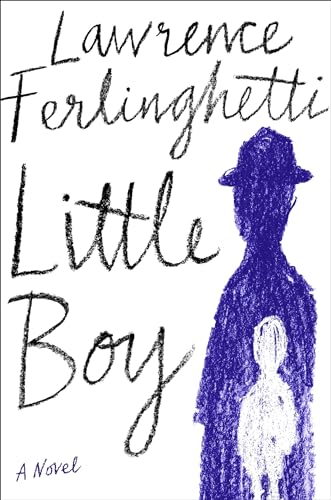
Inhaltsangabe
From the famed publisher and poet, author of the million-copy-selling collection A Coney Island of the Mind, his literary last will and testament -- part autobiography, part summing up, part Beat-inflected torrent of language and feeling, and all magical.
"A volcanic explosion of personal memories, political rants, social commentary, environmental jeremiads and cultural analysis all tangled together in one breathless sentence that would make James Joyce proud. . ."
—Ron Charles, The Washington Post
In this unapologetically unclassifiable work Lawrence Ferlinghetti lets loose an exhilarating rush of language to craft what might be termed a closing statement about his highly significant and productive 99 years on this planet. The "Little Boy" of the title is Ferlinghetti himself as a child, shuffled from his overburdened mother to his French aunt to foster childhood with a rich Bronxville family. Service in World War Two (including the D-Day landing), graduate work, and a scholar gypsy's vagabond life in Paris followed. These biographical reminiscences are interweaved with Allen Ginsberg-esque high energy bursts of raw emotion, rumination, reflection, reminiscence and prognostication on what we may face as a species on Planet Earth in the future. Little Boy is a magical font of literary lore with allusions galore, a final repository of hard-earned and durable wisdom, a compositional high wire act without a net (or all that much punctuation) and just a gas and an inspiration to read.
Die Inhaltsangabe kann sich auf eine andere Ausgabe dieses Titels beziehen.
Über die Autorin bzw. den Autor
LAWRENCE FERLINGHETTI was born in Yonkers, New York in 1919. Founder of the famed City Lights Booksellers and Publishers, he was an activist, painter, and author of numerous works of poetry, prose, and drama. His A Coney Island of the Mind was one of the bestselling poetry books of all time. Among his many honors were the Los Angeles Times' Robert Kirsch Award, the NBCC's Ivan Sandrof Award, and the ACLU's Earl Warren Civil Liberties Award. He was also a Commander of the French Order of Arts and Letters. He lived in San Francisco, close by to the bookstore he founded. He died in 2021.
Auszug. © Genehmigter Nachdruck. Alle Rechte vorbehalten.
Excerpted from LITTLE BOY
Little Boy was quite lost. He had no idea who he was or where he had come from. He was with Aunt Emilie whom he loved very much. She had taken him in swaddling clothes from his mother who already had four sons and could not handle a fifth born a few months after his father died of a heart attack. His brother Harry aged twelve found their father dead on the back cellar steps of their little house just north of Van Cortland Park, Manhattan. "Poor Mom, no money, Pop dead," wrote Harry years later. His mother, Clemence Albertine Mendes-Monsanto, was born in Providence, Rhode Island, to Sephardic parents who had immigrated from Saint Thomas, Virgin Islands, where the family had been established for a very long time as wealthy planters until a collapse of the sugar market in the late 1890s impoverished them. The family had originally fled the Inquisition in Spain and Portugal but didn't arrive in the New World in steerage with nothing but their clothes. They arrived with all their possessions in steamer trunks, including candelabras, gold and jewels, and thus were able to set up as merchants and planters in St. Thomas where they soon had a great house on a hill with wide verandas looking down on the center of the town, and a family album showed them in broad-brimmed hats and black string ties. Saint Thomas was a Danish crown colony until America snatched it early in the 20th century, and the Monsantos had intermarried with the Danes as well as with French settlers, and there were many French relatives who visited and were visited in France. Clemence Albertine had a French mother of vague aristocratic origins, and she still spoke French. So it went that Clemence Albertine's uncle married Emilie from northern France, and thus it was that Emilie who had always wanted a child came and took the newborn Laurent from his distraught mother and bore him off to France by herself. Little Boy surmised many years later that her husband, Ludwig Monsanto, a professor of languages, and quite a bit older than Emilie, did not at his advanced age want to adopt a son, and thus left Emilie with little Laurent. And so thus it was that Tante Emilie took him back to her home town near Strasbourg (the same town the famous Captain Dreyfus was from) when he was perhaps two years old, and there they lived long enough for him to speak French before English, and his very first memory of existence was being held on a balcony above the boulevard where a parade was going by, and someone was waving his hand at the great parade with band music wafting up and strains of the "Marseillaise" echoing. And the next thing he remembered was that they were back in New York in a big high ceilinged apartment on the upper westside overlooking the Hudson and the Palisades across the great river and steamboats hooting their whistles and Aunt Emilie and Ludwig somehow back together again. He had a prickly beard when he embraced Little Boy, and the sun shone on them for a brief time until suddenly Uncle Ludwig was not there anymore, and this time for good. So then again it was himself and Aunt Emilie in the big elegant flat, but not for long, because she had no money, and soon a Health Department man came and took him away to an orphanage in Chappaqua New York because she had no money to buy him milk and the man said Little Boy would develop rickets. And there was much weeping when they took him away from Emilie, and so it was he stayed in that orphanage, and years later the only memory he had of it was having to eat undercooked tapioca pudding the kids called Cat's Eyes. Oh the time lost and no other memory of it, until a year later Aunt Emilie came and got him, and it was still the nineteen-twenties in America. And how he remembered her back then. She wore cloche hats and had her hair cut short like Louise Brooks and wore always the same elegant dress in the 1920’s style, with low cut bosom and a long string of beads, and scent of eau-de cologne always about her. And of course it was not "always," except in Little Boy's memory, but it must have been her thread-bare elegance (well-hidden in her elegant spoken French) that got her a position as French governess to the 18-year-old daughter of Anna Lawrence Bisland and Presley Eugene Bisland in Bronxville New York where they lived in an ivy covered mansion not far from Sarah Lawrence College founded by Anna Lawrence's father. And so Aunt Emilie came and got him, and so began their life in a third floor room near the attic where steamer trunks with Cunard Line stickers on them shared space with old saddles and ancient bric-a-brac. But Little Boy remembered especially the dinners every night in the formal dining room with the big-boned Dutch butler who also served as chauffeur and was not used to butlering and juggled the serving dishes, while Tante Emilie conversed in French with beautiful daughter Sally, and the parents at opposite ends of the long table chiming in from time to time, or at least Madame Bisland did, for it was stylish back them to speak French and make grand tours of the Continent, especially Paris, and Aunt Emilie no doubt charmed them until a few months later she must have charmed Presley Bisland a little too much for Madame Bisland, and suddenly Aunt Emilie was gone from that house, and they told Little Boy that Emilie had gone away on her day off and had just never came back. Now, inasmuch as the Bislands had had a baby boy named Lawrence who died in infancy, it seemed an act of divine providence that they had now been provided with another Lawrence. And so it went, and Little Boy went on with them in the late 1920s in that fine mansion in Lawrence Park West Bronxville. But he was of school-age by then and they first sent him off to boarding school at Riverdale County School at Riverdale-on-Hudson of which Little Boy remembers nothing but a kind headmaster looking after him, the youngest boy in the school, and they had a summer camp in the Adirondacks where Little Boy learned to swim and tie knots and saw for the first time the first time the great woods, the huge straight pines, the shimmering lakes, the hidden streams and the light shining down on them, as in the first morning of the world. But this was all a brief idyll he would long remember, while between camp and school back at the mansion in Bronxville it was a very lonely life for Little Boy, with the nearest neighbor out of sight and no children of any age to play with, and there was only the grown-up Bislands who to Little Boy seemed very old, though perhaps they were only in their fifties, and he had a room in a wing of the house where great oaks leaned their branches over his windows, and the wind howled against the stone walls of the great house, but the wind was his companion in that room that seemed so distant from the rest of the house. It was only at mealtime when a dinner bell sounded that he descended to the family table to sit between Presley and Anna Bisland who talked to each other as if at a great distance. Now to describe each of them was a task for a writer like Charles Dickens, for indeed they were like Victorians in every way, each such a unique character of another age, at least to Little Boy. And Presley Eugene Bisland had been born into a noble but impoverished family in Natchez, Mississippi, a couple of decades after the American Civil War in which they had lost all but their great old mansion "Mount Repose.” And Presley was the last son in a large family, and there was no inheritance for him. So at age 15 he took off to the West, hoping to strike it rich in Gold Rush California. He rode the Chisholm Trail on cattle drives, learned to break horses, and worked his way West as a cowboy. Somewhere in northern California he put his stake into a promising gold mine, only to lose every cent of it as the mine failed to pan out. Broke but still only 20, he made it to New York City...
„Über diesen Titel“ kann sich auf eine andere Ausgabe dieses Titels beziehen.
Suchergebnisse für Little Boy: A Novel

Beispielbild für diese ISBN
Little Boy A Novel
Anbieter: World of Books (was SecondSale), Montgomery, IL, USA
Verkäuferbewertung 5 von 5 Sternen

Zustand: Acceptable. Item in acceptable condition! Textbooks may not include supplemental items i.e. CDs, access codes etc. Artikel-Nr. 00105792616
Gebraucht kaufen
EUR 4,32
Versand gratis
Versand innerhalb von USA
Versand innerhalb von USA
Anzahl: 1 verfügbar
Beispielbild für diese ISBN
Little Boy A Novel
Anbieter: World of Books (was SecondSale), Montgomery, IL, USA
Verkäuferbewertung 5 von 5 Sternen
Zustand: Good. Item in good condition. Textbooks may not include supplemental items i.e. CDs, access codes etc. Artikel-Nr. 00100166274
Gebraucht kaufen
EUR 4,32
Versand gratis
Versand innerhalb von USA
Versand innerhalb von USA
Anzahl: 3 verfügbar
Beispielbild für diese ISBN
Little Boy: A Novel
Verlag:
Doubleday (edition First Edition), 2019
ISBN 10: 0385544782
ISBN 13: 9780385544788
Gebraucht
Hardcover
Erstausgabe
Anbieter: BooksRun, Philadelphia, PA, USA
Verkäuferbewertung 5 von 5 Sternen
Hardcover. Zustand: Very Good. First Edition. With dust jacket. It's a well-cared-for item that has seen limited use. The item may show minor signs of wear. All the text is legible, with all pages included. It may have slight markings and/or highlighting. Artikel-Nr. 0385544782-8-6-29
Gebraucht kaufen
EUR 4,62
Versand gratis
Versand innerhalb von USA
Versand innerhalb von USA
Anzahl: 1 verfügbar
Beispielbild für diese ISBN
Little Boy
Anbieter: ThriftBooks-Atlanta, AUSTELL, GA, USA
Verkäuferbewertung 5 von 5 Sternen
Hardcover. Zustand: Very Good. No Jacket. Former library book; May have limited writing in cover pages. Pages are unmarked. ~ ThriftBooks: Read More, Spend Less. Artikel-Nr. G0385544782I4N10
Gebraucht kaufen
EUR 5,74
Versand gratis
Versand innerhalb von USA
Versand innerhalb von USA
Anzahl: 1 verfügbar
Beispielbild für diese ISBN
Little Boy
Anbieter: ThriftBooks-Reno, Reno, NV, USA
Verkäuferbewertung 5 von 5 Sternen
Hardcover. Zustand: Very Good. No Jacket. Former library book; May have limited writing in cover pages. Pages are unmarked. ~ ThriftBooks: Read More, Spend Less. Artikel-Nr. G0385544782I4N10
Gebraucht kaufen
EUR 5,74
Versand gratis
Versand innerhalb von USA
Versand innerhalb von USA
Anzahl: 1 verfügbar
Beispielbild für diese ISBN
Little Boy
Anbieter: ThriftBooks-Dallas, Dallas, TX, USA
Verkäuferbewertung 5 von 5 Sternen
Hardcover. Zustand: Very Good. No Jacket. Former library book; May have limited writing in cover pages. Pages are unmarked. ~ ThriftBooks: Read More, Spend Less. Artikel-Nr. G0385544782I4N10
Gebraucht kaufen
EUR 5,74
Versand gratis
Versand innerhalb von USA
Versand innerhalb von USA
Anzahl: 1 verfügbar
Beispielbild für diese ISBN
Little Boy : A Novel
Verlag:
Knopf Doubleday Publishing Group, 2019
ISBN 10: 0385544782
ISBN 13: 9780385544788
Gebraucht
Hardcover
Anbieter: Better World Books, Mishawaka, IN, USA
Verkäuferbewertung 5 von 5 Sternen
Zustand: Good. Former library copy. Pages intact with minimal writing/highlighting. The binding may be loose and creased. Dust jackets/supplements are not included. Includes library markings. Stock photo provided. Product includes identifying sticker. Better World Books: Buy Books. Do Good. Artikel-Nr. 42317611-6
Gebraucht kaufen
EUR 5,94
Versand gratis
Versand innerhalb von USA
Versand innerhalb von USA
Anzahl: 1 verfügbar
Beispielbild für diese ISBN
Little Boy : A Novel
Verlag:
Knopf Doubleday Publishing Group, 2019
ISBN 10: 0385544782
ISBN 13: 9780385544788
Gebraucht
Hardcover
Anbieter: Better World Books, Mishawaka, IN, USA
Verkäuferbewertung 5 von 5 Sternen
Zustand: Very Good. Former library copy. Pages intact with possible writing/highlighting. Binding strong with minor wear. Dust jackets/supplements may not be included. Includes library markings. Stock photo provided. Product includes identifying sticker. Better World Books: Buy Books. Do Good. Artikel-Nr. 19136341-6
Gebraucht kaufen
EUR 5,94
Versand gratis
Versand innerhalb von USA
Versand innerhalb von USA
Anzahl: 1 verfügbar
Beispielbild für diese ISBN
Little Boy : A Novel
Verlag:
Knopf Doubleday Publishing Group, 2019
ISBN 10: 0385544782
ISBN 13: 9780385544788
Gebraucht
Hardcover
Anbieter: Better World Books: West, Reno, NV, USA
Verkäuferbewertung 5 von 5 Sternen
Zustand: Good. Pages intact with minimal writing/highlighting. The binding may be loose and creased. Dust jackets/supplements are not included. Stock photo provided. Product includes identifying sticker. Better World Books: Buy Books. Do Good. Artikel-Nr. 18445567-6
Gebraucht kaufen
EUR 5,94
Versand gratis
Versand innerhalb von USA
Versand innerhalb von USA
Anzahl: 1 verfügbar
Beispielbild für diese ISBN
Little Boy : A Novel
Verlag:
Knopf Doubleday Publishing Group, 2019
ISBN 10: 0385544782
ISBN 13: 9780385544788
Gebraucht
Hardcover
Anbieter: Better World Books: West, Reno, NV, USA
Verkäuferbewertung 5 von 5 Sternen
Zustand: Very Good. Former library copy. Pages intact with possible writing/highlighting. Binding strong with minor wear. Dust jackets/supplements may not be included. Includes library markings. Stock photo provided. Product includes identifying sticker. Better World Books: Buy Books. Do Good. Artikel-Nr. 19136341-6
Gebraucht kaufen
EUR 5,94
Versand gratis
Versand innerhalb von USA
Versand innerhalb von USA
Anzahl: 1 verfügbar