
Verwandte Artikel zu Cravings: How I Conquered Food
Inhaltsangabe
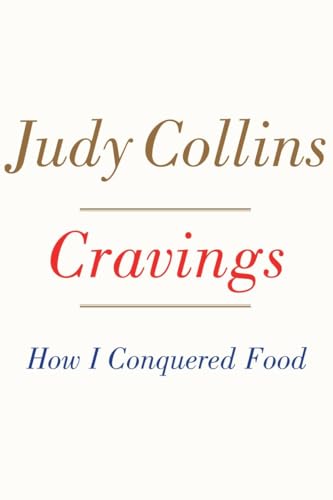
A no-holds-barred account of folk legend Judy Collins's harrowing struggle with compulsive overeating and of the journey that led her to a solution.
Since childhood Judy Collins has had a tumultuous, fraught relationship with food. Her issues with overeating nearly claimed her career and her life. For decades she thought she simply lacked self-discipline. She tried nearly every diet plan that exists, often turning to alcohol to dull the pain of yet another failed attempt to control her seemingly insatiable cravings.
Today, Judy knows she suffers from an addiction to sugar and grains, flour and wheat. She adheres to a strict diet of unprocessed foods consumed in carefully measured portions. This solution has allowed her to maintain a healthy weight for years, to enjoy the glow of good health, and to attain peace of mind.
Alternating between chapters on her life and those of the many diet gurus she has encountered along the way (Atkins, Jean Nidetch of Weight Watchers, Andrew Weil, to name a few), Cravings is the culmination of Judy's genuine desire to share what she's learned—so that no one else has navigate her heart-rending path to recovery.
Die Inhaltsangabe kann sich auf eine andere Ausgabe dieses Titels beziehen.
Über die Autorin bzw. den Autor
JUDY COLLINS has recorded more than fifty albums over her illustrious career. With several top-ten hits, Grammy nominations, and gold- and platinum-selling albums to her credit, she has also written several books and is a New York Times bestselling author.
Auszug. © Genehmigter Nachdruck. Alle Rechte vorbehalten.
Chapter 1
MY JOURNEY
The First Decade—Running
We ourselves are the battleground . . . All the power of transcendence is within us. Tap into it and you tap into the divine itself.
—deng ming-dao
I was born in Seattle, Washington, on May 1, 1939. That year, Germany invaded Poland. The Daughters of the American Revolution refused to let Marian Anderson sing at Constitution Hall in Washington, D.C., so Eleanor Roosevelt resigned from the DAR in protest and facilitated Anderson’s concert at the Lincoln Memorial. Marjorie Kinnan Rawlings’s The Yearling won the Pulitzer Prize. Maxwell Perkins, who also edited Ernest Hemingway and F. Scott Fitzgerald, had given her good advice: He told her to write about her own life.
My father would read The Yearling to me from his copy in Braille, pausing as he read to tell me, first, that a woman could win the Pulitzer, and, second, that a woman could do anything she set her mind to. He said I should always tell my own story, as she had told hers. Daddy was telling his, on his radio show, to his children, and in his journals.
Unfortunately, Mother burned Daddy’s journals after his death.
But I always knew what he meant.
Daddy and Mommy and I lived in a little house on a hill with a lawn that sloped down to the street, and there are pictures of me after a rare snowstorm going down that hill on a sled. And there I am again, in my pigtails in the summer sun, my naked body splashing in the washtub, a huge smile on my face. Even the black-and-white pictures show that I was blond, with curls and a bright pair of eyes.
As a tiny girl, I knew that my father was blind. I tried to make him see me; I talked and danced and sang. I knew he was fighting some kind of battle. But not because he could not see—he seemed to be perfectly at ease with that, even as he felt my face to know what I looked like. He would sometimes say there were advantages to being blind, like being able to read in the dark. No, it was some other battle.
I remember running, being excited, moving fast, almost in a blur. I was in a hurry from the start, walking at nine months, trying to catch up before I ever had a clue where I was headed. I knew I had to keep up with my blind, brilliant, talented father and with my mother who was as thin as a whip and always cooking, cleaning, driving my dad to the radio station to do his show, making my bed, braiding my hair, making my clothes on her Singer sewing machine. The Singer caught my imagination and I would hum along with the treadle. It was hurry, hurry, hurry, there was so much to be done, so much to see—I was seeing for my dad and soon I was the eldest of five siblings and running around helping my mother take care of them, changing diapers, cooking, babysitting. I would take a break and then it was back on the track, hurrying to get to somewhere.
The only time I really stopped hurrying was when I was singing, playing the piano, reading, or acting in a play. As a child, I was trained in the skills that would be required for me to survive, and to thrive. To shine on the stage, entertaining. What was missing in my training was the “rule book”—how to survive, how to get through life when I was not doing that thing that is my passion, when I was not onstage. Finding out how to live out of the spotlight (and in the spotlight, finally) was something I would have to nearly die to learn.
There are pictures of my grandparents at their golden wedding anniversary in 1943 on their porch in Seattle and the wedding cake that I devoured when no one was looking, making a dent in the back of the pristine white layers—a dent I covered over with more frosting. I did not want to be scolded on their special day, sent to my room or made an example of: Look at her, ruining that nice wedding cake.
My father, who had been blind from the age of four, was a man who saw more than most men I have known—sensitive, gifted, and inspiring in the way he managed every day of his sightlessness. Photographs of my father and the family crop up in boxes, in letters, in the folders my mother saved, folders of report cards and prom notices and newspaper articles about my father, and me, and the family. Photos of Daddy’s fraternity brother Holden Bowler, who was my godfather and who had a golden voice like my dad. They had been in Phi Gamma Delta at the University of Idaho.
Daddy was an alcoholic, born with the genetic disposition to the illness, a Jekyll and Hyde who could turn from charming to terrifying when he was at his worst. He drank whiskey—Johnnie Walker and Four Roses—and like me, he loved sugar and kept chocolate-covered cherries in his sock drawer where he hid what he thought was his secret. All of us children knew they were there, whispering to us from among his tidy, carefully folded socks. We would haunt his sock drawer and his other sugar hiding spots. Over time, I would find them all.
He would dig into sweets, pies, cakes, divinity, fudge with the exuberance of an addict and the joy of a satisfied husband. Mother, who did not seem to have our compulsions, was a fabulous baker and cook—as well as chauffeur, friend, and fan of my father’s many talents, even when he was too drunk to notice.
My father had a head of beautiful, full, mostly auburn hair tinged only slightly gray, right up to the time he died. He was always working on keeping his weight down. He would mow the lawn barefooted so he could “see” where he was going, getting the feel of the grass under his toes. He sometimes smoked—referring to his cigarettes as “coffin nails”—lecturing all the while about the dangers of smoking. His pipe was always in the pocket of whatever jacket he was wearing, and he packed the bowl with Old Briar cherry-flavored tobacco, though he occasionally smoked a cigar. I thought that a pipe tasted better than any cigarette I ever smoked.
Daddy was also a reader, and in our house, books were required possessions. My father read to all of us children from the time we were tiny. He would sit on the edge of my bed and run his fingers over the pages of the big Braille volumes from the Library of Congress—history, mystery, and the Russians—War and Peace, The Double, Chekhov. The books he read were big, weighty tomes that stood many feet high stacked against the wall. He once told me that when he could not sleep he would count the books he had read in his lifetime—hundreds of books, in Braille or on what he referred to as “talking books.” They arrived bound in heavy twine-wound squares. Daddy thought if you had not read Moby-Dick by the time you were seven, there must be something wrong with you.
Reading has been a lifelong obsession of mine, a preoccupation. As I read I began to learn what others did to control their demons. There were spiritual routes, and there were pragmatic ones as well. The two, for me, are inextricably linked. I always had a belief in some higher power in the world. I went to church, sang in the choir, loved the hymns. I learned to pray early in my life, wishing our Methodist practices could magically invoke the smoke and mirrors and meditations of the Catholic Church. Bring on Thomas Merton, bring on the saints! I longed for drama!
I discovered that there have always been pilgrims in the search for abstinence from food, alcohol, and drugs, as well as relief from despair and depression. There were those who were looking, as I was, for a spiritually uplifted life. And as I got older I began to pray for a different relationship with food and alcohol.
I knew early on that we were a family troubled by alcoholism and some kind of addiction to food. There were arguments about the liquor cabinet—Mother would lock it up and Daddy...
„Über diesen Titel“ kann sich auf eine andere Ausgabe dieses Titels beziehen.
Suchergebnisse für Cravings: How I Conquered Food

Beispielbild für diese ISBN
Cravings: How I Conquered Food
Anbieter: World of Books (was SecondSale), Montgomery, IL, USA
Verkäuferbewertung 5 von 5 Sternen

Zustand: Good. Item in good condition. Textbooks may not include supplemental items i.e. CDs, access codes etc. Artikel-Nr. 00105398014
Gebraucht kaufen
EUR 4,22
Versand gratis
Versand innerhalb von USA
Versand innerhalb von USA
Anzahl: 4 verfügbar
Beispielbild für diese ISBN
Cravings: How I Conquered Food
Anbieter: World of Books (was SecondSale), Montgomery, IL, USA
Verkäuferbewertung 5 von 5 Sternen
Zustand: Very Good. Item in very good condition! Textbooks may not include supplemental items i.e. CDs, access codes etc. Artikel-Nr. 00107903261
Gebraucht kaufen
EUR 4,22
Versand gratis
Versand innerhalb von USA
Versand innerhalb von USA
Anzahl: 1 verfügbar
Beispielbild für diese ISBN
Cravings: How I Conquered Food
Verlag:
Nan A. Talese (edition 1), 2017
ISBN 10: 0385541317
ISBN 13: 9780385541312
Gebraucht
Hardcover
Anbieter: BooksRun, Philadelphia, PA, USA
Verkäuferbewertung 5 von 5 Sternen
Hardcover. Zustand: Very Good. 1. With dust jacket. It's a well-cared-for item that has seen limited use. The item may show minor signs of wear. All the text is legible, with all pages included. It may have slight markings and/or highlighting. Artikel-Nr. 0385541317-11-1-29
Gebraucht kaufen
EUR 4,77
Versand gratis
Versand innerhalb von USA
Versand innerhalb von USA
Anzahl: 1 verfügbar
Beispielbild für diese ISBN
Cravings : How I Conquered Food
Verlag:
Knopf Doubleday Publishing Group, 2017
ISBN 10: 0385541317
ISBN 13: 9780385541312
Gebraucht
Hardcover
Erstausgabe
Anbieter: Better World Books: West, Reno, NV, USA
Verkäuferbewertung 5 von 5 Sternen
Zustand: Good. 1st Edition. Pages intact with minimal writing/highlighting. The binding may be loose and creased. Dust jackets/supplements are not included. Stock photo provided. Product includes identifying sticker. Better World Books: Buy Books. Do Good. Artikel-Nr. 16441809-6
Gebraucht kaufen
EUR 6,05
Versand gratis
Versand innerhalb von USA
Versand innerhalb von USA
Anzahl: 1 verfügbar
Beispielbild für diese ISBN
Cravings : How I Conquered Food
Verlag:
Knopf Doubleday Publishing Group, 2017
ISBN 10: 0385541317
ISBN 13: 9780385541312
Gebraucht
Hardcover
Erstausgabe
Anbieter: Better World Books, Mishawaka, IN, USA
Verkäuferbewertung 5 von 5 Sternen
Zustand: Very Good. 1st Edition. Former library copy. Pages intact with possible writing/highlighting. Binding strong with minor wear. Dust jackets/supplements may not be included. Includes library markings. Stock photo provided. Product includes identifying sticker. Better World Books: Buy Books. Do Good. Artikel-Nr. 17838400-75
Gebraucht kaufen
EUR 6,05
Versand gratis
Versand innerhalb von USA
Versand innerhalb von USA
Anzahl: 1 verfügbar
Beispielbild für diese ISBN
Cravings: How I Conquered Food
Anbieter: ThriftBooks-Atlanta, AUSTELL, GA, USA
Verkäuferbewertung 5 von 5 Sternen
Hardcover. Zustand: As New. No Jacket. Pages are clean and are not marred by notes or folds of any kind. ~ ThriftBooks: Read More, Spend Less. Artikel-Nr. G0385541317I2N00
Gebraucht kaufen
EUR 6,72
Versand gratis
Versand innerhalb von USA
Versand innerhalb von USA
Anzahl: 1 verfügbar
Beispielbild für diese ISBN
Cravings: How I Conquered Food
Anbieter: ThriftBooks-Atlanta, AUSTELL, GA, USA
Verkäuferbewertung 5 von 5 Sternen
Hardcover. Zustand: Very Good. No Jacket. May have limited writing in cover pages. Pages are unmarked. ~ ThriftBooks: Read More, Spend Less. Artikel-Nr. G0385541317I4N00
Gebraucht kaufen
EUR 6,72
Versand gratis
Versand innerhalb von USA
Versand innerhalb von USA
Anzahl: 1 verfügbar
Beispielbild für diese ISBN
Cravings: How I Conquered Food
Anbieter: AwesomeBooks, Wallingford, Vereinigtes Königreich
Verkäuferbewertung 5 von 5 Sternen
Hardcover. Zustand: Very Good. Cravings: How I Conquered Food This book is in very good condition and will be shipped within 24 hours of ordering. The cover may have some limited signs of wear but the pages are clean, intact and the spine remains undamaged. This book has clearly been well maintained and looked after thus far. Money back guarantee if you are not satisfied. See all our books here, order more than 1 book and get discounted shipping. Artikel-Nr. 7719-9780385541312
Gebraucht kaufen
EUR 7,30
EUR 4,80 Versand
Versand von Vereinigtes Königreich nach USA
Versand von Vereinigtes Königreich nach USA
Anzahl: 2 verfügbar
Beispielbild für diese ISBN
Cravings: How I Conquered Food
Verlag:
Nan A. Talese 28/02/2017, 2017
ISBN 10: 0385541317
ISBN 13: 9780385541312
Gebraucht
Hardcover
Anbieter: Bahamut Media, Reading, Vereinigtes Königreich
Verkäuferbewertung 5 von 5 Sternen
Hardcover. Zustand: Very Good. Shipped within 24 hours from our UK warehouse. Clean, undamaged book with no damage to pages and minimal wear to the cover. Spine still tight, in very good condition. Remember if you are not happy, you are covered by our 100% money back guarantee. Artikel-Nr. 6545-9780385541312
Gebraucht kaufen
EUR 15,45
EUR 8,14 Versand
Versand von Vereinigtes Königreich nach USA
Versand von Vereinigtes Königreich nach USA
Anzahl: 1 verfügbar