
Verwandte Artikel zu The Word Exchange
Inhaltsangabe
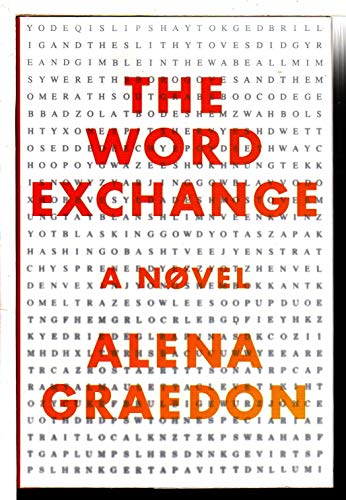
A dystopian novel for the digital age, The Word Exchange offers an inventive, suspenseful, and decidedly original vision of the dangers of technology and of the enduring power of the printed word.
In the not-so-distant future, the forecasted “death of print” has become a reality. Bookstores, libraries, newspapers, and magazines are things of the past, and we spend our time glued to handheld devices called Memes that not only keep us in constant communication but also have become so intuitive that they hail us cabs before we leave our offices, order takeout at the first growl of a hungry stomach, and even create and sell language itself in a marketplace called the Word Exchange.
Anana Johnson works with her father, Doug, at the North American Dictionary of the English Language (NADEL), where Doug is hard at work on the last edition that will ever be printed. Doug is a staunchly anti-Meme, anti-tech intellectual who fondly remembers the days when people used email (everything now is text or videoconference) to communicate—or even actually spoke to one another, for that matter. One evening, Doug disappears from theNADEL offices, leaving a single written clue: ALICE. It’s a code word he devised to signal if he ever fell into harm’s way. And thus begins Anana’s journey down the proverbial rabbit hole . . .
Joined by Bart, her bookish NADEL colleague, Anana’s search for Doug will take her into dark basements and subterranean passageways; the stacks and reading rooms of the Mercantile Library; and secret meetings of the underground resistance, the Diachronic Society. As Anana penetrates the mystery of her father’s disappearance and a pandemic of decaying language called “word flu” spreads,The Word Exchange becomes a cautionary tale that is at once a technological thriller and a meditation on the high cultural costs of digital technology.
Die Inhaltsangabe kann sich auf eine andere Ausgabe dieses Titels beziehen.
Über die Autorin bzw. den Autor
Alena Graedon was born in Durham, North Carolina, and is a graduate of Brown University and the Columbia MFA program. She lives in Brooklyn, New York. This is her first novel.
Auszug. © Genehmigter Nachdruck. Alle Rechte vorbehalten.
A
Al•ice \ˈa-lǝs\ n : a girl transformed by reflection
On a very cold and lonely Friday last November, my father disappeared from the Dictionary. And not only from the big glass building on Broadway where its offices were housed. On that night my father, Douglas Samuel Johnson, Chief Editor of the North American Dictionary of the English Language, slipped from the actual artifact he’d helped compose.
That was before the Dictionary died, letters expiring on the page. Before the virus. Before our language dissolved like so much melting snow. It was before I nearly lost everything I love.
Words, I’ve come to learn, are pulleys through time. Portals into other minds. Without words, what remains? Indecipherable customs. Strange rites. Blighted hearts. Without words, we’re history’s orphans. Our lives and thoughts erased.
Before my father vanished, before the first signs of S0111 arrived, I’d reflected very little on our way of life. The changing world I’d come of age in—slowly bereft of books and love letters, photographs and maps, takeout menus, timetables, liner notes, and diaries—was a world I’d come to accept. If I was missing out on things, they were things I didn’t think to miss. How could we miss words? We were drowning in a sea of text. A new one arrived, chiming, every minute.
All my life my father mourned the death of thank-you notes and penmanship. The newspaper. Libraries. Archives. Stamps. He even came to miss the mobile phones he’d been so slow to accept. And of course he also grieved the loss of dictionaries as they went out of print. I could understand his nostalgia for these things. The aesthetics of an old Olivetti. A letter opener. A quill pen. But I’d dismissed him when he’d spoken darkly of vague “consequences” and the dangers of the Meme. When he’d lectured on “accelerated obsolescence” and “ouroboros” and foretold the end of civilization. For years, as he predicted so much of what eventually came to happen—the attenuation of memory; the ascendance of the Word Exchange; later, the language virus—no one listened. Not the government, or the media, or the publishing industry. Not my mother, who grew very tired of these plaints. Not me, even after I went to work for him when I was twenty-three. No one worried about the bends we might get from progress; we just let ourselves fly higher up.
Well—not quite no one. I later learned that my father had conspirators. Those who shared his rare beliefs. But I didn’t find them until after the night he departed. Or, in fact, they sort of found me.
My father and I were supposed to meet for dinner at the Fancy Diner on Fifty-second Street, a childhood ritual revived only a month before—the night my boyfriend, Max, had moved out. Our four years together, turned to dust. Maybe the breakup shouldn’t have come as a shock; we’d both tried ending things in the past. But I’d thought we’d finally bound ourselves to something solid and strong, and then—Max was gone.
When I’d stumbled into my father’s office, reeling with the news, he’d proposed that we knock off early. I was my dad’s assistant—what he called his “amanuensis”—a job I’d thought would be temporary when I’d taken it more than four years earlier, soon after college: just until I could finish my painting portfolio and apply to grad school, I’d assumed. But I’d come to really like my life. I’d relaxed into it, like a bath. I liked having time to watch movies: long, plotless, and Italian; short, violent, and French; action ones, especially with steely heroines; and my favorite, thanks to Dad, anything starring sweet Buster Keaton. I liked stalking the Thirty-ninth Street flea market for vintage jumpers, leather bombers, shirts for Max. Liked inviting friends and family over for lasagnas and soufflés. I liked walking the High Line and the Battery Wetlands with my mom and volunteering with her sometimes in the parks.
And the truth was, I also really liked the job. It wasn’t that hard, maybe, but it was fun: combing through contributors’ notes and importing edits to the corpus; filing quotation paragraphs; drafting memos. Even taking editorial meeting minutes wasn’t so bad. On days when I felt a little torpid or bored, I still liked the routine, having somewhere to be, with combed hair, not spattered in paint or clay (or uncertainty). I liked my colleagues, some of them as strange as me. And maybe most of all, I liked the time with my dad—who I got in the habit of calling Doug along with the rest of the staff—even when he made me crazy, which was often. He’d spent a lot of time at work when I was growing up, and I’d sometimes felt as if he were off on an extended trip even when he was sleeping each night at home. I’d missed him, without always realizing it. Getting to spend so much time with him as an adult—coming to know him in all his generous, larking, exacting glory—felt very lucky.
I still spent most weekends in the studio, painting, sculpting, making what Max called my “installations”: tiny dioramas, clothes of Kevlar or tinfoil or leaves, animated glyphs of Max and me doing odd routines. “Living in the now,” in Max’s words. My portfolio never felt quite done, which Doug often gently chided me for. “Are you sure you’re not just being hard on yourself? You’re capable of far more than you seem to think you are,” was a recurring refrain. But it always seemed that I had a little more to do and that finishing could wait.
Max’s plans—the MBA, the internships, Hermes Corp.—seemed more pressing, especially to him. “Once I start raking it in,” Max would say, “you can be whatever you want.” He’d say it to get at me. All my life I’d vexedly accepted other people’s money. My grandparents’, mostly. (They had a lot, and I had none, and I’m their only grandchild; I still tried to find polite ways to turn it down most of the time.) But there was more truth in what Max said than I’d liked to admit. And I did take it for granted, that we’d get married and start having kids. That was among the things I had to face when he left: myself.
But on the afternoon it happened—My stuff will b out 2nite, the text read—I wasn’t quite ready for that yet, which Doug sensed. (The tears rilling down my face as I braced against his desk may have been a hint.) That’s when he suggested the Fancy. “Let’s just see if I’m available,” he joked, browsing through his blank calendar. Doug was also single. He was almost always available.
In the month since then—as the Fancy’s specials cycled from pot roast to meatloaf to filet of sole to turkey, in anticipation of Thanksgiving—Doug and I had spent every Friday night in the diner’s front-corner booth. We liked it there because it still had a waitress, Marla. She was orange-haired and surly. Brought our food as if she were doing a favor. But even she was mostly for show; we’d order with my Meme, like anywhere. Still, it felt comforting. Mild abuse while we chewed.
We’d meet at seven-thirty, me coming from home, Doug straight from the Dictionary. He’d never been even a few minutes late. He’d usually be the one waiting. Hunched over a sheaf of pages, oblivious to the stares of small children unused to seeing such sustained, public use of pens...
„Über diesen Titel“ kann sich auf eine andere Ausgabe dieses Titels beziehen.
Suchergebnisse für The Word Exchange

Beispielbild für diese ISBN
The Word Exchange
Anbieter: World of Books (was SecondSale), Montgomery, IL, USA
Verkäuferbewertung 5 von 5 Sternen

Hardback. Zustand: Very Good. A fiendishly clever dystopian novel for the digital age, The Word Exchange is a fresh, stylized, and decidedly original debut about the dangers of technology and the power of the printed word. In the not-so-distant future, the forecasted death of print has become a reality. Bookstores, libraries, newspapers, and magazines are a thing of the past, as we spend our time glued to handheld devices called memes that not only keep us in constant communication but have become so intuitive as to hail us cabs before we leave our offices, order takeout at the first growl of a hungry stomach, and even create and sell language itself in a marketplace called the Word Exchange. Anana Johnson works with her father, Doug, at the North American Dictionary of the English Language, where he is hard at work on the last edition that will ever be printed. Doug is a staunchly anti-meme, anti-tech intellectual who fondly remembers the days when people used e-mail to communicate--or even actually spoke to one another. One evening, Doug disappears, leaving a single written clue: ALICE--a code word he and Anana devised to signal if one of them ever fell into harm's way. Thus begins Anana's journey down the proverbial rabbit hole. Joined by Bart, her bookish colleague, Anana's search for Doug will take her into dark basement incinerator rooms, underground passages of the Mercantile Library, secret meetings of the anonymous Diachronic Society, the boardrooms of the evil online retailing site Synchronic, and ultimately to the hallowed halls of the Oxford English Dictionary--spiritual home of the written word. As Ana pieces together what is going on, and Bart gets sicker and sicker with the strange word flu that has spread worldwide and causes people to speak in gibberish, Alena Graedon crafts a fresh, cautionary tale that is at once a technological thriller and a thoughtful meditation on the price of technology and the unforeseen, though very real, dangers of the digital age. Artikel-Nr. 00103443179
Gebraucht kaufen
EUR 4,07
Versand gratis
Versand innerhalb von USA
Versand innerhalb von USA
Anzahl: 2 verfügbar
Beispielbild für diese ISBN
The Word Exchange
Anbieter: World of Books (was SecondSale), Montgomery, IL, USA
Verkäuferbewertung 5 von 5 Sternen
Hardback. Zustand: Good. A fiendishly clever dystopian novel for the digital age, The Word Exchange is a fresh, stylized, and decidedly original debut about the dangers of technology and the power of the printed word. In the not-so-distant future, the forecasted death of print has become a reality. Bookstores, libraries, newspapers, and magazines are a thing of the past, as we spend our time glued to handheld devices called memes that not only keep us in constant communication but have become so intuitive as to hail us cabs before we leave our offices, order takeout at the first growl of a hungry stomach, and even create and sell language itself in a marketplace called the Word Exchange. Anana Johnson works with her father, Doug, at the North American Dictionary of the English Language, where he is hard at work on the last edition that will ever be printed. Doug is a staunchly anti-meme, anti-tech intellectual who fondly remembers the days when people used e-mail to communicate--or even actually spoke to one another. One evening, Doug disappears, leaving a single written clue: ALICE--a code word he and Anana devised to signal if one of them ever fell into harm's way. Thus begins Anana's journey down the proverbial rabbit hole. Joined by Bart, her bookish colleague, Anana's search for Doug will take her into dark basement incinerator rooms, underground passages of the Mercantile Library, secret meetings of the anonymous Diachronic Society, the boardrooms of the evil online retailing site Synchronic, and ultimately to the hallowed halls of the Oxford English Dictionary--spiritual home of the written word. As Ana pieces together what is going on, and Bart gets sicker and sicker with the strange word flu that has spread worldwide and causes people to speak in gibberish, Alena Graedon crafts a fresh, cautionary tale that is at once a technological thriller and a thoughtful meditation on the price of technology and the unforeseen, though very real, dangers of the digital age. Artikel-Nr. 00108020541
Gebraucht kaufen
EUR 4,07
Versand gratis
Versand innerhalb von USA
Versand innerhalb von USA
Anzahl: 2 verfügbar
Beispielbild für diese ISBN
The Word Exchange: A Novel
Verlag:
Doubleday (edition First Edition), 2014
ISBN 10: 0385537654
ISBN 13: 9780385537650
Gebraucht
Hardcover
Erstausgabe
Anbieter: BooksRun, Philadelphia, PA, USA
Verkäuferbewertung 5 von 5 Sternen
Hardcover. Zustand: Very Good. First Edition. With dust jacket. It's a well-cared-for item that has seen limited use. The item may show minor signs of wear. All the text is legible, with all pages included. It may have slight markings and/or highlighting. Artikel-Nr. 0385537654-11-1-29
Gebraucht kaufen
EUR 5,57
Versand gratis
Versand innerhalb von USA
Versand innerhalb von USA
Anzahl: 1 verfügbar
Beispielbild für diese ISBN
Word Exchange
Verlag:
Knopf Doubleday Publishing Group, 2014
ISBN 10: 0385537654
ISBN 13: 9780385537650
Gebraucht
Hardcover
Erstausgabe
Anbieter: Better World Books, Mishawaka, IN, USA
Verkäuferbewertung 5 von 5 Sternen
Zustand: Good. 1st. Former library copy. Pages intact with minimal writing/highlighting. The binding may be loose and creased. Dust jackets/supplements are not included. Includes library markings. Stock photo provided. Product includes identifying sticker. Better World Books: Buy Books. Do Good. Artikel-Nr. GRP104735798
Gebraucht kaufen
EUR 6,90
Versand gratis
Versand innerhalb von USA
Versand innerhalb von USA
Anzahl: 1 verfügbar
Beispielbild für diese ISBN
Word Exchange
Verlag:
Knopf Doubleday Publishing Group, 2014
ISBN 10: 0385537654
ISBN 13: 9780385537650
Gebraucht
Hardcover
Erstausgabe
Anbieter: Better World Books, Mishawaka, IN, USA
Verkäuferbewertung 5 von 5 Sternen
Zustand: Very Good. 1st. Former library copy. Pages intact with possible writing/highlighting. Binding strong with minor wear. Dust jackets/supplements may not be included. Includes library markings. Stock photo provided. Product includes identifying sticker. Better World Books: Buy Books. Do Good. Artikel-Nr. GRP102288761
Gebraucht kaufen
EUR 6,90
Versand gratis
Versand innerhalb von USA
Versand innerhalb von USA
Anzahl: 1 verfügbar
Beispielbild für diese ISBN
Word Exchange
Verlag:
Knopf Doubleday Publishing Group, 2014
ISBN 10: 0385537654
ISBN 13: 9780385537650
Gebraucht
Hardcover
Erstausgabe
Anbieter: Better World Books, Mishawaka, IN, USA
Verkäuferbewertung 5 von 5 Sternen
Zustand: Good. 1st. Pages intact with minimal writing/highlighting. The binding may be loose and creased. Dust jackets/supplements are not included. Stock photo provided. Product includes identifying sticker. Better World Books: Buy Books. Do Good. Artikel-Nr. 485681-6
Gebraucht kaufen
EUR 6,90
Versand gratis
Versand innerhalb von USA
Versand innerhalb von USA
Anzahl: 1 verfügbar
Beispielbild für diese ISBN
The Word Exchange: A Novel
Anbieter: ThriftBooks-Dallas, Dallas, TX, USA
Verkäuferbewertung 5 von 5 Sternen
Hardcover. Zustand: Very Good. No Jacket. May have limited writing in cover pages. Pages are unmarked. ~ ThriftBooks: Read More, Spend Less. Artikel-Nr. G0385537654I4N00
Gebraucht kaufen
EUR 7,57
Versand gratis
Versand innerhalb von USA
Versand innerhalb von USA
Anzahl: 1 verfügbar
Beispielbild für diese ISBN
The Word Exchange: A Novel
Anbieter: ThriftBooks-Phoenix, Phoenix, AZ, USA
Verkäuferbewertung 5 von 5 Sternen
Hardcover. Zustand: Very Good. No Jacket. May have limited writing in cover pages. Pages are unmarked. ~ ThriftBooks: Read More, Spend Less. Artikel-Nr. G0385537654I4N00
Gebraucht kaufen
EUR 7,57
Versand gratis
Versand innerhalb von USA
Versand innerhalb von USA
Anzahl: 1 verfügbar
Foto des Verkäufers
The Word Exchange: A Novel
Anbieter: Goodwill Northern Illinois, Rockford, IL, USA
Verkäuferbewertung 5 von 5 Sternen
Zustand: good. The cover shows wear with possible indentations, creases, and small tears. The pages show wear that may include evidence of handling, smudges, and edge discoloration markings stains . The book may or may not have mild corner dings. The imagery is a stock photo of the item. Artikel-Nr. 4LFSZV000EBP_ns
Gebraucht kaufen
EUR 8,68
Versand gratis
Versand innerhalb von USA
Versand innerhalb von USA
Anzahl: 1 verfügbar
Beispielbild für diese ISBN
The Word Exchange: A Novel
Anbieter: Fulano Books, Cambridge, MA, USA
Verkäuferbewertung 4 von 5 Sternen

Zustand: As New. Like New++/New condition; **GREAT FIND**; minor cosmetic imperfection confined to cover; dust cover not included; otherwise impressively IMMACULATE copy with crisp/clean pages and tight, new spine. Artikel-Nr. D4-CYVY-Y08C
Gebraucht kaufen
EUR 8,71
EUR 5,41 Versand
Versand innerhalb von USA
Versand innerhalb von USA
Anzahl: 1 verfügbar