
Verwandte Artikel zu The Distance: A Thriller
Inhaltsangabe
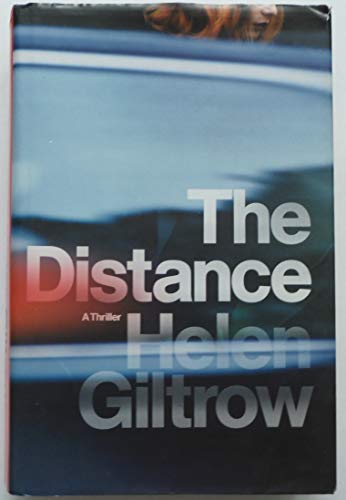
A dark, ultra-contemporary, and relentlessly paced debut thriller about a London society woman trying to put her secret criminal past behind her, and the hit man who comes to her with an impossible job she can't refuse.
Charlotte Alton is an elegant socialite. But behind the locked doors of her sleek, high-security apartment in London's Docklands, she becomes Karla. Karla's business is information. Specifically, making it disappear. She's the unseen figure who, for a commanding price, will cover a criminal's tracks. A perfectionist, she's only made one slip in her career—several years ago she revealed her face to a man named Simon Johanssen, an ex-special forces sniper turned killer-for-hire. After a mob hit went horrifically wrong, Johanssen needed to disappear, and Karla helped him. He became a regular client, and then, one day, she stepped out of the shadows for reasons unclear to even herself. Now, after a long absence, Johanssen has resurfaced with a job, and he needs Karla's help again. The job is to take out an inmate—a woman—inside an experimental prison colony. But there's no record the target ever existed. That's not the only problem: the criminal boss from whom Johanssen has been hiding is incarcerated there. That doesn't stop him. It's Karla's job to get him out alive, and to do that she must uncover the truth. Who is this woman? Who wants her dead? Is the job a trap for Johanssen or for her? But every door she opens is a false one, and she's getting desperate to protect a man—a killer—to whom she's inexplicably drawn. Written in stylish, sophisticated prose,The Distance is a tense and satisfying debut in which every character, both criminal and law-abiding, wears two faces, and everyone is playing a double game.
Die Inhaltsangabe kann sich auf eine andere Ausgabe dieses Titels beziehen.
Über die Autorin bzw. den Autor
HELEN GILTROW is a former bookseller and freelance editor whose writing has been shortlisted for the Crime Writers' Association Debut Dagger Award and the Daily Telegraph's Novel in a Year Competition in the United Kingdom. She lives in Oxford, England. This is her first novel.
Auszug. © Genehmigter Nachdruck. Alle Rechte vorbehalten.
Day 1: Wednesday–Day 2: Thursday
Karla
I’ve always known the past might hunt me down--despite all my precautions, the false trails and the forged histories and everything else I’ve done to distance myself from it.
But not like this.
It happens while I’m standing in the interval crush of a Royal Opera House bar, listening politely as a portly banker expounds on the proper staging of Gotterdammerung’s final act: I glance up, and in that second my two lives--lives that I have taken so much care to keep apart--grind against each other like tectonic plates and set the room rocking.
He’s loitering at the edge of a nearby group but angled fractionally away from them: he isn’t with them, though you might be forgiven for thinking that he is. The beautiful suit, the tie, the glass of champagne held loosely in the fingers of his right hand, even his haircut and his stance, mark him as someone who belongs here. Only I know that he doesn’t.
Two years. Two years, and only one reason he’d be here. He’s come for me.
A beat--I swallow my shock--then I turn back to my companion and smile and provide the right response. But my peripheral vision strains for a fix on him: I need to watch him, as if he’s some unpredictable animal, potentially dangerous. I want to turn and stare. But right here, right now, I’m Charlotte Alton--polite, wealthy, idle Charlotte Alton--and she emphatically doesn’t know the man I’ve just seen. Instead I must maneuver myself so I can survey the crowd over the banker’s shoulder. By the time I’ve done so, he’s vanished.
Carefully, discreetly, I sweep the room.
It’s a sold-out performance, and the bar--the biggest in the opera house, like a giant Victorian glasshouse under a high curved roof--is packed, the north and south balcony tables full, people crowding around the circular copper counter of the central servery. Too many men in dark suits who could be him but aren’t. A wall of rippling mirrors doubles the size of the place, reflecting the elaborate ironwork of the huge arched window and turning the crowd into a throng. He and his reflection have melted into it. At the top of the mirrored wall, the glass oblong of the upper bar’s balcony seems to float suspended above us: the people lounging against its rail look like boxed exhibits. I glance up there, too. He isn’t among them.
But he’s here, somewhere, and he’s found me. Of course he has. And whose fault is that?
The five-minute bell goes. Around me, glasses are drained. “Here, let me”--the banker takes mine, but as he turns away another of our party, a senior City lawyer, lays a hand on my arm--“Charlotte, I was hoping for a word--shall we?” So I fall into step beside him as we join the patient shuffle toward the auditorium, and I smile, and focus, while the blood beats harder behind my eyes.
Even though I’m searching for him, I don’t see him until he’s right beside me. He doesn’t look at me, but his hand finds mine. Then he’s gone, blending into the crush around me.
The lawyer and I move along the corridor toward the grand tier: the lawyer is on the board of a charity, there’s an auction coming up, might I possibly . . . ? The object nestles in my closed hand. It’s sticky and warm with perspiration when, bending to take my seat, I slip it into my clutch bag.
It is a tiny Christmas-tree decoration, a little red-and-purple bauble that has embedded glitter into the skin of my palm.
The lights dim. The final act begins. Wagner’s tale of assumed identities, broken promises, betrayal, and murder storms toward its end. I barely register it.
The bauble is a message, a prearranged signal in a code devised on the fly years ago. Simon Johanssen wants a meeting. But not with discreet, well-bred Charlotte Alton. Johanssen wants a meeting with Karla.
The easy excuses come unbidden. You haven’t been near a client in months. You’re out of the game. Send Craigie. He’ll deal with it. It’s what you pay him for.
It’s a pointless debate. I’m going anyway.
The early hours of the next morning. The cold is like grit, stinging the eyes.
Up on the main road in this part of East London there are glass-fronted office blocks and smart, new light-industrial units, and in the distance the towers of Docklands--my apartment building among them--glitter like something out of a fairy tale, but from down here they’re invisible and a world away: a burned-out van slumps on its axles beside the approach road, and the gutters are choked with rubbish.
An amusements company uses the site for storage: decrepit fairground rides, tatty street decorations. Broken machinery litters the yard like the fossilized remains of prehistoric beasts: a giant petrified octopus with its tentacles drawn up around it, a stretch of track like the curved spine of a tyrannosaur. Inside the warehouse, underpowered fluorescent tubes send a grimy wash of light across the aisles, illuminating a sheared-off dodgem car still with its pole, a painted board with the words the ultimate thrill.
It’s January, I’ve been here for twenty minutes, and I’m cold. Perhaps that’s why I miss it.
Not movement. I would have spotted movement. He is simply there, in the gloom, watching me.
“I’m sorry,” he says, but still I find myself sucking in air.
It’s as if he’s been here all along, among the grinning plastic Santas, the concertinaed Chinese New Year dragons, and only a change of focus has brought him into view. Or as if he’s developed fractionally, like the grass growing or the accumulation of dust: the shadows thickening into human form.
He’s thirty-eight years old. Six feet tall and spare, with the lean muscle mass of a distance athlete. The beautiful suit’s gone; now his clothes are understated, anonymous, his wristwatch mass produced. The bones of his knuckles are prominent, and scarred.
As always I’m struck by his stillness.
“I wanted to be sure we were alone,” he says. His voice is quiet, polite. The flat northern vowels betray his roots; nothing else does.
Two years since we last met. Fielding couldn’t tell me where he’d gone. The trail he left petered out in Amsterdam. A scatter of rumors after that came to nothing. I’d almost come to believe that he was dead. But here he is.
So why now, after all this time? Why come to find me now?
Instead I ask, “You didn’t try the number?” and I sound calm.
He says, “I didn’t know the man who answered.”
“He works for me. He’s safe.”
He nods, but his gaze goes sideways, away from me.
“Two years,” I say. “I thought we’d lost you.”
“I was keeping my head down.”
“Any particular reason?”
He just shrugs.
What does he want? Up until two years ago a meeting like this meant he simply needed an ID, or information for a job. That’s what people came to Karla for: the unauthorized obtaining of data, whether by bribery or blackmail or hacking or straightforward physical theft; the deliberate destruction of other data that would, if left intact, be of benefit to law enforcement agencies; the forging of identities or their deletion.
It can’t simply be that; not after two years of silence. But perhaps he’s out of the game, too, perhaps he’s ceased to be the man who--
“Tell me about the Program,” he says.
One extra second of silence, that’s...
„Über diesen Titel“ kann sich auf eine andere Ausgabe dieses Titels beziehen.
Suchergebnisse für The Distance: A Thriller

Beispielbild für diese ISBN
The Distance
Anbieter: Wonder Book, Frederick, MD, USA
Verkäuferbewertung 5 von 5 Sternen

Zustand: Very Good. Very Good condition. Good dust jacket. A copy that may have a few cosmetic defects. May also contain light spine creasing or a few markings such as an owner's name, short gifter's inscription or light stamp. Bundled media such as CDs, DVDs, floppy disks or access codes may not be included. Artikel-Nr. S10E-01390
Gebraucht kaufen
EUR 6,33
Versand gratis
Versand innerhalb von USA
Versand innerhalb von USA
Anzahl: 1 verfügbar
Beispielbild für diese ISBN
The Distance
Anbieter: Wonder Book, Frederick, MD, USA
Verkäuferbewertung 5 von 5 Sternen
Zustand: Good. Good condition. Very Good dust jacket. A copy that has been read but remains intact. May contain markings such as bookplates, stamps, limited notes and highlighting, or a few light stains. Artikel-Nr. D16A-03055
Gebraucht kaufen
EUR 6,33
Versand gratis
Versand innerhalb von USA
Versand innerhalb von USA
Anzahl: 1 verfügbar
Beispielbild für diese ISBN
The Distance
Anbieter: ThriftBooks-Atlanta, AUSTELL, GA, USA
Verkäuferbewertung 5 von 5 Sternen
Hardcover. Zustand: As New. No Jacket. Pages are clean and are not marred by notes or folds of any kind. ~ ThriftBooks: Read More, Spend Less. Artikel-Nr. G0385536992I2N00
Gebraucht kaufen
EUR 7,23
Versand gratis
Versand innerhalb von USA
Versand innerhalb von USA
Anzahl: 1 verfügbar
Beispielbild für diese ISBN
The Distance
Anbieter: ThriftBooks-Dallas, Dallas, TX, USA
Verkäuferbewertung 5 von 5 Sternen
Hardcover. Zustand: As New. No Jacket. Pages are clean and are not marred by notes or folds of any kind. ~ ThriftBooks: Read More, Spend Less. Artikel-Nr. G0385536992I2N00
Gebraucht kaufen
EUR 7,23
Versand gratis
Versand innerhalb von USA
Versand innerhalb von USA
Anzahl: 1 verfügbar
Beispielbild für diese ISBN
Distance
Verlag:
Knopf Doubleday Publishing Group, 2014
ISBN 10: 0385536992
ISBN 13: 9780385536998
Gebraucht
Hardcover
Anbieter: Better World Books, Mishawaka, IN, USA
Verkäuferbewertung 5 von 5 Sternen
Zustand: Very Good. Former library copy. Pages intact with possible writing/highlighting. Binding strong with minor wear. Dust jackets/supplements may not be included. Includes library markings. Stock photo provided. Product includes identifying sticker. Better World Books: Buy Books. Do Good. Artikel-Nr. 13676740-75
Gebraucht kaufen
EUR 8,44
Versand gratis
Versand innerhalb von USA
Versand innerhalb von USA
Anzahl: 1 verfügbar
Beispielbild für diese ISBN
The Distance: A Thriller
Anbieter: Revaluation Books, Exeter, Vereinigtes Königreich
Verkäuferbewertung 5 von 5 Sternen
Hardcover. Zustand: Brand New. 357 pages. 9.75x6.75x1.50 inches. In Stock. Artikel-Nr. 0385536992
Neu kaufen
EUR 25,47
EUR 14,52 Versand
Versand von Vereinigtes Königreich nach USA
Versand von Vereinigtes Königreich nach USA
Anzahl: 1 verfügbar
Beispielbild für diese ISBN
The Distance: A Thriller
Anbieter: Buchpark, Trebbin, Deutschland
Verkäuferbewertung 5 von 5 Sternen
Zustand: Sehr gut. Zustand: Sehr gut | Seiten: 368 | Sprache: Englisch | Produktart: Bücher | Keine Beschreibung verfügbar. Artikel-Nr. 24412037/2
Gebraucht kaufen
EUR 26,94
EUR 105,00 Versand
Versand von Deutschland nach USA
Versand von Deutschland nach USA
Anzahl: 1 verfügbar