
Verwandte Artikel zu The Next Decade: Where We've Been . . . and Where...
Inhaltsangabe
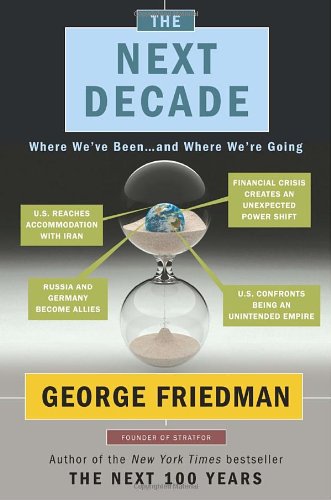
The author of the acclaimed New York Times bestseller The Next 100 Years now focuses his geopolitical forecasting acumen on the next decade and the imminent events and challenges that will test America and the world, specifically addressing the skills that will be required by the decade’s leaders.
The next ten years will be a time of massive transition. The wars in the Islamic world will be subsiding, and terrorism will become something we learn to live with. China will be encountering its crisis. We will be moving from a time when financial crises dominate the world to a time when labor shortages will begin to dominate. The new century will be taking shape in the next decade.
In The Next Decade, George Friedman offers readers a provocative and endlessly fascinating prognosis for the immediate future. Using Machiavelli’s The Prince as a model, Friedman focuses on the world’s leaders—particularly the American president—and with his trusted geopolitical insight analyzes the complex chess game they will all have to play. The book also asks how to be a good president in a decade of extraordinary challenge, and puts the world’s leaders under a microscope to explain how they will arrive at the decisions they will make—and the consequences these actions will have for us all.
Die Inhaltsangabe kann sich auf eine andere Ausgabe dieses Titels beziehen.
Über die Autorin bzw. den Autor
GEORGE FRIEDMAN is the founder and CEO of Stratfor, the world’s leading publisher of global geopolitical intelligence. He is the author of six books, including the New York Times bestselling The Next 100 Years. He has appeared on all the major television networks and has been featured in several national publications.
Auszug. © Genehmigter Nachdruck. Alle Rechte vorbehalten.
INTRODUCTION
Rebalancing America
A century is about events. A decade is about people. I wrote The Next 100 Years to explore the impersonal forces that shape history in the long run, but human beings don’t live in the long run. We live in the much shorter span in which our lives are shaped not so much by vast historical trends but by the specific decisions of specific individuals.
This book is about the short run of the next ten years: the specific realities to be faced, the specific decisions to be made, and the likely consequences of those decisions. Most people think that the longer the time frame, the more unpredictable the future. I take the opposite view. Individual actions are the hardest thing to predict. In the course of a century, so many individual decisions are made that no single one of them is ever critical. Each decision is lost in the torrent of judgments that make up a century. But in the shorter time frame of a decade, individual decisions made by individual people, particularly those with political power, can matter enormously. What I wrote in The Next 100 Years is the frame for understanding this decade. But it is only the frame.
Forecasting a century is the art of recognizing the impossible, then eliminating from consideration all the events that, at least logically, aren’t going to happen. The reason is, as Sherlock Holmes put it, “When you have eliminated the impossible, whatever remains, however improbable, must be the truth.”
It is always possible that a leader will do something unexpectedly foolish or brilliant, which is why forecasting is best left to the long run, the span over which individual decisions don’t carry so much weight. But having forecast for the long run, you can reel back your scenario and try to see how it plays out in, say, a decade. What makes this time frame interesting is that it is sufficiently long for the larger, impersonal forces to be at play but short enough for the individual decisions of individual leaders to skew outcomes that otherwise might seem inevitable. A decade is the point at which history and statesmanship meet, and a span in which policies still matter.
I am not normally someone who gets involved in policy debates— I’m more interested in what will happen than in what I want to see happen. But within the span of a decade, events that may not matter in the long run may still affect us personally and deeply. They also can have real meaning in defining which path we take into the future. This book is therefore both a forecast and a discussion of the policies that ought to be followed.
We begin with the United States for the same reason that a study of 1910 would have to begin with Britain. Whatever the future might hold, the global system today pivots around the United States, just as Britain was the pivotal point in the years leading up to World War I. In The Next 100 Years, I wrote about the long-term power of the United States. In this book, I have to write about American weaknesses, which, I think, are not problems in the long run; time will take care of most of these. But because you and I don’t live in the long run, for us these problems are very real. Most are rooted in structural imbalances that require solutions. Some are problems of leadership, because, as I said at the outset, a decade is about people.
This discussion of problems and people is particularly urgent at this introduction moment. In the first decade after the United States became the sole global power, the world was, compared to other eras, relatively tranquil. In terms of genuine security issues for the United States, Baghdad and the Balkans were nuisances, not threats. The United States had no need for strategy in a world that appeared to have accepted American leadership without complaint. Ten years later, September 11 brought that illusion crashing to the ground. The world was more dangerous than we imagined, but the options seemed fewer as well. The United States did not craft a global strategy in response. Instead, it developed a narrowly focused politico-military strategy designed to defeat terrorism, almost to the exclusion of all else.
Now that decade is coming to an end as well, and the search is under way for an exit from Iraq, from Afghanistan, and indeed from the world that began when those hijacked airliners smashed into buildings in New York and Washington. The impulse of the United States is always to withdraw from the world, savoring the pleasures of a secure homeland protected by the buffer of wide oceans on either side. But the homeland is not secure, either from terrorists or from the ambitions of nation-states that see the United States as both dangerous and unpredictable.
Under both President Bush and President Obama, the United States has lost sight of the long-term strategy that served it well for most of the last century. Instead, recent presidents have gone off on ad hoc adventures. They have set unattainable goals because they have framed the issues incorrectly, as if they believed their own rhetoric. As a result, the United States has overextended its ability to project its power around the world, which has allowed even minor players to be the tail that wags the dog.
The overriding necessity for American policy in the decade to come is a return to the balanced, global strategy that the United States learned from the example of ancient Rome and from the Britain of a hundred years ago. These old-school imperialists didn’t rule by main force. Instead, they maintained their dominance by setting regional players against each other and keeping these players in opposition to others who might also instigate resistance. They maintained the balance of power, using these opposing forces to cancel each other out while securing the broader interests of the empire. They also kept their client states bound together by economic interest and diplomacy, which is not to say the routine courtesies between nations but the subtle manipulation that causes neighbors and fellow clients to distrust each other more than they distrust the imperial powers. Direct intervention relying on the empire’s own troops was a distant, last resort.
Adhering to this strategy, the United States intervened in World War I only when the standoff among European powers was failing, and only when it appeared that the Germans, with Russia collapsing in the east, might actually overwhelm the English and French in the west. When the fighting stopped, the United States helped forge a peace treaty that prevented France from dominating postwar Europe.
During the early days of World War II, the United States stayed out of direct engagement as long as it could, supporting the British in their efforts to fend off the Germans in the west while encouraging the Soviets to bleed the Germans in the east. Afterward, the United States devised a balance-of-power strategy to prevent the Soviet Union from dominating Western Europe, the Middle East, and ultimately China. Throughout the long span from the first appearance of the “Iron Curtain” to the end of the Cold War, this U.S. strategy of distraction and manipulation was rational, coherent, and effectively devious.
Following the collapse of the Soviet Union, however, the United States shifted from a strategy focused on trying to contain major powers to an unfocused attempt to contain potential regional hegemons when their behavior offended American sensibilities. In the period from 1991 to 2001, the United States invaded or intervened in five countries—Kuwait, Somalia, Haiti, Bosnia, and Yugoslavia—which was an extraordinary tempo of military operations. At times, American strategy seemed...
„Über diesen Titel“ kann sich auf eine andere Ausgabe dieses Titels beziehen.
Suchergebnisse für The Next Decade: Where We've Been . . . and Where...

Beispielbild für diese ISBN
The Next Decade: Where We've Been . . . and Where We're Going
Anbieter: World of Books (was SecondSale), Montgomery, IL, USA
Verkäuferbewertung 5 von 5 Sternen

Zustand: Very Good. Item in very good condition! Textbooks may not include supplemental items i.e. CDs, access codes etc. Artikel-Nr. 00086061091
Gebraucht kaufen
EUR 3,84
Versand gratis
Versand innerhalb von USA
Versand innerhalb von USA
Anzahl: 4 verfügbar
Beispielbild für diese ISBN
The Next Decade: Where We've Been . . . and Where We're Going
Anbieter: World of Books (was SecondSale), Montgomery, IL, USA
Verkäuferbewertung 5 von 5 Sternen
Zustand: Good. Item in good condition. Textbooks may not include supplemental items i.e. CDs, access codes etc. Artikel-Nr. 00085954732
Gebraucht kaufen
EUR 3,84
Versand gratis
Versand innerhalb von USA
Versand innerhalb von USA
Anzahl: 4 verfügbar
Beispielbild für diese ISBN
The Next Decade : Where We've Been . and Where We're Going
Verlag:
Knopf Doubleday Publishing Group, 2011
ISBN 10: 0385532946
ISBN 13: 9780385532945
Gebraucht
Hardcover
Anbieter: Better World Books, Mishawaka, IN, USA
Verkäuferbewertung 5 von 5 Sternen
Zustand: Very Good. Former library copy. Pages intact with possible writing/highlighting. Binding strong with minor wear. Dust jackets/supplements may not be included. Includes library markings. Stock photo provided. Product includes identifying sticker. Better World Books: Buy Books. Do Good. Artikel-Nr. GRP62981249
Gebraucht kaufen
EUR 6,35
Versand gratis
Versand innerhalb von USA
Versand innerhalb von USA
Anzahl: 2 verfügbar
Beispielbild für diese ISBN
The Next Decade : Where We've Been . and Where We're Going
Verlag:
Knopf Doubleday Publishing Group, 2011
ISBN 10: 0385532946
ISBN 13: 9780385532945
Gebraucht
Hardcover
Anbieter: Better World Books: West, Reno, NV, USA
Verkäuferbewertung 5 von 5 Sternen
Zustand: Good. Pages intact with minimal writing/highlighting. The binding may be loose and creased. Dust jackets/supplements are not included. Stock photo provided. Product includes identifying sticker. Better World Books: Buy Books. Do Good. Artikel-Nr. GRP73180137
Gebraucht kaufen
EUR 6,35
Versand gratis
Versand innerhalb von USA
Versand innerhalb von USA
Anzahl: 1 verfügbar
Beispielbild für diese ISBN
The Next Decade: Where We've Been . . . and Where We're Going
Anbieter: ThriftBooks-Dallas, Dallas, TX, USA
Verkäuferbewertung 5 von 5 Sternen
Hardcover. Zustand: As New. No Jacket. Pages are clean and are not marred by notes or folds of any kind. ~ ThriftBooks: Read More, Spend Less. Artikel-Nr. G0385532946I2N00
Gebraucht kaufen
EUR 6,38
Versand gratis
Versand innerhalb von USA
Versand innerhalb von USA
Anzahl: 1 verfügbar
Beispielbild für diese ISBN
The Next Decade: Where We've Been . . . and Where We're Going
Anbieter: ThriftBooks-Atlanta, AUSTELL, GA, USA
Verkäuferbewertung 5 von 5 Sternen
Hardcover. Zustand: As New. No Jacket. Pages are clean and are not marred by notes or folds of any kind. ~ ThriftBooks: Read More, Spend Less. Artikel-Nr. G0385532946I2N00
Gebraucht kaufen
EUR 6,38
Versand gratis
Versand innerhalb von USA
Versand innerhalb von USA
Anzahl: 1 verfügbar
Beispielbild für diese ISBN
The Next Decade: Where We've Been . . . and Where We're Going
Anbieter: ThriftBooks-Atlanta, AUSTELL, GA, USA
Verkäuferbewertung 5 von 5 Sternen
Hardcover. Zustand: Fair. No Jacket. Readable copy. Pages may have considerable notes/highlighting. ~ ThriftBooks: Read More, Spend Less. Artikel-Nr. G0385532946I5N00
Gebraucht kaufen
EUR 6,38
Versand gratis
Versand innerhalb von USA
Versand innerhalb von USA
Anzahl: 1 verfügbar
Beispielbild für diese ISBN
The Next Decade: Where We've Been . . . and Where We're Going: What the World Will Look Like
Verlag:
Doubleday & Co Inc. 25/01/2011, 2011
ISBN 10: 0385532946
ISBN 13: 9780385532945
Gebraucht
Hardcover
Anbieter: AwesomeBooks, Wallingford, Vereinigtes Königreich
Verkäuferbewertung 5 von 5 Sternen
Zustand: Very Good. This book is in very good condition and will be shipped within 24 hours of ordering. The cover may have some limited signs of wear but the pages are clean, intact and the spine remains undamaged. This book has clearly been well maintained and looked after thus far. Money back guarantee if you are not satisfied. See all our books here, order more than 1 book and get discounted shipping. . Artikel-Nr. 7719-9780385532945
Gebraucht kaufen
EUR 4,30
EUR 4,87 Versand
Versand von Vereinigtes Königreich nach USA
Versand von Vereinigtes Königreich nach USA
Anzahl: 2 verfügbar
Beispielbild für diese ISBN
The Next Decade: Where We've Been and Where We're Going
Anbieter: WorldofBooks, Goring-By-Sea, WS, Vereinigtes Königreich
Verkäuferbewertung 5 von 5 Sternen
Hardback. Zustand: Very Good. The book has been read, but is in excellent condition. Pages are intact and not marred by notes or highlighting. The spine remains undamaged. Artikel-Nr. GOR003997064
Gebraucht kaufen
EUR 3,05
EUR 6,62 Versand
Versand von Vereinigtes Königreich nach USA
Versand von Vereinigtes Königreich nach USA
Anzahl: 1 verfügbar
Beispielbild für diese ISBN
The Next Decade: Where We've Been . . . and Where We're Going
Anbieter: Wonder Book, Frederick, MD, USA
Verkäuferbewertung 5 von 5 Sternen
Zustand: As New. Like New condition. Very Good dust jacket. A near perfect copy that may have very minor cosmetic defects. Artikel-Nr. J12R-00976
Gebraucht kaufen
EUR 10,09
Versand gratis
Versand innerhalb von USA
Versand innerhalb von USA
Anzahl: 1 verfügbar