
Verwandte Artikel zu American Rust: A Novel (Random House Reader's Circle)
Inhaltsangabe
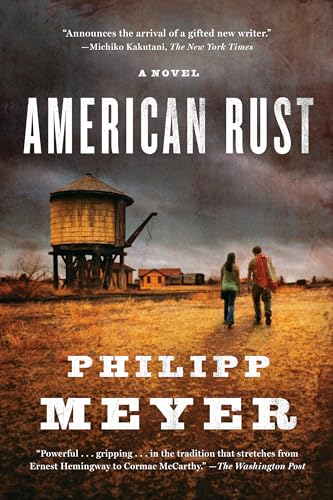
NOW A HIT STREAMING SERIES • A “bold, absorbing novel” (The New York Times Book Review) of the lost American dream, the acts of friendship, loyalty, and love that arise from its loss, and two young men, bound to their hometown, who crave an escape.
“Powerful . . . gripping . . . in the tradition that stretches from Ernest Hemingway to Cormac McCarthy.”—The Washington Post
A BEST BOOK OF THE YEAR: New York Times Book Review, The Washington Post, Economist, Pittsburgh Post-Gazette, Newsweek, Kansas City Star, Idaho Statesman
Left alone to care for his aging father after his mother dies by suicide and his sister escapes to Yale, Isaac English longs for a life beyond his hometown, a beautiful but economically devastated Pennsylvania steel town. But when he finally sets out to leave for good, accompanied by his temperamental best friend, former high school football star Billy Poe, they are caught up in a terrible act of violence that changes their lives forever.
Evoking John Steinbeck’s novels of restless lives during the Great Depression, American Rust takes us into the contemporary American heartland at a moment of profound unrest and uncertainty about the future. It is a dark but lucid vision, a moving novel about the bleak realities that battle our desire for transcendence and the power of love and friendship to redeem us.
Die Inhaltsangabe kann sich auf eine andere Ausgabe dieses Titels beziehen.
Über die Autorin bzw. den Autor
Philipp Meyer grew up in Baltimore, dropped out of high school, and got his GED when he was sixteen. After spending several years volunteering at a trauma center in downtown Baltimore, he attended Cornell University, where he studied English. Since graduating, Meyer has worked as a derivatives trader at UBS, a construction worker, and an EMT, among other jobs. His writing has been published in McSweeney's, The Iowa Review, Salon.com, and New Stories from the South. From 2005 to 2008 Meyer was a fellow at the Michener Center for Writers in Austin, Texas. He splits his time between Texas and upstate New York.
Auszug. © Genehmigter Nachdruck. Alle Rechte vorbehalten.
Book One
1.
Isaac's mother was dead five years but he hadn't stopped thinking about her. He lived alone in the house with the old man, twenty, small for his age, easily mistaken for a boy. Late morning and he walked quickly through the woods toward town--a small thin figure with a backpack, trying hard to keep out of sight. He'd taken four thousand dollars from the old man's desk; Stolen, he corrected himself. The nuthouse prisonbreak. Anyone sees you and it's Silas get the dogs.
Soon he reached the overlook: green rolling hills, a muddy winding river, an expanse of forest unbroken except for the town of Buell and its steelmill. The mill itself had been like a small city, but they had closed it in 1987, partially dismantled it ten years later; it now stood like an ancient ruin, its buildings grown over with bittersweet vine, devil's tear thumb, and tree of heaven. The footprints of deer and coyotes crisscrossed the grounds; there was only the occasional human squatter.
Still, it was a quaint town: neat rows of white houses wrapping the hillside, church steeples and cobblestone streets, the tall silver domes of an Orthodox cathedral. A place that had recently been well-off, its downtown full of historic stone buildings, mostly boarded now. On certain blocks there was still a pretense of keeping the trash picked up, but others had been abandoned completely. Buell, Fayette County, Pennsylvania. Fayette-nam, as it was often called.
Isaac walked the railroad tracks to avoid being seen, though there weren't many people out anyway. He could remember the streets at shiftchange, the traffic stopped, the flood of men emerging from the billet mill coated with steeldust and flickering in the sunlight; his father, tall and shimmering, reaching down to lift him. That was before the accident. Before he became the old man.
It was forty miles to Pittsburgh and the best way was to follow the tracks along the river--it was easy to jump a coal train and ride as long as you wanted. Once he made the city, he'd jump another train to California. He'd been planning this for a month. A long time overdue. Think Poe will come along? Probably not.
On the river he watched barges and a towboat pass, engines droning. It was pushing coal. Once the boat was gone the air got quiet and the water was slow and muddy and the forests ran down to the edge and it could have been anywhere, the Amazon, a picture from National Geographic. A bluegill jumped in the shallows--you weren't supposed to eat the fish but everyone did. Mercury and PCB. He couldn't remember what the letters stood for but it was poison.
In school he'd tutored Poe in math, though even now he wasn't sure why Poe was friends with him--Isaac English and his older sister were the two smartest kids in town, the whole Valley, probably; the sister had gone to Yale. A rising tide, Isaac had hoped, that might lift him as well. He'd looked up to his sister most of his life, but she had found a new place, had a husband in Connecticut that neither Isaac nor his father had met. You're doing fine alone, he thought. The kid needs to be less bitter. Soon he'll hit California--easy winters and the warmth of his own desert. A year to get residency and apply to school: astrophysics. Lawrence Livermore. Keck Observatory and the Very Large Array. Listen to yourself--does any of that still make sense?
Outside the town it got rural again and he decided to walk the trails to Poe's house instead of taking the road. He climbed steadily along. He knew the woods as well as an old poacher, kept notebooks of drawings he'd made of birds and other animals, though mostly it was birds. Half the weight of his pack was notebooks. He liked being outside. He wondered if that was because there were no people, but he hoped not. It was lucky growing up in a place like this because in a city, he didn't know, his mind was like a train where you couldn't control the speed. Give it a track and direction or it cracks up. The human condition put names to everything: bloodroot rockflower whip-poor-will, tulip bitternut hackberry. Shagbark and pin oak. Locust and king_nut. Plenty to keep your mind busy.
Meanwhile, right over your head, a thin blue sky, see clear to outer space: the last great mystery. Same distance to Pittsburgh--couple miles of air and then four hundred below zero, a fragile blanket. Pure luck. Odds are you shouldn't be alive--think about that, Watson. Can't say it in public or they'll put you in a straitjacket.
Except eventually the luck runs out--your sun turns into a red giant and the earth is burned whole. Giveth and taketh away. The entire human race would have to move before that happened and only the physicists could figure out how, they were the ones who would save people. Of course by then he'd be long dead. But at least he'd have made his contribution. Being dead didn't excuse your responsibility to the ones still alive. If there was anything he was sure of, it was that.
Poe lived at the top of a dirt road in a doublewide trailer that sat, like many houses outside town, on a large tract of woodland. Eighty acres, in this case, a frontier sort of feeling, a feeling of being the last man on earth, protected by all the green hills and hollows.
There was a muddy four-wheeler sitting in the yard near Poe's old Camaro, its three-thousand-dollar paintjob and blown transmission. Metal sheds in various states of collapse, a Number 3 Dale Earnhardt flag pinned across one of them, a wooden game pole for hanging deer. Poe was sitting at the top of the hill, looking out toward the river from his folding chair. If you could find a way to pay your mortgage, people always said, it was like living on God's back acre.
The whole town thought Poe would go to college to keep playing ball, not exactly Big Ten material but good enough for somewhere, only two years later here he was, living in his mother's trailer, sitting in the yard and looking like he intended to cut firewood. This week or maybe next. A year older than Isaac, his glory days already past, a dozen empty beer cans at his feet. He was tall and broad and squareheaded and at two hundred forty pounds, more than twice the size of Isaac. When he saw him, Poe said:
"Getting rid of you for good, huh?"
"Hide your tears," Isaac told him. He looked around. "Where's your bag?" It was a relief to see Poe, a distraction from the stolen money in his pocket.
Poe grinned and sipped his beer. He hadn't showered in days--he'd been laid off when the town hardware store cut its hours and was putting off applying to Wal-Mart as long as possible.
"As far as coming along, you know I've got all this stuff to take care of." He waved his arm generally at the rolling hills and woods in the distance. "No time for your little caper."
"You really are a coward, aren't you?"
"Christ, Mental, you can't seriously want me to come with you."
"I don't care either way," Isaac told him.
"Looking at it from my own selfish point of view, I'm still on goddamn probation. I'm better off robbing gas stations."
"Sure you are."
"You ain't gonna make me feel guilty. Drink a beer and sit down a minute."
"I don't have time," said Isaac.
Poe glanced around the yard in exasperation, but finally he stood up. He finished the rest of his drink and crumpled the can. "Alright," he said. "I'll ride with you up to the Conrail yard in the city. But after that, you're on your own."
From a distance, from the size of them, they might have been father and son. Poe with his big jaw and his small eyes and even now, two years out of school, a nylon football jacket, his name and player number on the front and buell eagles on the back. Isaac short and skinny, his eyes too large for his face, his clothes too large...
„Über diesen Titel“ kann sich auf eine andere Ausgabe dieses Titels beziehen.
Suchergebnisse für American Rust: A Novel (Random House Reader's Circle)

Beispielbild für diese ISBN
American Rust: A Novel
Anbieter: World of Books (was SecondSale), Montgomery, IL, USA
Verkäuferbewertung 5 von 5 Sternen

Paperback. Zustand: Good. NOW A HIT STREAMING SERIES * A "bold, absorbing novel" (The New York Times Book Review) of the lost American dream, the acts of friendship, loyalty, and love that arise from its loss, and two young men, bound to their hometown, who crave an escape. "Powerful . . . gripping . . . in the tradition that stretches from Ernest Hemingway to Cormac McCarthy."--The Washington Post A BEST BOOK OF THE YEAR: New York Times Book Review, The Washington Post, Economist, Pittsburgh Post-Gazette, Newsweek, Kansas City Star, Idaho Statesman Left alone to care for his aging father after his mother dies by suicide and his sister escapes to Yale, Isaac English longs for a life beyond his hometown, a beautiful but economically devastated Pennsylvania steel town. But when he finally sets out to leave for good, accompanied by his temperamental best friend, former high school football star Billy Poe, they are caught up in a terrible act of violence that changes their lives forever. Evoking John Steinbeck's novels of restless lives during the Great Depression, American Rust takes us into the contemporary American heartland at a moment of profound unrest and uncertainty about the future. It is a dark but lucid vision, a moving novel about the bleak realities that battle our desire for transcendence and the power of love and friendship to redeem us. Artikel-Nr. 00098826560
Gebraucht kaufen
EUR 4,19
Versand gratis
Versand innerhalb von USA
Versand innerhalb von USA
Anzahl: 16 verfügbar
Beispielbild für diese ISBN
American Rust: A Novel
Anbieter: World of Books (was SecondSale), Montgomery, IL, USA
Verkäuferbewertung 5 von 5 Sternen
Paperback. Zustand: Fair. NOW A HIT STREAMING SERIES * A "bold, absorbing novel" (The New York Times Book Review) of the lost American dream, the acts of friendship, loyalty, and love that arise from its loss, and two young men, bound to their hometown, who crave an escape. "Powerful . . . gripping . . . in the tradition that stretches from Ernest Hemingway to Cormac McCarthy."--The Washington Post A BEST BOOK OF THE YEAR: New York Times Book Review, The Washington Post, Economist, Pittsburgh Post-Gazette, Newsweek, Kansas City Star, Idaho Statesman Left alone to care for his aging father after his mother dies by suicide and his sister escapes to Yale, Isaac English longs for a life beyond his hometown, a beautiful but economically devastated Pennsylvania steel town. But when he finally sets out to leave for good, accompanied by his temperamental best friend, former high school football star Billy Poe, they are caught up in a terrible act of violence that changes their lives forever. Evoking John Steinbeck's novels of restless lives during the Great Depression, American Rust takes us into the contemporary American heartland at a moment of profound unrest and uncertainty about the future. It is a dark but lucid vision, a moving novel about the bleak realities that battle our desire for transcendence and the power of love and friendship to redeem us. Artikel-Nr. 00085985781
Gebraucht kaufen
EUR 4,19
Versand gratis
Versand innerhalb von USA
Versand innerhalb von USA
Anzahl: 10 verfügbar
Beispielbild für diese ISBN
American Rust: A Novel
Anbieter: World of Books (was SecondSale), Montgomery, IL, USA
Verkäuferbewertung 5 von 5 Sternen
Paperback. Zustand: Very Good. NOW A HIT STREAMING SERIES * A "bold, absorbing novel" (The New York Times Book Review) of the lost American dream, the acts of friendship, loyalty, and love that arise from its loss, and two young men, bound to their hometown, who crave an escape. "Powerful . . . gripping . . . in the tradition that stretches from Ernest Hemingway to Cormac McCarthy."--The Washington Post A BEST BOOK OF THE YEAR: New York Times Book Review, The Washington Post, Economist, Pittsburgh Post-Gazette, Newsweek, Kansas City Star, Idaho Statesman Left alone to care for his aging father after his mother dies by suicide and his sister escapes to Yale, Isaac English longs for a life beyond his hometown, a beautiful but economically devastated Pennsylvania steel town. But when he finally sets out to leave for good, accompanied by his temperamental best friend, former high school football star Billy Poe, they are caught up in a terrible act of violence that changes their lives forever. Evoking John Steinbeck's novels of restless lives during the Great Depression, American Rust takes us into the contemporary American heartland at a moment of profound unrest and uncertainty about the future. It is a dark but lucid vision, a moving novel about the bleak realities that battle our desire for transcendence and the power of love and friendship to redeem us. Artikel-Nr. 00109671960
Gebraucht kaufen
EUR 4,19
Versand gratis
Versand innerhalb von USA
Versand innerhalb von USA
Anzahl: 2 verfügbar
Beispielbild für diese ISBN
American Rust: A Novel (Random House Reader's Circle)
ISBN 10: 0385527527
ISBN 13: 9780385527521
Gebraucht
Paperback
Anbieter: BooksRun, Philadelphia, PA, USA
Verkäuferbewertung 5 von 5 Sternen
Paperback. Zustand: Very Good. Spiegal & Grau Paperback Edition. It's a well-cared-for item that has seen limited use. The item may show minor signs of wear. All the text is legible, with all pages included. It may have slight markings and/or highlighting. Artikel-Nr. 0385527527-11-6
Gebraucht kaufen
EUR 5,04
Versand gratis
Versand innerhalb von USA
Versand innerhalb von USA
Anzahl: 1 verfügbar
Beispielbild für diese ISBN
American Rust : A Novel
Verlag:
Random House Publishing Group, 2010
ISBN 10: 0385527527
ISBN 13: 9780385527521
Gebraucht
Softcover
Anbieter: Better World Books: West, Reno, NV, USA
Verkäuferbewertung 5 von 5 Sternen
Zustand: Good. Pages intact with minimal writing/highlighting. The binding may be loose and creased. Dust jackets/supplements are not included. Stock photo provided. Product includes identifying sticker. Better World Books: Buy Books. Do Good. Artikel-Nr. 4272342-20
Gebraucht kaufen
EUR 6,19
Versand gratis
Versand innerhalb von USA
Versand innerhalb von USA
Anzahl: 1 verfügbar
Beispielbild für diese ISBN
American Rust : A Novel
Verlag:
Random House Publishing Group, 2010
ISBN 10: 0385527527
ISBN 13: 9780385527521
Gebraucht
Softcover
Anbieter: Better World Books, Mishawaka, IN, USA
Verkäuferbewertung 5 von 5 Sternen
Zustand: Good. Pages intact with minimal writing/highlighting. The binding may be loose and creased. Dust jackets/supplements are not included. Stock photo provided. Product includes identifying sticker. Better World Books: Buy Books. Do Good. Artikel-Nr. 4272342-20
Gebraucht kaufen
EUR 6,19
Versand gratis
Versand innerhalb von USA
Versand innerhalb von USA
Anzahl: 7 verfügbar
Beispielbild für diese ISBN
American Rust : A Novel
Verlag:
Random House Publishing Group, 2010
ISBN 10: 0385527527
ISBN 13: 9780385527521
Gebraucht
Softcover
Anbieter: Better World Books, Mishawaka, IN, USA
Verkäuferbewertung 5 von 5 Sternen
Zustand: Good. Former library copy. Pages intact with minimal writing/highlighting. The binding may be loose and creased. Dust jackets/supplements are not included. Includes library markings. Stock photo provided. Product includes identifying sticker. Better World Books: Buy Books. Do Good. Artikel-Nr. GRP94014467
Gebraucht kaufen
EUR 6,19
Versand gratis
Versand innerhalb von USA
Versand innerhalb von USA
Anzahl: 3 verfügbar
Beispielbild für diese ISBN
American Rust
Verlag:
Random House Publishing Group, 2010
ISBN 10: 0385527527
ISBN 13: 9780385527521
Gebraucht
Paperback
Anbieter: ThriftBooks-Reno, Reno, NV, USA
Verkäuferbewertung 5 von 5 Sternen
Paperback. Zustand: Good. No Jacket. Missing dust jacket; Pages can have notes/highlighting. Spine may show signs of wear. ~ ThriftBooks: Read More, Spend Less. Artikel-Nr. G0385527527I3N01
Gebraucht kaufen
EUR 6,23
Versand gratis
Versand innerhalb von USA
Versand innerhalb von USA
Anzahl: 1 verfügbar
Beispielbild für diese ISBN
American Rust
Verlag:
Random House Publishing Group, 2010
ISBN 10: 0385527527
ISBN 13: 9780385527521
Gebraucht
Paperback
Anbieter: ThriftBooks-Reno, Reno, NV, USA
Verkäuferbewertung 5 von 5 Sternen
Paperback. Zustand: Good. No Jacket. Pages can have notes/highlighting. Spine may show signs of wear. ~ ThriftBooks: Read More, Spend Less. Artikel-Nr. G0385527527I3N00
Gebraucht kaufen
EUR 6,23
Versand gratis
Versand innerhalb von USA
Versand innerhalb von USA
Anzahl: 1 verfügbar
Beispielbild für diese ISBN
American Rust
Verlag:
Random House Publishing Group, 2010
ISBN 10: 0385527527
ISBN 13: 9780385527521
Gebraucht
Paperback
Anbieter: ThriftBooks-Phoenix, Phoenix, AZ, USA
Verkäuferbewertung 5 von 5 Sternen
Paperback. Zustand: Good. No Jacket. Pages can have notes/highlighting. Spine may show signs of wear. ~ ThriftBooks: Read More, Spend Less. Artikel-Nr. G0385527527I3N00
Gebraucht kaufen
EUR 6,23
Versand gratis
Versand innerhalb von USA
Versand innerhalb von USA
Anzahl: 1 verfügbar