
Verwandte Artikel zu Fraternity: In 1968, a Visionary Priest Recruited 20...
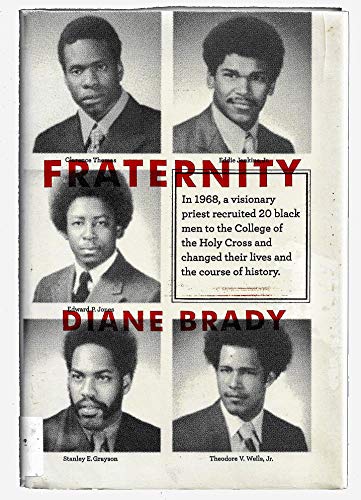
Fraternity: In 1968, a Visionary Priest Recruited 20 Black Men to the College of the Holy Cross and Changed Their Lives and the Co - Hardcover
Inhaltsangabe
NAMED ONE OF THE BEST BOOKS OF THE YEAR BY
San Francisco Chronicle • The Plain Dealer
The inspiring true story of a group of young men whose lives were changed by a visionary mentor
On April 4, 1968, the death of Martin Luther King, Jr., shocked the nation. Later that month, the Reverend John Brooks, a professor of theology at the College of the Holy Cross who shared Dr. King’s dream of an integrated society, drove up and down the East Coast searching for African American high school students to recruit to the school, young men he felt had the potential to succeed if given an opportunity. Among the twenty students he had a hand in recruiting that year were Clarence Thomas, the future Supreme Court justice; Edward P. Jones, who would go on to win a Pulitzer Prize for literature; and Theodore Wells, who would become one of the nation’s most successful defense attorneys. Many of the others went on to become stars in their fields as well.
In Fraternity, Diane Brady follows five of the men through their college years. Not only did the future president of Holy Cross convince the young men to attend the school, he also obtained full scholarships to support them, and then mentored, defended, coached, and befriended them through an often challenging four years of college, pushing them to reach for goals that would sustain them as adults.
Would these young men have become the leaders they are today without Father Brooks’s involvement? Fraternity is a triumphant testament to the power of education and mentorship, and a compelling argument for the difference one person can make in the lives of others.
Die Inhaltsangabe kann sich auf eine andere Ausgabe dieses Titels beziehen.
Über die Autorinnen und Autoren
Diane Brady grew up in Scotland and Canada before moving to Nairobi to begin her career as a journalist. She now writes for Bloomberg Businessweek in New York City, where she lives with her husband and three children. This is her first book.
Diane Brady grew up in Scotland and Canada before moving to Nairobi to begin her career as a journalist. She now writes for Bloomberg Businessweek in New York City.
Auszug. © Genehmigter Nachdruck. Alle Rechte vorbehalten.
ONE
All of King’s Men
On April 4, 1968, eight black students were enrolled at the College of the Holy Cross. One, an outgoing and opinionated sophomore named Arthur “Art” Martin, from Newark, New Jersey, was studying in his dorm’s common room when he heard a commotion in the hall. A white student ran in and announced to everyone present that “Martin Luther Coon” had been shot. He looked Art straight in the eye, as if daring him to acknowledge the slur. There was an uncomfortable silence in the room as the other students all turned to stare, curious to see how the black student was going to react to the news of the civil rights leader’s death. Art calmly got up and left the study area. He held his composure until he found his friend Orion Douglass, a black senior from Savannah, and only then did his tears start to flow.
About 1,400 miles away, at the Immaculate Conception Seminary, a young student was battling his rage. Conception, Missouri, was no place to mourn the death of a black man. Clarence Thomas knew he didn’t fit in. From the minute he had arrived from Georgia in the tiny rural community where he had come to study for the priesthood, he’d had misgivings that were increasingly hard to ignore. Thomas had promised his grandfather that he would become the first black priest in Savannah, and he knew that the consequences of letting down the man who had raised him would be dire. His grandfather had made it clear that if Thomas dropped out of school, he would not be welcome back home. Thomas hadn’t expected to have fun in Missouri—he wasn’t the type of teenager who put having a good time ahead of an education—but the isolation and loneliness he experienced was a shock. While Thomas may have come across as friendly and enthusiastic to his fellow seminarians—three of whom were black—he had privately come to loathe his life at the pastoral theology school. Though he liked quite a few of his peers, he felt he had little in common with them. They sometimes stared at his black skin and spoke disparagingly about men like Martin Luther King, Jr., and Malcolm X. The biggest problem, though, wasn’t the other men but the demons he was battling within himself. Thomas had been mourning the death of a friend who had been killed in a fight in Savannah, and had been reading about the philosophies of a new generation of black leaders.
That sorrow, combined with the racial tensions he felt at the seminary, had merely added to his doubts about why he was there. The Roman Catholic Church had once seemed like a sanctuary from racism to Thomas. The Franciscan sisters who had taught him at St. Benedict the Moor Grammar School had shown him a level of respect he had rarely encountered on the streets of Savannah. Even St. John Vianney Minor Seminary, a white boarding school near Savannah where he had finished up high school and endured occasional teasing, had been at least tolerable in his mind. But a lot had changed over the past year. Civil rights activists like Stokeley Carmichael and Bobby Seale had helped to make black power a rallying cry on campuses nationwide, instilling black students with both a sense of pride and anger about social injustice. There was a growing sense across the country that it was time to give African Americans the rights they had been denied for so long. But one institution that had yet to come to that conclusion, in Thomas’s view, was the Roman Catholic Church. Despite the bold and inclusive vision of Catholicism that emerged from the Second Vatican Council, or Vatican II, he saw hypocrisy in where the Church was spending its energies. Thomas found that the Church’s discussions about how to become more relevant were lacking any real focus on the evils of racism, or on the racial segregation within the Church hierarchy. Thomas had once believed that becoming a priest would put him on equal footing with his white peers; now he wasn’t so sure. With each passing day, he instead felt more diminished and full of doubt.
Even as he gave the appearance of fitting in, Thomas felt left out by the conversations that seemed to grow quieter when he entered a room, the choice of TV shows in common areas, and even the letters that other students received from parents who seemed to care about their sons in a way that his own mother and father never had. His father had left the family when Clarence was a toddler, while his mother had left her two boys with their grandfather when Thomas was barely seven.
The scripture Thomas studied felt out of sync with the realities of 1968. The men living in Conception seemed to him oblivious to a world that was exploding with images of war, protests, and injustice. Instead of acting as a catalyst in the push for racial equality, the Church seemed to have become an oasis from it. It was hard for him to keep his faith when, amid all the battles and debates and violence over civil rights, the Church said nothing. As he would say years later, the silence haunted him.
Martin Luther King, Jr., was a beacon of hope for Thomas; through his work, King had helped him to articulate the pain he felt at being black in a racist world, a pain that Thomas had worked hard to ignore most of his life. The only time he had really been unaware of it was in the small black community of Pin Point, Georgia, where he had lived until the age of six. After his younger brother, Myers, accidentally burned down the house where they lived, the boys had moved to the slums of Savannah with their mother while Thomas’s older sister stayed in Pin Point with another relative.
On the evening of April 4, Thomas was walking back to his dormitory when one of the men watching TV suddenly yelled that King had been shot. As Thomas stood there, trying to digest the news, he heard a white classmate say, “That’s good. I hope the son of a bitch dies.” The man who’d said he hoped King would die was a future priest. In that moment, all of the white students seemed the same to Thomas. Just as King had given voice to Thomas’s hopes, one wisecracking student brought clarity to his anger. It was apparent to him that he didn’t belong with these men. There was no sanctuary in the Church, no equality in Catholicism for people like him. Thomas no longer felt a desire to swallow his rage and head off to the chapel to pray. He simply made a decision, then and there, to leave the seminary and never come back. Later in life, Thomas would refer back to King’s death as a turning point, as the moment when he abandoned both his faith and his vocation.
At eighteen, Eddie Jenkins had a confidence that many adults envied. He was handsome, in an approachable sort of way, and had a reputation for being charming and funny. His days were filled with commuting more than two hours to school and football practice in Brooklyn before returning to Queens and his after-school job at Alexander’s department store. On April 4, Jenkins was stocking shelves at Alexander’s when he looked up to see an older black man walking slowly toward him. What an Uncle Tom, the teen thought to himself. The low hang of the stranger’s head gave the man the kind of look that men his father’s age sometimes had, as if they had spent so much of their lives bowing to white people that they had forgotten how to stand tall. Jenkins turned away in disgust and went back to his work, absently wondering why the street outside wasn’t buzzing with its usual mix of music, laughter, and the chatter of commuters.
As the man approached him, Jenkins grudgingly asked if he needed help.
“The king is dead,” the man said.
Jenkins saw tears in the man’s eyes and suddenly understood why he looked so beaten down. Martin Luther King, Jr., was dead. The...
„Über diesen Titel“ kann sich auf eine andere Ausgabe dieses Titels beziehen.
Suchergebnisse für Fraternity: In 1968, a Visionary Priest Recruited 20...

Beispielbild für diese ISBN
Fraternity: In 1968, a visionary priest recruited 20 black men to the College of the Holy Cross and changed their lives and the course of history.
Anbieter: World of Books (was SecondSale), Montgomery, IL, USA
Verkäuferbewertung 5 von 5 Sternen

Zustand: Good. Item in good condition. Textbooks may not include supplemental items i.e. CDs, access codes etc. Artikel-Nr. 00089504955
Gebraucht kaufen
EUR 4,57
Versand gratis
Versand innerhalb von USA
Versand innerhalb von USA
Anzahl: 6 verfügbar
Beispielbild für diese ISBN
Fraternity: In 1968, a visionary priest recruited 20 black men to the College of the Holy Cross and changed their lives and the course of history.
Anbieter: World of Books (was SecondSale), Montgomery, IL, USA
Verkäuferbewertung 5 von 5 Sternen
Zustand: Very Good. Item in very good condition! Textbooks may not include supplemental items i.e. CDs, access codes etc. Artikel-Nr. 00105640382
Gebraucht kaufen
EUR 4,57
Versand gratis
Versand innerhalb von USA
Versand innerhalb von USA
Anzahl: 1 verfügbar
Beispielbild für diese ISBN
Fraternity: In 1968, a visionary priest recruited 20 black men to the College of the Holy Cross and changed their lives and the course of history.
Anbieter: ThriftBooks-Atlanta, AUSTELL, GA, USA
Verkäuferbewertung 5 von 5 Sternen
Hardcover. Zustand: Very Good. No Jacket. May have limited writing in cover pages. Pages are unmarked. ~ ThriftBooks: Read More, Spend Less. Artikel-Nr. G0385524749I4N00
Gebraucht kaufen
EUR 6,51
Versand gratis
Versand innerhalb von USA
Versand innerhalb von USA
Anzahl: 1 verfügbar
Beispielbild für diese ISBN
Fraternity: In 1968, a visionary priest recruited 20 black men to the College of the Holy Cross and changed their lives and the course of history.
Anbieter: ThriftBooks-Dallas, Dallas, TX, USA
Verkäuferbewertung 5 von 5 Sternen
Hardcover. Zustand: Very Good. No Jacket. May have limited writing in cover pages. Pages are unmarked. ~ ThriftBooks: Read More, Spend Less. Artikel-Nr. G0385524749I4N00
Gebraucht kaufen
EUR 6,51
Versand gratis
Versand innerhalb von USA
Versand innerhalb von USA
Anzahl: 1 verfügbar
Beispielbild für diese ISBN
Fraternity: In 1968, a visionary priest recruited 20 black men to the College of the Holy Cross and changed their lives and the course of history.
Anbieter: ThriftBooks-Atlanta, AUSTELL, GA, USA
Verkäuferbewertung 5 von 5 Sternen
Hardcover. Zustand: Good. No Jacket. Missing dust jacket; Pages can have notes/highlighting. Spine may show signs of wear. ~ ThriftBooks: Read More, Spend Less. Artikel-Nr. G0385524749I3N01
Gebraucht kaufen
EUR 6,51
Versand gratis
Versand innerhalb von USA
Versand innerhalb von USA
Anzahl: 1 verfügbar
Beispielbild für diese ISBN
The Fraternity : In 1968, a Visionary Priest Recruited 20 Black Men to the College of the Holy Cross and Changed Their Lives and the Course of History
Verlag:
Random House Publishing Group, 2012
ISBN 10: 0385524749
ISBN 13: 9780385524742
Gebraucht
Hardcover
Anbieter: Better World Books, Mishawaka, IN, USA
Verkäuferbewertung 5 von 5 Sternen
Zustand: Very Good. Former library copy. Pages intact with possible writing/highlighting. Binding strong with minor wear. Dust jackets/supplements may not be included. Includes library markings. Stock photo provided. Product includes identifying sticker. Better World Books: Buy Books. Do Good. Artikel-Nr. GRP92317261
Gebraucht kaufen
EUR 7,02
Versand gratis
Versand innerhalb von USA
Versand innerhalb von USA
Anzahl: 1 verfügbar
Beispielbild für diese ISBN
The Fraternity : In 1968, a Visionary Priest Recruited 20 Black Men to the College of the Holy Cross and Changed Their Lives and the Course of History
Verlag:
Random House Publishing Group, 2012
ISBN 10: 0385524749
ISBN 13: 9780385524742
Gebraucht
Hardcover
Anbieter: Better World Books, Mishawaka, IN, USA
Verkäuferbewertung 5 von 5 Sternen
Zustand: Good. Pages intact with minimal writing/highlighting. The binding may be loose and creased. Dust jackets/supplements are not included. Stock photo provided. Product includes identifying sticker. Better World Books: Buy Books. Do Good. Artikel-Nr. 486057-75
Gebraucht kaufen
EUR 7,02
Versand gratis
Versand innerhalb von USA
Versand innerhalb von USA
Anzahl: 2 verfügbar
Foto des Verkäufers
Fraternity (First Printing) In 1968, a Visionary Priest Recruited 20 Black Men to the College of the Holy Cross and Changed Their Lives and the Course of History.
Verlag:
Spiegel & Grau, New York, NY, 2012
ISBN 10: 0385524749
ISBN 13: 9780385524742
Gebraucht
Hardcover
Erstausgabe
Anbieter: True Oak Books, Highland, NY, USA
Verkäuferbewertung 5 von 5 Sternen
Hardcover. Zustand: Good. Zustand des Schutzumschlags: Good. First Edition; First Printing. 6.19 X 0.77 X 9.5 inches; 242 pages; B&W photographs. Ex-Library copy with usual identifiers. Mylar cover around DJ. Few minor surface speckles on the top exterior edge of textblock. Good condition otherwise. No other noteworthy defects. No markings on text pages. ; - Your satisfaction is our priority. We offer free returns and respond promptly to all inquiries. Your item will be packaged with care and ship on the same or next business day. Buy with confidence. Artikel-Nr. HVD-73401-A-0
Gebraucht kaufen
EUR 17,93
Versand gratis
Versand innerhalb von USA
Versand innerhalb von USA
Anzahl: 1 verfügbar
Beispielbild für diese ISBN
Fraternity: In 1968, a Visionary Priest Recruited 20 Black Men to the College of the Holy Cross and Changed Their Lives and the Course of History.
Anbieter: Revaluation Books, Exeter, Vereinigtes Königreich
Verkäuferbewertung 5 von 5 Sternen
Hardcover. Zustand: Brand New. 256 pages. 9.50x6.50x1.00 inches. In Stock. Artikel-Nr. 0385524749
Neu kaufen
EUR 32,58
EUR 11,66 Versand
Versand von Vereinigtes Königreich nach USA
Versand von Vereinigtes Königreich nach USA
Anzahl: 1 verfügbar