
Verwandte Artikel zu The Dead Hand: The Untold Story of the Cold War Arms...
Inhaltsangabe
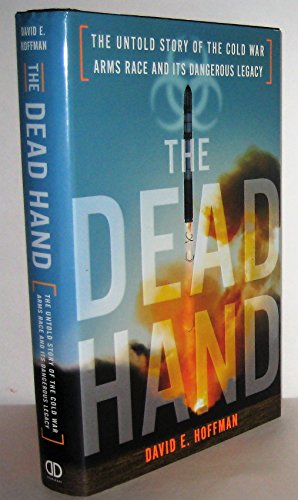
A history of the end of the arms race describes the Soviet Union's development of an automatic retaliatory attack system, the United States's efforts to create space-based missile defenses, and the struggle to prevent nuclear weapons from being acquired by terrorists.
Die Inhaltsangabe kann sich auf eine andere Ausgabe dieses Titels beziehen.
Über die Autorin bzw. den Autor
David E. Hoffman is a contributing editor at the Washington Post, where he previously served as White House correspondent, Moscow bureau chief, and assistant managing editor for foreign news. He is the author of The Oligarchs: Wealth and Power in the New Russia.
He lives in Maryland.
Auszug. © Genehmigter Nachdruck. Alle Rechte vorbehalten.
PROLOGUE
I. Epidemic of Mystery
"Are any of your patients dying?" asked Yakov Klipnitzer when he called Margarita Ilyenko on Wednesday, April 4, 1979. She was chief physician at No. 24, a medium-sized, one-hundred-bed hospital in Sverdlovsk, a Soviet industrial metropolis in the Ural Mountains. Her hospital often referred patients to a larger facility, No. 20, where Klipnitzer was chief doctor. Klipnitzer saw two unusual deaths from what looked like severe pneumonia. The patients, he told Ilyenko, were "two of yours." No, Ilyenko told him, she did not know of any deaths. The next day he called again. Klipnitzer was more persistent. "You still don't have any patients dying?" he asked. Klipnitzer had new deaths with pneumonia-like symptoms. "Who is dying from pneumonia today?" Ilyenko replied, incredulous. "It is very rare."
Soon, patients began to die at Ilyenko's hospital, too. They were brought in ambulances and cars, suffering from high fevers, headaches, coughs, vomiting, chills and chest pains. They were stumbling in the hallways and lying on gurneys. The head of admissions at Hospital No. 20, Roza Gaziyeva, was on duty overnight between April 5 and 6. "Some of them who felt better after first aid tried to go home. They were later found on the streets—the people had lost consciousness," she recalled. She tried to give mouth-to-mouth resuscitation to one ill patient, who died. "During the night, we had four people die. I could hardly wait until morning. I was frightened."
On the morning of April 6, Ilyenko raced to the hospital, threw her bag into her office, put on her white gown and headed for the ward. One patient looked up at her, eyes open, and then died. "There are dead bodies, people still alive, lying together. I thought, this is a nightmare. Something is very, very wrong."
Death came quickly to victims. Ilyenko reported to the district public health board that she had an emergency. Instructions came back to her that another hospital, No. 40, was being set up to receive all the patients in an infectious disease ward. The word spread—infection!—and with it, fear. Some staff refused to report for work, and others already at work refused to go home so as not to expose their families. Then, disinfection workers arrived at hospital No. 20, wearing hazardous materials suits. They spread chlorine everywhere, which was a standard disinfectant, but the scene was terrifying, Ilyenko recalled. "There was panic when people saw them."(1)
Sverdlovsk, population 1.2 million, was the tenth-largest city in the Soviet Union and the heartland of its military-industrial complex. Guns, steel, industry and some of the best mechanical engineering schools in the Soviet Union were Sverdlovsk's legacy from Stalin's rush to modernize during World War II and after. Since 1976, the region had been run by a young, ambitious party secretary, Boris Yeltsin.
Hospitals No. 20 and 24 were in the southern end of the city, which slopes downward from the center. Streets lined with small wooden cottages and high fences were broken up by stark five-story apartment buildings, shops and schools. The Chkalovsky district, where Ilyenko's hospital was located, included a ceramics factory where hundreds of men worked in shifts in a cavernous building with large, high windows.
Less than a mile away, to the north-northwest, was Compound 32, an army base for two tank divisions, largely residences, and, adjacent to it, a closed military microbiology facility. Compound 19, which comprised a laboratory, development and testing center for deadly pathogens, including anthrax, was run by the 15th Main Directorate of the Ministry of Defense. On Monday April 2, 1979, from morning until early evening, the wind was blowing down from Compound 19 toward the ceramics factory.(2)
Inside Compound 19, three shifts operated around the clock, experimenting with anthrax and making it in batches. Anthrax bacteria were grown in fermentation vessels, separated from the liquid growth medium and dried before they were ground up into a fine powder for use in aerosol form. Workers at the compound were regularly given vaccinations. The work was high risk.
Anthrax is an often-fatal infection that occurs when spores of the bacteria Bacillus anthracis enter the body, either through the skin, ingestion or inhalation. The bacteria germinate and release toxins that can quickly bring on death if untreated. In Russia, the disease was known as Sibirskaya yazva, or Siberian ulcer, because of the black sores that form when it is contracted through cuts in the skin. In nature, the disease most commonly spreads through contact with infected animals, usually grazing animals such as cows, goats and sheep, which ingest the spores from the soil. The inhalation variety is dangerous to humans. Breathing the spores into the lungs can kill those infected if not treated. A single gram of anthrax contains around a trillion spores. Odorless and colorless, the spores are extremely stable, and can remain dormant for as long as fifty years or more. For these reasons, anthrax was well suited for a biological weapon. According to one estimate, 112 pounds of anthrax spores released along a 1.2-mile line upwind of a city of 500,000 residents would result in 125,000 infections—and kill 95,000 people.(3)
What exactly happened at Compound 19 is still unknown. By one account, a filter was removed and not properly replaced, and anthrax spores were released into the air.(4)
To the south, sheep and cattle in villages began to die. Anthrax had been present in rural areas in the past, although it was not common. At the same time, people started getting sick. The first records of those admitted to hospitals came on Wednesday, April 4, when Ilyenko got Klipnitzer's phone call. "What was strange for us, it was mainly men dying, not many women, and not a single child," she said.(5) Ilyenko began keeping records of names, ages, addresses and possible reasons for the deaths, but she didn't know what was happening, or why.
On April 10, as the crisis deepened, Faina Abramova, a retired pathologist who had been a lecturer at the Sverdlovsk Medical Institute, was summoned to Hospital No. 40 and asked to autopsy a thirty-seven-yearold man who died over the weekend. He had been at Compound 32, the army base with the tank divisions, for reserve duty, gone home to a nearby village and, for no apparent reason, became suddenly ill. Abram ova, a spirited professional, was puzzled by the case. The man did not show classic signs of influenza and pneumonia. But the autopsy showed infection of the lymph nodes and the lungs. Abramova had also noticed the man suffered from cerebral bleeding, a distinctive red ring around the brain known as "cardinal's cap."(6)
"We started thinking what other diseases may cause this pathology," she recalled. "We looked up the books, and we went through them all together, and it looked like anthrax."
That evening, Abramova attended a reception, which was also attended by Lev Grinberg, her protégé, a young pathologist with thick glasses, black hair and a beard. As they danced at the reception, Abramova whispered to him that she had autopsied the man earlier that day, and diagnosed his death as anthrax. Grinberg was stunned. "I asked, where in our godforsaken Sverdlovsk can we have anthrax?" he recalled.
The next day, Grinberg...
„Über diesen Titel“ kann sich auf eine andere Ausgabe dieses Titels beziehen.
Suchergebnisse für The Dead Hand: The Untold Story of the Cold War Arms...

Beispielbild für diese ISBN
Dead Hand : The Untold Story of the Cold War Arms Race and Its Dangerous Legacy
Verlag:
Knopf Doubleday Publishing Group, 2009
ISBN 10: 0385524374
ISBN 13: 9780385524377
Gebraucht
Hardcover
Erstausgabe
Anbieter: Better World Books, Mishawaka, IN, USA
Verkäuferbewertung 5 von 5 Sternen

Zustand: Very Good. 1st Edition. Former library copy. Pages intact with possible writing/highlighting. Binding strong with minor wear. Dust jackets/supplements may not be included. Includes library markings. Stock photo provided. Product includes identifying sticker. Better World Books: Buy Books. Do Good. Artikel-Nr. 485776-6
Gebraucht kaufen
EUR 9,60
Versand gratis
Versand innerhalb von USA
Versand innerhalb von USA
Anzahl: 2 verfügbar
Beispielbild für diese ISBN
Dead Hand : The Untold Story of the Cold War Arms Race and Its Dangerous Legacy
Verlag:
Knopf Doubleday Publishing Group, 2009
ISBN 10: 0385524374
ISBN 13: 9780385524377
Gebraucht
Hardcover
Erstausgabe
Anbieter: Better World Books: West, Reno, NV, USA
Verkäuferbewertung 5 von 5 Sternen
Zustand: Good. 1st Edition. Former library copy. Pages intact with minimal writing/highlighting. The binding may be loose and creased. Dust jackets/supplements are not included. Includes library markings. Stock photo provided. Product includes identifying sticker. Better World Books: Buy Books. Do Good. Artikel-Nr. GRP92879456
Gebraucht kaufen
EUR 9,60
Versand gratis
Versand innerhalb von USA
Versand innerhalb von USA
Anzahl: 2 verfügbar
Beispielbild für diese ISBN
Dead Hand : The Untold Story of the Cold War Arms Race and Its Dangerous Legacy
Verlag:
Knopf Doubleday Publishing Group, 2009
ISBN 10: 0385524374
ISBN 13: 9780385524377
Gebraucht
Hardcover
Erstausgabe
Anbieter: Better World Books, Mishawaka, IN, USA
Verkäuferbewertung 5 von 5 Sternen
Zustand: Good. 1st Edition. Pages intact with minimal writing/highlighting. The binding may be loose and creased. Dust jackets/supplements are not included. Stock photo provided. Product includes identifying sticker. Better World Books: Buy Books. Do Good. Artikel-Nr. 485774-6
Gebraucht kaufen
EUR 9,60
Versand gratis
Versand innerhalb von USA
Versand innerhalb von USA
Anzahl: 2 verfügbar
Beispielbild für diese ISBN
The Dead Hand: The Untold Story of the Cold War Arms Race and its Dangerous Legacy
Anbieter: ThriftBooks-Atlanta, AUSTELL, GA, USA
Verkäuferbewertung 5 von 5 Sternen
Hardcover. Zustand: Good. No Jacket. Former library book; Pages can have notes/highlighting. Spine may show signs of wear. ~ ThriftBooks: Read More, Spend Less. Artikel-Nr. G0385524374I3N10
Gebraucht kaufen
EUR 11,59
Versand gratis
Versand innerhalb von USA
Versand innerhalb von USA
Anzahl: 1 verfügbar
Beispielbild für diese ISBN
The Dead Hand: The Untold Story of the Cold War Arms Race and its Dangerous Legacy
Anbieter: ThriftBooks-Dallas, Dallas, TX, USA
Verkäuferbewertung 5 von 5 Sternen
Hardcover. Zustand: Fair. No Jacket. Former library book; Readable copy. Pages may have considerable notes/highlighting. ~ ThriftBooks: Read More, Spend Less. Artikel-Nr. G0385524374I5N10
Gebraucht kaufen
EUR 11,59
Versand gratis
Versand innerhalb von USA
Versand innerhalb von USA
Anzahl: 1 verfügbar
Beispielbild für diese ISBN
The Dead Hand: The Untold Story of the Cold War Arms Race and its Dangerous Legacy
Anbieter: ThriftBooks-Atlanta, AUSTELL, GA, USA
Verkäuferbewertung 5 von 5 Sternen
Hardcover. Zustand: Fair. No Jacket. Former library book; Readable copy. Pages may have considerable notes/highlighting. ~ ThriftBooks: Read More, Spend Less. Artikel-Nr. G0385524374I5N10
Gebraucht kaufen
EUR 11,59
Versand gratis
Versand innerhalb von USA
Versand innerhalb von USA
Anzahl: 1 verfügbar
Beispielbild für diese ISBN
The Dead Hand: The Untold Story of the Cold War Arms Race and its Dangerous Legacy
Anbieter: ThriftBooks-Dallas, Dallas, TX, USA
Verkäuferbewertung 5 von 5 Sternen
Hardcover. Zustand: Good. No Jacket. Former library book; Pages can have notes/highlighting. Spine may show signs of wear. ~ ThriftBooks: Read More, Spend Less. Artikel-Nr. G0385524374I3N10
Gebraucht kaufen
EUR 11,59
Versand gratis
Versand innerhalb von USA
Versand innerhalb von USA
Anzahl: 1 verfügbar
Beispielbild für diese ISBN
The Dead Hand: The Untold Story of the Cold War Arms Race and its Dangerous Legacy
Anbieter: ThriftBooks-Atlanta, AUSTELL, GA, USA
Verkäuferbewertung 5 von 5 Sternen
Hardcover. Zustand: Good. No Jacket. Pages can have notes/highlighting. Spine may show signs of wear. ~ ThriftBooks: Read More, Spend Less. Artikel-Nr. G0385524374I3N00
Gebraucht kaufen
EUR 11,60
Versand gratis
Versand innerhalb von USA
Versand innerhalb von USA
Anzahl: 1 verfügbar
Foto des Verkäufers
The Dead Hand: The Untold Story of the Cold War Arms Race and its Dangerous Legacy
Anbieter: Southampton Books, Sag Harbor, NY, USA
Verkäuferbewertung 5 von 5 Sternen
Hardcover. Zustand: Like New. First Edition. First Edition, First Printing. Not price-clipped. Published by Doubleday, 2009. Octavo. Hardcover. Book is like new. Dust jacket is like new with small nick to spine.100% positive feedback. 30 day money back guarantee. NEXT DAY SHIPPING! Excellent customer service. Please email with any questions. All books packed carefully and ship with free delivery confirmation/tracking. All books come with free bookmarks. Ships from Sag Harbor, New York. Artikel-Nr. 409341
Gebraucht kaufen
EUR 18,33
EUR 4,44 Versand
Versand innerhalb von USA
Versand innerhalb von USA
Anzahl: 1 verfügbar
Beispielbild für diese ISBN
The Dead Hand; The Untold Story of the Cold War Arms Race and Its Dangerous Legacy
Verlag:
Doubleday, New York, 2009
ISBN 10: 0385524374
ISBN 13: 9780385524377
Gebraucht
Hardcover
Erstausgabe
Anbieter: Ground Zero Books, Ltd., Silver Spring, MD, USA
Verkäuferbewertung 5 von 5 Sternen
Hardcover. Zustand: Very good. Zustand des Schutzumschlags: Very good. Gene Thorp (Map) (illustrator). x, [4], 575, [3] pages. Illustrations. Abbreviations in Notes. Endnotes. Index. David Emanuel Hoffman is an American writer and journalist, a contributing editor to The Washington Post. He came to Washington D.C. in 1977 to work for the Capitol Hill News Service. In May 1982, he joined The Washington Post and covered the George H. W. Bush presidency. His White House coverage won three national journalism awards. He became Jerusalem bureau chief for The Washington Post in 1992. From 1995 to 2001, he served as Moscow bureau chief, and later as foreign editor and assistant managing editor for foreign news. He won the annual Pulitzer Prize for General Non-Fiction in 2010 for his second book, The Dead Hand: The Untold Story of the Cold War Arms Race and its Dangerous Legacy. The Prize citation termed it "a well documented narrative that examines the terrifying doomsday competition between two superpowers and how weapons of mass destruction still imperil humankind." Derived from a Kirkus review: This penetrating look at the history of the Cold War. One of its aspects was the notion that the Soviet military created "Dead Hand," a missile system that led to further assumptions that the civilian leadership and military command system were dead and gone. The Soviet brass, writes Washington Post reporter Hoffman, tried to push through a computer-loop design by which the machines would decide when to unleash hell without human intervention. One of the many virtues of Hoffman's book is that it depicts not just the death-tainted hand of the military-industrial complex in the United States, but also in the Soviet Union, where supposed strongmen like Leonid Brezhnev and Yuri Andropov had considerable trouble keeping the warmongers under control. Indeed, readers will realize how lucky we are to have escaped being destroyed at their hands. A compendium of discomfiting, implication-heavy facts, of particular interest to students of geopolitics. First Edition [Stated], First Printing [Stated]. Artikel-Nr. 76887
Gebraucht kaufen
EUR 41,24
EUR 4,45 Versand
Versand innerhalb von USA
Versand innerhalb von USA
Anzahl: 3 verfügbar