
Verwandte Artikel zu Laura Bush: An Intimate Portrait of the First Lady
Inhaltsangabe
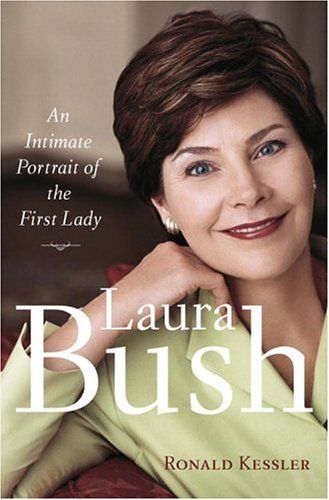
An authorized portrait of America's First Lady, written with full White House cooperation, offers a rare glimpse inside the private world of Laura Bush, the beliefs and attitudes that shape her life, and her important influence on the president and his administration.
Die Inhaltsangabe kann sich auf eine andere Ausgabe dieses Titels beziehen.
Über die Autorin bzw. den Autor
RONALD KESSLER is the New York Times bestselling author of fifteen books, including A Matter of Character: Inside the White House of George W. Bush. A former investigative reporter for the Washington Post and the Wall Street Journal, Kessler has won sixteen journalism awards, including two George Polk Awards. He lives in Potomac, Maryland, with his wife, Pamela.
Auszug. © Genehmigter Nachdruck. Alle Rechte vorbehalten.
1
Hostile Terrain
From the air, Midland looks as if a hurricane had just hit. The few trees are short, like Christmas trees. The grass is yellow, the land flat. Dust coats the paved roads. There are no lakes or rivers. Visitors could be forgiven for thinking they were stepping off onto the moon.
With annual rainfall of only thirteen and a half inches, Midland is so arid that, to keep their lawns green in summer, residents must water them every day. To create flower beds, they often have to use jackhammers to cut through the brittle crust formed from caliche, a weathered soil rich in calcium. Until the city started mixing more surface water from the Colorado River Municipal Water District with its own well water, tap water would cause brown stains on teeth because it had excess levels of fluoride.
Two or three times a year, usually in the spring, a bad sandstorm hits, obscuring the sun as in a total eclipse. The sand stings and enters the nostrils. Drivers peering through their windshield cannot see the front of their car. The sand seeps through the frames of windows and doors and piles up on floors and windowsills. Sand frosts the panes as well.
The wind uproots the tumbleweeds--tangled balls of light, stiff branches that can balloon to the size of a Volkswagen. The tumbleweeds roll before the wind and clump together in masses of five or ten along the cinderblock walls residents build around their backyards to try to keep out the sand. Into this inhospitable environment, on November 4, 1946, Laura Lane Welch was born.
Located 335 miles west of Dallas in what is known as West Texas, Midland was named for Midway Station, a section house where railroad employees could stay overnight. The Texas and Pacific Railway built the station in June 1881 halfway between Dallas and El Paso, an area crisscrossed by a Comanche trail and wagon roads. The name was changed from Midway Station to Midland on January 4, 1884, when a post office was established. Until Herman N. Garrett moved his herd of sheep there in 1882, the area had no permanent residents. In 1885, Midland County was established with Midland as the county seat.
Soon, Nelson Morris, a Chicago meatpacker, bought 200,000 acres from the state for his Black Angus ranch and introduced cattle to the area. Farmers began moving in, and by 1920 over 4,600 acres in Midland County were devoted to cotton. In 1923, oil was discovered seventy miles southeast of Midland, touching off a boom that has continued, off and on, to this day. Located at the center of the Permian Basin, which has 22 percent of the nation's oil reserves, Midland would become one of the greatest petroleum-producing areas in the country.
Laura's ancestors on her father's side can be traced back to England and to Christopher DeGraffenried, a Swiss nobleman born in 1691. DeGraffenried moved to Philadelphia and eventually to Charleston, South Carolina. Laura's paternal grandfather, Mark Anthony Welch, was born in Texas in 1873. He began as a carpenter and became a homebuilder. According to family legend, he became a friend of Samuel Langhorne Clemens, better known as Mark Twain, and sometimes traveled with him. His wife, Marie Lula Lane, was born in Arkansas in 1873. They moved to Lubbock, Texas, 120 miles north of Midland, in 1918.
As with her father's ancestors, Laura's mother's side goes back mainly to England, except that she is "one-eighth French," according to genealogist Robert Battle, who, along with William Addams Reitwiesner, has traced Laura's origins. In doing so, they discovered that Laura, on her father's side, is a very distant cousin of Senator John McCain. Both are descendants of Allen Valentine, who lived in Virginia in the 1700s and served as a lieutenant colonel with the North Carolina Troops during the American Revolution.
On her mother's side, Laura also has an ancestor who fought in the Revolution: John Wiseman, a private in the Pennsylvania militia and a descendant of one Abraham Wiseman, who lived in Philadelphia in the early 1700s. While his name sounds Jewish, he was probably a Mennonite, according to the two genealogists.
Laura's maternal grandfather, Halsey Sinclair Hawkins, was born in 1894 in Little Rock, Arkansas. While delivering mail for the U.S. Post Office, he met his future wife, Jessie Laura Sherrard. Laura's mother, Jenna Louise Hawkins, was born in Little Rock in 1919. But having been gassed in combat during World War I, Hawkins sought out a dry climate, and they settled first in Tyler, Texas, then in the tiny village of Canutillo about twelve miles northwest of El Paso, where they opened what was known as a tourist court on Nuway Road. A precursor of a motel, it had guest cottages, a restaurant, and a small grocery store.
Laura's father, Harold Bruce Welch, was born in Oklahoma in 1912 and moved with his parents to Lubbock when he was six. In 1944, he married Jenna Hawkins in the military chapel at Fort Bliss. Jenna had attended Texas Western College--now the University of Texas at El Paso--and had been working as a bookkeeper at an El Paso department store when a mutual friend introduced them.
Harold served during World War II with the Army's 555th AntiAircraft Artillery Battalion as a master gunner. On April 11, 1945, he was among the soldiers who liberated Mittelbau-Dora concentration camp in Nordhausen in central Germany, 150 miles southeast of Hamburg. An estimated 20,000 prisoners were killed at the top secret camp, where prisoners made V2 rockets in underground tunnels as long as two miles. As the Allies advanced, Hitler began sending prisoners to the Bergen-Belsen camp. In what became known as death marches, tens of thousands of prisoners died of starvation or cold in the winter or were shot by SS guards when they could no longer walk.
"It was said we discovered six thousand political prisoners, but alas, Þve thousand were corpses," said Father Edward P. Doyle, a Catholic chaplain in the 104th Infantry Division, who participated in the liberation with the 555th. "A sight beyond description, mutilated, beaten, starved skeletons. A thousand were 'living' in various stages of decay, merely breathing among the already dead."
"I can still remember the smell of burning bodies as we entered the camp," said Marvin S. Brettingen, who served with Welch and played cards with him while on maneuvers in Louisiana.
A month after the liberation, on May 14, 1945, Major General Terry Allen commended Harold's battalion and its efforts against a "fanatic enemy."
"Frequently in forward positions, under hostile observation, and suffering casualties from deadly direct enemy fire, all members of the 555th AAA Battalion have proved their courage and skill," Allen wrote. Besides destroying eleven Nazi planes and "probably" destroying another eleven planes, the battalion rendered close ground support to the infantry on thirty-four occasions.(1)
After the war, Harold took a job as a district manager with Universal CIT Credit Corporation in El Paso. When an oil boom created a need for homes for workers, Harold and Jenna moved to Midland, where he became a homebuilder. For some ventures, he joined forces with Lloyd E. Waynick, another builder, and together they formed Waynick and Welch Company. Eventually, Harold would build 200 homes.
Harold maintained his office in a tiny room off the kitchen of his home at 2500 Humble Avenue. On Sundays, the Welches attended the First United Methodist Church, where Laura was baptized and would later marry. Harold and Jenna were a team. He built the houses, drawing up a rough floor plan and then taking it to a draftsman to finish. Jenna kept the books.
Jenna was a traditional stay-at-home mother, which was the norm in those days. As in the television show Father Knows Best,...
„Über diesen Titel“ kann sich auf eine andere Ausgabe dieses Titels beziehen.
Suchergebnisse für Laura Bush: An Intimate Portrait of the First Lady

Beispielbild für diese ISBN
Laura Bush: An Intimate Portrait of the First Lady
Anbieter: World of Books (was SecondSale), Montgomery, IL, USA
Verkäuferbewertung 5 von 5 Sternen

Zustand: Good. Item in good condition. Textbooks may not include supplemental items i.e. CDs, access codes etc. Artikel-Nr. 00079505030
Gebraucht kaufen
EUR 3,78
Versand gratis
Versand innerhalb von USA
Versand innerhalb von USA
Anzahl: 2 verfügbar
Beispielbild für diese ISBN
Laura Bush: An Intimate Portrait of the First Lady
Verlag:
Doubleday (edition First Edition), 2006
ISBN 10: 0385516215
ISBN 13: 9780385516211
Gebraucht
Hardcover
Erstausgabe
Anbieter: BooksRun, Philadelphia, PA, USA
Verkäuferbewertung 5 von 5 Sternen
Hardcover. Zustand: Very Good. First Edition. With dust jacket. It's a well-cared-for item that has seen limited use. The item may show minor signs of wear. All the text is legible, with all pages included. It may have slight markings and/or highlighting. Artikel-Nr. 0385516215-8-1-29
Gebraucht kaufen
EUR 5,50
Versand gratis
Versand innerhalb von USA
Versand innerhalb von USA
Anzahl: 1 verfügbar
Beispielbild für diese ISBN
Laura Bush: An Intimate Portrait of the First Lady
Anbieter: ThriftBooks-Dallas, Dallas, TX, USA
Verkäuferbewertung 5 von 5 Sternen
Hardcover. Zustand: As New. No Jacket. Pages are clean and are not marred by notes or folds of any kind. ~ ThriftBooks: Read More, Spend Less. Artikel-Nr. G0385516215I2N00
Gebraucht kaufen
EUR 5,87
Versand gratis
Versand innerhalb von USA
Versand innerhalb von USA
Anzahl: 1 verfügbar
Beispielbild für diese ISBN
Laura Bush: An Intimate Portrait of the First Lady
Anbieter: ThriftBooks-Phoenix, Phoenix, AZ, USA
Verkäuferbewertung 5 von 5 Sternen
Hardcover. Zustand: As New. No Jacket. Pages are clean and are not marred by notes or folds of any kind. ~ ThriftBooks: Read More, Spend Less. Artikel-Nr. G0385516215I2N00
Gebraucht kaufen
EUR 5,87
Versand gratis
Versand innerhalb von USA
Versand innerhalb von USA
Anzahl: 1 verfügbar
Beispielbild für diese ISBN
Laura Bush : An Intimate Portrait of the First Lady
Verlag:
Doubleday Religious Publishing Group, The, 2006
ISBN 10: 0385516215
ISBN 13: 9780385516211
Gebraucht
Hardcover
Anbieter: Better World Books, Mishawaka, IN, USA
Verkäuferbewertung 5 von 5 Sternen
Zustand: Good. Large Print. Former library copy. Pages intact with minimal writing/highlighting. The binding may be loose and creased. Dust jackets/supplements are not included. Includes library markings. Stock photo provided. Product includes identifying sticker. Better World Books: Buy Books. Do Good. Artikel-Nr. 21372916-75
Gebraucht kaufen
EUR 6,26
Versand gratis
Versand innerhalb von USA
Versand innerhalb von USA
Anzahl: 2 verfügbar
Beispielbild für diese ISBN
Laura Bush: An Intimate Portrait of the First Lady
Anbieter: Wonder Book, Frederick, MD, USA
Verkäuferbewertung 5 von 5 Sternen
Zustand: Very Good. Very Good condition. Very Good dust jacket. A copy that may have a few cosmetic defects. May also contain light spine creasing or a few markings such as an owner's name, short gifter's inscription or light stamp. Artikel-Nr. L07A-02872
Gebraucht kaufen
EUR 6,33
Versand gratis
Versand innerhalb von USA
Versand innerhalb von USA
Anzahl: 4 verfügbar
Beispielbild für diese ISBN
Laura Bush: An Intimate Portrait of the First Lady
Anbieter: Wonder Book, Frederick, MD, USA
Verkäuferbewertung 5 von 5 Sternen
Zustand: Good. Good condition. Good dust jacket. A copy that has been read but remains intact. May contain markings such as bookplates, stamps, limited notes and highlighting, or a few light stains. Bundled media such as CDs, DVDs, floppy disks or access codes may not be included. Artikel-Nr. D07M-00586
Gebraucht kaufen
EUR 6,33
Versand gratis
Versand innerhalb von USA
Versand innerhalb von USA
Anzahl: 1 verfügbar
Beispielbild für diese ISBN
Laura Bush: An Intimate Portrait of the First Lady
Verlag:
Doubleday Books April 2006, 2006
ISBN 10: 0385516215
ISBN 13: 9780385516211
Gebraucht
Hardcover
Anbieter: Eagle Eye Books, Decatur, GA, USA
Verkäuferbewertung 4 von 5 Sternen

Hardcover. Zustand: Used. Artikel-Nr. 839418
Gebraucht kaufen
EUR 4,52
EUR 3,51 Versand
Versand innerhalb von USA
Versand innerhalb von USA
Anzahl: 1 verfügbar
Beispielbild für diese ISBN
Laura Bush: An Intimate Portrait of the First Lady
Anbieter: WorldofBooks, Goring-By-Sea, WS, Vereinigtes Königreich
Verkäuferbewertung 5 von 5 Sternen
Paperback. Zustand: Very Good. The book has been read, but is in excellent condition. Pages are intact and not marred by notes or highlighting. The spine remains undamaged. Artikel-Nr. GOR006177211
Gebraucht kaufen
EUR 7,21
EUR 6,51 Versand
Versand von Vereinigtes Königreich nach USA
Versand von Vereinigtes Königreich nach USA
Anzahl: 1 verfügbar
Beispielbild für diese ISBN
Laura Bush: An Intimate Portrait of the First Lady
Anbieter: Robinson Street Books, IOBA, Binghamton, NY, USA
Verkäuferbewertung 4 von 5 Sternen
Hardcover. Zustand: Very Good. Prompt Shipment, shipped in Boxes, Tracking PROVIDEDVery good in very good dust jacket. Book club. Artikel-Nr. DR2mm053
Gebraucht kaufen
EUR 12,23
EUR 8,35 Versand
Versand innerhalb von USA
Versand innerhalb von USA
Anzahl: 1 verfügbar