
Verwandte Artikel zu The True Sources of the Nile: A Novel
Inhaltsangabe
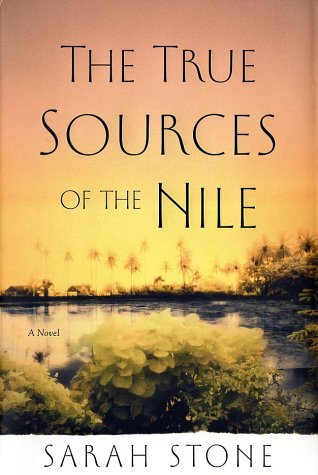
Anne, an idealistic American human rights advocate, falls in love with Jean-Pierre, a high-ranking, Paris-educated member of the Tutsi ruling class, and is drawn into the tribal violence and political and social turmoil that continue to rend Burundi apart.
Die Inhaltsangabe kann sich auf eine andere Ausgabe dieses Titels beziehen.
Über die Autorin bzw. den Autor
SARAH STONE lived in Bujumbura, Burundi, from 1991 to 1993, where she volunteered at the Jane Goodall Institute, taught English as a second language, and reported on human rights. She is on the faculty of the College Writing Programs at the University of California, Berkeley. She lives with her husband, writer Ron Nyren, in the San Francisco Bay Area.
Aus dem Klappentext
An erotic tale of love and betrayal that asks: What are the consequences of passion?
Anne, an American living in central Africa, finds her innate optimism challenged by the realities of her work for peace and democracy. Love is the furthest thing from her mind until she meets Jean-Pierre, a high-ranking, Paris-educated member of the Tutsi ruling class, and they begin an irresistibly intoxicating and blindingly intense affair. While her efforts to improve the conditions in Burundi are laborious and painstaking, the force of their love seems to have conquered the differences between them. For a time, it seems to be an enchanted romance full of burning desire and mutual fascination, until the intractable chaos of the outside world intervenes.
The first crack appears when Anne's mother is diagnosed with cancer, bringing the needs of her family to a fever pitch on the other side of the globe. On a trip to her mother's bedside in the United States, Anne makes shocking discoveries about her family. She returns to Burundi only to find a tense situation that ultimately leaves 100,000 dead in a horrifying outbreak of racial fighting, a crisis that devastates Jean-Pierre's family and reveals a past utterly unknown to her. As violence erupts around them and the divisions between them grow sharper, they wrestle with how to come to terms with their pasts and the possibility of a future together. Meanwhile, the acute demands of her family force Anne to search for her own answer to an unbearable question: What horrors and betrayals can be justified in the name of loyalty, duty, and love?
As much about passion and the power of love as it is about obligation and immutable ties to family, The True Sources of the Nile is a story of lovers from profoundly different worlds, and the terrible choices they must make.
Auszug. © Genehmigter Nachdruck. Alle Rechte vorbehalten.
1
It began as an ordinary lunchtime. Every business and government office in Burundi had shut down for two or three hours, and Jean-Pierre came to join me. We'd already disappeared into the bedroom while Deo, my housekeeper, finished making lunch. The sound of his disapproving hymns, floating back from the kitchen, had continued all through our love-making. Now we sat on my porch, gorging ourselves on Nile perch lapped in palm oil and surrounded by green bananas baked until they were soft, fat, sticky with oil. Though it wasn't raining just then, it had been earlier, and the clouds were thick and spectacular overhead, massed above the black mountains of Zaire as they rose up across the lake, the light and water harmonizing in dense, luminous grays.
We picked through our rice, casually, sorting for little rocks, and Jean-Pierre said to me, in his rich Kirundi-accented French, "I have such a surprise for you."
"A surprise?"
"Don't make any arrangements for the weekend. Friday, after work, look for my driver. What would you say to being away from other people for a few days?"
"I'd say, yes, please. Should I bring anything?"
"I will have what you need. Deo and I have an understanding. But don't try to get anything out of him. He doesn't know the whole story." He crossed his arms. I had his smiles memorized: this private, ironic smile, full of secrets; his official smile, judicious, formal--lips narrowed, teeth covered; and a reckless teeth-baring grin, a smile that made me crazy with desire.
The neighbors' dogs, all eight of them, began to bark (how I wanted to poison them! Sometimes, when I slept alone and they kept me awake with their barking and howling, I would imagine how I'd do it, though I'd always been an animal lover before). Outside, on the broken pavement of the road, a tank rumbled by. But it was only one, and Jean-Pierre paid it no attention, so I knew it didn't mean much. My house wasn't that far from the military installation.
We had stopped eating. I wanted to go back to bed, but not to overdo it, to lose the chance of spending the night together. "Shall we take a walk?"
"You have read my mind. Again." He grinned, and I grinned back. An awareness of the way two very different creatures could function as one. He reached out and took my hand.
My house was only ten minutes by foot from Lake Tanganyika, though there was no time of day when I could safely walk there by myself. All the stores and street stands were closed for the midday break. We passed the Musee Vivante, with its re-creation of a traditional housing compound, and an adjoining reptile park, which had an old crocodile in a shallow pond, and glass cages full of mambas and one indifferent kingsnake who'd been flown out from California to live on a branch and a pile of rocks, to be taken out and shown to frightened tourists and children who couldn't tell a poisonous snake from a harmless one.
"I want to see the bats," I said, and Jean-Pierre, courteous and obliging, turned around. We walked toward the Ministry of Education and the fruit bats.
The earth was unbearably red. The banana trees, jacaranda, papayas crowded the mud-streaked, pot-holed roads, luscious and terrible. The saddest place in the world, this piece of central Africa, site of a terrible history--German and Belgian colonialism, the breaking of Ruanda-Urundi into two countries: Rwanda and Burundi. Coup after coup. And, most of all, the struggles between Tutsi and Hutu: power-grabs, betrayals, death, people fleeing to Zaire. But Burundi felt more and more like home to me. The leaves, blossoms, shone jade, emerald, rose and vermilion against silver and ebony trunks. I inhaled the smells of wet earth, of diesel fuel from the truck rumbling past, of Jean-Pierre beside me, sharp and familiar. He was sweating, and the smell of his skin aroused me, uselessly.
As we walked, we told each other stories about our mornings. Jean-Pierre was a government official at the Ministry of the Interior, a kind of internal affairs bureau. He maneuvered fluently in Burundi's local, trade, and colonial languages--Kirundi, Kiswahili, and French--and with difficulty in English. Apart from English, I had only my rapid but awkward French and a little Kiswahili, so we always talked in French, with Kiswahili words thrown in.
Now Jean-Pierre told me about a colleague who hadn't been available when urgent papers needed to be signed (all signatures in Burundi have to be gathered in the proper order), and then it had been discovered that someone had seen him in the Bally store in the morning, and someone else in the afternoon--this sub-minister had spent an entire day picking out shoes. I was laughing helplessly, my hands over my eyes. The bracelet Jean-Pierre had given me for my birthday, heavy, hammered-gold links, fell forward against my face. He looked at me, and then he stopped talking. I often didn't know how to interpret his silences.
"What are you thinking?" I hadn't meant to ask. We'd been lovers for six months; he was the first man who had ever made me think, for more than two weeks, marriage, children.
He shook his head with a half-smile of refusal. I had a brief moment of missing the self I had been before I knew him, my brisk energy, my effectiveness and decision. I looked at him again, trying to see him as I might after twenty years of marriage, and then as I might if I were a stranger passing him in the street.
After a moment he said, slowly, "What you were asking earlier. About my family." He had introduced me to a couple of his sisters, reluctantly, as a friend. I went along with the fiction, which they may or may not have believed, but it didn't seem very loyal or noble of him. After struggling with myself for weeks, I had said something today, when we were getting dressed again. I'd brought out what was on my mind, that he was ashamed of me, and his evident surprise had reassured me, but he hadn't really replied.
Now, though, he said, "You have so much life in you. So much bravery. You do not think, If I move my rook, in four moves, the bishop will check my king." He frowned and touched my arm, as close as he would come to caressing me in public. "Before you, I was half-alive. But when your leg is asleep, and it comes back to life, there is also pain, isn't there?"
"Not for long, not if you move around and get the circulation going again."
"For my family also, there will be some pain. They think already that I should not have spent so much time at the Sorbonne." I started to object, but he said, suddenly deciding, "Soon, then, I will tell them. Do not worry." He touched my cheek, briefly, smiling. "You have your Mary-at-the-foot-of-the-Cross look. But it is unnecessary." He had said to me, more than once, that my long oval face and round eyes made me look like a 15th century Italian madonna. I actually thought I looked a little stupid, a little surprised, most of the time. Two years earlier, on my thirty-fifth birthday, I had chopped off all my hair in an attempt to look worldly. It hadn't worked, and I was growing it out again.
Jean-Pierre said, "The bats," and we walked across the gravel of the parking lot, stopping halfway, standing back from the two great trees, fifty feet tall and so thick with bats that the trees themselves seemed to be shimmering, moving. The ground was limed with guano, and the trees' foliage had disappeared under the weight of bats clinging to bats, a dozen deep. In the evening, clumps of bats would fall away, detaching themselves, skimming out into the sky, uttering squeaking cries as they flew. Even in the daytime, an endless chittering hum of high-pitched squeaks came from the restless...
„Über diesen Titel“ kann sich auf eine andere Ausgabe dieses Titels beziehen.
Suchergebnisse für The True Sources of the Nile: A Novel

Beispielbild für diese ISBN
The True Sources of the Nile: A Novel
Verlag:
Doubleday (edition First Edition), 2002
ISBN 10: 0385503016
ISBN 13: 9780385503013
Gebraucht
Hardcover
Erstausgabe
Anbieter: BooksRun, Philadelphia, PA, USA
Verkäuferbewertung 5 von 5 Sternen

Hardcover. Zustand: Very Good. First Edition. With dust jacket. It's a well-cared-for item that has seen limited use. The item may show minor signs of wear. All the text is legible, with all pages included. It may have slight markings and/or highlighting. Artikel-Nr. 0385503016-11-1-29
Gebraucht kaufen
EUR 5,79
Versand gratis
Versand innerhalb von USA
Versand innerhalb von USA
Anzahl: 1 verfügbar
Beispielbild für diese ISBN
The True Sources of the Nile: A Novel
Anbieter: Wonder Book, Frederick, MD, USA
Verkäuferbewertung 5 von 5 Sternen
Zustand: Good. Good condition. Very Good dust jacket. With remainder mark. A copy that has been read but remains intact. May contain markings such as bookplates, stamps, limited notes and highlighting, or a few light stains. Bundled media such as CDs, DVDs, floppy disks or access codes may not be included. Artikel-Nr. Q08D-02459
Gebraucht kaufen
EUR 6,41
Versand gratis
Versand innerhalb von USA
Versand innerhalb von USA
Anzahl: 1 verfügbar
Beispielbild für diese ISBN
The True Sources of the Nile: A Novel
Anbieter: ThriftBooks-Dallas, Dallas, TX, USA
Verkäuferbewertung 5 von 5 Sternen
Hardcover. Zustand: Very Good. No Jacket. Missing dust jacket; May have limited writing in cover pages. Pages are unmarked. ~ ThriftBooks: Read More, Spend Less. Artikel-Nr. G0385503016I4N01
Gebraucht kaufen
EUR 7,28
Versand gratis
Versand innerhalb von USA
Versand innerhalb von USA
Anzahl: 1 verfügbar
Beispielbild für diese ISBN
The True Sources of the Nile: A Novel
Anbieter: ThriftBooks-Dallas, Dallas, TX, USA
Verkäuferbewertung 5 von 5 Sternen
Hardcover. Zustand: As New. No Jacket. Pages are clean and are not marred by notes or folds of any kind. ~ ThriftBooks: Read More, Spend Less. Artikel-Nr. G0385503016I2N00
Gebraucht kaufen
EUR 7,28
Versand gratis
Versand innerhalb von USA
Versand innerhalb von USA
Anzahl: 1 verfügbar
Beispielbild für diese ISBN
The True Sources of the Nile
Verlag:
Doubleday Religious Publishing Group, The, 2002
ISBN 10: 0385503016
ISBN 13: 9780385503013
Gebraucht
Hardcover
Erstausgabe
Anbieter: Better World Books: West, Reno, NV, USA
Verkäuferbewertung 5 von 5 Sternen
Zustand: Fine. 1st ed. Used book that is in almost brand-new condition. May contain a remainder mark. Better World Books: Buy Books. Do Good. Artikel-Nr. 15718433-75
Gebraucht kaufen
EUR 7,38
Versand gratis
Versand innerhalb von USA
Versand innerhalb von USA
Anzahl: 1 verfügbar
Beispielbild für diese ISBN
The True Sources of the Nile
Verlag:
Doubleday Religious Publishing Group, The, 2002
ISBN 10: 0385503016
ISBN 13: 9780385503013
Gebraucht
Hardcover
Erstausgabe
Anbieter: Better World Books, Mishawaka, IN, USA
Verkäuferbewertung 5 von 5 Sternen
Zustand: Very Good. 1st ed. Former library copy. Pages intact with possible writing/highlighting. Binding strong with minor wear. Dust jackets/supplements may not be included. Includes library markings. Stock photo provided. Product includes identifying sticker. Better World Books: Buy Books. Do Good. Artikel-Nr. GRP96839921
Gebraucht kaufen
EUR 7,38
Versand gratis
Versand innerhalb von USA
Versand innerhalb von USA
Anzahl: 1 verfügbar
Beispielbild für diese ISBN
The True Sources of the Nile: A Novel
Anbieter: Robinson Street Books, IOBA, Binghamton, NY, USA
Verkäuferbewertung 4 von 5 Sternen

Hardcover. Zustand: As New. Prompt Shipment, shipped in Boxes, Tracking PROVIDEDFine in Fine dust jacket. First edition. Artikel-Nr. bing797b001
Gebraucht kaufen
EUR 12,39
EUR 8,46 Versand
Versand innerhalb von USA
Versand innerhalb von USA
Anzahl: 2 verfügbar
Beispielbild für diese ISBN
The True Sources of the Nile (Signed First Edition)
Verlag:
Doubleday, 2002
ISBN 10: 0385503016
ISBN 13: 9780385503013
Neu
Hardcover
Erstausgabe
Signiert
Anbieter: Dan Pope Books, West Hartford, CT, USA
Verkäuferbewertung 5 von 5 Sternen
Hardcover. Zustand: New. Zustand des Schutzumschlags: New. 1st Edition. New York: Doubleday [2002]. First Edition. First Printing. Hardbound. New, in dust jacket, very fine/very fine in all respects. A pristine unread copy. Comes with mylar dust jacket wrapper. SIGNED BY AUTHOR on title page. [CASE5] 0.0. Signed by Author(s). Artikel-Nr. cat59
Neu kaufen
EUR 36,70
EUR 4,01 Versand
Versand innerhalb von USA
Versand innerhalb von USA
Anzahl: 1 verfügbar
Foto des Verkäufers
The True Sources of the Nile
Verlag:
DoubleDay, New York, 2002
ISBN 10: 0385503016
ISBN 13: 9780385503013
Gebraucht
Hardcover
Erstausgabe
Signiert
Anbieter: Between the Covers-Rare Books, Inc. ABAA, Gloucester City, NJ, USA
Verkäuferbewertung 5 von 5 Sternen
Hardcover. Zustand: Fine. Zustand des Schutzumschlags: Fine. First edition. Fine in fine dustwrapper. Inscribed by Stone to fellow author Nicholas Delbanco acknowledging his contributions to the book. Delbanco also contributes a blurb on the rear panel of the jacket. Artikel-Nr. 417581
Gebraucht kaufen
EUR 45,87
EUR 4,90 Versand
Versand innerhalb von USA
Versand innerhalb von USA
Anzahl: 1 verfügbar