
Inhaltsangabe
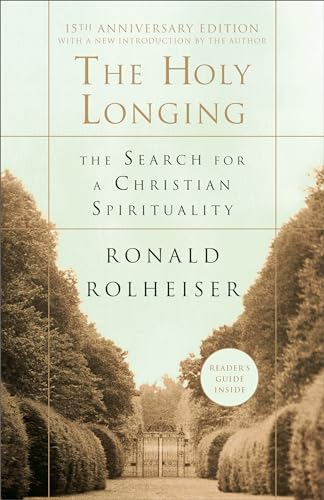
Channeling the deep, mysterious desires of our hearts, Ronald Rolheiser leads readers from restlessness to peace, showing a contemporary path to authentic and healthy spiritual life—now featuring a new reader’s guide!
In The Holy Longing, Ronald Rolheiser probes the question “What is spirituality?”, cutting through the misunderstanding and confusion that can often surround this subject with his trademark clarity. Using examples and stories relevant for today, and with great sensitivity to modern challenges to religious faith, he explains the essentials of spiritual life, including the importance of community worship, the imperatives surrounding social action, and the centrality of the Incarnation, to outline a Christian spirituality that reflects the yearning and search for meaning at the core of the human experience.
Essential reading for anyone seeking to understand what Christian spirituality means and how to apply it to their own lives, The Holy Longing translates the universal struggle for love and integration of spirit into a language accessible to all, explaining God and the Church for a world that more often than not doubts the credibility of both.
Die Inhaltsangabe kann sich auf eine andere Ausgabe dieses Titels beziehen.
Über die Autorin bzw. den Autor
RONALD ROLHEISER, O.M.I., a Roman Catholic priest and member of the Missionary Oblates of Mary Immaculate, is president of the Oblate School of Theology in San Antonio, Texas, and the author of the books The Restless Heart, Forgotten Among the Lilies, The Shattered Lantern, and Against An Infinite Horizon. He is a community-builder, lecturer and writer, and his weekly column appears in more than 90 Catholic publications. More information on his work can be found at ronrolheiser.com.
Auszug. © Genehmigter Nachdruck. Alle Rechte vorbehalten.
1
What Is Spirituality?
"We are fired into life with a madness that comes from the gods and which would have us believe that we can have a great love, perpetuate our own seed, and contemplate the divine."
Desire, Our Fundamental Dis-Ease
It is no easy task to walk this earth and find peace. Inside of us, it would seem, something is at odds with the very rhythm of things and we are forever restless, dissatisfied, frustrated, and aching. We are so overcharged with desire that it is hard to come to simple rest. Desire is always stronger than satisfaction.
Put more simply, there is within us a fundamental dis-ease, an unquenchable fire that renders us incapable, in this life, of ever coming to full peace. This desire lies at the center of our lives, in the marrow of our bones, and in the deep recesses of the soul. We are not easeful human beings who occasionally get restless, serene persons who once in a while are obsessed by desire. The reverse is true. We are driven persons, forever obsessed, congenitally dis-eased, living lives, as Thoreau once suggested, of quiet desperation, only occasionally experiencing peace. Desire is the straw that stirs the drink.
At the heart of all great literature, poetry, art, philosophy, psychology, and religion lies the naming and analyzing of this desire. Thus, the diary of Anne Frank haunts us, as do the journals of Therese of Lisieux and Etty Hillesum. Desire intrigues us, stirs the soul. We love stories about desire--tales of love, sex, wanderlust, haunting nostalgia, boundless ambition, and tragicloss. Many of the great secular thinkers of our time have made this fire, this force that so haunts us, the centerpiece of their thinking.
Sigmund Freud, for example, talks about a fire without a focus that burns at the center of our lives and pushes us out in a relentless and unquenchable pursuit of pleasure. For Freud, everyone is hopelessly overcharged for life.
Karl Jung talks about deep, unalterable, archetypal energies which structure our very souls and imperialistically demand our every attention. Energy, Jung warns, is not friendly. Every time we are too restless to sleep at night we understand something of what he is saying. Doris Lessing speaks of a certain voltage within us, a thousand volts of energy for love, sex, hatred, art, politics. James Hillman speaks of a blue fire within us and of being so haunted and obsessed by daimons from beyond that neither nature nor nurture, but daimons, restless demanding spirits from beyond, are really the determinative factors in our behavior. Both women's and men's groups are constantly speaking of a certain wild energy that we need to access and understand more fully. Thus, women's groups talk about the importance of running with wolves and men's groups speak of wild men's journeys and of having fire in the belly. New Age gurus chart the movement of the planets and ask us to get ourselves under the correct planets or we will have no peace.
Whatever the expression, everyone is ultimately talking about the same thing--an unquenchable fire, a restlessness, a longing, a disquiet, a hunger, a loneliness, a gnawing nostalgia,a wildness that cannot be tamed, a congenital all-embracing ache that lies at the center of human experience and is the ultimate force that drives everything else. This dis-ease is universal. Desire gives no exemptions.
It does however admit of different moods and faces. Sometimes it hits us as pain--dissatisfaction, frustration, and aching. At other times its grip is not felt as painful at all, but as a deep energy, as something beautiful, as an inexorable pull, more important than anything else inside us, toward love, beauty, creativity, and a future beyond our limited present. Desire can show itself as aching pain or delicious hope.
Spirituality is, ultimately, about what we do with that desire. What we do with our longings, both in terms of handling the pain and the hope they bring us, that is our spirituality. Thus, when Plato says that we are on fire because our souls come from beyond and that beyond is, through the longing and hope that its fire creates in us, trying to draw us back toward itself, he is laying out the broad outlines for a spirituality. Likewise for Augustine, when he says:
"You have made us for yourself, Lord, and our hearts are restless until they rest in you." Spirituality is about what we do with our unrest. All of this, however, needs further explanation.
What Is Spirituality?
Few words are as misunderstood in the contemporary English language as is the word spirituality. First of all, in English, this is a relatively new word, at least in terms of signifying what it does today. That is not the case in the French language, where the word has a much longer and richer history. However, in English, it is only within the last thirty years that this word has become part of our common vocabulary. Thus, for example, if one went to an English library and checked the titles of books, he or she would find that, save for a few exceptions, the word spirituality appears in those titles only published within the last three decades. It is also only within these years that the concept of spirituality has become popular, both within church circles and within the population at large. Today bookstores, church and secular alike, literally teem with books on spirituality.
A generation ago, with some notable exceptions, this was not the case. The secular world then had virtually no interest in the area. This was also true for most of the churches. What we would call spirituality today existed, but it had a very different face. In the Christian churches it existed mainly within certain charismatic prayer groups and theologies of the Pentecostal churches, the social action of some Protestant churches, and the devotional life within the Roman Catholic Church. In secular bookstores you would have found very little in the area of spirituality, other than a section on the Bible and some books on the merits of positive thinking. In ecclesial bookstores, since this was considered an area distinct from strict, academic theology, you would have found very little as well, save for Roman Catholic bookstores where you would have found devotional literature and some books labeled ascetical theology.
Today there are books on spirituality everywhere. However, despite the virtual explosion of literature in the area, in the Western world today, especially in the secular world, there are still some major misunderstandings about the concept. Chief among these is the idea that spirituality is, somehow, exotic, esoteric, and not something that issues forth from the bread and butter of ordinary life. Thus, for many people, the term spirituality conjures up images of something paranormal, mystical, churchy, holy, pious, otherworldly, New Age, something on the fringes and something optional. Rarely is spirituality understood as referring to something vital and nonnegotiable lying at the heart of our lives.
This is a tragic misunderstanding. Spirituality is not something on the fringes, an option for those with a particular bent. None of us has a choice. Everyone has to have a spirituality and everyone does have one, either a life-giving one or a destructive one. No one has the luxury of choosing here because all of us are precisely fired into life with a certain madness that comes from the gods and we have to do something with that. We do not wake up in this world calm and serene, having the luxury of choosing to act or not act. We wake up crying, on fire with desire, with madness. What we do with that madness is our spirituality.
Hence, spirituality is not about serenely picking or rationally choosing certain spiritual activities like going to church, praying or meditating, reading spiritual books, or setting off on some explicit spiritual quest. It...
„Über diesen Titel“ kann sich auf eine andere Ausgabe dieses Titels beziehen.
Weitere beliebte Ausgaben desselben Titels

Suchergebnisse für The Holy Longing: The Search for a Christian Spirituality

Beispielbild für diese ISBN
The Holy Longing The Search fo
Anbieter: World of Books (was SecondSale), Montgomery, IL, USA
Verkäuferbewertung 5 von 5 Sternen

Zustand: Good. Item in good condition. Textbooks may not include supplemental items i.e. CDs, access codes etc. Artikel-Nr. 00101142188
Gebraucht kaufen
EUR 5,50
Versand gratis
Versand innerhalb von USA
Versand innerhalb von USA
Anzahl: 6 verfügbar
Beispielbild für diese ISBN
The Holy Longing: The Search for a Christian Spirituality
Anbieter: ThriftBooks-Dallas, Dallas, TX, USA
Verkäuferbewertung 5 von 5 Sternen
Paperback. Zustand: Good. No Jacket. Former library book; Pages can have notes/highlighting. Spine may show signs of wear. ~ ThriftBooks: Read More, Spend Less. Artikel-Nr. G038549419XI3N10
Gebraucht kaufen
EUR 5,99
Versand gratis
Versand innerhalb von USA
Versand innerhalb von USA
Anzahl: 1 verfügbar
Beispielbild für diese ISBN
The Holy Longing: The Search for a Christian Spirituality
Anbieter: ThriftBooks-Reno, Reno, NV, USA
Verkäuferbewertung 5 von 5 Sternen
Paperback. Zustand: Fair. No Jacket. Readable copy. Pages may have considerable notes/highlighting. ~ ThriftBooks: Read More, Spend Less. Artikel-Nr. G038549419XI5N00
Gebraucht kaufen
EUR 5,99
Versand gratis
Versand innerhalb von USA
Versand innerhalb von USA
Anzahl: 1 verfügbar
Beispielbild für diese ISBN
The Holy Longing: The Search for a Christian Spirituality
Anbieter: ThriftBooks-Atlanta, AUSTELL, GA, USA
Verkäuferbewertung 5 von 5 Sternen
Paperback. Zustand: Good. No Jacket. Pages can have notes/highlighting. Spine may show signs of wear. ~ ThriftBooks: Read More, Spend Less. Artikel-Nr. G038549419XI3N00
Gebraucht kaufen
EUR 5,99
Versand gratis
Versand innerhalb von USA
Versand innerhalb von USA
Anzahl: 6 verfügbar
Beispielbild für diese ISBN
The Holy Longing: The Search for a Christian Spirituality
Anbieter: ThriftBooks-Atlanta, AUSTELL, GA, USA
Verkäuferbewertung 5 von 5 Sternen
Paperback. Zustand: Fair. No Jacket. Readable copy. Pages may have considerable notes/highlighting. ~ ThriftBooks: Read More, Spend Less. Artikel-Nr. G038549419XI5N00
Gebraucht kaufen
EUR 5,99
Versand gratis
Versand innerhalb von USA
Versand innerhalb von USA
Anzahl: 1 verfügbar
Beispielbild für diese ISBN
The Holy Longing: The Search for a Christian Spirituality
Anbieter: ThriftBooks-Reno, Reno, NV, USA
Verkäuferbewertung 5 von 5 Sternen
Paperback. Zustand: Good. No Jacket. Former library book; Pages can have notes/highlighting. Spine may show signs of wear. ~ ThriftBooks: Read More, Spend Less. Artikel-Nr. G038549419XI3N10
Gebraucht kaufen
EUR 5,99
Versand gratis
Versand innerhalb von USA
Versand innerhalb von USA
Anzahl: 1 verfügbar
Beispielbild für diese ISBN
The Holy Longing: The Search for a Christian Spirituality
Anbieter: ThriftBooks-Phoenix, Phoenix, AZ, USA
Verkäuferbewertung 5 von 5 Sternen
Paperback. Zustand: Good. No Jacket. Former library book; Pages can have notes/highlighting. Spine may show signs of wear. ~ ThriftBooks: Read More, Spend Less. Artikel-Nr. G038549419XI3N10
Gebraucht kaufen
EUR 5,99
Versand gratis
Versand innerhalb von USA
Versand innerhalb von USA
Anzahl: 1 verfügbar
Beispielbild für diese ISBN
The Holy Longing: The Search for a Christian Spirituality
Anbieter: ThriftBooks-Dallas, Dallas, TX, USA
Verkäuferbewertung 5 von 5 Sternen
Paperback. Zustand: Fair. No Jacket. Readable copy. Pages may have considerable notes/highlighting. ~ ThriftBooks: Read More, Spend Less. Artikel-Nr. G038549419XI5N00
Gebraucht kaufen
EUR 5,99
Versand gratis
Versand innerhalb von USA
Versand innerhalb von USA
Anzahl: 1 verfügbar
Beispielbild für diese ISBN
The Holy Longing: The Search for a Christian Spirituality
Anbieter: ThriftBooks-Reno, Reno, NV, USA
Verkäuferbewertung 5 von 5 Sternen
Paperback. Zustand: Good. No Jacket. Pages can have notes/highlighting. Spine may show signs of wear. ~ ThriftBooks: Read More, Spend Less. Artikel-Nr. G038549419XI3N00
Gebraucht kaufen
EUR 5,99
Versand gratis
Versand innerhalb von USA
Versand innerhalb von USA
Anzahl: 6 verfügbar
Beispielbild für diese ISBN
The Holy Longing: The Search for a Christian Spirituality
Anbieter: ThriftBooks-Dallas, Dallas, TX, USA
Verkäuferbewertung 5 von 5 Sternen
Paperback. Zustand: Good. No Jacket. Pages can have notes/highlighting. Spine may show signs of wear. ~ ThriftBooks: Read More, Spend Less. Artikel-Nr. G038549419XI3N00
Gebraucht kaufen
EUR 5,99
Versand gratis
Versand innerhalb von USA
Versand innerhalb von USA
Anzahl: 6 verfügbar