
Verwandte Artikel zu Backlash: The Undeclared War Against American Women
Inhaltsangabe
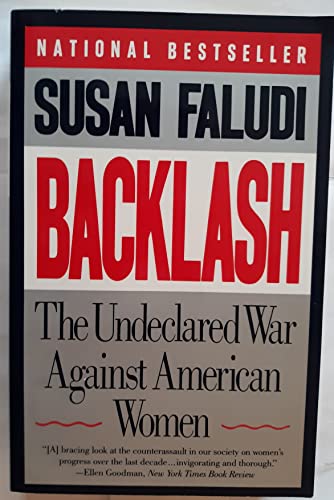
Winner of the National Book Critics Circle award for nonfiction, this controversial, thought-provoking, and timely book is "as groundbreaking as Simone de Beauvoir's The Second Sex and Betty Friedan's The Feminine Mystique." -- Newsweek.
Die Inhaltsangabe kann sich auf eine andere Ausgabe dieses Titels beziehen.
Über die Autorin bzw. den Autor
A former Wall Street Journal reporter, Susan Faludi won the Pulitzer Prize in 1991 for explanatory journalism and the National Book Critics’ Circle award for Backlash. She is the author of Stiffed: The Betrayal of the American Man, which was published in 1999, and has written for many publications, including The New Yorker, The Nation, Newsweek, and the New York Times.
Auszug. © Genehmigter Nachdruck. Alle Rechte vorbehalten.
INTRODUCTION: BLAME IT ON FEMINISM
To be a woman in America at the close of the 20th century--what good fortune. That's what we keep hearing, anyway. The barricades have fallen, politicians assure us. Women have "made it," Madison Avenue cheers. Women's fight for equality has "largely been won," Time magazine announces. Enroll at any university, join any law firm, apply for credit at any bank. Women have so many opportunities now, corporate leaders say, that we don't really need equal opportunity policies. Women are so equal now, lawmakers say, that we no longer need an Equal Rights Amendment. Women have "so much," former President Ronald Reagan says, that the White House no longer needs to appoint them to higher office. Even American Express ads are saluting a woman's freedom to charge it. At last, women have received their full citizenship papers.
And yet . . .
Behind this celebration of the American woman's victory, behind the news, cheerfully and endlessly repeated, that the struggle for women's rights is won, another message flashes. You may be free and equal now, it says to women, but you have never been more miserable.
This bulletin of despair is posted everywhere--at the newsstand, on the TV set, at the movies, in advertisements and doctors' offices and academic journals. Professional women are suffering "burnout" and succumbing to an "infertility epidemic." Single women are grieving from a "man shortage." The New York Times reports: Childless women are "depressed and confused" and their ranks are swelling. Newsweek says: Unwed women are "hysterical" and crumbling under a "profound crisis of confidence." The health advice manuals inform: High-powered career women are stricken with unprecedented outbreaks of "stress-induced disorders," hair loss, bad nerves, alcoholism, and even heart attacks. The psychology books advise: Independent women's loneliness represents "a major mental health problem today." Even founding feminist Betty Friedan has been spreading the word: she warns that women now suffer from a new identity crisis and "new 'problems that have no name.'"
How can American women be in so much trouble at the same time that they are supposed to be so blessed? If the status of women has never been higher, why is their emotional state so low? If women got what they asked for, what could possibly be the matter now?
The prevailing wisdom of the past decade has supported one, and only one, answer to this riddle: it must be all that equality that's causing all that pain. Women are unhappy precisely because they are free. Women are enslaved by their own liberation. They have grabbed at the gold ring of independence, only to miss the one ring that really matters. They have gained control of their fertility, only to destroy it. They have pursued their own professional dreams--and lost out on the greatest female adventure. The women's movement, as we are told time and again, has proved women's own worst enemy.
"In dispensing its spoils, women's liberation has given my generation high incomes, our own cigarette, the option of single parenthood, rape crisis centers, personal lines of credit, free love, and female gynecologists," Mona Charen, a young law student, writes in the National Review, in an article titled "The Feminist Mistake." "In return it has effectively robbed us of one thing upon which the happiness of most women rests--men." The National Review is a conservative publication, but such charges against the women's movement are not confined to its pages. "Our generation was the human sacrifice" to the women's movement, Los Angeles Times feature writer Elizabeth Mehren contends in a Time cover story. Baby-boom women like her, she says, have been duped by feminism: "We believed the rhetoric." In Newsweek, writer Kay Ebeling dubs feminism "The Great Experiment That Failed" and asserts "women in my generation, its perpetrators, are the casualties." Even the beauty magazines are saying it: Harper's Bazaar accuses the women's movement of having "lost us [women] ground instead of gaining it."
In the last decade, publications from the New York Times to Vanity Fair to the Nation have issued a steady stream of indictments against the women's movement, with such headlines as when feminism failed or the awful truth about women's lib. They hold the campaign for women's equality responsible for nearly every woe besetting women, from mental depression to meager savings accounts, from teenage suicides to eating disorders to bad complexions. The "Today" show says women's liberation is to blame for bag ladies. A guest columnist in the Baltimore Sun even proposes that feminists produced the rise in slasher movies. By making the "violence" of abortion more acceptable, the author reasons, women's rights activists made it all right to show graphic murders on screen.
At the same time, other outlets of popular culture have been forging the same connection: in Hollywood films, of which Fatal Attraction is only the most famous, emancipated women with condominiums of their own slink wild-eyed between bare walls, paying for their liberty with an empty bed, a barren womb. "My biological clock is ticking so loud it keeps me awake at night," Sally Field cries in the film Surrender, as, in an all too common transformation in the cinema of the '80s, an actress who once played scrappy working heroines is now showcased groveling for a groom. In prime-time television shows, from "thirtysomething" to "Family Man," single, professional, and feminist women are humiliated, turned into harpies, or hit by nervous breakdowns; the wise ones recant their independent ways by the closing sequence. In popular novels, from Gail Parent's A Sign of the Eighties to Stephen King's Misery, unwed women shrink to sniveling spinsters or inflate to fire-breathing she-devils; renouncing all aspirations but marriage, they beg for wedding bands from strangers or swing sledgehammers at reluctant bachelors. We "blew it by waiting," a typically remorseful careerist sobs in Freda Bright's Singular Women; she and her sister professionals are "condemned to be childless forever." Even Erica Jong's high-flying independent heroine literally crashes by the end of the decade, as the author supplants Fear of Flying's saucy Isadora Wing, a symbol of female sexual emancipation in the '70s, with an embittered careerist-turned-recovering-"co-dependent" in Any Woman's Blues--a book that is intended, as the narrator bluntly states, "to demonstrate what a dead end the so-called sexual revolution had become, and how desperate so-called free women were in the last few years of our decadent epoch."
Popular psychology manuals peddle the same diagnosis for contemporary female distress. "Feminism, having promised her a stronger sense of her own identity, has given her little more than an identity crisis," the best-selling advice manual Being a Woman asserts. The authors of the era's self-help classic Smart Women/Foolish Choices proclaim that women's distress was "an unfortunate consequence of feminism," because "it created a myth among women that the apex of self-realization could be achieved only through autonomy, independence, and career."
In the Reagan and Bush years, government officials have needed no prompting to endorse this thesis. Reagan spokeswoman Faith Whittlesey declared feminism a "straitjacket" for women, in the White House's only policy speech on the status of the American female population--entitled "Radical Feminism in Retreat." Law enforcement officers and judges, too, have...
„Über diesen Titel“ kann sich auf eine andere Ausgabe dieses Titels beziehen.
Suchergebnisse für Backlash: The Undeclared War Against American Women

Beispielbild für diese ISBN
Backlash: the Undeclared War a
Anbieter: World of Books (was SecondSale), Montgomery, IL, USA
Verkäuferbewertung 5 von 5 Sternen

Zustand: Acceptable. Item in acceptable condition! Textbooks may not include supplemental items i.e. CDs, access codes etc. Artikel-Nr. 00083621573
Gebraucht kaufen
EUR 5,59
Versand gratis
Versand innerhalb von USA
Versand innerhalb von USA
Anzahl: 8 verfügbar
Beispielbild für diese ISBN
Backlash: the Undeclared War a
Anbieter: World of Books (was SecondSale), Montgomery, IL, USA
Verkäuferbewertung 5 von 5 Sternen
Zustand: Good. Item in good condition. Textbooks may not include supplemental items i.e. CDs, access codes etc. Artikel-Nr. 00104893811
Gebraucht kaufen
EUR 5,59
Versand gratis
Versand innerhalb von USA
Versand innerhalb von USA
Anzahl: 4 verfügbar
Beispielbild für diese ISBN
Backlash: The Undeclared War Against American Women
Anbieter: ThriftBooks-Reno, Reno, NV, USA
Verkäuferbewertung 5 von 5 Sternen
Paperback. Zustand: Good. No Jacket. Pages can have notes/highlighting. Spine may show signs of wear. ~ ThriftBooks: Read More, Spend Less. Artikel-Nr. G0385425074I3N00
Gebraucht kaufen
EUR 5,76
Versand gratis
Versand innerhalb von USA
Versand innerhalb von USA
Anzahl: 2 verfügbar
Beispielbild für diese ISBN
Backlash: The Undeclared War Against American Women
Anbieter: ThriftBooks-Phoenix, Phoenix, AZ, USA
Verkäuferbewertung 5 von 5 Sternen
Paperback. Zustand: Good. No Jacket. Pages can have notes/highlighting. Spine may show signs of wear. ~ ThriftBooks: Read More, Spend Less. Artikel-Nr. G0385425074I3N00
Gebraucht kaufen
EUR 5,76
Versand gratis
Versand innerhalb von USA
Versand innerhalb von USA
Anzahl: 1 verfügbar
Beispielbild für diese ISBN
Backlash: The Undeclared War Against American Women
Anbieter: ThriftBooks-Atlanta, AUSTELL, GA, USA
Verkäuferbewertung 5 von 5 Sternen
Paperback. Zustand: Good. No Jacket. Pages can have notes/highlighting. Spine may show signs of wear. ~ ThriftBooks: Read More, Spend Less. Artikel-Nr. G0385425074I3N00
Gebraucht kaufen
EUR 5,87
Versand gratis
Versand innerhalb von USA
Versand innerhalb von USA
Anzahl: 2 verfügbar
Beispielbild für diese ISBN
Backlash: The Undeclared War Against American Women
Anbieter: ThriftBooks-Dallas, Dallas, TX, USA
Verkäuferbewertung 5 von 5 Sternen
Paperback. Zustand: Good. No Jacket. Pages can have notes/highlighting. Spine may show signs of wear. ~ ThriftBooks: Read More, Spend Less. Artikel-Nr. G0385425074I3N00
Gebraucht kaufen
EUR 5,87
Versand gratis
Versand innerhalb von USA
Versand innerhalb von USA
Anzahl: 2 verfügbar
Beispielbild für diese ISBN
Backlash: The Undeclared War Against American Women
Anbieter: ThriftBooks-Dallas, Dallas, TX, USA
Verkäuferbewertung 5 von 5 Sternen
Paperback. Zustand: Very Good. No Jacket. May have limited writing in cover pages. Pages are unmarked. ~ ThriftBooks: Read More, Spend Less. Artikel-Nr. G0385425074I4N00
Gebraucht kaufen
EUR 5,87
Versand gratis
Versand innerhalb von USA
Versand innerhalb von USA
Anzahl: 1 verfügbar
Beispielbild für diese ISBN
Backlash: The Undeclared War Against American Women
Anbieter: ThriftBooks-Atlanta, AUSTELL, GA, USA
Verkäuferbewertung 5 von 5 Sternen
Paperback. Zustand: Very Good. No Jacket. May have limited writing in cover pages. Pages are unmarked. ~ ThriftBooks: Read More, Spend Less. Artikel-Nr. G0385425074I4N00
Gebraucht kaufen
EUR 5,87
Versand gratis
Versand innerhalb von USA
Versand innerhalb von USA
Anzahl: 1 verfügbar
Beispielbild für diese ISBN
Backlash: The Undeclared War Against American Women
Verlag:
Anchor (edition First Edition), 1992
ISBN 10: 0385425074
ISBN 13: 9780385425070
Gebraucht
Paperback
Erstausgabe
Anbieter: BooksRun, Philadelphia, PA, USA
Verkäuferbewertung 5 von 5 Sternen
Paperback. Zustand: Very Good. First Edition. It's a well-cared-for item that has seen limited use. The item may show minor signs of wear. All the text is legible, with all pages included. It may have slight markings and/or highlighting. Artikel-Nr. 0385425074-11-1
Gebraucht kaufen
EUR 6,14
Versand gratis
Versand innerhalb von USA
Versand innerhalb von USA
Anzahl: 1 verfügbar
Beispielbild für diese ISBN
Backlash: The Undeclared War Against American Women
Anbieter: Redux Books, Grand Rapids, MI, USA
Verkäuferbewertung 5 von 5 Sternen
Paperback. Zustand: Very Good. Paperback. Pages are clean and unmarked. Covers show very minor shelving wear.; 100% Satisfaction Guaranteed! Ships same or next business day! Artikel-Nr. 132603130020
Gebraucht kaufen
EUR 6,14
Versand gratis
Versand innerhalb von USA
Versand innerhalb von USA
Anzahl: 1 verfügbar