
Verwandte Artikel zu City on Fire
Inhaltsangabe
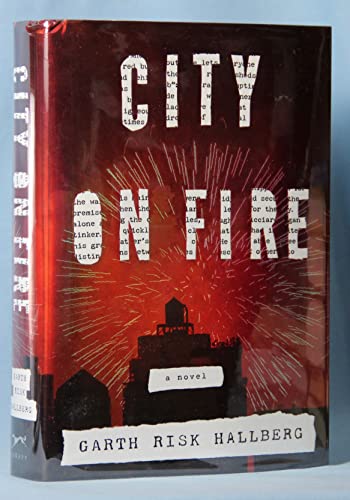
National Best Seller • Named a Best Book of the Year by: New York Times, Washington Post, San Francisco Chronicle, NPR, Vogue, The Atlantic, Newsday
“A novel of head-snapping ambition and heart-stopping power—a novel that attests to its young author’s boundless and unflagging talents.” —Michiko Kakutani, New York Times
New York City, 1976. Meet Regan and William Hamilton-Sweeney, estranged heirs to one of the city’s great fortunes; Keith and Mercer, the men who, for better or worse, love them; Charlie and Samantha, two suburban teenagers seduced by downtown’s punk scene; an obsessive magazine reporter and his idealistic neighbor—and the detective trying to figure out what any of them have to do with a shooting in Central Park on New Year’s Eve.
The mystery, as it reverberates through families, friendships, and the corridors of power, will open up even the loneliest-seeming corners of the crowded city. And when the blackout of July 13, 1977, plunges this world into darkness, each of these lives will be changed forever.
City on Fire is an unforgettable novel about love and betrayal and forgiveness, about art and truth and rock ’n’ roll: about what people need from each other in order to live . . . and about what makes the living worth doing in the first place.
Die Inhaltsangabe kann sich auf eine andere Ausgabe dieses Titels beziehen.
Über die Autorin bzw. den Autor
GARTH RISK HALLBERG lives in New York with his wife and children. This is his first novel.
Auszug. © Genehmigter Nachdruck. Alle Rechte vorbehalten.
Chapter 22
Those first few weeks of grief counseling, Charlie took the LIRR in. He was always late, though; invariably his train would get hung up in the East River tunnel. He couldn’t tell how much time had passed unless he asked other people—his dad’s watch still lay in a coffin-shaped box in his underwear drawer—and they were already looking at him funny because he was doing his nervous humming thing. The stares only made him more nervous, which led to more humming, and when he came out of the subway he’d bolt the last five blocks to the doctor’s and arrive sweaty and short of breath, sucking on his inhaler. Dr. Altschul must have said something to Mom, because after he got his driver’s license, in May, she insisted on his taking the station wagon, as she’d insisted on the counseling in the first place.
The office was on Charles Street, in the half-basement of a brownstone you wouldn’t necessarily have known was anything other than a residence. Even the discreet plaque below the buzzer—All appointments please ring—made no mention of specialties. This was probably for the peace of mind of clients (patients?), so no one in the waiting room would know what you were there for, who needed board-certified grief counseling and who needed whatever it was Dr. Altschul’s wife (also, confusingly, named Dr. Altschul) did. Honestly, that Dr. Altschul should be married at all was a mind-bender. He was the kind of bosomy overweight man who could make even a beard look sexless. Charlie kept trying to memorize the doctor’s zippered cardigan, so that he could determine at the next session if it was the same one. But as soon as he’d settled in, Dr. Altschul would sort of tip back in his large leather chair and place his hands contentedly on his belly and ask, “So how are we doing this week?” Charlie’s own hands stayed tucked under his thighs.We were doing fine.
Which could mean only one thing: Charlie was still in denial. For eight or ten weeks now, he’d been resisting the pressure of Dr. Altschul’s questions, the Buddha-like invitation of those flattened but not knotted fingers. Charlie focused instead on the oddments of the therapist’s desk and walls—diplomas, little carved-wood statuettes, intricate patterns woven into the tasseled rug. He’d had the suspicion, from the very first, that Dr. Altschul (Bruce, he kept telling Charlie to call him) meant to vacuum out his skull, replace whatever was there with something else. It was connected with the doctor’s studious skirting of the word “father” and its equivalents, which of course kept the person they referred to at the very front of Charlie’s mind. But suppose they were right: the school guidance counselor, his mom. Suppose the dead father lodged in his skull was making him sick, and suppose Dr. Altschul could pry Dad out, like a bad tooth. What, then, would be left of Charlie? So he talked instead about school and pee-wee league, about the Sullivans and Ziggy Stardust. When given a “homework” assignment—think about a moment he’d been scared—he talked about the terrifying dentist his mom used to make him go see on the thirty-eighth floor of the Hamilton-Sweeney Building; how old Dr. DeMoto once scraped his plaque onto a saltine and made him eat it; and how the window, inches away from his chair, gave onto a sheer drop of six hundred feet. Mom had this idea that for the finest care, you had to go to Manhattan. In fact, maybe ponying up for a fancy headshrinker now was contrition for Dad; maybe she thought if he’d been rushed after the second heart attack to a hospital in the City, he’d still be alive. “Heights—that’s what scares me,” Charlie said. “And fires. And snakes.” One of these wasn’t even true. He’d put it in to test Dr. Altschul, or throw him off the trail.
Then one Friday, a month before school ended, he found himself holding forth with unexpected vehemence about Rabbi Lidner. This had been another of his “homework” assignments, to “recover” his feelings about his adoption. “Abe and Izz will do fine with the Torah study, it’s in their blood, but honestly, sometimes I feel sorry for them. They don’t know what they’re in for.”
There was a twitch, a resettling of fingers on the cardigan, like a cellist’s on his instrument, a movement at the corner of the therapeutic mouth too quick for the beard to camouflage. “What is it you feel they’re in for, Charlie?”
“All this stuff about being shepherded, watched over…You and I both know it’s bullshit, Doc. If I was any kind of brother, I’d take them aside and tell them.”
“Tell them what? Shall we role-play?”
Charlie let his gaze rest on Dr. Altschul’s pantheistic tchotchkes. “You know. You are alone, you were alone, you will be alone.”
“This is a worldview you have.”
“I’ve only been saying this for like two months now. What I feel is, basically, you’re an alien dropped on a hostile planet, whose inhabitants are constantly trying to tempt you into depending on them. Have you seen The Man Who Fell to Earth?” Charlie’s face was hot, his asthma tightening his throat. “I realize that maybe sounds like a metaphor, but you listen to David Bowie, he’s thinking about what people will face in the future. I guess I’m trying to, too. Because there’s two ways of taking off a band-aid.”
Was it the cardigan he was allergic to? Its lurid flamestitch pattern seemed to fill the room. And right then, in that moment of weak- ness, was when the doctor pounced. “Charlie, what do you remember about your father?”
All of Charlie’s beautiful rope-a-dope had deserted him. “You make it sound like he died thirty years ago.”
“This is what we call an evasion, Charlie.”
“What if I just said fuck you? Would that be an evasion?”
“It makes you angry when I ask about your father?”
“Is our fifty minutes up?”
“We’ve got another half-hour.”
Charlie resolved to sit there silently with his arms crossed for the remainder of the session, but after a couple of minutes, Dr. Altschul offered to pro-rate. He seemed to feel a little bad, but probably this, too, was a ploy. They obviously trained them not to have feelings. As Charlie rose to open the door, the doctor told him that his “homework” this week was to think about it. A red-haired lady out on the waiting-room couch looked up, curious; Think about what? He had an urge to grab the magazine from her hands and rip it in two. Instead, he said something a girl at school had said to him once: “Take a picture, it’ll last longer.” And fled through the narrow basement door, grazing his head on the overhang.
It was midday now, the air hotter and stiller than it had been when he went in. The lime-green pelt of pollen on the cars boxing in Mom’s wagon let you know they hadn’t been driven in a while. Nor had the street been swept; rotten mulberries from the trees littered the asphalt like dog shit. Charlie kept walking. As the blocks piled up between him and the grief counselor’s office, his indignation ripened into something almost like pleasure. Messiness, death, righteous anger: this was Charlie’s world. It pleased him that the berries were spoiling and the brownstones were falling apart and the...
„Über diesen Titel“ kann sich auf eine andere Ausgabe dieses Titels beziehen.
Suchergebnisse für City on Fire

Beispielbild für diese ISBN
City on Fire: A novel
Anbieter: World of Books (was SecondSale), Montgomery, IL, USA
Verkäuferbewertung 5 von 5 Sternen

Zustand: Good. Item in good condition. Textbooks may not include supplemental items i.e. CDs, access codes etc. Artikel-Nr. 00095883968
Gebraucht kaufen
EUR 4,49
Versand gratis
Versand innerhalb von USA
Versand innerhalb von USA
Anzahl: 3 verfügbar
Beispielbild für diese ISBN
City on Fire: A novel
Anbieter: World of Books (was SecondSale), Montgomery, IL, USA
Verkäuferbewertung 5 von 5 Sternen
Zustand: Very Good. Item in very good condition! Textbooks may not include supplemental items i.e. CDs, access codes etc. Artikel-Nr. 00091089442
Gebraucht kaufen
EUR 4,49
Versand gratis
Versand innerhalb von USA
Versand innerhalb von USA
Anzahl: 8 verfügbar
Beispielbild für diese ISBN
City on Fire: A novel
Anbieter: Wonder Book, Frederick, MD, USA
Verkäuferbewertung 5 von 5 Sternen
Zustand: Very Good. Very Good condition. Very Good dust jacket. A copy that may have a few cosmetic defects. May also contain light spine creasing or a few markings such as an owner's name, short gifter's inscription or light stamp. Artikel-Nr. E03A-05338
Gebraucht kaufen
EUR 6,70
Versand gratis
Versand innerhalb von USA
Versand innerhalb von USA
Anzahl: 3 verfügbar
Beispielbild für diese ISBN
City on Fire: A novel
Anbieter: Wonder Book, Frederick, MD, USA
Verkäuferbewertung 5 von 5 Sternen
Zustand: Very Good. Signed Copy . Good dust jacket. Signed by author on title page. NOT AVAILABLE FOR SHIPMENT OUTSIDE OF THE UNITED STATES. Artikel-Nr. SB06F-01131
Gebraucht kaufen
EUR 6,70
Versand gratis
Versand innerhalb von USA
Versand innerhalb von USA
Anzahl: 1 verfügbar
Beispielbild für diese ISBN
City on Fire: A novel
Anbieter: Wonder Book, Frederick, MD, USA
Verkäuferbewertung 5 von 5 Sternen
Zustand: Good. Signed Copy . Very Good dust jacket. Signed by author on title page. Slightly dampstained. Artikel-Nr. SB03A-02751
Gebraucht kaufen
EUR 6,70
Versand gratis
Versand innerhalb von USA
Versand innerhalb von USA
Anzahl: 1 verfügbar
Beispielbild für diese ISBN
City on Fire: A novel
Anbieter: Wonder Book, Frederick, MD, USA
Verkäuferbewertung 5 von 5 Sternen
Zustand: Good. Good condition. Good dust jacket. A copy that has been read but remains intact. May contain markings such as bookplates, stamps, limited notes and highlighting, or a few light stains. Bundled media such as CDs, DVDs, floppy disks or access codes may not be included. Artikel-Nr. P03A-01919
Gebraucht kaufen
EUR 6,70
Versand gratis
Versand innerhalb von USA
Versand innerhalb von USA
Anzahl: 1 verfügbar
Beispielbild für diese ISBN
City on Fire
Verlag:
Knopf Doubleday Publishing Group, 2015
ISBN 10: 0385353774
ISBN 13: 9780385353779
Gebraucht
Hardcover
Anbieter: Better World Books, Mishawaka, IN, USA
Verkäuferbewertung 5 von 5 Sternen
Zustand: Good. First. Former library copy. Pages intact with minimal writing/highlighting. The binding may be loose and creased. Dust jackets/supplements are not included. Includes library markings. Stock photo provided. Product includes identifying sticker. Better World Books: Buy Books. Do Good. Artikel-Nr. GRP94904294
Gebraucht kaufen
EUR 6,83
Versand gratis
Versand innerhalb von USA
Versand innerhalb von USA
Anzahl: 1 verfügbar
Beispielbild für diese ISBN
City on Fire
Verlag:
Knopf Doubleday Publishing Group, 2015
ISBN 10: 0385353774
ISBN 13: 9780385353779
Gebraucht
Hardcover
Anbieter: Better World Books, Mishawaka, IN, USA
Verkäuferbewertung 5 von 5 Sternen
Zustand: Fine. First. Used book that is in almost brand-new condition. May contain a remainder mark. Better World Books: Buy Books. Do Good. Artikel-Nr. 10873313-6
Gebraucht kaufen
EUR 6,83
Versand gratis
Versand innerhalb von USA
Versand innerhalb von USA
Anzahl: 1 verfügbar
Beispielbild für diese ISBN
City on Fire
Verlag:
Knopf Doubleday Publishing Group, 2015
ISBN 10: 0385353774
ISBN 13: 9780385353779
Gebraucht
Hardcover
Anbieter: Better World Books, Mishawaka, IN, USA
Verkäuferbewertung 5 von 5 Sternen
Zustand: Good. First. Pages intact with minimal writing/highlighting. The binding may be loose and creased. Dust jackets/supplements are not included. Stock photo provided. Product includes identifying sticker. Better World Books: Buy Books. Do Good. Artikel-Nr. 6232609-6
Gebraucht kaufen
EUR 6,83
Versand gratis
Versand innerhalb von USA
Versand innerhalb von USA
Anzahl: 2 verfügbar
Beispielbild für diese ISBN
City on Fire
Verlag:
Knopf Doubleday Publishing Group, 2015
ISBN 10: 0385353774
ISBN 13: 9780385353779
Gebraucht
Hardcover
Anbieter: Better World Books, Mishawaka, IN, USA
Verkäuferbewertung 5 von 5 Sternen
Zustand: Very Good. First. Pages intact with possible writing/highlighting. Binding strong with minor wear. Dust jackets/supplements may not be included. Stock photo provided. Product includes identifying sticker. Better World Books: Buy Books. Do Good. Artikel-Nr. 4828303-6
Gebraucht kaufen
EUR 6,83
Versand gratis
Versand innerhalb von USA
Versand innerhalb von USA
Anzahl: 4 verfügbar