
Verwandte Artikel zu The Accident
Inhaltsangabe
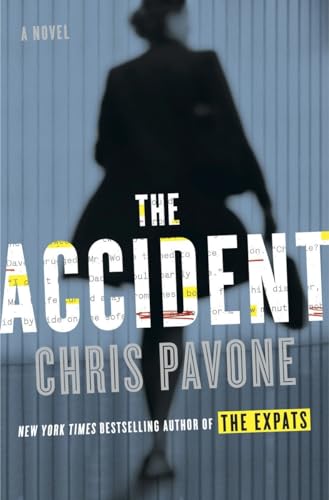
From the author of the New York Times-bestselling and Edgar Award-winning The Expats
As dawn approaches in New York, literary agent Isabel Reed is turning the final pages of a mysterious, anonymous manuscript, racing through the explosive revelations about powerful people, as well as long-hidden secrets about her own past. In Copenhagen, veteran CIA operative Hayden Gray, determined that this sweeping story be buried, is suddenly staring down the barrel of an unexpected gun. And in Zurich, the author himself is hiding in a shadowy expat life, trying to atone for a lifetime’s worth of lies and betrayals with publication of The Accident, while always looking over his shoulder.
Over the course of one long, desperate, increasingly perilous day, these lives collide as the book begins its dangerous march toward publication, toward saving or ruining careers and companies, placing everything at risk—and everyone in mortal peril. The rich cast of characters—in publishing and film, politics and espionage—are all forced to confront the consequences of their ambitions, the schisms between their ideal selves and the people they actually became.
The action rockets around Europe and across America, with an intricate web of duplicities stretching back a quarter-century to a dark winding road in upstate New York, where the shocking truth about the accident itself is buried.
Gripping, sophisticated, layered, and impossible to put down, The Accident proves once again that Chris Pavone is a true master of suspense.
Die Inhaltsangabe kann sich auf eine andere Ausgabe dieses Titels beziehen.
Über die Autorin bzw. den Autor
Chris Pavone's novel The Expats was a New York Times, USA Today, and international bestseller, and winner of Edgar and Anthony awards for best first novel. Chris grew up in Brooklyn, graduated from Cornell, and was a book editor for nearly two decades, as well as an expat in Luxembourg, but now lives again in New York City with his wife and children. The Accident is his second novel.
Auszug. © Genehmigter Nachdruck. Alle Rechte vorbehalten.
Chapter 1
It’s just before dawn when Isabel Reed turns the final sheet of paper. Halfway down the page, her mouth falls open, her heartbeat quickens. Her eyes dart across each typescript line at a rapid-fire pace, accelerating as she moves through the final paragraph, desperate to arrive at a revelation, to confirm her suspicions. She sucks in her breath, and holds that breath, for the last lines.
Isabel stares at the final period, the little black dot of ink . . . staring . . .
She lets out her breath. “My God.” Astounded, at the enormity of the story. Disappointed, at the absence of the confirmation she was hoping for. Furious, at what it means. Terrified, at the dangers it presents. And, above all, heartbroken, at the immensity of the betrayal. Betrayals.
She puts the page down on the fat stack of paper that sits on the bedspread, next to a crumpled soft-pack of cigarettes and an overflowing crystal ashtray, a mildly snarky birthday present from a passive-aggressive colleague. She picks up the manuscript with both hands, flips it over, and uses her thumbs to align the pages. Her hands are trembling. She tries to steady herself with a deep breath, and sets the straightened pile of pages in her lap. There are four words centered at the top of the page:
The Accident by Anonymous
Isabel stares across the room, off into the black nothingness of the picture window on the opposite wall, its severe surface barely softened by the half-drawn shades, an aggressive void invading the cocoon of her bedroom. The room is barely lit by a small bullet-shaped reading sconce mounted over the headboard, aiming a concentrated beam of light directly at her. In the window, the light’s reflection hovers above her face, like a tiny sun illuminating the top of her head, creating a halo. An angel. Except she’s not.
She can feel her body tense and her jaw tighten and her shoulders contract in a spasm of rage. She tries to suppress it, bites her lip, brings herself under the flimsiest tether of control.
Isabel draws aside the bedspread, struggles to a sitting position. It’s been hours since she has shifted her body in any appreciable way, and her legs and back are stiff and achy--old, if she had to choose a word for her joints. Her legs dangle over the side of the mattress, her toes searching for the fleece-lined slippers.
Along the wall, long slivers of aluminum shelves--hundreds of horizontal feet--are filled with neat stacks of manuscripts, their authors’ names written with thick black Sharpie into the sides of the stacks of pages. Tens of thousands of pages of proposed books of every sort, promising a wide assortment of entertainment and information, produced with a broad range of skill levels.
These days, everyone younger than Isabel seems to read manuscripts and proposals on e-readers; quite a few of those older, too. But she feels uncomfortable, unnatural, sitting there holding a little device in her hands. Isabel is of the generation that’s just old enough to be congenitally uncomfortable with new technologies. When she started her first job, she didn’t have a computer at her desk. A year later, she did.
Maybe next year she’ll start using one of those things, but for now she’s still reading on paper, turning pages, making notes with pens, surrounding herself with stacks of paper, like bricks, bunkered against the relentless onslaught of the future. And for The Accident, she didn’t even have a choice. Because although nearly all of new projects are now delivered to her office electronically, this submission was not.
She shuffles down the hall, through the darkness. Turns on the kitchen lights, and the coffee machine--switched from AUTO-ON, which is set to start brewing an hour from now, to ON--and the small television. Filling the silent lonely apartment with humming electronic life.
Isabel had been reading frantically, hoping to discover the one assertion that rang untrue, the single mismatched thread that would unravel the whole narrative, growing increasingly discouraged as page 1 at the office in the morning became page two-hundred-something at home in the evening. She fell asleep sometime after eleven, more than halfway through, then woke again at two, unable to quiet her mind, anxious to get back to it. People in the book business are constantly claiming “I couldn’t put it down” or “it kept me up all night” or “I read it in one day.” This time, all that was true.
So at two a.m. Isabel picked up the manuscript and started reading again, page after page, through the late-late night. Vaguely reminiscent of those days when Tommy was an infant, and she was sleep-deprived, awake in a dormant world. They are very discrete periods, for very specific reasons, when it’s a normal part of life to be awake at four a.m.: it’s for making babies or caring for them, in the small desperate hours when a blanket of quiet smothers the city, but through the moth-eaten holes there’s the occasional lowing of a railroad in New Jersey, the distant Dopplered wail of an ambulance siren. Then the inevitable thump of the newspaper on the doormat, the end of the idea of night, even if it’s still dark out.
Nothing she encountered during the 488 pages seemed false. Now she stares at the anchor’s face on the television, tuned to Wolfe . . . That goddamned son of a bitch . . .
Her anger swells, and she loses control--
Isabel cocks her arm and hurls the remote across the kitchen, cracking and splintering against the refrigerator door, clattering loudly to the floor. Then the heightened silence of the aftermath, the subdued thrum of a double-A battery rolling across the tile, the impotent click as it comes to rest against a baseboard.
She feels tears trickling down her cheek, and wipes them away.
The coffee machine hisses and sputters the final drops, big plops falling into the tempered glass. Isabel glances at the contraption’s clock, changing from 5:48 to 5:49, in the corner of the neatly organized counter, a study in right angles of brushed stainless steel. Isabel is a passionate proponent of perfect alignment. Fanatical, some might say.
She opens the refrigerator door, with its new scratch from the airborne remote, whose jagged pieces she kicks out of her way. She takes out the quart of skim and pours a splash into her mug. She grabs the plastic handle of the carafe and fills the mug with hot, viscous, bitter, bracing caffeination. She takes a small sip, then a larger one. She tops up the mug, and again wipes away tears.
She walks back down the now-lighted hall, lined with the family photographs she’d unearthed when she was moving out of her matrimonial apartment, into this single-woman space in a new neighborhood, far from the painful memories of her home--of her life--downtown, where she’d been running into too many mothers, often with their children. Women she’d known from the playgrounds and toy stores and mommy-and-me music classes, from the gyms and grocers and coffee shops, from preschool drop-off and the pediatrician’s waiting room. All those other little children growing older, getting bigger, Emmas and Stellas in precious little plaids, Ashers and Amoses with mops of messy curls in skinny jeans on scooters; all those self-satisfied downtown bobo parents, unabashedly proud of their progeny’s precociousness.
She’d bought herself a one-bedroom in a full-service uptown co-op, the type of apartment that a woman chooses when she becomes reconciled that she’s not going to be living with another human being. She had reached that age, that stage, when a lifestyle starts to look...
„Über diesen Titel“ kann sich auf eine andere Ausgabe dieses Titels beziehen.
Weitere beliebte Ausgaben desselben Titels

Suchergebnisse für The Accident

Beispielbild für diese ISBN
The Accident
Anbieter: World of Books (was SecondSale), Montgomery, IL, USA
Verkäuferbewertung 5 von 5 Sternen

Zustand: Good. Good condition ex-library book with usual library markings and stickers. Artikel-Nr. 00101264968
Gebraucht kaufen
EUR 4,32
Versand gratis
Versand innerhalb von USA
Versand innerhalb von USA
Anzahl: 1 verfügbar
Beispielbild für diese ISBN
The Accident
Anbieter: World of Books (was SecondSale), Montgomery, IL, USA
Verkäuferbewertung 5 von 5 Sternen
Zustand: Acceptable. Item in acceptable condition! Textbooks may not include supplemental items i.e. CDs, access codes etc. Artikel-Nr. 00101145725
Gebraucht kaufen
EUR 4,42
Versand gratis
Versand innerhalb von USA
Versand innerhalb von USA
Anzahl: 1 verfügbar
Beispielbild für diese ISBN
The Accident
Anbieter: World of Books (was SecondSale), Montgomery, IL, USA
Verkäuferbewertung 5 von 5 Sternen
Zustand: Good. Item in good condition. Textbooks may not include supplemental items i.e. CDs, access codes etc. Artikel-Nr. 00091901879
Gebraucht kaufen
EUR 4,42
Versand gratis
Versand innerhalb von USA
Versand innerhalb von USA
Anzahl: 13 verfügbar
Beispielbild für diese ISBN
The Accident
Verlag:
Crown (edition First Edition), 2014
ISBN 10: 0385348452
ISBN 13: 9780385348454
Gebraucht
Hardcover
Erstausgabe
Anbieter: BooksRun, Philadelphia, PA, USA
Verkäuferbewertung 5 von 5 Sternen
Hardcover. Zustand: Very Good. First Edition. With dust jacket. It's a well-cared-for item that has seen limited use. The item may show minor signs of wear. All the text is legible, with all pages included. It may have slight markings and/or highlighting. Artikel-Nr. 0385348452-11-1-29
Gebraucht kaufen
EUR 4,76
Versand gratis
Versand innerhalb von USA
Versand innerhalb von USA
Anzahl: 1 verfügbar
Beispielbild für diese ISBN
The Accident
Verlag:
Crown (edition First Edition), 2014
ISBN 10: 0385348452
ISBN 13: 9780385348454
Gebraucht
Hardcover
Erstausgabe
Anbieter: BooksRun, Philadelphia, PA, USA
Verkäuferbewertung 5 von 5 Sternen
Hardcover. Zustand: Very Good. First Edition. With dust jacket. It's a well-cared-for item that has seen limited use. The item may show minor signs of wear. All the text is legible, with all pages included. It may have slight markings and/or highlighting. Artikel-Nr. 0385348452-11-6-29
Gebraucht kaufen
EUR 5,16
Versand gratis
Versand innerhalb von USA
Versand innerhalb von USA
Anzahl: 1 verfügbar
Beispielbild für diese ISBN
The Accident
Anbieter: Wonder Book, Frederick, MD, USA
Verkäuferbewertung 5 von 5 Sternen
Zustand: Good. Good condition. Like New dust jacket. A copy that has been read but remains intact. May contain markings such as bookplates, stamps, limited notes and highlighting, or a few light stains. Artikel-Nr. L05B-03684
Gebraucht kaufen
EUR 6,22
Versand gratis
Versand innerhalb von USA
Versand innerhalb von USA
Anzahl: 1 verfügbar
Beispielbild für diese ISBN
The Accident
Anbieter: Wonder Book, Frederick, MD, USA
Verkäuferbewertung 5 von 5 Sternen
Zustand: Very Good. Very Good condition. Very Good dust jacket. A copy that may have a few cosmetic defects. May also contain light spine creasing or a few markings such as an owner's name, short gifter's inscription or light stamp. Artikel-Nr. P10A-03308
Gebraucht kaufen
EUR 6,22
Versand gratis
Versand innerhalb von USA
Versand innerhalb von USA
Anzahl: 2 verfügbar
Beispielbild für diese ISBN
The Accident
Verlag:
Crown Publishing Group, The, 2014
ISBN 10: 0385348452
ISBN 13: 9780385348454
Gebraucht
Hardcover
Erstausgabe
Anbieter: Better World Books, Mishawaka, IN, USA
Verkäuferbewertung 5 von 5 Sternen
Zustand: Good. First Edition. Former library copy. Pages intact with minimal writing/highlighting. The binding may be loose and creased. Dust jackets/supplements are not included. Includes library markings. Stock photo provided. Product includes identifying sticker. Better World Books: Buy Books. Do Good. Artikel-Nr. GRP94468233
Gebraucht kaufen
EUR 6,53
Versand gratis
Versand innerhalb von USA
Versand innerhalb von USA
Anzahl: 2 verfügbar
Beispielbild für diese ISBN
The Accident
Verlag:
Crown Publishing Group, The, 2014
ISBN 10: 0385348452
ISBN 13: 9780385348454
Gebraucht
Hardcover
Erstausgabe
Anbieter: Better World Books, Mishawaka, IN, USA
Verkäuferbewertung 5 von 5 Sternen
Zustand: Very Good. First Edition. Former library copy. Pages intact with possible writing/highlighting. Binding strong with minor wear. Dust jackets/supplements may not be included. Includes library markings. Stock photo provided. Product includes identifying sticker. Better World Books: Buy Books. Do Good. Artikel-Nr. 484076-75
Gebraucht kaufen
EUR 6,53
Versand gratis
Versand innerhalb von USA
Versand innerhalb von USA
Anzahl: 1 verfügbar
Beispielbild für diese ISBN
The Accident
Verlag:
Crown Publishing Group (NY), 2014
ISBN 10: 0385348452
ISBN 13: 9780385348454
Gebraucht
Hardcover
Anbieter: ThriftBooks-Dallas, Dallas, TX, USA
Verkäuferbewertung 5 von 5 Sternen
Hardcover. Zustand: Very Good. No Jacket. May have limited writing in cover pages. Pages are unmarked. ~ ThriftBooks: Read More, Spend Less. Artikel-Nr. G0385348452I4N00
Gebraucht kaufen
EUR 6,68
Versand gratis
Versand innerhalb von USA
Versand innerhalb von USA
Anzahl: 1 verfügbar