
Inhaltsangabe
Wall Street Journal Bestseller
"The pick of 2014's management books." –Andrew Hill, Financial Times
"One of the top business books of the year." –Harvey Schacter, The Globe and Mail
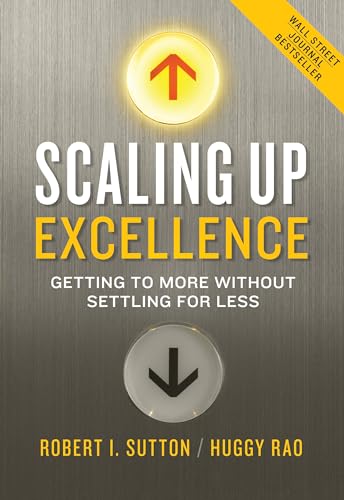
Bestselling author, Robert Sutton and Stanford colleague, Huggy Rao tackle a challenge that determines every organization’s success: how to scale up farther, faster, and more effectively as an organization grows.
Sutton and Rao have devoted much of the last decade to uncovering what it takes to build and uncover pockets of exemplary performance, to help spread them, and to keep recharging organizations with ever better work practices. Drawing on inside accounts and case studies and academic research from a wealth of industries-- including start-ups, pharmaceuticals, airlines, retail, financial services, high-tech, education, non-profits, government, and healthcare-- Sutton and Rao identify the key scaling challenges that confront every organization. They tackle the difficult trade-offs that organizations must make between whether to encourage individualized approaches tailored to local needs or to replicate the same practices and customs as an organization or program expands. They reveal how the best leaders and teams develop, spread, and instill the right mindsets in their people-- rather than ruining or watering down the very things that have fueled successful growth in the past. They unpack the principles that help to cascade excellence throughout an organization, as well as show how to eliminate destructive beliefs and behaviors that will hold them back.
Scaling Up Excellence is the first major business book devoted to this universal and vexing challenge and it is destined to become the standard bearer in the field.
Die Inhaltsangabe kann sich auf eine andere Ausgabe dieses Titels beziehen.
Über die Autorin bzw. den Autor
Robert I. Sutton is professor of management science and engineering at Stanford University, where he is co-founder of the Center for Work Technology and Organizations, Stanford Technology Ventures Program, and Institute of Design (“the d.school”). Sutton was named as one of 10 “B-School All-Stars” by BusinessWeek, which they described as “professors who are influencing contemporary business thinking far beyond academia.” His books include The Knowing-Doing Gap (with Jeffrey Pfeffer), Weird Ideas the Work, and two New York Times bestsellers, The No Asshole Rule and Good Boss, Bad Boss.
Huggy Rao is the Atholl McBean Professor of Organizational Behavior, Stanford University, where he studies the social and cultural causes of organizational change. His honors include the W. Richard Scott Distinguished Award for Scholarship from the American Sociological Association and Sidney Levy Teaching Award from the Kellogg School of Management. He is the author of Market Rebels: How Activists Make or Break Radical Innovation,” Which Intel’s Andy Grove praised for providing “shrewd analysis” and an “aha moment.”
Auszug. © Genehmigter Nachdruck. Alle Rechte vorbehalten.
Chapter 1
It's a Ground War, Not Just an Air War
Going Slower to Scale Faster (and Better) Later
Listen. This is the most important thing that we learned, the one to keep in mind every day if you are bent on spreading excellence to more people and places: those who master what venture capitalist Ben Horowitz calls "the black art of scaling a human organization" act as if they are fighting a ground war, not just an air war.
In the air wars of World War II, commanders typically ordered pilots to drop bombs or strafe some general area in hopes of damaging the enemy. Unfortunately, such attacks were woefully inaccurate. Political scientist Robert Pape estimated that, during World War II, "only about 18 percent of U.S. bombs fell within 1,000 feet of their targets, and only 20 percent of British bombs dropped at night fell within 5 miles." Even when air strikes were more accurate, Allied leaders learned that without ground operations--where soldiers were close to targets, gaining or losing territory a few yards at a time--victory was impossible. Even today, when guidance systems ensure that 70 percent of bombs fall within thirty feet of targets, an air war alone is rarely enough to defeat an enemy. After reviewing NATO's seventy-eight-day air war in Serbia that was meant to force Yugoslavian president Slobodan Milosevic to ban ethnic cleansing, retired U.S. Air Force General Merrill McPeak concluded, "In a major blunder, the use of ground troops was ruled out from the beginning."
Similarly, savvy leaders know that just bombarding employees with a quick PowerPoint presentation, a few days of training, or an inspirational speech won't cut it if they want to spread some goodness from the few to the many. Certainly, there are junctures in every scaling effort when it is wise to choose the easier path or secure a quick victory. Yet as we dug into case after case, and study after study, we saw that every allegedly easy and speedy scaling success turned out to be one we just hadn't understood very well. Scaling requires grinding it out, and pressing each person, team, group, division, or organization to make one small change after another in what they believe, feel, or do.
That is what Claudia Kotchka learned during her seven-year effort to spread innovation practices at Procter & Gamble. As vice president of design innovation and strategy, Kotchka started with a tiny team and one project and ended with over three hundred innovation experts embedded in dozens of businesses. We asked her the most important lesson that she had gleaned about scaling. Kotchka responded that she was naturally impatient, someone who wanted things done "right now" and as quickly and easily as possible. This action orientation served her team well, driving them to make progress each day, find savvy shortcuts, and achieve quick wins. But Kotchka explained that her team would have failed to scale if this penchant for action hadn't been blended with patience and persistence. "My CEO, A. G. Lafley, reminded me how important it was again and again." Kotchka's advice is reminiscent of something a McKinsey consultant--a veteran of the scaling wars--told us: When big organizations scale well, they focus on "moving a thousand people forward a foot at a time, rather than moving one person forward by a thousand feet."
This kind of discipline is equally important in small and young organizations. It has been a way of life for Shannon May and her team since they launched Bridge International Academies, the chain of low-cost and standardized elementary schools that we described in the Preface. Consider the grueling gauntlet that Bridge created for screening and training new teachers. In early 2012, they hired eight hundred teachers for fifty-one new schools and eighty-three existing schools. These are tough jobs: students attend school from 7:00 a.m. to 5:30 p.m. each weekday and for half a day on Saturday, and teachers are required to maximize the time that students spend "on task and actively engaged." A thirty-person team from Bridge interviewed ten thousand candidates and gave each a battery of tests: reading, writing, and math exams. The team also had candidates give short speeches and hold one-on-one conversations with them to assess their ability to deliver material and interact with students. They invited 1,400 finalists (in two batches of 700) to a five-week training camp, where all were paid to learn Bridge's mindset, skills, and procedures. The team then selected the best 800 to teach Bridge's students.
The Bridge team doesn't just view scaling as the Problem of More. As they expand, their goal isn't just to maintain the status quo. The team works day after day to make their system better. They never leave well enough alone. For example, they keep improving the technologies and content delivered via the phones and "hacked" Nook tablets used to collect money from parents, pay staff, deliver teaching materials, and monitor student and teacher performance. May also described a new effort to deliver questions and assignments to teachers that are customized for students in the same class at different ability levels.
This kind of determination and discipline also defines people who spread excellence from the bottom or middle of organizations. In 1991, Andy Papa graduated from Stanford, where he had played as a defensive lineman on the football team for four years. Through luck and persistence, Papa landed a job on a NASCAR racing team based in North Carolina, which included being on the pit crew that changed tires, poured in fuel, made adjustments, and did quick repairs during races. Papa asked when the crew practiced pit stops. The answer was they didn't practice; most worked as mechanics during the week and didn't have time. A lightbulb went off in Papa's head: by transferring "the athletic mindset" he had learned in football to pit stops, they could get faster and more consistent--a big advantage, as the gap between winners and losers is so small in NASCAR races, with less than one second often separating the first- and second-place cars. Papa talked his crew into practicing a couple times a week for just twenty or thirty minutes, he started analyzing film of pit stops, and he tested different techniques (such as coiling the air hose in a figure-eight shape instead of a circle to reduce tangles). The crew's average time dropped from about twenty-two to twenty seconds and, more important, the frequency of awful pit stops plummeted.
Papa eventually took this zeal for the "athletic mindset" to Hendrick Motorsports. He spent years as their "athletic director," overseeing the pit crews that serve elite drivers including Mark Martin, Jeff Gordon, Jimmie Johnson, and Dale Earnhardt, Jr. Members of each crew are selected, trained, and coached by Papa and his colleagues, who enforce an exacting regimen of physical training, practice, and learning aimed at making stops faster (about fourteen seconds is the current goal) and more consistent during the thirty-six grueling races they compete in per year (each with six to twelve pit stops). This discipline has helped Hendrick win more championships than any NASCAR ownership group in history--including an unprecedented run of five Sprint Cup championships by Jimmie Johnson between 2006 and 2010.
Claudia Kotchka, Shannon May, and Andy Papa have traveled different paths. But they all have something in common, an essential quality for grinding out the ground war and overcoming the inevitable setbacks and nasty surprises. These scaling stars have grit. Researcher Angela Duckworth and her colleagues found that grit "entails working strenuously toward challenges, maintaining effort and interest despite failure, adversity, and plateaus in progress. The gritty individual approaches achievement as a marathon, his or her advantage is stamina." Grit drives people to succeed,...
„Über diesen Titel“ kann sich auf eine andere Ausgabe dieses Titels beziehen.
Weitere beliebte Ausgaben desselben Titels

Suchergebnisse für Scaling Up Excellence: Getting to More Without Settling...

Beispielbild für diese ISBN
Scaling Up Excellence: Getting to More Without Settling for Less
Anbieter: World of Books (was SecondSale), Montgomery, IL, USA
Verkäuferbewertung 5 von 5 Sternen

Zustand: Acceptable. Item in acceptable condition! Textbooks may not include supplemental items i.e. CDs, access codes etc. Artikel-Nr. 00097736659
Gebraucht kaufen
EUR 4,54
Versand gratis
Versand innerhalb von USA
Versand innerhalb von USA
Anzahl: 1 verfügbar
Beispielbild für diese ISBN
Scaling Up Excellence: Getting to More Without Settling for Less
Anbieter: World of Books (was SecondSale), Montgomery, IL, USA
Verkäuferbewertung 5 von 5 Sternen
Zustand: Good. Item in good condition. Textbooks may not include supplemental items i.e. CDs, access codes etc. Artikel-Nr. 00081250451
Gebraucht kaufen
EUR 4,54
Versand gratis
Versand innerhalb von USA
Versand innerhalb von USA
Anzahl: Mehr als 20 verfügbar
Beispielbild für diese ISBN
Scaling Up Excellence: Getting to More Without Settling for Less
Anbieter: ThriftBooks-Reno, Reno, NV, USA
Verkäuferbewertung 5 von 5 Sternen
Hardcover. Zustand: Very Good. No Jacket. Former library book; May have limited writing in cover pages. Pages are unmarked. ~ ThriftBooks: Read More, Spend Less. Artikel-Nr. G0385347022I4N10
Gebraucht kaufen
EUR 6,09
Versand gratis
Versand innerhalb von USA
Versand innerhalb von USA
Anzahl: 1 verfügbar
Beispielbild für diese ISBN
Scaling Up Excellence: Getting to More Without Settling for Less
Anbieter: ThriftBooks-Dallas, Dallas, TX, USA
Verkäuferbewertung 5 von 5 Sternen
Hardcover. Zustand: Very Good. No Jacket. Former library book; May have limited writing in cover pages. Pages are unmarked. ~ ThriftBooks: Read More, Spend Less. Artikel-Nr. G0385347022I4N10
Gebraucht kaufen
EUR 6,10
Versand gratis
Versand innerhalb von USA
Versand innerhalb von USA
Anzahl: 1 verfügbar
Beispielbild für diese ISBN
Scaling Up Excellence: Getting to More Without Settling for Less
Anbieter: ThriftBooks-Dallas, Dallas, TX, USA
Verkäuferbewertung 5 von 5 Sternen
Hardcover. Zustand: Very Good. No Jacket. Missing dust jacket; May have limited writing in cover pages. Pages are unmarked. ~ ThriftBooks: Read More, Spend Less. Artikel-Nr. G0385347022I4N01
Gebraucht kaufen
EUR 6,10
Versand gratis
Versand innerhalb von USA
Versand innerhalb von USA
Anzahl: 1 verfügbar
Beispielbild für diese ISBN
Scaling Up Excellence: Getting to More Without Settling for Less
Anbieter: ThriftBooks-Atlanta, AUSTELL, GA, USA
Verkäuferbewertung 5 von 5 Sternen
Hardcover. Zustand: Very Good. No Jacket. Former library book; May have limited writing in cover pages. Pages are unmarked. ~ ThriftBooks: Read More, Spend Less. Artikel-Nr. G0385347022I4N10
Gebraucht kaufen
EUR 6,10
Versand gratis
Versand innerhalb von USA
Versand innerhalb von USA
Anzahl: 1 verfügbar
Beispielbild für diese ISBN
Scaling Up Excellence: Getting to More Without Settling for Less
Verlag:
Crown Currency (edition 1), 2014
ISBN 10: 0385347022
ISBN 13: 9780385347020
Gebraucht
Hardcover
Anbieter: BooksRun, Philadelphia, PA, USA
Verkäuferbewertung 5 von 5 Sternen
Hardcover. Zustand: Very Good. 1. With dust jacket. It's a well-cared-for item that has seen limited use. The item may show minor signs of wear. All the text is legible, with all pages included. It may have slight markings and/or highlighting. Artikel-Nr. 0385347022-8-1-29
Gebraucht kaufen
EUR 6,34
Versand gratis
Versand innerhalb von USA
Versand innerhalb von USA
Anzahl: 1 verfügbar
Beispielbild für diese ISBN
Scaling Up Excellence: Getting to More Without Settling for Less
Anbieter: Wonder Book, Frederick, MD, USA
Verkäuferbewertung 5 von 5 Sternen
Zustand: As New. Like New condition. Like New dust jacket. A near perfect copy that may have very minor cosmetic defects. Artikel-Nr. P02R-00877
Gebraucht kaufen
EUR 6,76
Versand gratis
Versand innerhalb von USA
Versand innerhalb von USA
Anzahl: 1 verfügbar
Beispielbild für diese ISBN
Scaling Up Excellence: Getting to More Without Settling for Less
Anbieter: Wonder Book, Frederick, MD, USA
Verkäuferbewertung 5 von 5 Sternen
Zustand: Very Good. Very Good condition. Very Good dust jacket. A copy that may have a few cosmetic defects. May also contain light spine creasing or a few markings such as an owner's name, short gifter's inscription or light stamp. Artikel-Nr. M11A-03094
Gebraucht kaufen
EUR 6,76
Versand gratis
Versand innerhalb von USA
Versand innerhalb von USA
Anzahl: 1 verfügbar
Beispielbild für diese ISBN
Scaling up Excellence : Getting to More Without Settling for Less
Verlag:
Crown Publishing Group, The, 2014
ISBN 10: 0385347022
ISBN 13: 9780385347020
Gebraucht
Hardcover
Erstausgabe
Anbieter: Better World Books: West, Reno, NV, USA
Verkäuferbewertung 5 von 5 Sternen
Zustand: Good. First Edition. Pages intact with minimal writing/highlighting. The binding may be loose and creased. Dust jackets/supplements are not included. Stock photo provided. Product includes identifying sticker. Better World Books: Buy Books. Do Good. Artikel-Nr. 5767968-6
Gebraucht kaufen
EUR 8,52
Versand gratis
Versand innerhalb von USA
Versand innerhalb von USA
Anzahl: 1 verfügbar