
Verwandte Artikel zu Better and Faster: The Proven Path to Unstoppable Ideas
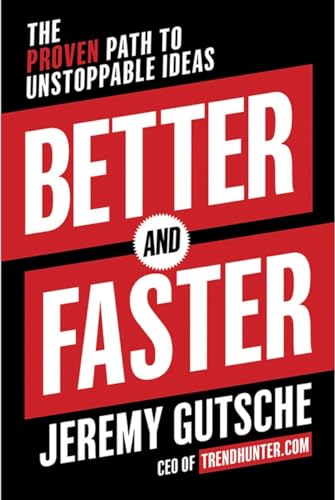
Inhaltsangabe
Out-innovate, outsmart and outmaneuver your competitors with tactics from the CEO of TrendHunter.com, Jeremy Gutsche.
In our world of chaos and change, what are you overlooking? If you knew the answer, you’d be a better innovator, better manager, and better investor.
This book will make you better by teaching you how to overcome neurological traps that block successful people, like you, from realizing your full potential. Then, it will make you faster by teaching you 6 patterns of opportunity: Convergence, Divergence, Cyclicality, Redirection, Reduction and Acceleration. Each pattern you’ll learn is a repeatable shortcut that has created fortunes for ex-criminals, reclusive billionaires, disruptive CEOs and ordinary people who unexpectedly made it big.
In an unparalleled study of 250,000 ideas, Jeremy and his TrendHunter.com team have leveraged their 100,000,000 person audience to study what actually causes opportunity: data-driven research that was never before possible. The result is a series of frameworks battle-tested with several hundred brands, and top executives at some of the most successful companies in the world who rely on Jeremy to accelerate their hunt for ideas.
Better and Faster will help you learn to see patterns and clues wherever you look that will put you on the smarter, easier path to finding those breakthrough ideas, faster.
Die Inhaltsangabe kann sich auf eine andere Ausgabe dieses Titels beziehen.
Über die Autorin bzw. den Autor
JEREMY GUTSCHE is an innovation expert, award-winning author, one of the most sought-after keynote speakers on the planet, and the founder of Trendhunter.com, the world's #1 most popular trend-spotting website. Prior to founding Trend Hunter, Jeremy grew a $1 billion portfolio for Capital One, and today over 300 brands rely on his expertise, including Victoria's Secret, Sony, Coca-Cola, IBM, Wells Fargo, and Hughes Aerospace.
Auszug. © Genehmigter Nachdruck. Alle Rechte vorbehalten.
Chapter 1
THE HUNTER AND THE FARMER
Living in an era of unprecedented change, it’s easy to think of our potential opportunities as boundless. But there’s a catch. We must be smart enough--evolved enough--to leverage change. We must get beyond our “farmer” roots and find our inner “hunter.”
Ten thousand years ago, something changed. Someone planted the first seeds, ushering in a new era. Humankind had a reliable source of food, eliminating the time-consuming need to seek out wild plants and hunt animals nomadically. People could stay put, build communities, and acquire possessions. Over the next five hundred generations, predictability and protecting order became paramount. We evolved into excellent farmers. It’s this simple: Once we find a field to farm, we’re neurologically wired to repeat the chain of decisions that led to the last harvest. Today, you can see this wiring in the way most corporations behave. Once a company becomes successful, it creates rules, procedures, and policies to protect the status quo.
Everyone farms. Your “field” might be your job, your product, or your brand, but reflexively, when you find a fertile field, you farm. Your neurological preferences take over and you become protective of your craft, digging in for what you hope will be a repeat of the prior harvest.
While this tendency served us well for the last ten thousand years, it leaves us unprepared for today’s era of rapid change. To break free, we need to better understand our farming bias and learn how to awaken our inner hunter. Yes, it’s tempting to think, “But I’m already a hunter. That’s why I’m reading this book. Why can’t I just hear about those patterns and get going already!” But there’s immense danger in that impatience. If you fall into the traps of the farmer, you won’t be able to fully exploit the patterns. So listen up.
THE FARMER: COUGH SYRUP, AWKWARD MOMENTS, AND SEX APPEAL
Roy Raymond was a 1970s version of today’s ambitious California entrepreneurs. He was a Stanford business grad on the lookout for a commercial concept he could call his own, and he wasn’t finding it pursuing a career at Vicks, the over-the-counter cough syrup company. One day, on a mission to find a gift for his wife, he entered the intimate apparel section of a local department store. The experience was awkward, to say the least. He felt like “an unwelcome intruder,” embarrassed and lost in “racks of terry-cloth robes and ugly, floral-print nylon nightgowns.”1
The discomfort led to an idea: Why not create a guy-friendly shop in which men could buy lingerie for their girlfriends or wives? His idea was rooted in two insights: first, that a lingerie shop geared toward men would make them more comfortable shopping, and second, that truly sexy lingerie would be a hit with both men and women.
In 1977, Raymond begged and borrowed $80,000 from his relatives to launch a little lingerie shop. With its wood-paneled walls, fashionable clothing, and upscale, male-oriented theme, the shop racked up sales of half a million dollars in its first year. That success funded three more locations. Aiming to go national, Raymond launched a mail-order catalog that was the talk of the industry and won additional notice when it was pinned up in men’s locker rooms everywhere. Within a few years, he was adding new locations and reaping millions in revenue.
By now, you’ve probably guessed that Raymond’s store was Victoria’s Secret, although little remains of Raymond’s business model in the international chain we know today. Raymond did many things correctly, including transforming a broken shopping experience into a lucrative retail concept and exploiting an untapped niche, for which he reaped the rewards. But, despite those smart moves, he didn’t see the bigger picture. It turned out, of course, that women buy most lingerie, not men--so Raymond was marketing to the wrong sex. Indeed, the main reason that women shopped at his stores was the fashionable lingerie, but not specifically because it made men happy. Rather, because it made women feel more confident. Raymond missed all that, and eventually his chain was headed for bankruptcy. That’s when retailing magnate Leslie Wexner took the enterprise off his hands.
Within months, the new managers radically repositioned the stores and catalogue: imagery, brand, colors, and styles were all redesigned for a woman’s eye, and the fresh, female-empowering approach worked like a charm. The result: Three decades later, Victoria’s Secret has grown into a $6 billion megabrand.
It would be easy to dismiss Raymond’s talents based on the scale of his blunder. You might argue that he was overlooking the obvious, but don’t forget that his initial stores made millions. He had a proven formula, and he stuck by it for years.
Unfortunately, like many individuals and teams, Raymond was only too happy to play the role of the farmer. Had he experimented more and been willing to cast aside his strongly held beliefs, he might have taken full advantage of the tremendous opportunities his company was poised to exploit.
What opportunities are you missing right now? How many breakthrough business ideas are just a few steps away from what you’re already working on? The reality is that you can’t know. Unlike Raymond, most of us will never see someone else come and do our job so much better.
While Raymond’s failure was catastrophic, his shortcomings are common among businesses and entrepreneurs. Raymond suffered from the three farmer traps: He was complacent with his own success, repetitive, and overly protective of his own beliefs.
As strange as it may sound, one of the hard-to-fathom lessons from these traps is that “being good” at something may eventually keep you from reaching your full potential.
THE HUNTER: COUTURE, BLUE JEANS, AND NO PHOTOGRAPHS
To understand how to skirt these common traps, let’s meet an unlikely hunter, a seventy-eight-year-old man who lives in the bustling Spanish port city of A Coruna. He wears the same blue outfit nearly every day. He eats lunch in his work cafeteria and rarely goes on vacation. He doesn’t do interviews. In fact, until 1999, no published photograph existed of this mysterious man.
Indeed, the only reason he finally deigned to be photographed at all was that he had to as part of his company’s initial public offering. He earned his billions by revolutionizing fashion, and today, he’s the world’s third-wealthiest individual, richer than Warren Buffet and Larry Ellison, and just behind Carlos Slim and Bill Gates.
Amancio Ortega is the creator of Zara, a thriving international chain of clothing stores that you might mistakenly think is like any other, except that it’s completely different. Louis Vuitton’s fashion director calls Zara “possibly the most innovative and devastating retailer in the world.”2 The company doesn’t advertise because it can’t and doesn’t need to. Zara doesn’t carry every design and size in stock, and styles are rarely consistent. And that’s precisely why it succeeds.
To understand how Zara has made Ortega fabulously wealthy is to understand the future of business--in any industry. This is not a lesson in fashion.
It starts with speed. An average clothing company takes several months or up to a year to turn a design into a product ready for purchase. Zara takes just fourteen days.3
Designers and pattern makers craft several concepts throughout each day, which the company speedily manufactures from its local factory....
„Über diesen Titel“ kann sich auf eine andere Ausgabe dieses Titels beziehen.
Suchergebnisse für Better and Faster: The Proven Path to Unstoppable Ideas

Beispielbild für diese ISBN
Better and Faster: The Proven Path to Unstoppable Ideas
Verlag:
Crown Currency (edition Illustrated), 2015
ISBN 10: 0385346549
ISBN 13: 9780385346542
Gebraucht
Hardcover
Anbieter: BooksRun, Philadelphia, PA, USA
Verkäuferbewertung 5 von 5 Sternen

Hardcover. Zustand: Fair. Illustrated. With dust jacket. The item might be beaten up but readable. May contain markings or highlighting, as well as stains, bent corners, or any other major defect, but the text is not obscured in any way. Artikel-Nr. 0385346549-7-1-29
Gebraucht kaufen
EUR 4,92
Versand gratis
Versand innerhalb von USA
Versand innerhalb von USA
Anzahl: 1 verfügbar
Beispielbild für diese ISBN
Better and Faster : The Proven Path to Unstoppable Ideas
Verlag:
Crown Publishing Group, The, 2015
ISBN 10: 0385346549
ISBN 13: 9780385346542
Gebraucht
Hardcover
Anbieter: Better World Books: West, Reno, NV, USA
Verkäuferbewertung 5 von 5 Sternen
Zustand: Good. Former library copy. Pages intact with minimal writing/highlighting. The binding may be loose and creased. Dust jackets/supplements are not included. Includes library markings. Stock photo provided. Product includes identifying sticker. Better World Books: Buy Books. Do Good. Artikel-Nr. 5208109-75
Gebraucht kaufen
EUR 6,19
Versand gratis
Versand innerhalb von USA
Versand innerhalb von USA
Anzahl: 1 verfügbar
Beispielbild für diese ISBN
Better and Faster : The Proven Path to Unstoppable Ideas
Verlag:
Crown Publishing Group, The, 2015
ISBN 10: 0385346549
ISBN 13: 9780385346542
Gebraucht
Hardcover
Anbieter: Better World Books, Mishawaka, IN, USA
Verkäuferbewertung 5 von 5 Sternen
Zustand: Good. Pages intact with minimal writing/highlighting. The binding may be loose and creased. Dust jackets/supplements are not included. Stock photo provided. Product includes identifying sticker. Better World Books: Buy Books. Do Good. Artikel-Nr. 5064772-6
Gebraucht kaufen
EUR 6,19
Versand gratis
Versand innerhalb von USA
Versand innerhalb von USA
Anzahl: 1 verfügbar
Beispielbild für diese ISBN
Better and Faster : The Proven Path to Unstoppable Ideas
Verlag:
Crown Publishing Group, The, 2015
ISBN 10: 0385346549
ISBN 13: 9780385346542
Gebraucht
Hardcover
Anbieter: Better World Books, Mishawaka, IN, USA
Verkäuferbewertung 5 von 5 Sternen
Zustand: Very Good. Pages intact with possible writing/highlighting. Binding strong with minor wear. Dust jackets/supplements may not be included. Stock photo provided. Product includes identifying sticker. Better World Books: Buy Books. Do Good. Artikel-Nr. 5528728-6
Gebraucht kaufen
EUR 6,19
Versand gratis
Versand innerhalb von USA
Versand innerhalb von USA
Anzahl: 1 verfügbar
Beispielbild für diese ISBN
Better and Faster: The Proven Path to Unstoppable Ideas
Anbieter: ThriftBooks-Dallas, Dallas, TX, USA
Verkäuferbewertung 5 von 5 Sternen
Hardcover. Zustand: Very Good. No Jacket. May have limited writing in cover pages. Pages are unmarked. ~ ThriftBooks: Read More, Spend Less. Artikel-Nr. G0385346549I4N00
Gebraucht kaufen
EUR 6,21
Versand gratis
Versand innerhalb von USA
Versand innerhalb von USA
Anzahl: 1 verfügbar
Beispielbild für diese ISBN
Better and Faster: The Proven Path to Unstoppable Ideas
Anbieter: Wonder Book, Frederick, MD, USA
Verkäuferbewertung 5 von 5 Sternen
Zustand: Very Good. Very Good condition. Very Good dust jacket. A copy that may have a few cosmetic defects. May also contain light spine creasing or a few markings such as an owner's name, short gifter's inscription or light stamp. Artikel-Nr. V05M-00619
Gebraucht kaufen
EUR 6,43
Versand gratis
Versand innerhalb von USA
Versand innerhalb von USA
Anzahl: 1 verfügbar
Beispielbild für diese ISBN
Better and Faster: The Proven Path to Unstoppable Ideas
Anbieter: Wonder Book, Frederick, MD, USA
Verkäuferbewertung 5 von 5 Sternen
Zustand: Good. Good condition. Very Good dust jacket. A copy that has been read but remains intact. May contain markings such as bookplates, stamps, limited notes and highlighting, or a few light stains. Artikel-Nr. P09R-00347
Gebraucht kaufen
EUR 6,43
Versand gratis
Versand innerhalb von USA
Versand innerhalb von USA
Anzahl: 1 verfügbar
Beispielbild für diese ISBN
Better and Faster
Anbieter: BookOutlet, Jefferson City, TN, USA
Verkäuferbewertung 5 von 5 Sternen
Hardcover. Zustand: New. Hardcover. Publisher overstock, may contain remainder mark on edge. Artikel-Nr. 9780385346542B
Neu kaufen
EUR 3,67
EUR 2,90 Versand
Versand innerhalb von USA
Versand innerhalb von USA
Anzahl: 10 verfügbar
Beispielbild für diese ISBN
Better and Faster: The Proven Path to Unstoppable Ideas
Anbieter: WorldofBooks, Goring-By-Sea, WS, Vereinigtes Königreich
Verkäuferbewertung 5 von 5 Sternen
Paperback. Zustand: Very Good. The book has been read, but is in excellent condition. Pages are intact and not marred by notes or highlighting. The spine remains undamaged. Artikel-Nr. GOR008014066
Gebraucht kaufen
EUR 2,66
EUR 6,62 Versand
Versand von Vereinigtes Königreich nach USA
Versand von Vereinigtes Königreich nach USA
Anzahl: 4 verfügbar
Foto des Verkäufers
Better and Faster: The Proven Path to Unstoppable Ideas
Verlag:
Crown Publishing Group, Division of Random House Inc, 2015
ISBN 10: 0385346549
ISBN 13: 9780385346542
Gebraucht
Hardcover
Anbieter: WeBuyBooks, Rossendale, LANCS, Vereinigtes Königreich
Verkäuferbewertung 5 von 5 Sternen
hardcover. Zustand: Good. Most items will be dispatched the same or the next working day. A copy that has been read but remains in clean condition. All of the pages are intact and the cover is intact and the spine may show signs of wear. The book may have minor markings which are not specifically mentioned. Artikel-Nr. rev1528487228
Gebraucht kaufen
EUR 3,13
EUR 6,97 Versand
Versand von Vereinigtes Königreich nach USA
Versand von Vereinigtes Königreich nach USA
Anzahl: 1 verfügbar