
Inhaltsangabe
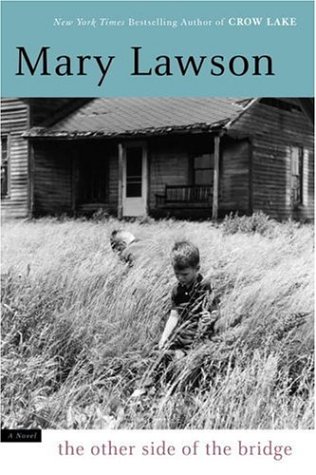
From the author of the beloved #1 national bestseller Crow Lake comes an exceptional new novel of jealously, rivalry and the dangerous power of obsession.
Two brothers, Arthur and Jake Dunn, are the sons of a farmer in the mid-1930s, when life is tough and another world war is looming. Arthur is reticent, solid, dutiful and set to inherit the farm and his father’s character; Jake is younger, attractive, mercurial and dangerous to know – the family misfit. When a beautiful young woman comes into the community, the fragile balance of sibling rivalry tips over the edge.
Then there is Ian, the family’s next generation, and far too sure he knows the difference between right and wrong. By now it is the fifties, and the world has changed – a little, but not enough.
These two generations in the small town of Struan, Ontario, are tragically interlocked, linked by fate and community but separated by a war which devours its young men – its unimaginable horror reaching right into the heart of this remote corner of an empire. With her astonishing ability to turn the ratchet of tension slowly and delicately, Lawson builds their story to a shocking climax. Taut with apprehension, surprising us with moments of tenderness and humour, The Other Side of the Bridge is a compelling, humane and vividly evoked novel with an irresistible emotional undertow.
Arthur found himself staring down at the knife embedded in his foot. There was a surreal split second before the blood started to well up and then up it came, dark and thick as syrup.
Arthur looked at Jake and saw that he was staring at the knife. His expression was one of surprise, and this was something that Arthur wondered about later too. Was Jake surprised because he had never considered the possibility that he might be a less than perfect shot? Did he have that much confidence in himself, that little self-doubt?
Or was he merely surprised at how easy it was to give in to an impulse, and carry through the thought which lay in your mind? Simply to do whatever you wanted to do, and damn the consequences.
–from The Other Side of the Bridge
Die Inhaltsangabe kann sich auf eine andere Ausgabe dieses Titels beziehen.
Über die Autorin bzw. den Autor
Mary Lawson was born and brought up in a farming community in central Ontario. She moved to England in 1968, is married with two sons and lives in Kingston-upon-Thames. This is her second novel.
Auszug. © Genehmigter Nachdruck. Alle Rechte vorbehalten.
Chapter One
FireFighters Battle BushFire
Lost Bear Hunter Located by Plane: In Bush 40 Hours
—Temiskaming Speaker, May 1957
On a small farm about two miles outside Struan there lived a beautiful woman. She was tall and willowy with a lot of fair hair that she drew back into a thick plait and tied with whatever came to hand—a bit of frayed ribbon, an elastic band, an old piece of string. On Sundays she rolled it into a shining ball at the nape of her neck and fastened it somehow so that it wouldn’t fall down during church. Her name was Laura Dunn. Laura, her own name, soft and beautiful like she was; Dunn, her husband’s name, solid and lumpen like her husband. Arthur Dunn was a farmer, a big, heavyset man with a neck at least twice the width of his wife’s, and to Ian, sitting with his parents three pews behind, he looked about as exciting as dishwater.
Ian had first noticed Laura Dunn when he was fourteen—she must have been around all his life but that was the year he became aware of her. She would have been about thirty at the time. She and Arthur had three children, or possibly four. Ian wasn’t sure—he’d never paid any attention to the children.
For a year he made do with watching her in church on Sundays—the Dunns came into town for church every Sunday without fail. Then, when he was fifteen, Ian’s father said that he should get a job working Saturdays and holidays and start saving up for his further education, the theory being that you appreciated things more if you’d helped to pay for them yourself. Ian couldn’t recall anyone asking him if he wanted more education—it was another of the many assumptions people made about his life—but in this particular case he didn’t argue. He got on his bike and cycled out to the Dunns’ farm.
The farm was an oddity in the Struan area because Arthur Dunn still worked his land with horses. It wasn’t because he couldn’t afford a tractor—the farm was prosperous enough—and it wasn’t through any religious convictions like the Mennonites farther south. When asked about it Arthur would study the ground thoughtfully, as if the question had never occurred to him before, and then say that he guessed he liked horses. No one bought that explanation, though. They all believed that Arthur had been put off tractors years earlier, when his father got one and drove it down to the lower forty, where he rolled it into a ditch and killed himself, all within two hours of its arrival on the farm. Even the youngest and least intelligent of the plow horses would have known better than to fall into a ditch. The day after the funeral Arthur got rid of the tractor and harnessed up the team again and he’d been plodding along behind them ever since.
He was out in the fields when Ian cycled up to the farm. Ian saw him, off in the distance, being towed along by two great heavy-footed animals like a picture postcard of a time gone by. Ian leaned his bike up against the pump, which he guessed would only be used to fill the water trough—all but the most remote farms in the area had running water, and electricity too; they’d been connected up to the grid two years ago, when the power lines were run in for the sawmill.
Ian picked his way between the chickens to the back door. There was a front door on the other side of the house, but he figured no one ever used it. It would lead into the sitting room, where probably no one ever sat, whereas the back door led into the kitchen, which was where life would be lived. He could hear Laura Dunn talking as he climbed the three steps to the door. The inner door was open, letting the sound of voices out, but the screen door was closed, making it difficult to see in. She was scolding one of the kids, by the sound of it, though Ian couldn’t make out the words because a baby was crying. Her voice wasn’t sharp and sarcastic, as Ian’s mother’s voice tended to be when she was annoyed about something. It was exasperated, but still gentle and light, or so it seemed to Ian.
There was a lull in the baby’s crying and Ian, standing on the top step with his hand lifted, ready to knock on the door, heard Laura Dunn say, “Well for goodness’ sake, Carter, couldn’t you share it? Couldn’t you let her have a turn?” And a boy’s voice said, “She never shares hers!” and a little girl’s voice wailed, “I do so!” and the baby started to howl again. There was the sound of a chair being scuffed along the floor and then the screen door was flung open, nearly knocking Ian off the step, and a boy charged out. He gave Ian a startled, angry glance before jumping off the steps and disappearing around the side of the house. He looked about twelve years old and had the sort of face, Ian thought, that made you want to hit him. The sullen, sulky face of a kid who thinks the world’s against him.
The screen door slammed closed again and Laura Dunn appeared behind it. She gave a start when she saw Ian standing there and said, “Oh! Oh . . . hello! It’s Ian, isn’t it? Dr. Christopherson’s son?”
“Yes,” Ian said. “Um, yes . . . um, I’ve come to talk to Mr. Dunn . . . about a job. I wondered if he’d be taking on anyone this summer. I mean, full-time this summer, but maybe Saturdays right away, and then full-time once the holidays start.”
He felt himself flushing. He was gabbling, because she was so near, just inches away behind the screen door, and she was looking at him, directly and only at him, with those wonderful soft eyes, eyes that he’d noticed always seemed shadowed, as if they contained deep, unfathomable mysteries, or—the possibility occurred to him now, what with the crying of the baby and the behavior of the kids—as if she were tired all the time.
“Oh,” she said. “Oh, well yes, I’m sure he’d be glad of some help. Just a minute, Ian. . . . I’ll come out. Just a minute.”
She disappeared. Ian heard her say something to somebody and then she reappeared with a baby in her arms. A little girl was behind her, but she shrank back when she saw Ian standing there. He moved down off the steps and Laura came out, bouncing the baby gently up and down on her hip. The baby was fat and sexless, like all babies, and had round, unconvincing tears rolling down its cheeks. It and Ian looked at each other and the baby gave a sort of snort, as if it didn’t think much of what it saw, and put its thumb in its mouth.
“There, now,” Laura said, brushing the top of its head with her lips. “That’s better. This is Ian. Say hello to Ian.”
“Hi,” Ian said. He smiled warily at the baby. It stared back and then curled up and buried its face in the folds of Laura’s dress, its free hand clutching possessively at her breast. Ian quickly looked down at his feet.
“The thing is, you’ll really need to speak to Arthur,” Laura was saying. “He’s plowing at the moment.” She nodded in the direction of the picture-postcard view of her husband. “If you’d like to go out and have a word with him . . . just along that track there.” She looked doubtfully at Ian’s bike. “Only I think you’d be better to walk. The horses cut up the path a bit. . . . But I’m sure he’ll be pleased—it’s so hard to get help. Men nowadays don’t know how to deal with horses, you see.” She smiled at him. “But maybe you like them. Is that why you’ve come?”
“Well, sort of,” Ian said....
„Über diesen Titel“ kann sich auf eine andere Ausgabe dieses Titels beziehen.
Weitere beliebte Ausgaben desselben Titels

Suchergebnisse für The Other Side of the Bridge

Beispielbild für diese ISBN
The Other Side of the Bridge
Anbieter: World of Books (was SecondSale), Montgomery, IL, USA
Verkäuferbewertung 5 von 5 Sternen

Zustand: Very Good. Item in very good condition! Textbooks may not include supplemental items i.e. CDs, access codes etc. Artikel-Nr. 00095483014
Gebraucht kaufen
EUR 3,86
Versand gratis
Versand innerhalb von USA
Versand innerhalb von USA
Anzahl: 2 verfügbar
Beispielbild für diese ISBN
The Other Side of the Bridge
Anbieter: World of Books (was SecondSale), Montgomery, IL, USA
Verkäuferbewertung 5 von 5 Sternen
Zustand: Good. Item in good condition. Textbooks may not include supplemental items i.e. CDs, access codes etc. Artikel-Nr. 00093366103
Gebraucht kaufen
EUR 3,86
Versand gratis
Versand innerhalb von USA
Versand innerhalb von USA
Anzahl: 1 verfügbar
Beispielbild für diese ISBN
The Other Side of the Bridge
Verlag:
Random House Publishing Group, 2006
ISBN 10: 0385340370
ISBN 13: 9780385340373
Gebraucht
Hardcover
Erstausgabe
Anbieter: Better World Books: West, Reno, NV, USA
Verkäuferbewertung 5 von 5 Sternen
Zustand: Very Good. First Edition. Former library copy. Pages intact with possible writing/highlighting. Binding strong with minor wear. Dust jackets/supplements may not be included. Includes library markings. Stock photo provided. Product includes identifying sticker. Better World Books: Buy Books. Do Good. Artikel-Nr. GRP69557744
Gebraucht kaufen
EUR 6,35
Versand gratis
Versand innerhalb von USA
Versand innerhalb von USA
Anzahl: 1 verfügbar
Beispielbild für diese ISBN
The Other Side of the Bridge
Verlag:
Random House Publishing Group, 2006
ISBN 10: 0385340370
ISBN 13: 9780385340373
Gebraucht
Hardcover
Erstausgabe
Anbieter: Better World Books, Mishawaka, IN, USA
Verkäuferbewertung 5 von 5 Sternen
Zustand: Good. First Edition. Former library copy. Pages intact with minimal writing/highlighting. The binding may be loose and creased. Dust jackets/supplements are not included. Includes library markings. Stock photo provided. Product includes identifying sticker. Better World Books: Buy Books. Do Good. Artikel-Nr. GRP67757240
Gebraucht kaufen
EUR 6,35
Versand gratis
Versand innerhalb von USA
Versand innerhalb von USA
Anzahl: 2 verfügbar
Beispielbild für diese ISBN
The Other Side of the Bridge
Anbieter: ThriftBooks-Atlanta, AUSTELL, GA, USA
Verkäuferbewertung 5 von 5 Sternen
Hardcover. Zustand: Very Good. No Jacket. Former library book; May have limited writing in cover pages. Pages are unmarked. ~ ThriftBooks: Read More, Spend Less. Artikel-Nr. G0385340370I4N10
Gebraucht kaufen
EUR 7,04
Versand gratis
Versand innerhalb von USA
Versand innerhalb von USA
Anzahl: 1 verfügbar
Beispielbild für diese ISBN
The Other Side of the Bridge
Anbieter: ThriftBooks-Dallas, Dallas, TX, USA
Verkäuferbewertung 5 von 5 Sternen
Hardcover. Zustand: Very Good. No Jacket. Missing dust jacket; May have limited writing in cover pages. Pages are unmarked. ~ ThriftBooks: Read More, Spend Less. Artikel-Nr. G0385340370I4N01
Gebraucht kaufen
EUR 7,04
Versand gratis
Versand innerhalb von USA
Versand innerhalb von USA
Anzahl: 1 verfügbar
Beispielbild für diese ISBN
The Other Side of the Bridge
Anbieter: WorldofBooks, Goring-By-Sea, WS, Vereinigtes Königreich
Verkäuferbewertung 5 von 5 Sternen
Paperback. Zustand: Very Good. The book has been read, but is in excellent condition. Pages are intact and not marred by notes or highlighting. The spine remains undamaged. Artikel-Nr. GOR004285720
Gebraucht kaufen
EUR 1,38
EUR 6,49 Versand
Versand von Vereinigtes Königreich nach USA
Versand von Vereinigtes Königreich nach USA
Anzahl: 1 verfügbar
Beispielbild für diese ISBN
The Other Side of the Bridge
Anbieter: AwesomeBooks, Wallingford, Vereinigtes Königreich
Verkäuferbewertung 5 von 5 Sternen
Hardcover. Zustand: Very Good. The Other Side of the Bridge This book is in very good condition and will be shipped within 24 hours of ordering. The cover may have some limited signs of wear but the pages are clean, intact and the spine remains undamaged. This book has clearly been well maintained and looked after thus far. Money back guarantee if you are not satisfied. See all our books here, order more than 1 book and get discounted shipping. Artikel-Nr. 7719-9780385340373
Gebraucht kaufen
EUR 5,07
EUR 5,78 Versand
Versand von Vereinigtes Königreich nach USA
Versand von Vereinigtes Königreich nach USA
Anzahl: 2 verfügbar
Beispielbild für diese ISBN
The Other Side of the Bridge
Anbieter: Bahamut Media, Reading, Vereinigtes Königreich
Verkäuferbewertung 5 von 5 Sternen
Hardcover. Zustand: Very Good. This book is in very good condition and will be shipped within 24 hours of ordering. The cover may have some limited signs of wear but the pages are clean, intact and the spine remains undamaged. This book has clearly been well maintained and looked after thus far. Money back guarantee if you are not satisfied. See all our books here, order more than 1 book and get discounted shipping. Artikel-Nr. 6545-9780385340373
Gebraucht kaufen
EUR 5,39
EUR 8,09 Versand
Versand von Vereinigtes Königreich nach USA
Versand von Vereinigtes Königreich nach USA
Anzahl: 2 verfügbar
Beispielbild für diese ISBN
The Other Side of the Bridge
Anbieter: Sell Books, Elland, YORKS, Vereinigtes Königreich
Verkäuferbewertung 5 von 5 Sternen
hardcover. Zustand: Very Good. Most of our very good books have only minor imperfections such as shelf wear consistent with a new book that's sat on a bookshop shelf for a year or two. Occasionally we may miss other minor imperfections as we have to grade books at speed. Our books are dispatched from a Yorkshire former cotton mill. We list via barcode/ISBN so please note that the images are stock images and may not be the exact copy you receive, furthermore the details about edition and year might not be accurate as many publishers reuse the same ISBN for multiple editions and as we simply scan a barcode or enter an ISBN we do not check the validity of the edition data when listing. If you're looking for an exact edition please don't order (at least not without checking with us first, although we don't always have time to check). We aim to dispatch prompty, the service used will depend on order value and book size. We can ship to most countries, see our shipping policies. Payment is via Abe only. Artikel-Nr. mon0000012007
Gebraucht kaufen
EUR 2,45
EUR 14,08 Versand
Versand von Vereinigtes Königreich nach USA
Versand von Vereinigtes Königreich nach USA
Anzahl: 1 verfügbar